 Burbank Film Memorabilia Collector Shop Walk: Studio Stash
Hidden Gems & Odd Finds
Oddities Museum Near Me: Valley Relics Museum Roadside History
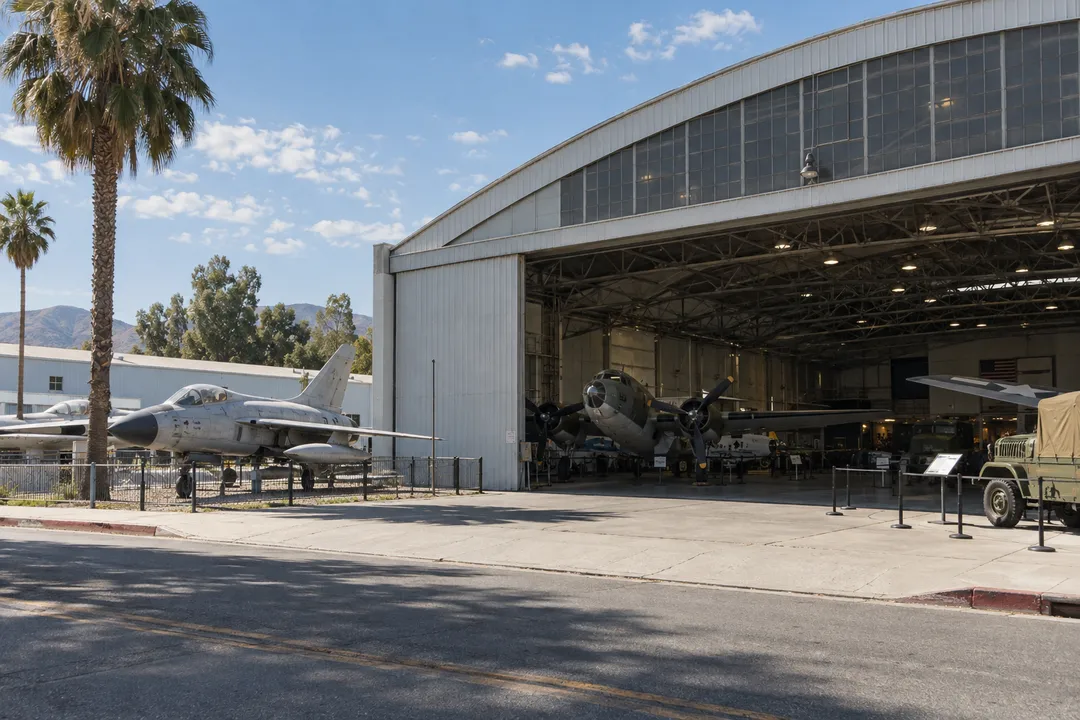
Valley Relics Museum in a Lake Balboa hangar gathers signs, cars, clothing, photographs, and everyday artifacts from San Fernando Valley life.
Valley Relics Museum is a satisfying oddities museum near me destination for Los Angeles visitors who want local history at the scale of signs, storefronts, cars, uniforms, toys, and family photographs. The museum occupies Hangar C3 and C4 at 7900 Balboa Boulevard in Lake Balboa, with the entrance on Stagg Street. Inside, the San Fernando Valley appears as a dense accumulation of things that once looked ordinary: neon, roadside advertising, school memories, restaurant objects, and pieces of vanished businesses.
The hangar location makes this a driving visit, although local buses can bring you toward Balboa Boulevard and Stagg Street. Parking and the industrial setting are part of the experience; do not expect a polished museum district or a prominent street entrance. The current public hours are Saturday and Sunday, 10am to 3pm. Arrive near opening for the clearest walk through the aisles, especially when families and collectors arrive with stories of their own.
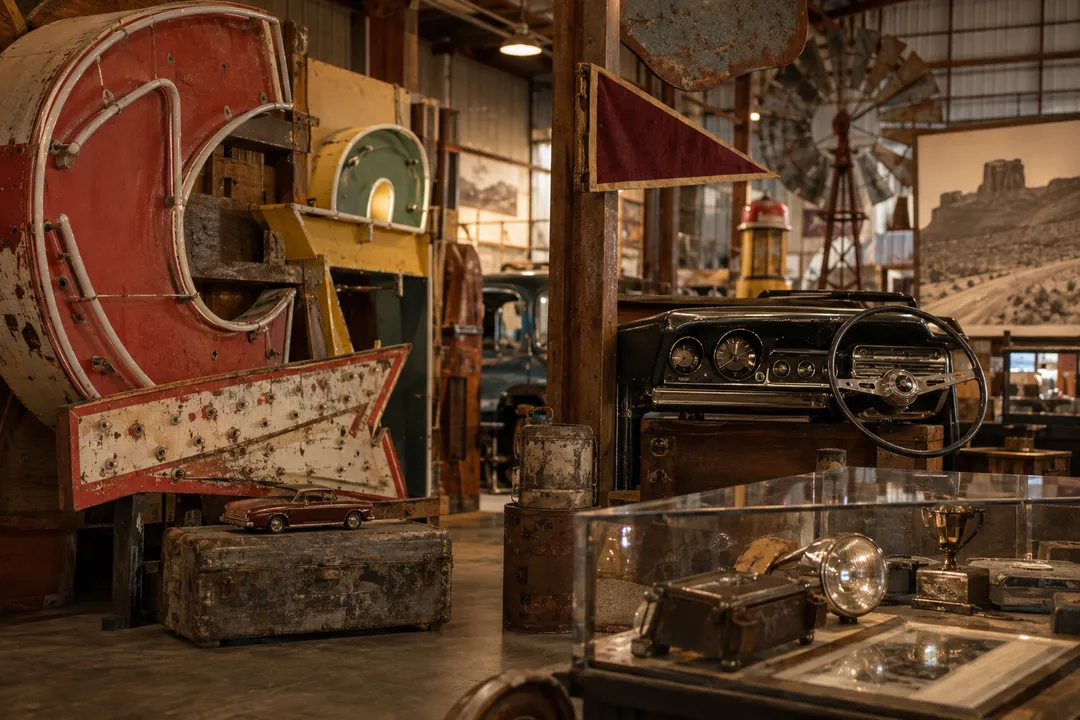
The collection's unusual quality comes from its refusal to separate high design from neighborhood clutter. A restaurant sign, a gas station logo, a school pennant, or a vintage vehicle can be historically meaningful even if it was never intended to last. Valley Relics treats those objects as evidence of the Valley's commercial and social life. The result feels more like an archaeological dig through memory than a conventional chronology of Los Angeles.
Start with the signs. Their lettering, color, and shape often survive after the business itself is gone, making the sign a compressed portrait of a place. Look for the difference between a handmade sign and a mass-produced one, then consider what each says about budgets, ambition, and the roadside landscape. Neon tubes and painted panels also show how businesses competed for attention before every storefront could be found on a digital map.
The vehicles create a different kind of oddity. Cars, vans, and other large objects show how much of Valley life was organized around distance, work, recreation, and the freeway. Walk around them slowly rather than treating them as background props. The interior details, badges, upholstery, and modifications are often more revealing than the exterior. A vehicle can tell you whether a family traveled, a business delivered, or a neighborhood imagined itself as modern.
Clothing, toys, photographs, and documents bring the collection back to individual lives. A jacket or yearbook does not explain an entire community, but it can anchor a memory in a specific decade. The museum is strongest when several kinds of evidence sit near each other: a local sign beside a photograph of the street, or a vehicle beside the business material that once advertised it. Those pairings turn nostalgia into a more useful form of history.
The museum is compact enough for a relaxed visit, but the aisles can narrow around large objects. Keep children close, do not climb on vehicles or touch fragile artifacts, and ask before taking close-up photos of private documents. There is no formal timed queue, yet weekend admission can bunch near opening. The best strategy is to arrive at 10am, then take a second pass after the first crowd moves through. Wear shoes suited to a hangar floor.
General admission is $15, and children 10 and under enter free. Tickets are available at the door, with public hours listed Saturday and Sunday from 10am to 3pm. The price includes the full collection rather than a single special exhibit, so allow at least an hour and a half if you read labels or talk with staff. Bring a little extra time for the shop and for the stories that often surface when local visitors recognize an object.
The atmosphere is lively, crowded with visual information, and intentionally unpolished. A hangar lets the collection breathe vertically, but it also keeps the focus on objects rather than architecture. There are moments when the sheer quantity feels like the point: the Valley was built from layers, and the museum preserves that accumulation. Do not try to photograph everything. Choose a few objects and notice how their material surfaces carry sun, dust, fingerprints, repairs, and use.
Valley Relics was founded around the idea that San Fernando Valley history deserves a public home. Its holdings reach from the nineteenth century to more recent decades, covering businesses, neighborhoods, entertainment, transportation, and domestic life. The institution depends heavily on community support and donations, which explains why the collection feels personal. Many artifacts arrived because someone recognized that a sign, photo, or vehicle was too meaningful to throw away.
Afterward, continue through Lake Balboa and the surrounding Valley streets rather than driving straight back to central Los Angeles. The lake and park offer open space after the hangar, while Balboa Boulevard and nearby neighborhoods reveal the low-rise commercial geography behind the collection. A lunch stop can become another small archive if you pay attention to signage and storefronts. The museum works best as the center of a half-day Valley route.
Practical Notes: Valley Relics Museum is at 7900 Balboa Boulevard, Lake Balboa, CA 91406, Hangar C3 and C4, with entrance on Stagg Street. Listed hours are Saturday and Sunday, 10am to 3pm. General admission is $15, and children 10 and under are free. Tickets are sold at the door. No pets are allowed, and comfortable shoes help on the hangar floor and neighborhood walk.
Choose this oddities museum near me when the strange thing you want to see is an entire region's discarded visual language. It suits Angelenos, collectors, car fans, families, photographers, and visitors who enjoy roadside history more than polished institutions. It is not a quiet white-wall gallery. The reward is a noisy, affectionate archive of the Valley, where a faded sign or a plastic toy can explain an era of Los Angeles better than a landmark can.
Ask Karpo for more information.
Keep reading
- Burbank Film Memorabilia Collector Shop Walk: Studio Stash
 Pasadena Film Memorabilia Collector Shop Walk: Classic Route
 Silver Lake Film Memorabilia Collector Shop Walk: Indie Lore