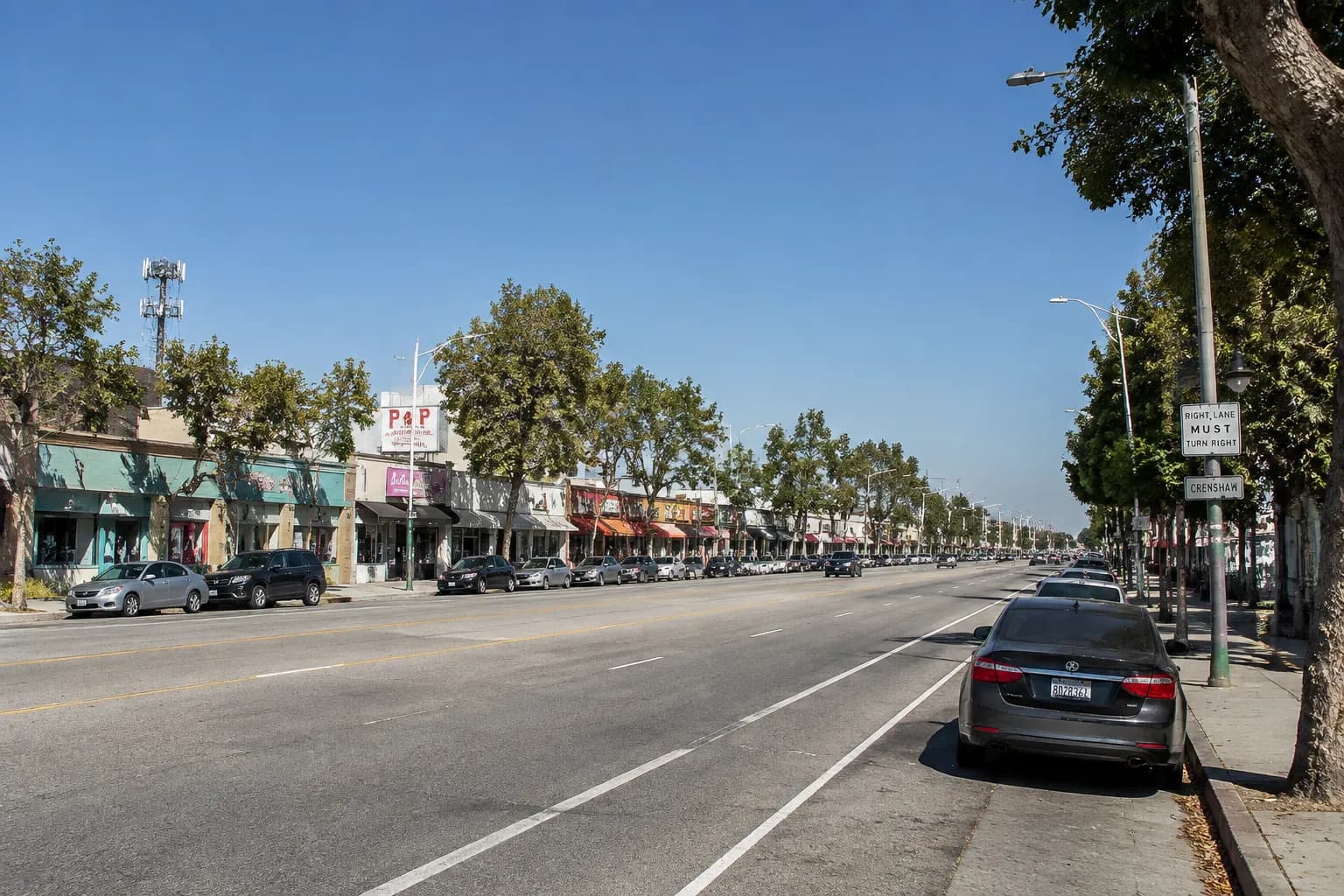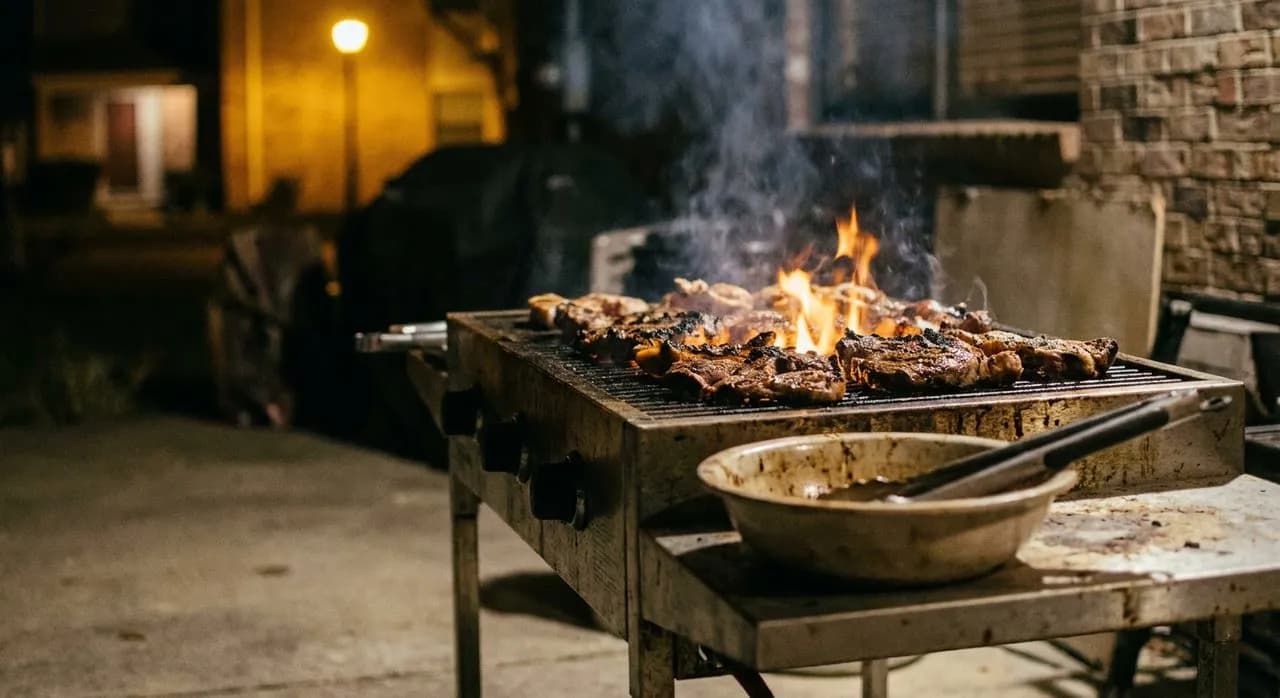
The bars along Sunset Boulevard have just released their crowds into the warm late-May night, and the sidewalk near Alvarado is beginning to acquire its weekend architecture: folding tables draped with vinyl cloths, propane burners hissing blue beneath blackened comals, coolers wedged open to reveal foil-wrapped bundles and plastic tubs of salsa. By twelve-thirty the air smells of charred meat and corn smoke. Three separate operations claim their territories along a two-block stretch, each with its own rhythm, its own regulars, its own quiet expertise. This is Echo Park's least formal dining scene, and for a certain cohort of night-shift workers, insomniacs, and bar-hoppers, it is also the most essential.
The Setup and the Ritual
The stands arrive in pickup trucks and hatchbacks, their equipment compact enough to unpack in under ten minutes. You will see the same folding tables week after week, the same dented aluminum pots, the same hand-lettered signs propped against cooler lids. One vendor uses a repurposed shopping cart to ferry tubs of marinated meat from the vehicle to the grill. Another keeps her tortilla press lashed to the table leg with bungee cords. These are not pop-ups in the polished, permitting sense; they are operations that exist in the space between formal commerce and neighborhood mutual aid, and they have been doing so for years.
The ritual is consistent. You approach, you wait your turn, you watch the cook work. Tortillas are pressed to order, two at a time, and laid onto the comal to blister. Meat comes off the grill in a quick sizzle, chopped with the edge of a spatula, piled onto the tortillas with a practiced flick of the wrist. Cilantro, onion, a squeeze of lime, salsa from the tub. The transaction is cash-only and efficiently tender—four dollars here, five there, exact change appreciated. You eat standing up, or perched on the low wall that runs along the sidewalk, or leaning against your car if you were lucky enough to find street parking.
What They're Grilling
Asada is the anchor offering at all three stands, the beef dark-edged and smoky, cut thin enough to crisp at the margins. Al pastor appears at two of the vendors, the pork layered with dried chiles and pineapple, though the vertical trompo is absent; this is a flat-top interpretation, no less flavorful for its pragmatism. Tripas—beef intestine, for the uninitiated—is the specialty that separates casual eaters from the faithful. Cooked low and slow earlier in the evening, then crisped to order over high heat, tripas demand patience and a certain reverence for texture. If you have never tried it, this is the place to start.
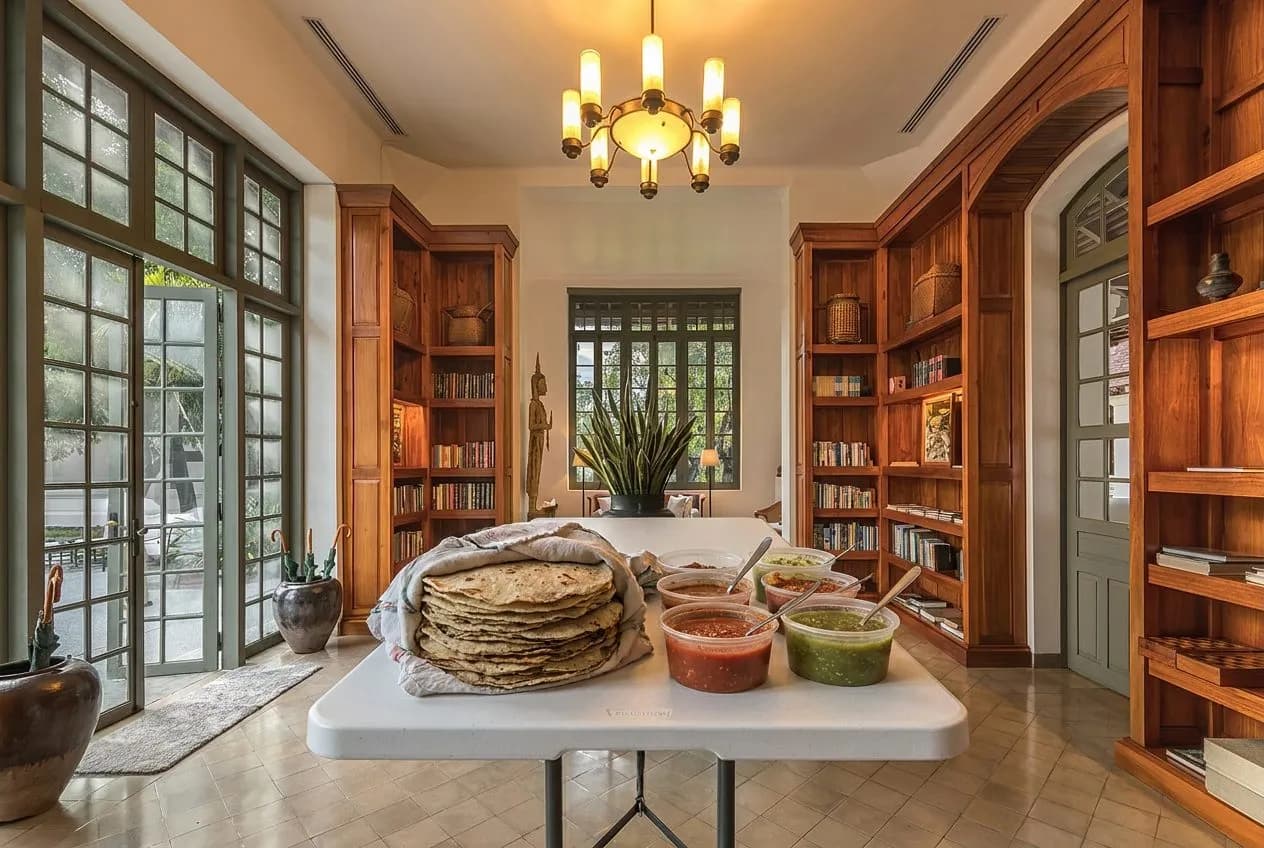
The salsas are house-made, and each stand guards its own variations. Expect a thin, incendiary red that tastes primarily of árbol chiles and vinegar. Expect a chunky green with the vegetal brightness of tomatillo and serrano. One vendor offers a dark, smoky salsa that regulars refer to simply as "the brown one," a recipe involving charred chiles and something faintly sweet—piloncillo, perhaps, or a whisper of chocolate. You will not find these salsas bottled or branded. You will find them spooned from repurposed yogurt containers, and you will think about them later.
The Regulars and the Mariachis
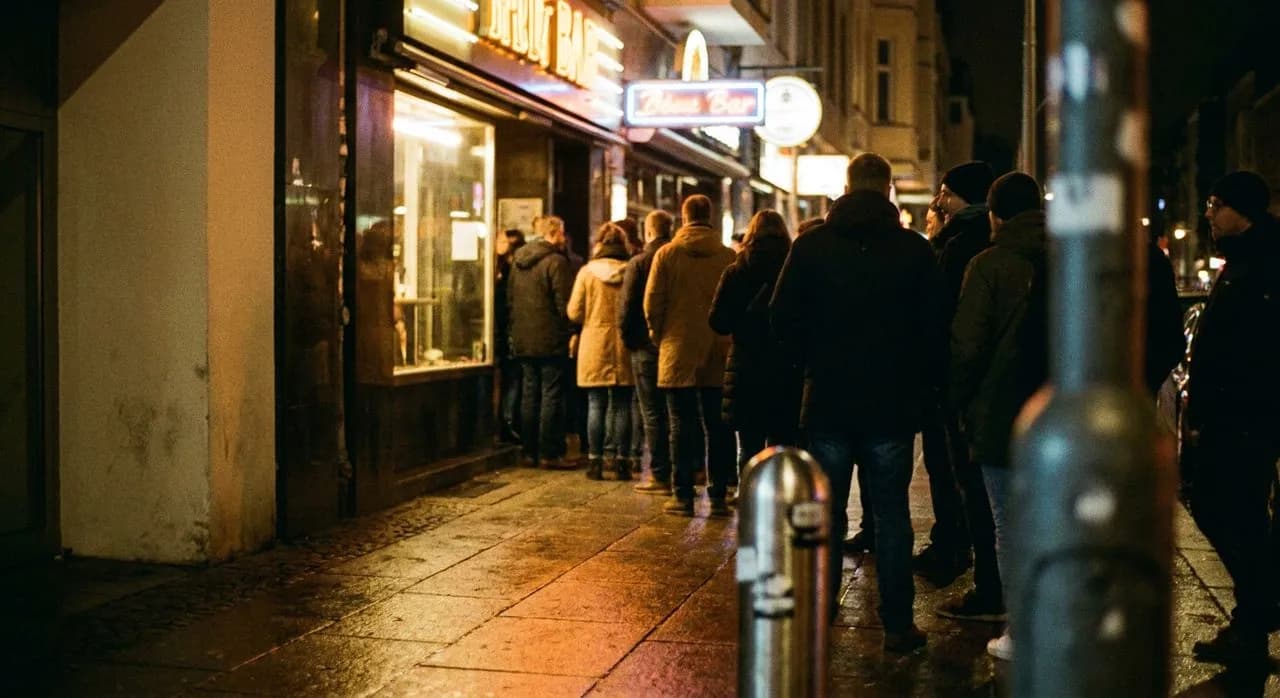
By one in the morning the line has thickened with a cross-section of Los Angelesночной life: restaurant workers still in their kitchen clogs, a couple in cocktail attire clearly extending their date, a cluster of skateboarders comparing wheel bearings between bites. The regulars are easy to spot. They do not consult the menu or ask questions. They greet the cooks by name, request extra cilantro and grilled onions without being prompted, accept their tacos with the brevity of people who have done this many times before.
On some nights a mariachi duo works the line—trumpet and guitarrón, the traditional pairing. They are older men, professionals whose day likely began at a quinceañera or a wedding in the Valley. Now, near the end of their shift, they play requests for tips: "Cielito Lindo," "El Rey," "Bésame Mucho." The music adds a layer of formality to the informality, a reminder that even the most transient gatherings can hold ceremony. When they finish a song, someone in the crowd will clap, and the trumpet player will nod, and they will move on to the next cluster of eaters.
The Neighborhood Context
Echo Park has spent the past decade and a half oscillating between its older working-class identity and the tide of boutique coffee and curated vintage that followed the artists and the artists' rents. By late May 2026 the neighborhood is somewhere in the middle of that negotiation, and these taco stands represent one end of the spectrum: ungentrifiable, unselfconscious, operating on a schedule and a business model that cannot be replicated by anyone with a lease and a health permit. They are a reminder that the city's most vital food culture often happens in the margins, in the hours when the formal economy has clocked out.
The stretch of Sunset near Alvarado has long been a corridor of immigrant enterprise—produce vendors, elote carts, street-parked loncheras serving birria and tortas. The midnight taco stands are part of that continuum, even as the blocks around them fill with bars that serve mezcal cocktails for sixteen dollars and brunch spots with hour-long waits. The stands do not compete with those establishments; they serve a different clock, a different hunger.
Why It Works
The appeal is not novelty. These are not fusion tacos or Instagram stunts. The appeal is competence, consistency, and the particular alchemy that happens when someone who knows how to cook is cooking for people who know how to eat. The tortillas are made from masa, not from a bag, and you can taste the difference. The salsas are balanced, not merely hot. The meat is treated with respect—seasoned, cooked properly, served without fanfare.
There is also the appeal of the ephemeral. The stands exist only in this window, only on these nights, and only until the meat runs out. If you arrive at two forty-five, you may find the grills already cooling, the vendors packing up the last of their equipment. There is no website to check, no reservation to make. You simply show up, and hope, and usually you are rewarded.
What to Expect
Expect a wait, though rarely longer than fifteen minutes even on a busy night. Expect to stand while you eat, and to eat quickly—the tacos are at their best in the first minute, while the tortilla still holds its heat. Expect the occasional waft of exhaust from passing cars, the occasional shout from a nearby apartment window. This is street food in the most literal sense, and it comes with the full texture of the street: sirens, laughter, the buzz of a helicopter overhead, the scrape of skateboards on asphalt.
Expect, too, the satisfaction of eating something very good at an hour when very good food is hard to find. The city at this hour is mostly drive-throughs and 24-hour diners, places designed to fill rather than to nourish. These stands offer something different: care, even in the temporary.
Practical Notes
The stands typically set up somewhere along Sunset Boulevard near the Echo Park/Alvarado corridor, though exact locations can shift slightly week to week. The nearest Metro station is Westlake / MacArthur Park on the B and D lines, but the stretch near Sunset and Alvarado is closer to local bus service and is not a ten-minute walk east. Street parking is competitive but possible on the residential blocks north of Sunset. The stands usually operate late on weekend nights, or until they sell out; arriving earlier improves your odds. Bring cash—tens and fives preferred—and consider bringing napkins of your own. There are no restrooms, no seating, and no shelter if the weather turns. Accessibility is limited; the sidewalk is uneven in places, and the setup is informal. Verify current operation by asking locals or checking neighborhood social feeds, as these vendors do not maintain an online presence.
Tags: #EchoPark #MidnightEats #LAStreetFood #LateNightLA #TacoStands #SunsetBlvd #TheOddEdit #AuthenticLA #WeekendLA #CashOnly #LosAngelesDining #LANightlife #StreetTacos #Spring2026 #KarposFinds
Sources consulted: Echo Park, Los Angeles · Taco · Best Tacos in LA · LA Sidewalk & Street Vendors
All trademarks are the property of their respective owners.