 Los Feliz Nail Salon Walk In Finder for Broken Nail Repair
Neighborhood Guides
Culver City Neighborhood Historical Walking Tour: Film Lots
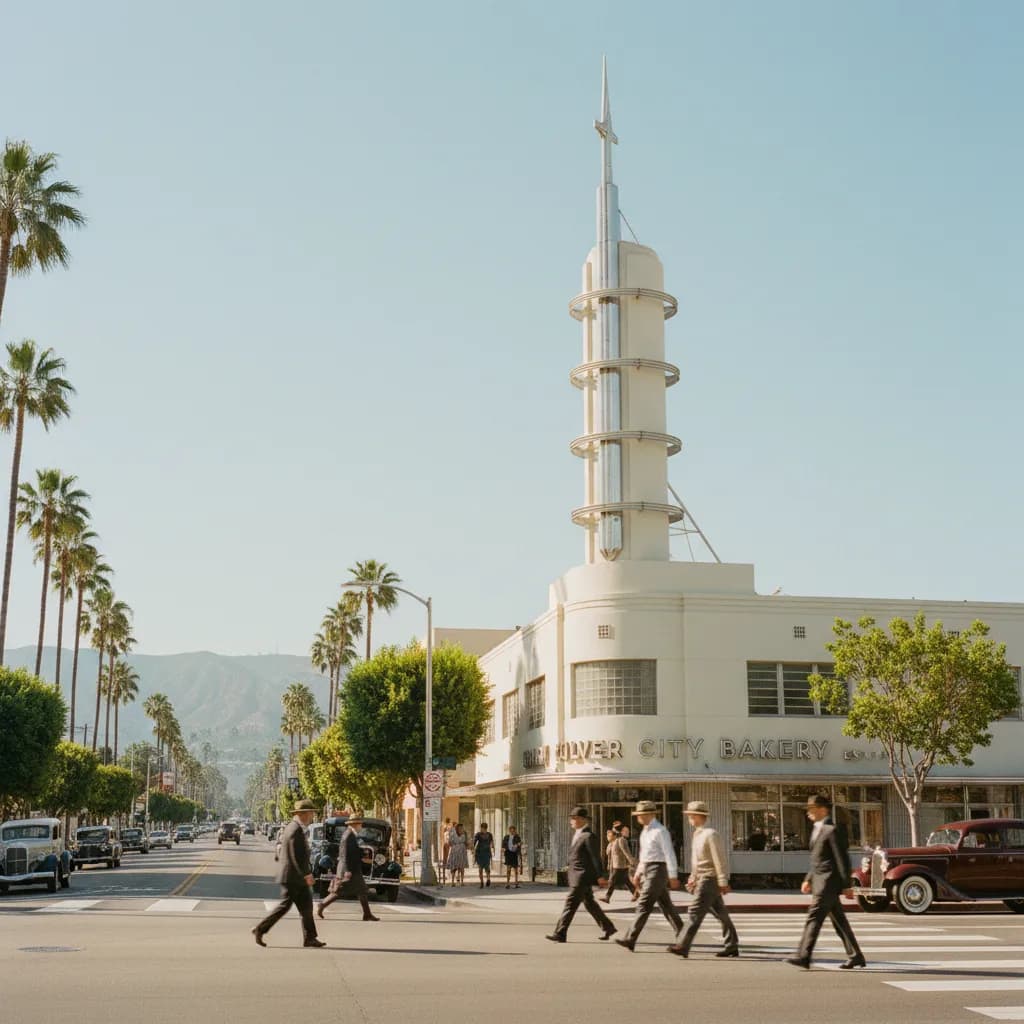
This free Culver City history walk links the Culver Studios mansion, the old MGM lot, the 1924 Culver Hotel and the Helms Bakery building on public sidewalks.
The white colonnaded mansion on Washington Boulevard that opened Gone with the Wind on screen in 1939 is a real building, and you can stand across the street from it. This neighborhood historical walking tour of Culver City starts there and follows the studios, hotel and bakery that shaped the town Harry Culver incorporated in 1917. It is free, flat, about two and a half miles, and begins a short walk from the Culver City E Line station.
Harry Culver's Plan and Thomas Ince's Studios
Harry Culver was a real estate developer who bet that a new town between downtown and the beach could attract film companies. His first big catch was producer Thomas Ince, who built a studio on Washington Boulevard in 1915 and then, a few years later, a second lot a short distance east with a stately colonial-style administration building. That second lot is now known as The Culver Studios, and its mansion front became famous as the Selznick International logo.
From the sidewalk you can see the mansion's portico, lawn and flagpoles exactly as they appear in the film's opening credits. The lot itself is private and actively used for production, so there is no access past the gate. Photographers usually stand on the opposite side of Washington Boulevard in the morning, when the sun lights the facade directly. Avoid blocking the driveways; crew vehicles come and go throughout the day.
Before moving on, look east along Washington Boulevard. The low commercial buildings between the two studio lots once held prop houses, costume shops and cafes that fed crews on long shooting days. A few still serve the industry, but most are now restaurants and offices. Street signs and lamp posts carry the city's old motto, The Heart of Screenland, which first appeared in the 1930s and still shows up on civic banners.
Downtown Culver City and the Flatiron Hotel
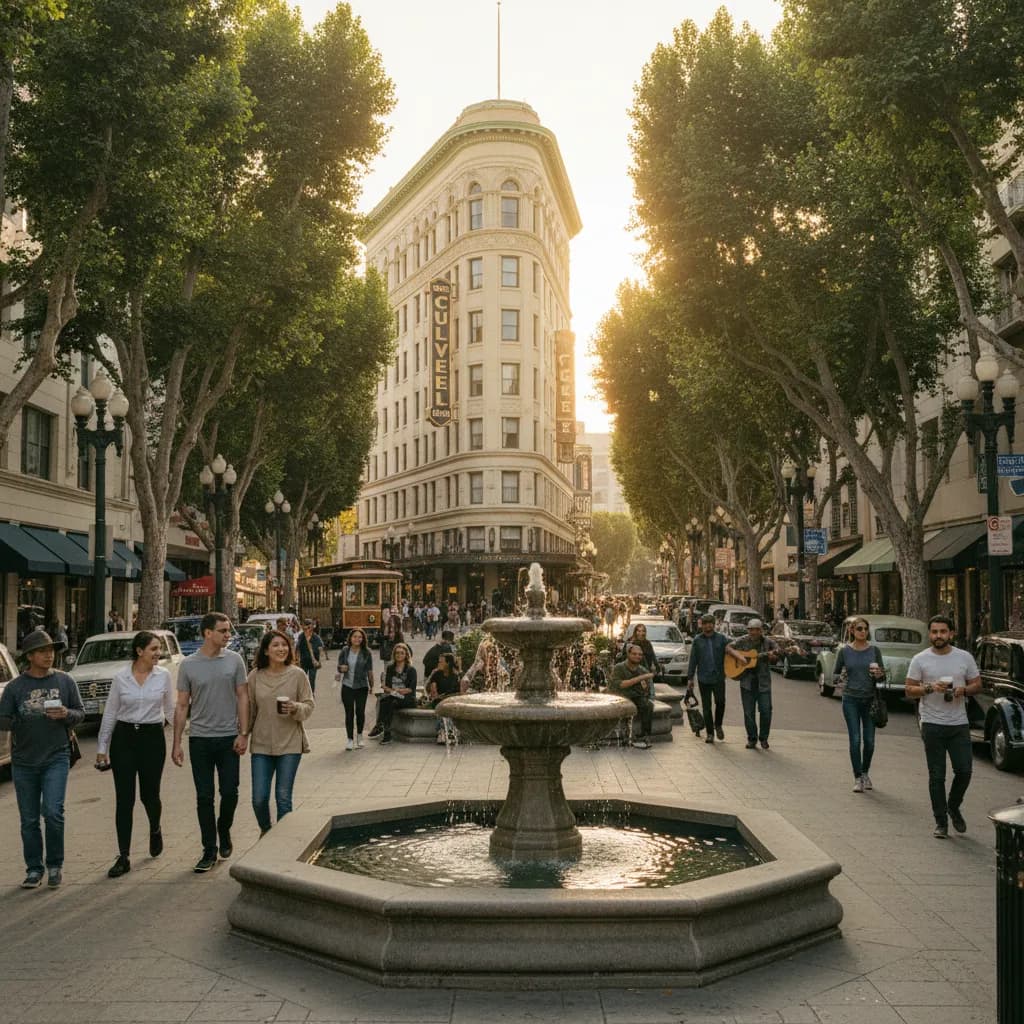
Walk west along Washington Boulevard into the small downtown. At the wedge-shaped corner where Washington meets Culver Boulevard stands the Culver Hotel, a six-story flatiron building Harry Culver opened in 1924. During the filming of The Wizard of Oz, many of the actors who played Munchkins stayed here, a story the hotel still tells proudly. Its lobby bar is open to the public, though the guest floors are not.
Across the street, the plaza around the town fountain is where residents meet for lunch, and on summer evenings it fills with families and office workers from the nearby tech and media companies. Behind it, the Kirk Douglas Theatre occupies the former Culver Theatre, a 1940s movie house with a tall streamline moderne tower that was restored and reopened as a live theater in 2004. Its vertical sign is the best photo in downtown.
The MGM Lot and the Thalberg Building
Continue west on Washington Boulevard to the main gates of what is now Sony Pictures Studios. This was Ince's first lot, which passed to Triangle and Goldwyn and then, in 1924, became Metro-Goldwyn-Mayer, the most powerful studio of Hollywood's golden age. The Wizard of Oz, Singin' in the Rain and hundreds of other films were shot on its sound stages. MGM's old slogan claimed more stars than there are in heaven.
From the street you can see the tall rainbow sculpture on the lot and the Irving Thalberg Building, a 1930s administration block named for MGM's production chief. Sony runs a guided studio tour that requires an advance ticket, and it is the only way inside. Honest advice: if you do not care about current productions, skip the tour and spend the time walking; the history is just as visible from the public sidewalks around the lot.
Helms Bakery and the 1932 Olympics
Walk northeast on Washington to Venice Boulevard and the Helms Bakery building, a long streamline moderne factory that opened in 1931. Paul Helms won the contract to supply bread to athletes at the 1932 Los Angeles Olympics and printed Olympic Bread on his wrappers for decades. Until the bakery closed in 1969, its yellow coaches drove through Southern California neighborhoods, blowing a whistle so families could run out and buy fresh bread.
The building now holds furniture showrooms, restaurants and design shops, and the original rooftop sign still reads Helms. On weekend mornings you will see couples browsing sofas, cyclists stopping for coffee and parents pushing strollers along the arcades. If the courtyard is crowded, cross Venice Boulevard and walk the residential blocks south, where 1920s Spanish bungalows built for studio workers line the quieter streets.
Odd Museums on Venice Boulevard
A few blocks east on Venice Boulevard are two small institutions that suit a history walk. The Museum of Jurassic Technology is a dimly lit, ticketed cabinet of curiosities that blurs fact and invention on purpose, which is part of the fun. Nearby, the Center for Land Use Interpretation runs a modest storefront gallery about how people shape the American landscape. Both keep limited hours, so check their websites before you go.
The museum detour adds about a mile out and back. It is worth doing if you like slow, eccentric places and have an extra hour; if you prefer film history, stay on Washington Boulevard instead. The area between Helms and the museums is mostly auto repair shops and low apartments, which show the working town behind the studio facades, and they are perfectly fine to walk during daylight.
Getting Around and a Short Version
The Culver City station on the E Line sits at Venice and Robertson Boulevards, within easy walking distance of Helms Bakery and the downtown. Public parking structures in downtown Culver City are close to the hotel. Sidewalks are wide and flat throughout, so this route works for strollers and wheelchairs, though crossing Washington and Venice at the larger intersections requires patience with long signals.
For a shorter version, walk only from the Culver Studios mansion to the Culver Hotel and the Kirk Douglas Theatre, which covers the founding story in under an hour. Ask Karpo APP to arrange the stops around a studio tour time or lunch downtown, and it will propose an order that fits your plan. Every stop on this route is a public street or plaza that you can visit any day.
Ask Karpo for more information.
Keep reading
- Los Feliz Nail Salon Walk In Finder for Broken Nail Repair
 Highland Park Nail Salon Walk In Finder for Retro Manicures
 Koreatown Nail Salon Walk In Finder for K-Beauty Nail Looks