 Los Feliz Nail Salon Walk In Finder for Broken Nail Repair
Neighborhood Guides
Arts District Neighborhood Historical Walking Tour: Rail Era
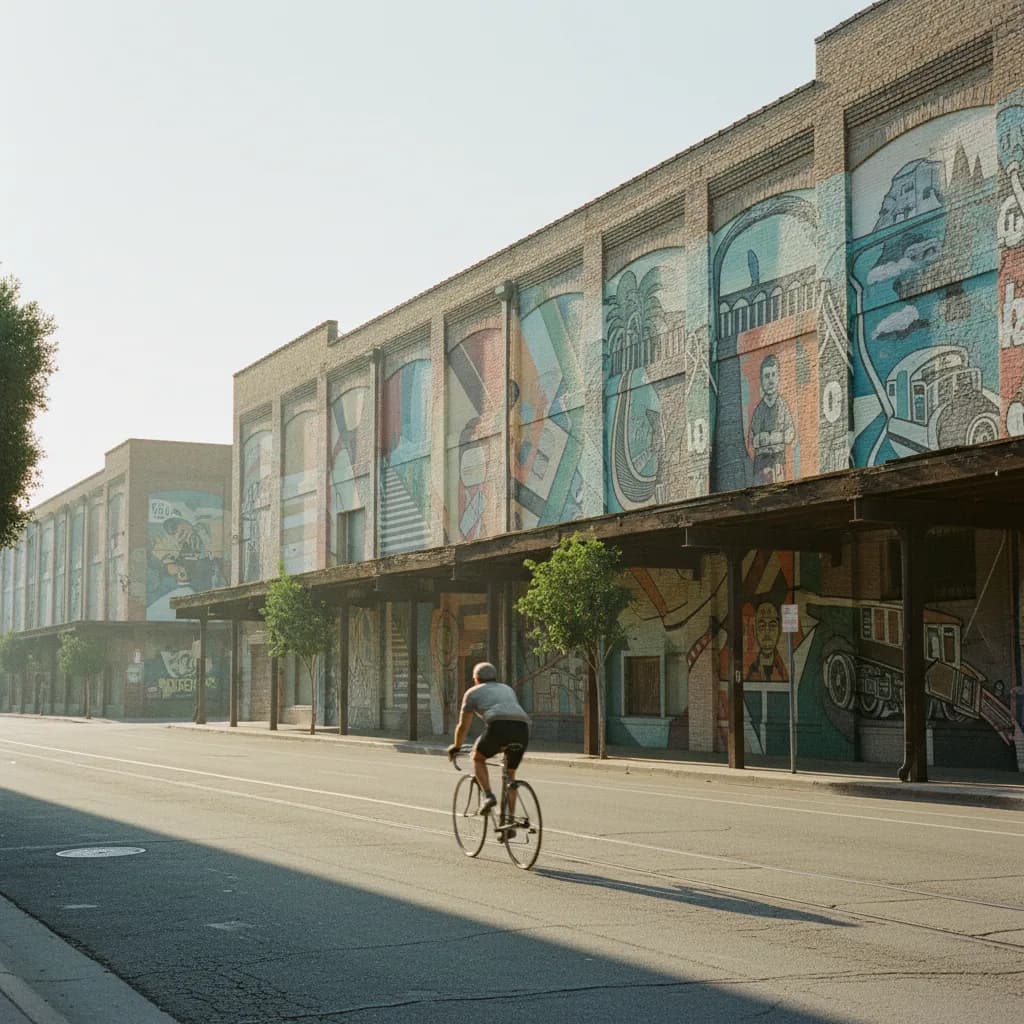
This free Arts District history walk runs from Vignes Street's vineyard roots past rail warehouses, Traction Avenue lofts and the new Sixth Street Viaduct.
Vignes Street is named for Jean-Louis Vignes, a French winemaker who planted a vineyard called El Aliso on this side of Los Angeles in the 1830s. This neighborhood historical walking tour of the Arts District follows that land through three reinventions: vineyard and orange grove, rail and warehouse yard, then artist loft quarter. It starts at the Little Tokyo/Arts District Metro station, covers about three miles on flat streets, and every stop is free.
Vineyards and the First Industry
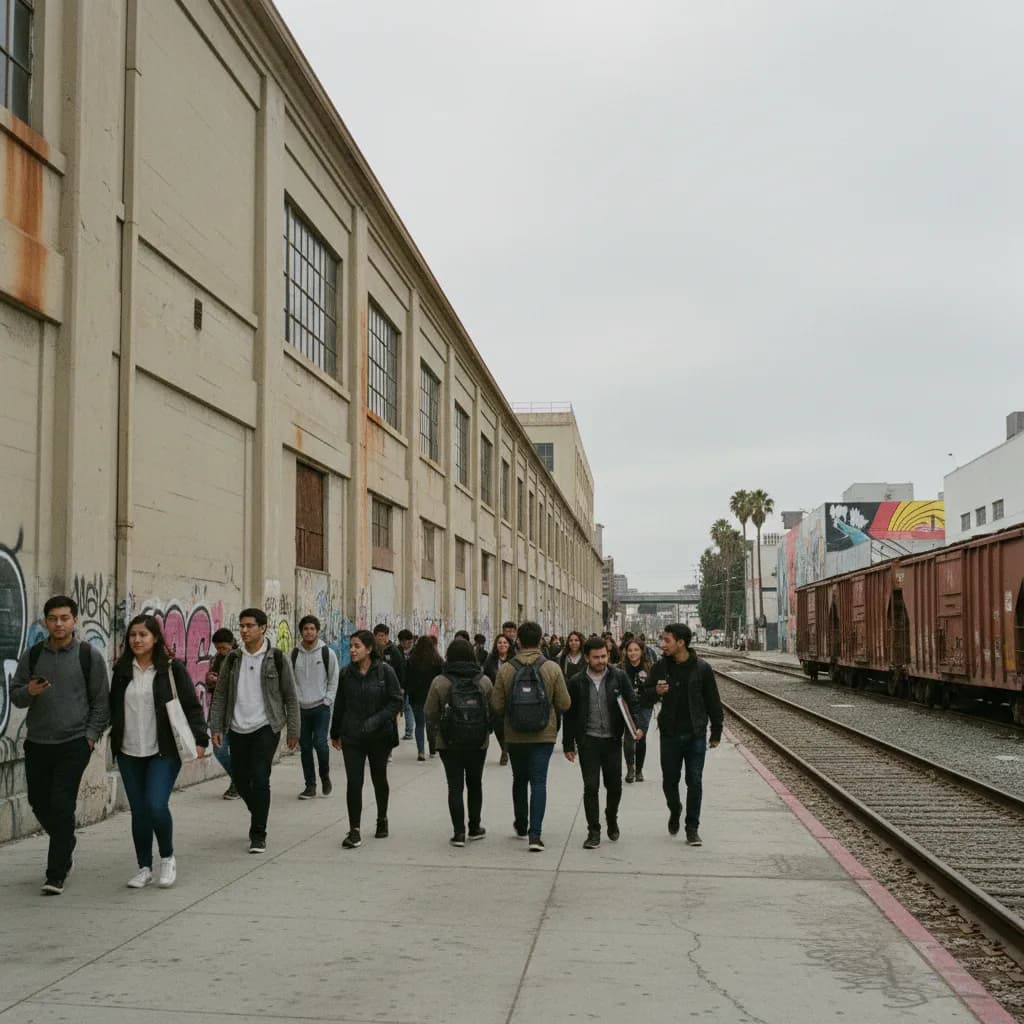
From the station, walk east along Alameda and First Street toward Vignes. Two centuries ago, this flat land between the pueblo and the river was irrigated by a zanja, an open ditch, and given over to grapes. Vignes' wine was shipped up the coast, and by the 1850s Los Angeles was one of the leading wine regions in California. None of the vines survive, but the street names and the gentle grade toward the river are clues.
Disease and the railroad ended the vineyard era. In the late nineteenth century, growers switched to citrus, and when the Santa Fe and Southern Pacific lines reached the river, packing houses and cold storage plants lined the tracks. Look for loading docks set at boxcar height and rail spurs still embedded in the asphalt on side streets; they are the most common relics of that era on this walk.
Rail Sidings and Warehouse Blocks
Walk south on Santa Fe Avenue and Mateo Street to see the scale of the industrial district at its peak. Brick and concrete warehouses fill entire blocks, many with painted company names fading on the parapets. The long narrow building on Santa Fe that now houses SCI-Arc, the architecture school, was a Santa Fe railroad freight depot built in 1907, roughly a quarter mile long. The school moved in in 2001.
Pause at the intersection of Santa Fe Avenue and Fourth Street to compare building ages. The older warehouses use load-bearing brick with arched window openings, while the 1920s and 1930s plants switched to reinforced concrete with wide steel sash windows. Several have been converted to apartments and restaurants, but their freight doors were kept as windows, so you can still read where trucks and boxcars once backed in.
A good habit here is to look up rather than at storefronts. Steel-framed sawtooth roofs, water tanks and old freight elevators survive above the cafes and showrooms at street level. Delivery trucks still use these streets on weekday mornings, so stay on the sidewalk and give loading docks room. The quietest time to walk is a Sunday morning, when the district is almost empty and the light falls cleanly across the brick.
Traction Avenue and the Loft Pioneers
Head north to Traction Avenue, the curving street at the heart of the district. After the Second World War, freight moved to trucks and many warehouses emptied. In the 1970s, artists began living illegally in the cheap, cavernous spaces, and in the early 1980s the city adopted an artist-in-residence rule that let them stay. Their presence gave the area its current name, coined by neighborhood advocates during that decade.
At the corner of Traction and Hewitt, the American Hotel, built in 1905, held Al's Bar on its ground floor from 1979 to 2001, a tiny, sticky room where punk and experimental bands played for small crowds. The hotel still stands. Nearby, Joel Bloom Square honors a local shopkeeper who championed the neighborhood. Expect skateboarders, dog walkers, photographers with tripods and residents carrying groceries home on any given afternoon here.
Galleries in Old Mills
Walk east on Third Street to see how the art economy reused the heaviest industrial buildings. Hauser and Wirth occupies a former flour mill complex, and admission to its courtyard and galleries is free. Smaller galleries and studios occupy converted warehouses along Third and on the side streets; many keep irregular hours, so a closed door is normal and not a sign the space has gone.
Honest advice: skip any attempt to see every mural. Paintings on the district's walls change constantly, often within months, and chasing a specific one you saw online usually ends in disappointment. Treat the walls as a rotating gallery, and spend more time reading the architecture underneath, which has not changed in a century and tells the neighborhood's real story far better than a photograph posted last year.
The River and the Sixth Street Viaduct
Finish on the southern edge at the Sixth Street Viaduct. The original 1932 bridge, a favorite filming location for car chases, was demolished in 2016 after its concrete deteriorated, and the new viaduct, with ten pairs of lit arches, opened in July 2022. Walk onto the pedestrian path for a view of the concrete Los Angeles River channel, built by the Army Corps of Engineers after the floods of 1938.
Below the bridge, a park and public space has been taking shape on both banks. From the deck you can see the downtown skyline to the west and the rail yards and Boyle Heights to the east, which puts the whole history of the walk, from vineyard to freight yard to loft, into one wide view. Bridge closures happen during events, so check signs at the entrances before you plan your finish there.
Getting Around, Safety and a Short Version
The Little Tokyo/Arts District station serves the A and E lines, and DASH buses cross the district on weekdays. Parking is paid and limited near the busiest blocks. Sidewalks are flat but sometimes uneven or blocked by construction, so wear sturdy shoes, keep valuables out of sight in parked cars, and carry water on hot days, since shade is scarce between buildings.
For a shorter version, walk from the station to Traction Avenue and the American Hotel and then back along Third Street, which covers the loft story in about an hour. Ask Karpo APP to reorder the stops around a gallery visit or a quiet Sunday morning, and it will suggest a sequence that fits your time. Every stop on this route is a public street, sidewalk view or free courtyard.
Ask Karpo for more information.
Keep reading
- Los Feliz Nail Salon Walk In Finder for Broken Nail Repair
 Highland Park Nail Salon Walk In Finder for Retro Manicures
 Koreatown Nail Salon Walk In Finder for K-Beauty Nail Looks