 Lincoln Heights Champurrado Winter Cafe Picker: Two Routes
Coffee & Dessert
Koreatown Neighborhood Bakery Breakfast Route: Buns to Go
A Koreatown neighborhood bakery breakfast route on Wilshire: Korean milk bread and garlic buns, walnut cakes to go and Art Deco towers between each stop.
Koreatown runs one of the most satisfying neighborhood bakery breakfast routes in Los Angeles, and few people outside the neighborhood know it. Along Wilshire Boulevard and the streets around Western Avenue, Korean bakery cafes stock soft milk bread, cream cheese garlic buns and red bean pastries on self-serve shelves. Pair one bakery cafe with a walnut cake stand and a walk past the Art Deco towers on Wilshire, and breakfast becomes a tour.
How a Korean Bakery Cafe Works
The big Korean bakery cafes feel different from a French counter. Shelves run along the walls with dozens of individually wrapped or open breads, and you serve yourself with a tray and tongs before taking everything to the register, where the barista also takes your coffee order. The breads lean soft, fluffy and gently sweet, and many of them blur the line between breakfast and dessert in a way that regulars love.
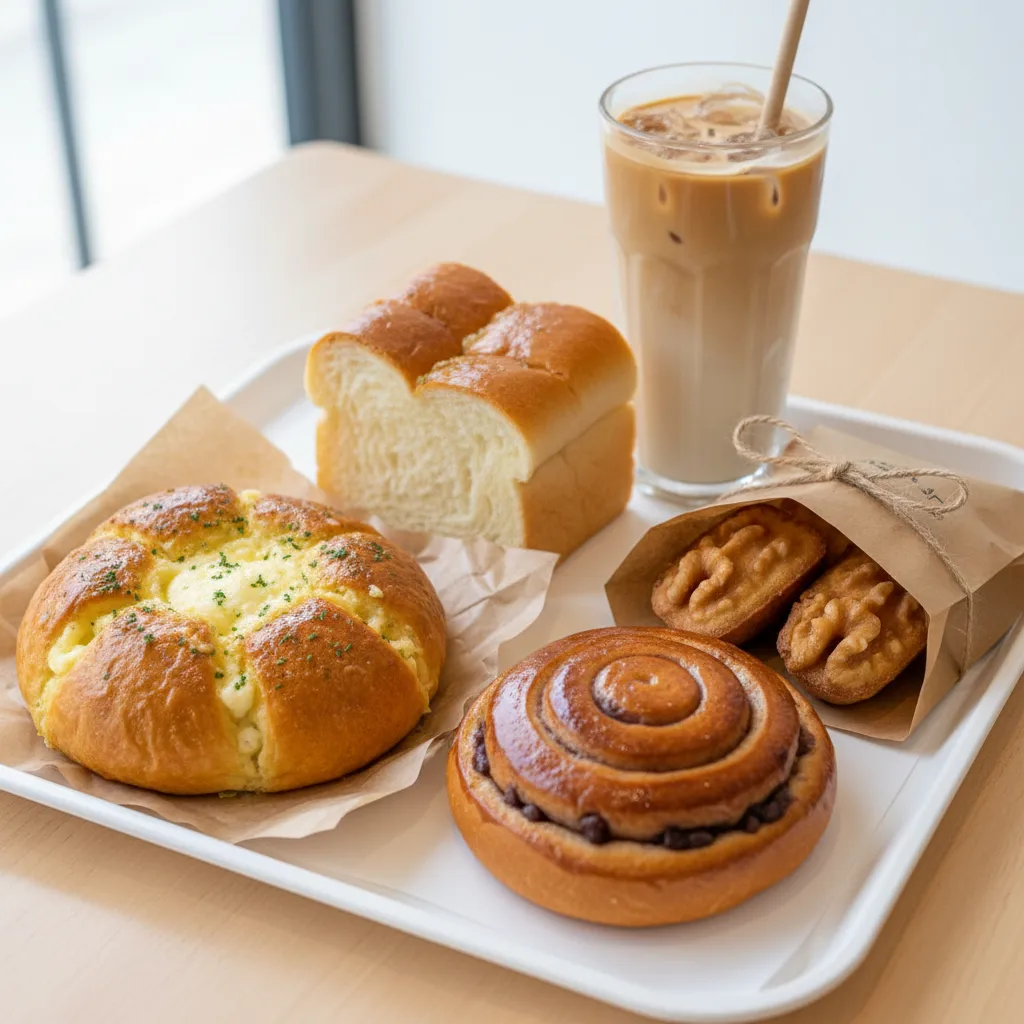
Start with the cream cheese garlic bun, a craze that came over from Korea: a round loaf cut into wedges, stuffed with sweetened cream cheese and soaked in garlic herb butter. Add a slice of milk bread or a soboro, the crumbly peanut-streusel bun, and maybe a red bean or sweet potato bun. Ask for an iced latte or a grain latte, a nutty misugaru drink many cafes here offer.
Who You Will Meet at the Tables
Koreatown bakery cafes double as living rooms. In the morning, the tables fill with older Korean men reading newspapers, students with laptops, church groups meeting after an early service and office workers grabbing something before the commute. The cafes are spacious and bright, with long tables and charging outlets, and nobody minds if you settle in with coffee for a while, which makes them an easy place to start a slow morning.
The unwritten rule is to clear your own tray when you leave, and to keep your voice low in the quieter cafes where people are working. Many of the bigger places are part of chains from Seoul, while smaller independent bakeries tucked into strip malls offer a more personal feel. Try one of each over different mornings, since the bread selection and atmosphere change noticeably between them.
Bakery cafes here also fill a role that coffee shops play in other neighborhoods. Friends meet over a shared tray of breads, parents bring kids for a treat after weekend Korean school, and grandparents buy boxes of buns to carry to family visits. Watching the steady flow of shoppers filling trays tells you which breads are the favorites that week. Follow the crowd to the shelf that keeps emptying, because that is almost always the freshest batch of the morning.
Walking Wilshire's Art Deco Mile
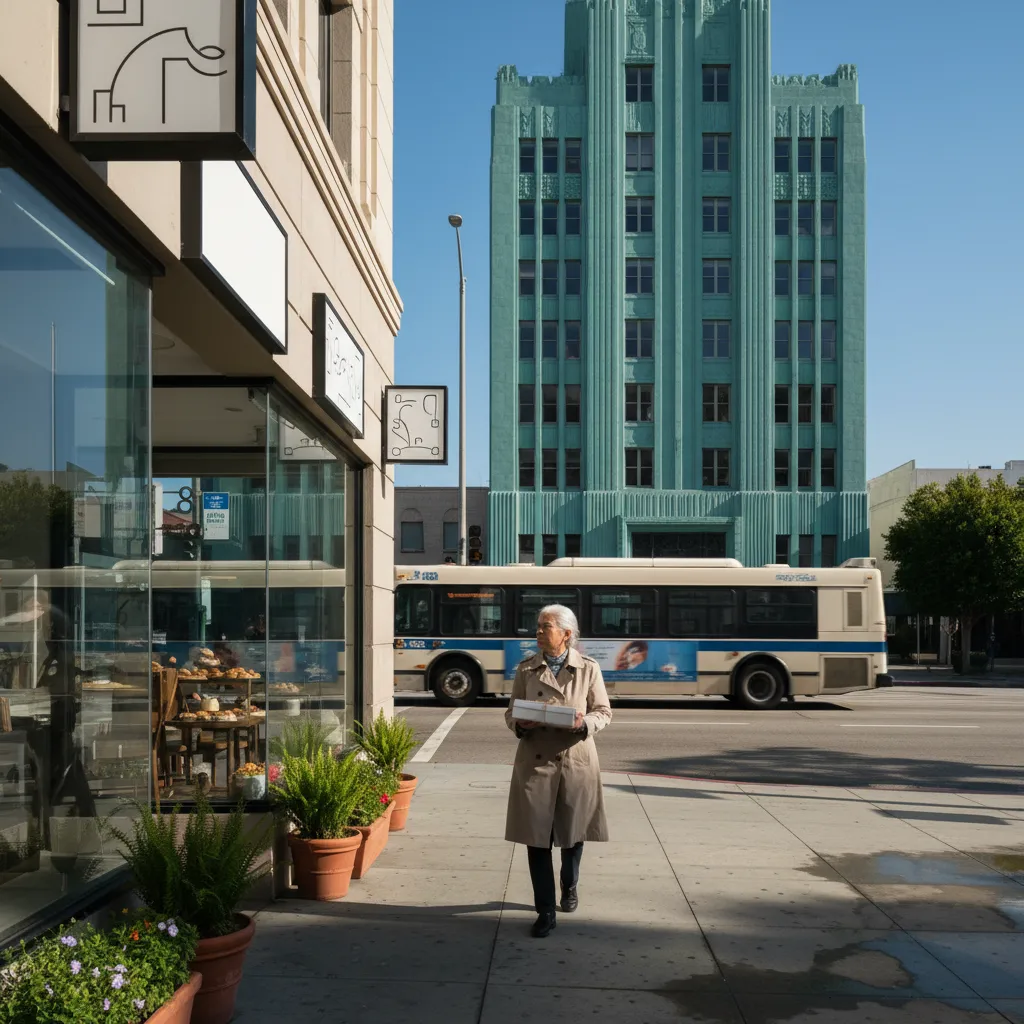
Wilshire Boulevard through Koreatown is lined with some of the grandest Art Deco and early twentieth century buildings in Los Angeles. The turquoise terracotta tower of the Wiltern theater, at the corner of Wilshire and Western, is the showpiece. Further east, the old Bullocks Wilshire department store, now part of a law school, rises with its copper-topped tower, and handsome churches and former hotels fill the blocks between.
Walking this stretch with a bakery bag is one of the best ways to see it. Mornings are calm before the traffic builds, and the low sun lights up the terracotta and stone. Carry a bun to eat as you go, then stop at a bench near one of the old churches. The contrast between the lavish towers and the strip malls behind them is the real story of Koreatown.
Stop Two: Walnut Cakes and Street Sweets
The second stop is for something you can hold. Hodu-gwaja, small walnut-shaped cakes filled with red bean paste and a piece of walnut, are baked in iron molds and sold warm by the bag at stands and small shops around the neighborhood. They are a classic travel snack in Korea and the perfect walking treat on Wilshire. Ask for a mix of red bean and custard if both are offered.
Depending on the season, you may also find hotteok, the pan-fried pancake stuffed with brown sugar and cinnamon, or fish-shaped bungeoppang filled with sweet bean. These are best eaten immediately, standing on the sidewalk, while the filling is still molten. If you want to save something for later, the walnut cakes keep best and make an easy gift for friends or coworkers.
Picking Your Morning and Route
Koreatown is famous for its nightlife, with karaoke rooms and barbecue joints packed with groups after dark, so mornings feel peaceful by comparison. Weekday mornings are the quietest time to get a table at a bakery cafe, while Sunday mornings bring families and church crowds. Saturdays sit in between. The neighborhood is dense and flat, so the whole route can be walked comfortably in an hour or two.
A good loop starts at the Wilshire and Western station on the Metro D Line, heads to a bakery cafe nearby, then walks east along Wilshire past the old towers before doubling back for walnut cakes. If you prefer a quieter version, wander the residential streets north of Wilshire, where older apartment buildings with courtyards and palm trees give a sense of the neighborhood's earlier life.
An Honest Word on What to Skip
Not every bakery cafe item is a winner. The elaborate decorated cakes in the display case look beautiful, but they are made for birthdays and celebrations rather than breakfast, and a slice can be heavy first thing in the morning. Save them for an afternoon visit. The same goes for the giant bingsu shaved ice bowls, which shine on a hot afternoon but make a cold start to the day.
Focus instead on the breads that Korean bakeries do best: the soft milk loaves, the stuffed buns and the savory options like sausage rolls or corn-and-mayo breads. These are the items regulars buy every week. If something looks unfamiliar, ask the staff, who are used to curious first-timers and will happily explain what is inside each bun before you add it to your tray.
Practical Notes and Karpo APP
The Metro D Line makes Koreatown one of the easiest neighborhoods in Los Angeles to reach without a car, with stations along Wilshire. Parking is difficult and often paid, so take the train if you can. Bring a tote bag for a loaf of milk bread to take home, since it makes excellent toast for the next few days and stays soft longer than most breads.
Use Karpo APP to plan the walk before you head out. Ask for Korean bakery cafes near the Wilshire and Western station, filter for places with roomy seating if you want to linger, and save a walnut cake stand along the way. Karpo can also point you toward a nearby park or a quiet courtyard café when you want a break from the boulevard.
Ask Karpo for more information.
Keep reading
- Lincoln Heights Champurrado Winter Cafe Picker: Two Routes
 Pico-Union Champurrado Winter Cafe Picker: Two Easy Ways
 Highland Park Champurrado Winter Cafe Picker: Two Avenues