 Los Feliz Nail Salon Walk In Finder for Broken Nail Repair
Neighborhood Guides
LA Neighborhood Audio Walk: Free Pasadena Craftsman Loop
Follow this self-guided Pasadena neighborhood audio walk to explore historic Craftsman timber homes, the Colorado Street Bridge, and Old Pasadena alleys.
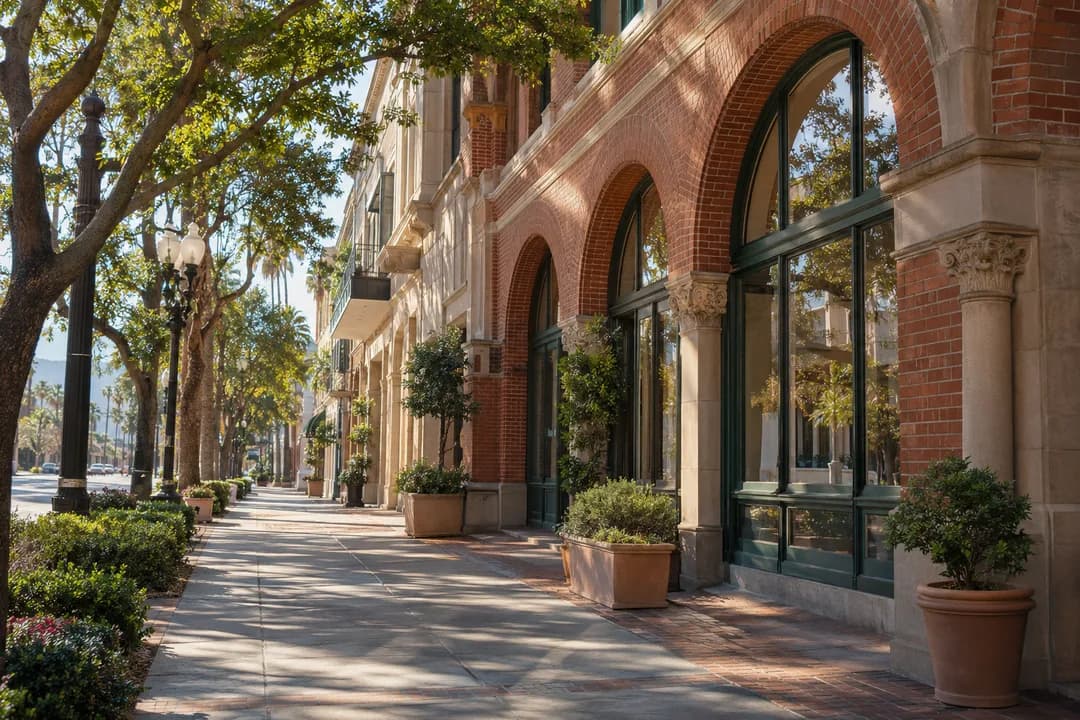
Taking a Pasadena neighborhood audio walk through the Arroyo Seco neighborhood and Old Pasadena reveals the cradle of the American Arts and Crafts movement in Southern California. Beneath canopies of mature camphor trees and native live oaks, hand-crafted timber bungalows, clinker-brick chimneys, and river-rock masonry celebrate honest craftsmanship and organic materials. By slipping on your earbuds and following this quiet pedestrian loop, you experience how turn-of-the-century architects turned away from Victorian industrial mass-production in favor of exposed joinery, broad overhanging eaves, and seamless indoor-outdoor living. This self-guided route guides you along peaceful residential lanes, across monumental concrete arches, and into preserved nineteenth-century brick mercantile passageways.

The Arroyo Seco Craftsman Architectural Heritage
The architectural journey begins at The Gamble House at 4 Westmoreland Pl, commissioned in 1908 by David and Mary Gamble of the Procter & Gamble Company and masterfully realized by brothers Charles and Henry Greene. Widely regarded as the supreme expression of American Craftsman architecture, this three-story timber residence features hand-rubbed Burma teak and redwood interiors, sweeping gabled roofs, and projecting rafter tails. At the front entrance, an extraordinary leaded art-glass door panel depicts a stylized California live oak tree, glowing with amber and olive hues that celebrate local nature.
Strolling southward onto Arroyo Terrace exposes an entire enclave of Greene & Greene residences, including the Mary E. Cole House built in 1906 and Charles Greene's personal studio from 1901. Notice how these homes incorporate massive rounded boulders gathered directly from the Arroyo Seco riverbed into foundations and retaining walls. Your audio guide highlights the subtle Japanese wooden joinery techniques and pegged joints that allow these timber structures to settle gracefully into their natural hillside topography.
Historic Bridges and Grand Avenue Vistas
Continuing along West Colorado Boulevard leads directly onto the monumental Colorado Street Bridge at 504 W Colorado Blvd, completed in 1913 by the engineering firm Waddell & Harrington. Spanning fifteen hundred feet across the Arroyo Seco canyon, this Beaux-Arts concrete structure features eleven graceful parabolic arches, classical cast-concrete balustrades, and historic globe streetlamps. Pausing at one of the bridge's projecting viewing bays provides sweeping panoramic views of the San Gabriel Mountains and the verdant canyon trails below.
On the bridge's eastern bluff stands the majestic Vista del Arroyo Hotel at 125 S Grand Ave, opened in 1920 and now housing the United States Court of Appeals for the Ninth Circuit. Its six-story Spanish Colonial Revival bell tower, red-tiled rooflines, and arched garden pergolas recall Pasadena's era as a sun-drenched winter resort for wealthy travelers escaping East Coast winters. Listening to the audio narrative here explains how luxury hospitality fueled Pasadena's cultural growth in the 1920s.
Castle Green and Victorian Winter Resorts
Heading east along Green Street brings you toward Central Park and the extraordinary Castle Green at 99 S Raymond Ave, constructed in 1898 by architect Frederick Roehrig. Built as the luxurious annex to the Hotel Green, this eclectic Moorish and Mediterranean Revival confection boasts circular corner turrets, decorative cast-iron verandas, and a preserved covered pedestrian bridge that once carried guests over Raymond Avenue. The private palm gardens surrounding the building offer a shaded vantage point to observe its intricate masonry bands and bracketed balconies.
Directly across the street lies Central Park at 275 S Raymond Ave, established in 1902 as Pasadena's original public town square. Lined with century-old magnolias, fan palms, and shaded stone benches, the park serves as an ideal acoustic oasis to pause your playback, review route milestones, and watch local lawn bowlers practice on adjacent historical greens before crossing into the shopping district.
Old Pasadena Brick Alleys and Courtyards
Entering Old Pasadena along Colorado Boulevard and Fair Oaks Avenue introduces a dramatically different architectural atmosphere, listed on the National Register of Historic Places in 1983. Following a successful citizen-led preservation campaign in the late 1970s, twenty-two city blocks of late nineteenth-century Victorian commercial storefronts, brick facades, and decorative cast-iron pilasters were saved from urban renewal demolition. The district's human-scale storefronts and wide sidewalks make it exceptionally pleasant for self-guided pedestrian exploration.
Ducking into the pedestrian alleyways reveals hidden architectural gems like One Colorado at 41 Hugus Alley. Here, restored historic red-brick warehouses frame an intimate open-air courtyard paved with Belgian stones, complete with vintage streetlamps and quiet coffee terraces. Exploring these pedestrian-only service lanes demonstrates how thoughtful historic preservation can revitalize urban commerce while honoring original industrial textures.
Seasonal Light and Scenic Walking Pacing
Because Pasadena enjoys over three hundred days of sunshine annually, walking early or late in the day maximizes comfort and visual appeal. The recommended morning window is between 9:00 am and 11:30 am, when soft eastern light illuminates the carved wood fascias of Arroyo Terrace and the temperature remains mild. Alternatively, late afternoon between 4:00 pm and 6:00 pm yields warm golden light across the Colorado Street Bridge arches and the San Gabriel foothills.
When walking through the residential streets of Arroyo Terrace and Westmoreland Place, visitors should respect private property boundaries by remaining strictly on public sidewalks. The beauty of Craftsman homes lies in their public garden integration, allowing you to admire handcrafted porch lanterns, rafter overhangs, and stone retaining walls from comfortable sidewalk perspectives without trespassing.
Transit Directions and Route Planning Tips
Pasadena is easily accessible from across Los Angeles County via public transportation. The Metro A Line stops at Memorial Park Station at 125 E Holly St, positioned just two blocks north of Colorado Boulevard, and Del Mar Station at 230 S Raymond Ave, located directly adjacent to Castle Green. If you prefer to drive, convenient public parking structures are available at Schoolhouse Garage on Green Street and Delacey Garage on South De Lacey Avenue.
The walking circuit encompasses approximately two miles of generally flat sidewalks, with a gentle incline when ascending from the Arroyo Seco rim to Grand Avenue. Sturdy walking shoes and water are recommended, particularly during warm summer afternoons. The Karpo APP provides complete walking route sequences, architectural history insights, and neighborhood walking tips to enrich your visit to historic Pasadena.
Ask Karpo for more information.
Keep reading
- Los Feliz Nail Salon Walk In Finder for Broken Nail Repair
 Highland Park Nail Salon Walk In Finder for Retro Manicures
 Koreatown Nail Salon Walk In Finder for K-Beauty Nail Looks