 Los Feliz Nail Salon Walk In Finder for Broken Nail Repair
Neighborhood Guides
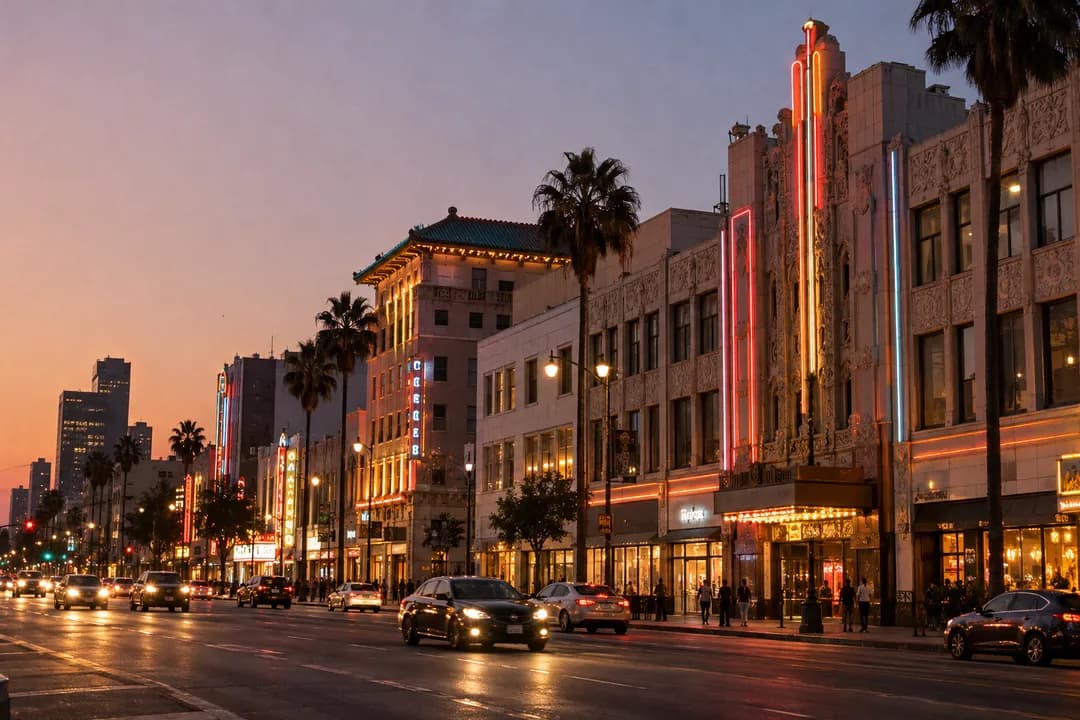
LA Neighborhood Audio Walk: Free Koreatown Art Deco Loop
Take this self-guided Koreatown neighborhood audio walk to discover historic 1920s Art Deco towers, Chapman Plaza Spanish arches, and Wilshire Center murals.
Embarking on a Koreatown neighborhood audio walk through Los Angeles's historic Wilshire Center corridor exposes one of the most culturally dynamic and architecturally rich districts in Southern California. Along Wilshire Boulevard and 6th Street, towering Art Deco corporate spires and Spanish Baroque commercial courtyards stand shoulder to shoulder with vibrant modern bilingual storefronts and celebrated culinary hubs. By tuning into your audio guide and navigating these bustling avenues on foot, you uncover the layered evolution of a neighborhood that transitioned from an elite suburban shopping paradise in the 1920s to the pulsating commercial heart of the global Korean diaspora. This self-guided walk guides you through stunning architectural monuments, quiet residential avenues, and vibrant community plazas where mid-century commercial history meets contemporary metropolitan life.

Wilshire Boulevard as the Fifth Avenue of the West
The architectural narrative centers along Wilshire Boulevard, famously developed during the 1920s by visionary builder A.W. Ross as the 'Fifth Avenue of the West.' Anticipating the rapid rise of personal automobile culture, Ross designed wide multilane boulevards, deep setback lines, and magnificent rear parking structures that revolutionized twentieth-century urban commercial planning. At the intersection of Wilshire Boulevard and Western Avenue stands the district's crowning jewel: the Pellissier Building and Wiltern Theatre at 3790 Wilshire Blvd, completed in 1931 by the renowned architectural firm Morgan, Walls & Clements.
Rising twelve stories above the bustling boulevard, the Wiltern's steel-framed tower is completely wrapped in radiant turquoise-green glazed terra-cotta tile, featuring sharp vertical ribbing, geometric setbacks, and a dramatic Zigzag Moderne sunburst crown. At street level, the grand theater marquee beckons pedestrians toward a breathtaking interior auditorium designed by G. Albert Lansburgh, where stylized art-deco relief murals, geometric proscenium moldings, and silver-leaf detailing celebrate early twentieth-century optimism and technological progress.
Chapman Plaza and Spanish Colonial Commerce
Heading north to 6th Street leads you to Chapman Plaza at 3465 W 6th St, erected in 1929 by architects Morgan, Walls & Clements. Originally conceived as the Chapman Park Market, it holds historical distinction as one of the very first drive-in neighborhood shopping centers in America. Clad in richly detailed Spanish Churrigueresque cast stone, the complex showcases ornate arched arcades, decorative heraldic crests, carved stone griffins, and a dramatic red-tiled central tower that evokes the historic romance of old Seville.
Today, Chapman Plaza has been brilliantly revitalized as a bustling open-air dining center filled with celebrated Korean barbecue restaurants, dessert cafes, and late-night gathering spots. Listening to the audio commentary while standing in the interior brick courtyard reveals how this 1920s automobile market evolved organically into a pedestrian-centered culinary landmark where heritage architecture anchors daily neighborhood social life, illuminated by glowing lantern fixtures and lively courtyard chatter.
Historic Houses of Worship and Residential Landmarks
A short walk eastward along Wilshire brings you to the monumental Wilshire Boulevard Temple at 3663 Wilshire Blvd, dedicated in 1929 by architect Abram M. Edelman for Los Angeles's oldest Jewish congregation. Dominated by a massive Byzantine revival dome soaring one hundred feet into the sky, the sanctuary's exterior is framed by stately black marble columns and carved stone capitals. Inside, celebrated Hollywood studio artist Hugo Ballin painted a continuous three-hundred-foot narrative mural depicting the biblical history of the Jewish people without depicting the human face in strict adherence to traditional customs.
Directly across the boulevard at 3355 Wilshire Blvd stands The Gaylord Apartments, constructed in 1924 by prominent architects Schultze & Weaver. This dignified fourteen-story Italian Renaissance revival apartment hotel was named after Henry Gaylord Wilshire and quickly became home to film stars and writers during the golden age of cinema. Its handsome brick and stone masonry, arched ground-floor loggia, and rooftop neon sign recall the glamorous residential prestige that defined Wilshire Center throughout the Roaring Twenties.
Exploring Sixth Street and Mid-Century Facades
Turning along 6th Street provides a fascinating contrast between 1920s grandeur and postwar architectural innovation. Mid-century modern financial buildings and corporate bank offices constructed in the 1950s and 1960s feature geometric brise-soleil sunshades, textured terrazzo aggregate panels, and broad plate-glass windows designed for an expanding corporate skyline. The street level thrums with bilingual signage, herbal medicine dispensaries, and traditional bakeries that reflect the district's vibrant modern identity.
Walking south toward 7th Street and Catalina brings you past the historic site of the Ambassador Hotel at 701 S Catalina St, now transformed into the Robert F. Kennedy Community Schools campus. While the original hotel and legendary Cocoanut Grove nightclub were demolished in the early 2000s, preserved palm groves and commemorative public art installations preserve the memory of the legendary 1920s resort that hosted early Academy Award ceremonies and shaped modern Los Angeles political history.
Timing Your Walk for Street Life and Lighting
To appreciate the detailed facade work and terra-cotta tile ornamentation, embark on your audio walk during the late morning between 10:00 am and 12:30 pm. During these hours, morning sunlight illuminates the turquoise tiles of the Wiltern and the carved relief of Chapman Plaza, while sidewalk foot traffic along Wilshire remains comfortably calm for audio listening without heavy mid-day congestion.
Alternatively, walking between 5:30 pm and 7:30 pm introduces the kinetic evening pulse of Koreatown. Glowing neon signage, lively aromas from neighborhood kitchen vents, and active pedestrian crowds along 6th Street create an immersive urban atmosphere. Remember to pause on wide sidewalk corners away from building entrances to listen to historical audio chapters without obstructing busy pedestrian paths and transit commuters.
Metro Transit Access and Practical Suggestions
Koreatown is one of the most transit-connected urban districts in Los Angeles. The Metro D Line (Purple) subway terminates directly at the Wilshire/Western Station at 3775 Wilshire Blvd, offering an immediate connection to the start of this walk outside the Wiltern Theatre. Additionally, the Wilshire/Normandie Station at 3510 Wilshire Blvd provides a convenient midpoint access portal. Frequent bus lines also operate continuously along Wilshire Boulevard and Western Avenue, making car-free exploration effortless.
The walking route covers approximately one and a half miles of broad, level city sidewalks with accessible curb cuts at all major intersections. Comfortable walking footwear and sun protection are recommended during bright daylight hours, as open boulevard stretches receive intense Southern California sun. The Karpo APP offers self-guided route navigation, architectural milestone summaries, and neighborhood discovery tips to guide your exploration of historic Koreatown.
Ask Karpo for more information.
Keep reading
- Los Feliz Nail Salon Walk In Finder for Broken Nail Repair
 Highland Park Nail Salon Walk In Finder for Retro Manicures
 Koreatown Nail Salon Walk In Finder for K-Beauty Nail Looks