 Los Feliz Nail Salon Walk In Finder for Broken Nail Repair
Neighborhood Guides
LA Neighborhood Audio Walk: Free Hollywood Deco Route
Explore historic Art Deco theaters, palm-lined sidewalks, and terrazzo street details on this self-guided Hollywood neighborhood audio walk in Los Angeles.
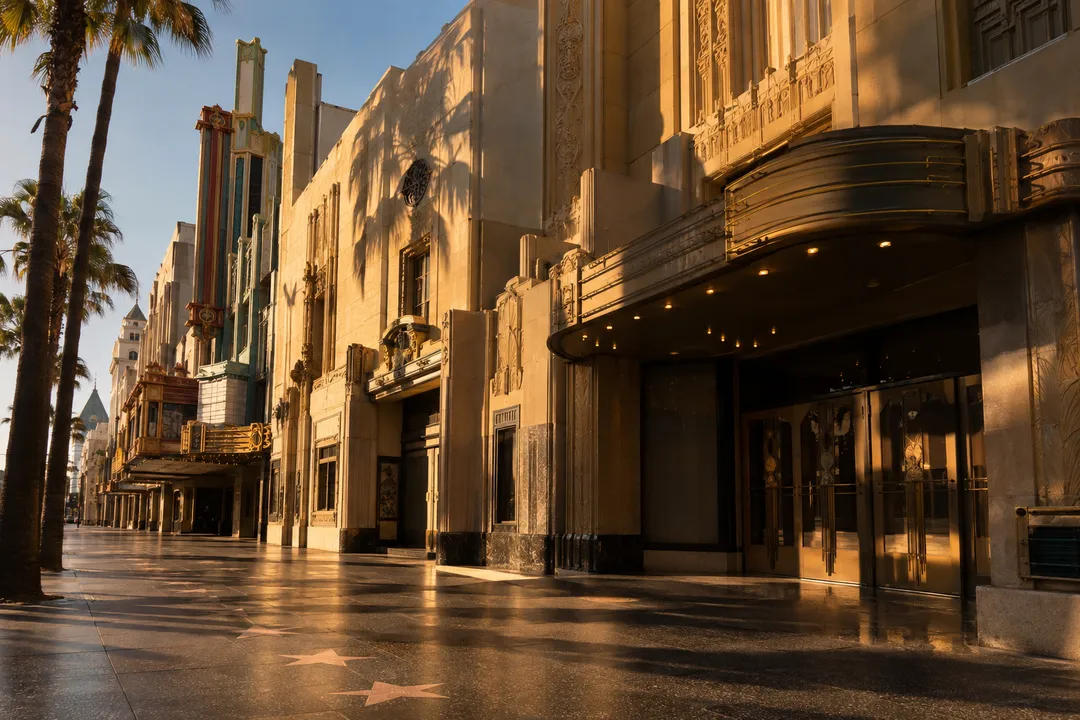
A Hollywood neighborhood audio walk works best when it moves beyond celebrity mythology and listens to the built city. This route follows Art Deco theater fronts, palm-lined sidewalks, terrazzo stars, and the small architectural cues that survive between louder attractions. The guide gives you a sequence for looking up, stepping aside, and noticing how visitors and residents share the same boulevard.
Practical Transit and Safety
Hollywood streets are long, bright, and deceptively tiring. Comfortable shoes matter, and a small layer helps when the temperature drops after sunset. Cross only at signals, keep bags closed in crowds, and use the route’s landmark order to avoid wandering while looking upward.
The Karpo APP can present the route sequence, suggest a shorter loop, and surface nearby exploration ideas. It does not claim live positional audio or guaranteed crowd information. Start each chapter manually, keep your phone down between prompts, and let the street provide the timing.
A More Honest Hollywood Ending
Finish by comparing a polished theater entrance with an ordinary side-street facade. The contrast is the route’s quiet conclusion: Hollywood is both a performance district and a neighborhood of daily work. One does not cancel the other.
Skip any stop where a tour group blocks the view and return later if the building still interests you. A route that leaves room for a second look is more useful than one that treats every landmark as a box to tick. Hollywood works when you allow the boulevard to be both grand and ordinary. A marquee can command attention while a janitor hoses a sidewalk, a bus idles, or a resident cuts through a side street. The route keeps those layers together. Take the chapters in order if you want a clear architectural arc, or skip to the theater section when you have only thirty minutes. On a return visit, listen from the opposite side of the street and compare the rhythm of signs, shadows, and entrances. A self-guided audio walk cannot remove the boulevard’s noise, but it can give that noise a shape, making the city easier to read without pretending it is quiet.
The Boulevard as a Stage
Starting near the El Capitan Theatre at 6838 Hollywood Blvd and the TCL Chinese Theatre at 6925 Hollywood Blvd, let the opening chapter separate spectacle from structure. Marquees, vertical signs, and projecting canopies were designed to pull attention from a moving crowd, while the sidewalk carries a quieter history in tile, stone, and worn thresholds. Stand across the street for the full composition before moving closer.
Traffic and tour groups create a busy soundtrack, so the guide builds in short pauses at wider corners. Use those pauses to replay a detail or watch the flow of pedestrians. The goal is not to photograph every star; it is to understand how a long block turns movement into theater.
Theater Facades and Terrazzo
Historic theater facades give the route its strongest visual chapters. Look for stepped crowns, geometric relief, glazed tile, and the way entrances compress a large building into a human-scale doorway. The guide encourages you to compare materials rather than rank venues, because each facade tells a different story about its era and audience.
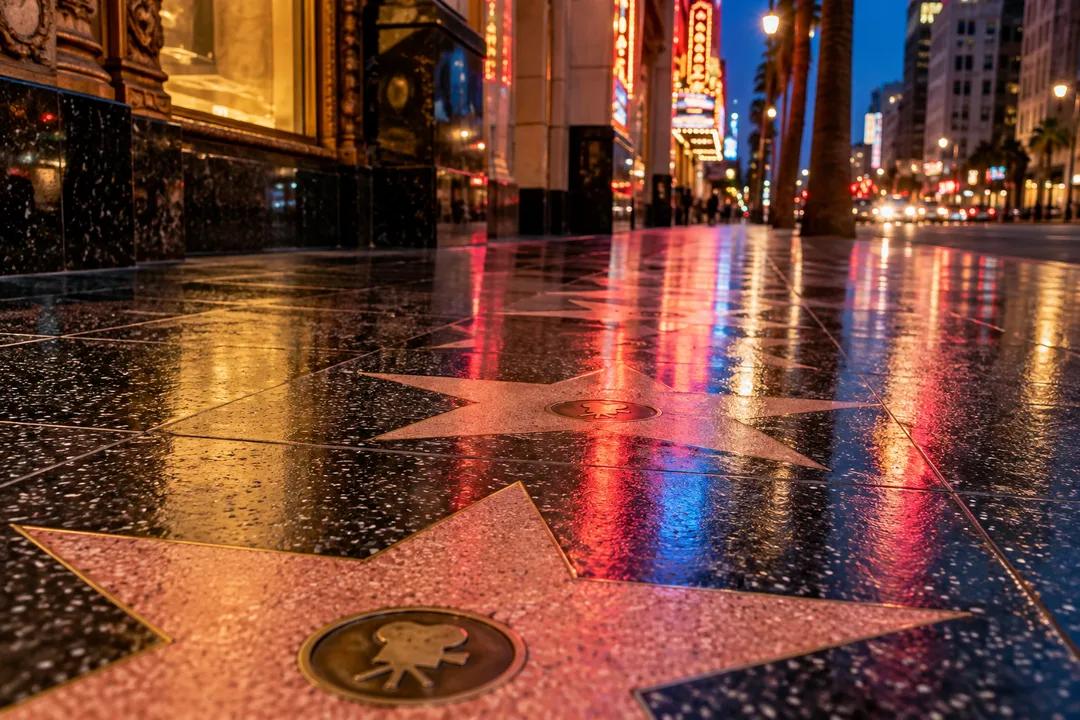
At sidewalk level, terrazzo patterns and brass insets provide a second narrative. Some details are easy to miss when a crowd stops for a photo. Walk one storefront past the obvious landmark, then look back; the angle often reveals a border or motif hidden from the center of the sidewalk.
Palm Shadows and Cross-Street Contrast
Palm trees supply the route’s recurring silhouette, but the guide treats them as an urban design device rather than a postcard prop. Their shadows move across signage, stucco, and polished stone, changing the same block through the day. Notice where the shade makes a safer, calmer place to pause.
Cross streets bring a different scale. Side lanes expose loading doors, apartment entries, and the backs of entertainment buildings that the boulevard presents as polished fronts. Keep the detour brief and stay on public sidewalks; the contrast is useful without needing to turn the walk into a backstage tour.
When the Crowd Peaks
Late morning usually gives a clearer read of facades before the busiest visitor surge. Afternoon adds the most street energy, while dusk turns marquees and reflected light into the visual focus. Choose one window based on whether you want architectural detail or theatrical atmosphere. The route remains flexible when a block is crowded.
If a stop becomes too dense, move to the next wide corner and let the chapter continue. Do not pause at curb ramps, bus zones, or theater doorways. A self-guided route earns its freedom by fitting around the boulevard’s real traffic rather than demanding a clear stage. Keep the final chapter short if you are walking after dark. Choose a well-lit public corner, stay aware of traffic, and let the last architectural comparison happen from a safe distance. The route is designed to end with curiosity rather than exhaustion, leaving you ready to explore another block or return another day. If you have company, trade the lead every few chapters so everyone gets a chance to choose the next pause. That simple practice prevents one person from turning the route into a lecture. End with a view that feels ordinary, then carry the boulevard’s theatrical details with you into the next block. Give the boulevard one final glance from a side angle. The marquee, palm, and pavement will arrange themselves differently when you step away from the crowd. That is a fitting end for a route about seeing a familiar street anew. Ordinary street sounds should have the last word too. A bus sigh, a ticket line, or a distant rehearsal reminds you that the boulevard is lived in between its famous moments. Carry that balance into your next walk, and remember that the most useful landmark may be the one that helps you notice everything around it. Let the route end with that wider attention.
Ask Karpo for more information.
Keep reading
- Los Feliz Nail Salon Walk In Finder for Broken Nail Repair
 Highland Park Nail Salon Walk In Finder for Retro Manicures
 Koreatown Nail Salon Walk In Finder for K-Beauty Nail Looks