 Lincoln Heights Champurrado Winter Cafe Picker: Two Routes
Coffee & Dessert
Arts District Neighborhood Artisan Bakery Trail on Foot
An Arts District neighborhood artisan bakery trail from Little Tokyo: century-old mochi, a free gallery in a flour mill, Israeli-style loaves and a bridge view.
The Arts District is a neighborhood artisan bakery trail that starts in Little Tokyo, a short walk west of the warehouse blocks, at a confectioner that has made mochi in Los Angeles since 1903. From there the route runs about two and a half miles east through former rail yards and flour mills to a Santa Fe Avenue bakery opened by Ran Zimon in 2010, and it ends on the arches of the Sixth Street Viaduct, which opened in 2022.
Getting Here Without a Car
Take Metro to Little Tokyo/Arts District station, where the regional connector now links lines that used to require a transfer downtown. Coming out of the station puts you on First Street, steps from the old Japanese American commercial blocks and a few minutes from the edge of the warehouse district.
Parking in the Arts District is tight on weekends, and the walk between stops is part of the experience, so leave the car at home if you can. Wear sturdy shoes, because some sidewalks east of Alameda are cracked, narrow or interrupted by loading docks, and carry water on sunny days since shade is limited between buildings.
Stop One: Mochi at Fugetsu-Do
Fugetsu-Do on First Street is one of the oldest family businesses in Little Tokyo, founded in 1903 and run by the same family across generations. It specializes in Japanese wagashi, especially mochi and manju, and the display case is small enough that you can see most of the day's selection at a glance. Buy a mixed handful rather than a box; they travel well in a paper bag.
The regulars are often older Japanese American customers buying for family gatherings, alongside students and tourists who have heard about the history. A quiet rule applies: point and order clearly, and do not hover over the case while deciding. Eat one piece right away, since fresh mochi is at its softest the day it is made.
Walking Into the Warehouse Blocks
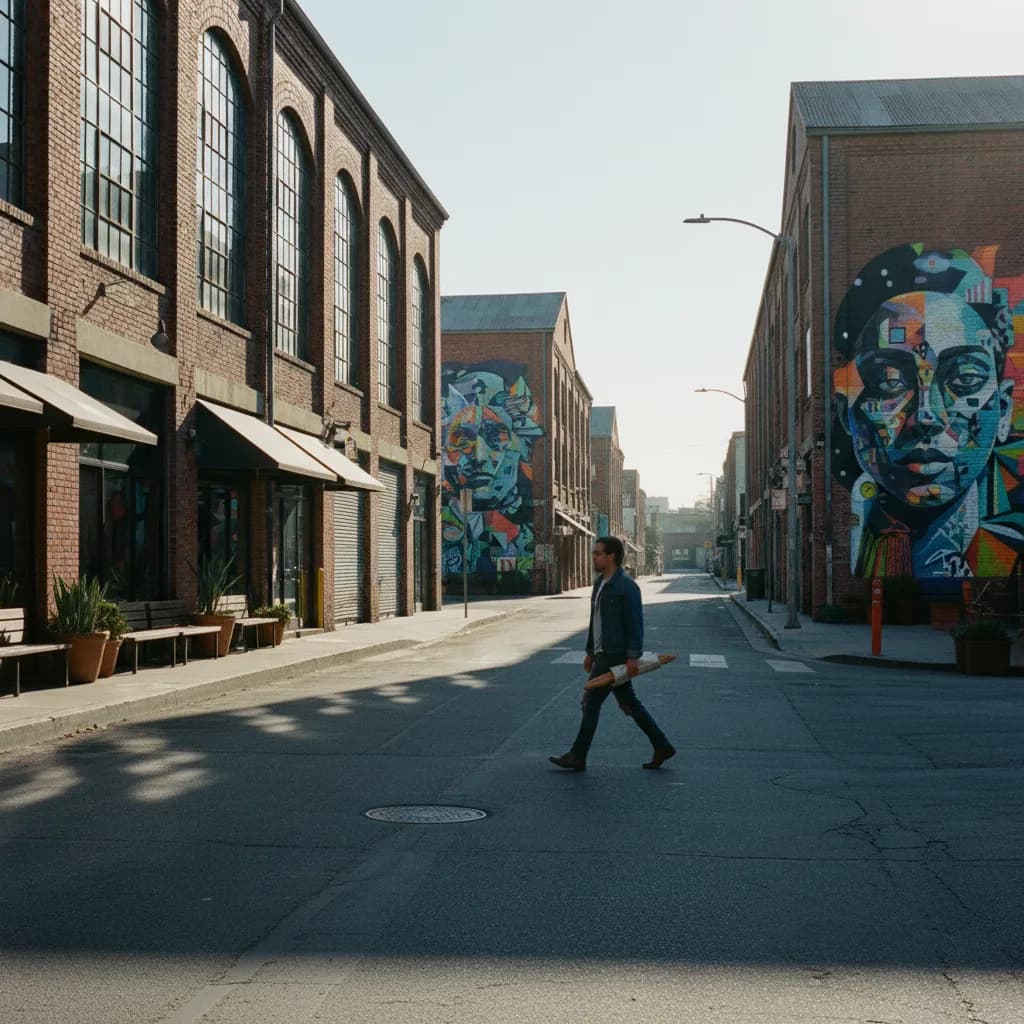
Leave Little Tokyo heading east and cross Alameda Street into the Arts District proper. Traction Avenue and Third Street are the spine of the neighborhood, lined with converted industrial buildings, mural walls and loading docks that now hold cafes and studios. The area grew up around rail lines and produce warehouses, and later became a cheap-rent haven for artists.
Slow down here. Murals change frequently, and the best way to see them is block by block rather than chasing a list of famous walls. Note that some buildings are private studios or residences even when the doors are open, so photograph from the sidewalk and keep the volume down near living spaces.
A Free Gallery Pause in a Former Flour Mill
Before the bread stop, step into Hauser & Wirth Los Angeles on East Third Street, a free contemporary art gallery that opened in 2016 inside a converted flour mill complex. The courtyard and garden give you a shaded place to sit with the mochi, and the exhibitions rotate several times a year.
Here is an honest call: the gallery restaurant is pleasant but not essential on a bakery walk, and a full lunch will spoil the next stop. Use the courtyard for a short break, check whether any exhibition interests you, and continue south toward Seventh Street while your appetite is still intact.
Stop Two: Bread Lounge on Santa Fe Avenue
Bread Lounge sits in a plain concrete building near the eastern edge of downtown, close to the Los Angeles River. Ran Zimon trained in Israeli bakeries and worked in Suzanne Goin's restaurant kitchens before supplying chefs with wholesale bread, and he opened Bread Lounge in 2010. The baking mixes European technique with Middle Eastern flavors, from challah to borekas and pistachio pastries.
Reviewers often single out the breads and laminated pastries, so pick one loaf to carry and one pastry to eat now. The crowd is a mix of nearby office workers, residents of the converted lofts, and cyclists using the river path. There is no need to rush; the room is calmer than most of the hyped bakeries across town.
Finish on the Sixth Street Viaduct
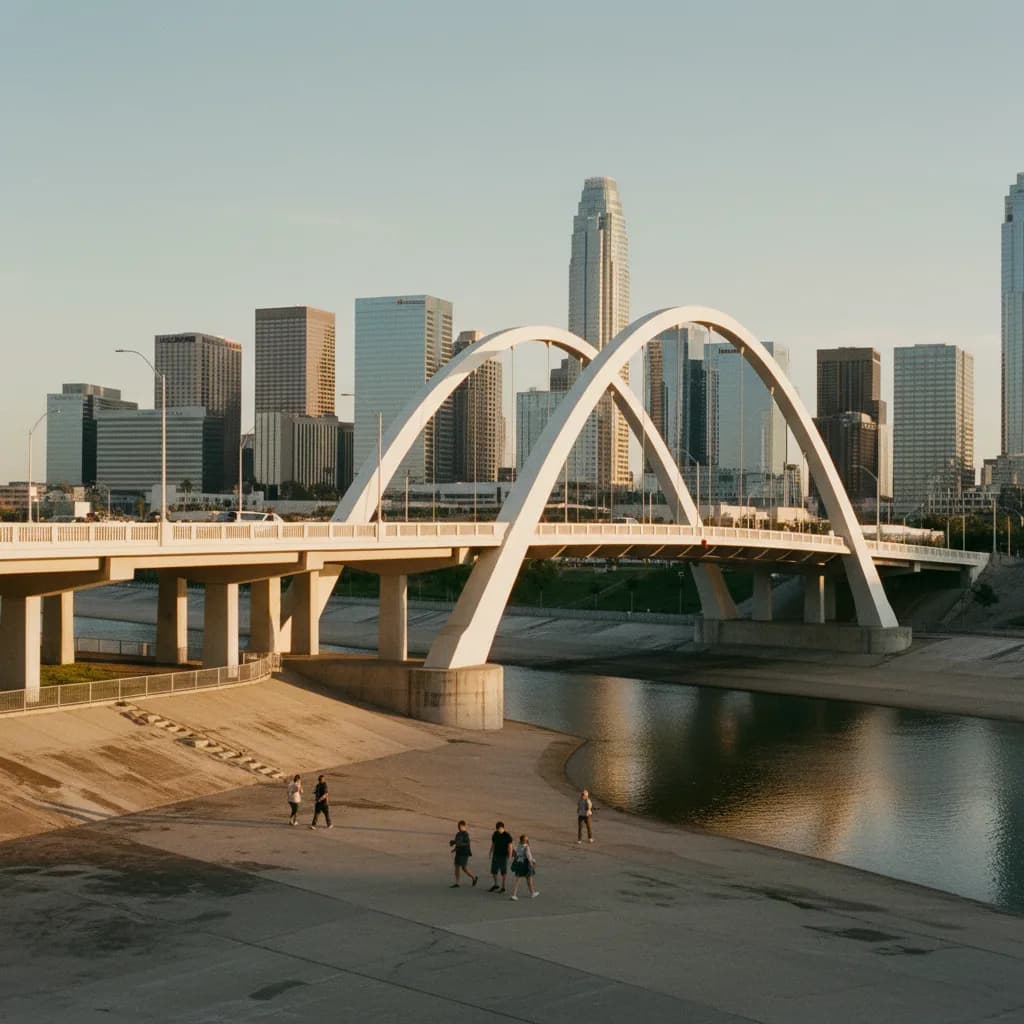
From Santa Fe Avenue, walk a few blocks to the Sixth Street Viaduct, the bridge that replaced the original 1932 structure and opened to the public in 2022. Its pairs of lit arches are already a city landmark, and the sidewalks offer one of the best views of the downtown skyline over the river channel.
Walk partway across, find a spot along the railing, and tear open the loaf you bought. Evenings bring photographers and crowds, especially at sunset, so a late morning finish is quieter. Stay on the protected sidewalk and away from the arch tops, which are closed to climbing and patrolled.
Plan B for Sellouts, Heat and Crowds
Small bakeries sell out of the most popular items, so start earlier rather than later if you have a specific pastry in mind. If one stop is closed on the day, substitute a coffee stop on Traction Avenue and keep the gallery and bridge legs, which do not depend on any one counter.
Summer afternoons in the Arts District can be hot and exposed, so shift the walk to the morning or do it in reverse, starting at the viaduct while it is cool. Rainy days are rare, but when they come, shorten the route to Little Tokyo and the gallery courtyard, both easy to reach from the station.
How Karpo Helps You Plan the Trail
Open the Karpo APP and describe the walk, for example an Arts District bakery trail from the Metro station with one gallery break and a skyline finish. Karpo can suggest a stop order, nearby alternatives if a counter is closed, and coffee places to add along Traction Avenue. It does not track stock or hold orders, so treat the plan as a guide you adjust in person.
You can ask Karpo for variations too, such as a Little Tokyo sweets walk, a bread-only version for picnic shopping, or a shorter loop for a lunch break. Comparing a few saved versions on the morning makes it easy to match the route to the weather and your group.
Ask Karpo for more information.
Keep reading
- Lincoln Heights Champurrado Winter Cafe Picker: Two Routes
 Pico-Union Champurrado Winter Cafe Picker: Two Easy Ways
 Highland Park Champurrado Winter Cafe Picker: Two Avenues