 Burbank Film Memorabilia Collector Shop Walk: Studio Stash
Hidden Gems & Odd Finds
Claremont Musical Instrument Repair at Folk Music Center
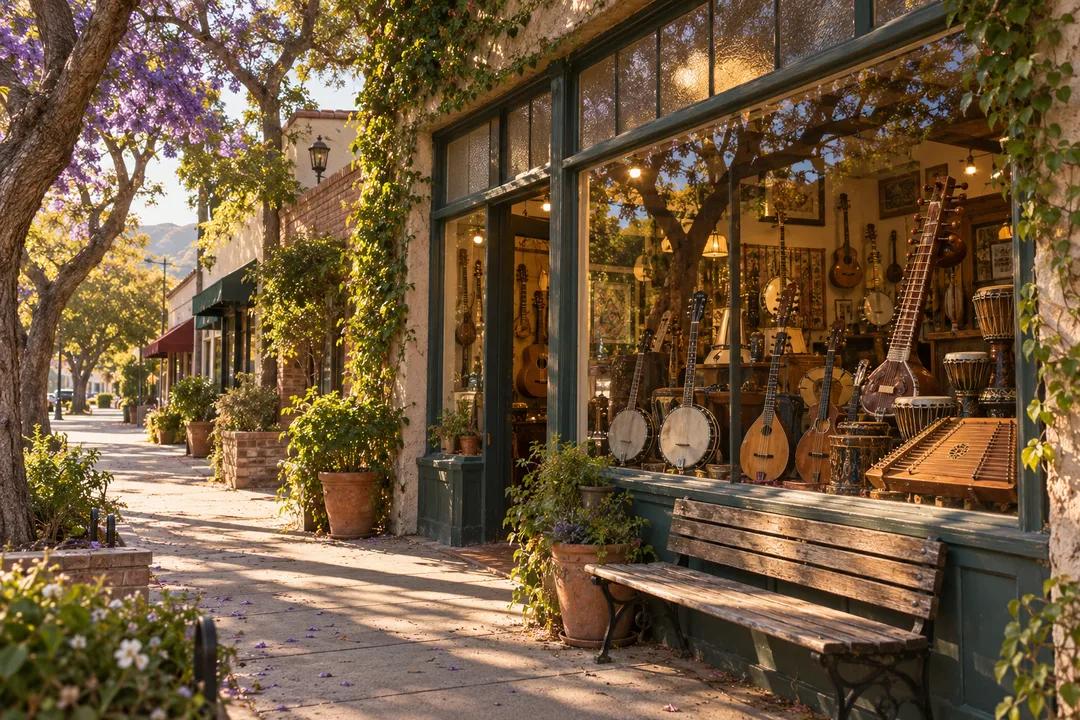
Folk Music Center at 220 Yale Avenue, Claremont, repairs banjos, mandolins, sitars and violins. Its repair shop works Tuesday to Saturday, 10 am to 6 pm.
Folk Music Center, at 220 Yale Avenue in Claremont Village, is a 1958 instrument store and museum whose back-room repair shop fixes banjos, mandolins, sitars, violins and guitars. The repair shop lists Tuesday to Saturday hours of 10 am to 6 pm and takes questions at repair@folkmusiccenter.com, while the store floor keeps shorter hours. A verbal appraisal costs nothing. For musical instrument repair on the odd and the old, from a goatskin banjo head to a sitar, this is the shop Los Angeles County players drive east for.
A Back Room Behind a Real Estate Office
The store's history page tells the founding story with relish. On August 12, 1958, Charles and Dorothy Chase opened the Folk Music Center on Harvard Avenue, in the back of a real estate office whose owner told them that no one would ever come to see them. The rent was $35 a month, and they borrowed $2,000 to buy records, books, strings and a few instruments. Soon the landlord was complaining about the traffic, and the shop moved around the corner to First Street, where Charles repaired instruments in the basement. In 1965 the Chases and friends opened the Golden Ring, a music cafe on Harvard Avenue. In its five years it brought the Reverend Gary Davis, Brownie McGhee and Sonny Terry, Doc Watson and John Fahey to Claremont, and it was one of the earliest folk venues in Southern California.
Yale Avenue Since 1970
On April 5, 1970, after a short stay across the street, the store moved into its current home at 220 Yale. Dorothy taught guitar, banjo, dulcimer and autoharp to hundreds of local children and adults, while Charles trained young people in repair; one couple pitched a tent in the Chases' backyard in 1962 to study with him. The museum was incorporated as a non-profit in 1976. Today the Chases' daughter Ellen Chase-Verdries manages the store, and her son, the musician Ben Harper, bought it from his grandparents to keep it in the family.
If It Is Made of Wood, Metal or Goat
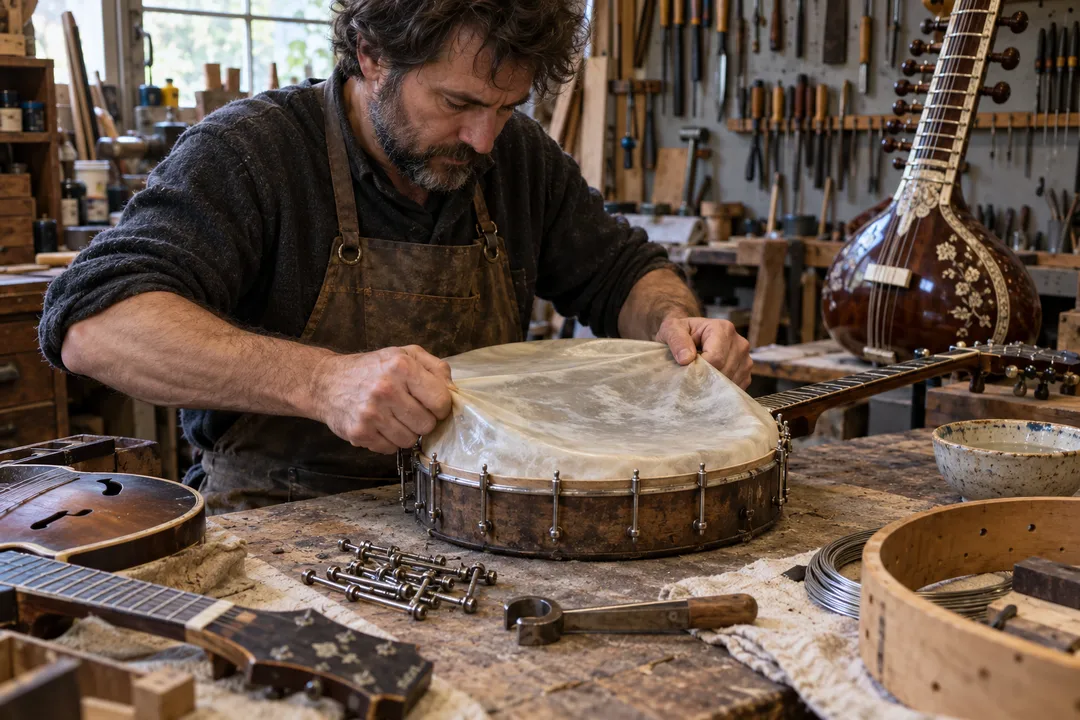
The repair page quotes Charles Chase's old promise: if it's made of wood, metal, goat or cow, they'll re-skin it, restring it and repair it. The shop says it has been repairing vintage American instruments and instruments from around the world for 60 years. Every instrument sold in the store passes through the repair shop first so that it leaves set up properly. Its luthiers list teachers including Charles Chase, Jack Willock, Larry Jackson and David Dart.
The Two Luthiers
Henry Barnes has been building and repairing stringed instruments since 1983, starting at Charvel and Jackson in the early 1980s, where he learned guitar making and began designing solid-body instruments. At Folk Music Center he specialises in setups and repairs on sitars, banjos, mandolins and violins, plus fret replacement and fret dressing on all stringed instruments, neck resets, electronics and pickup installation. Dave Millard was hired here in 1966 under Charles Chase and ran the shop until 1977. He later taught middle school science, and on his last teaching day in 2018 he walked in and was offered his old job back.
How to Bring a Repair In
Repair prices are not posted, so the way in is a conversation. Email the repair address with photos and a description, or bring the instrument during repair shop hours and talk it through at the counter. Because the store floor closes at 5 pm and opens only at noon on Tuesdays, the repair shop's 10 am to 6 pm window is the one to plan around. The homepage's own advice is simple: give us a call or come by.
Appraisals Before You Sell
The staff have been appraising instruments for more than 50 years, for insurance replacement value and for fair market or resale value, using the IRS definition of fair market value. The written appraisal fee depends on the time spent researching and writing it, not on what the instrument is worth. A verbal appraisal is free. That makes the counter a sensible first stop for an inherited banjo or a mystery guitar from an estate, before you decide whether a repair is worth the money.
The Museum Among the Merchandise
Walls and cases hold hundreds of rare and antique instruments from around the world. The first pieces in the collection were a Stauffer guitar and a Stauffer theorbo from the 1880s that the Chases found in a second-hand store for five dollars. Many visitors come for the museum first and leave with strings, a harmonica or a repair ticket. The store says people travel from as far as Australia, Japan and Europe, and that you could visit every day and see something new.
Open Mic and Concerts
The museum hosts an open mic on the last Sunday of every month, with October's set for October 25, 2026. Bring your own instrument; a PA and a sound person are provided, and each performer gets two songs or five minutes. The concert series has recently brought guitarist Stan Ayeroff, songwriter Joel Rafael with the Citrus Sisters, and Tom Freund with Victoria Williams. Collecting a freshly set-up banjo on open mic night is the most Claremont way to test it.
Around Claremont Village
Claremont Village is a compact grid of tree-shaded streets, easy to walk while a repair is being assessed. The Claremont Metrolink station is a couple of blocks south, so the San Bernardino Line from Union Station is a realistic way to arrive without a car. A short walk east brings you to the Pomona College campus, where the James Turrell Skyspace has hosted Folk Music Center Museum music programs with the Benton Museum of Art. Back in the Village, Harvard Avenue, where the store began, is lined with cafes and shops.
Practical Notes
Address: 220 Yale Avenue, Claremont, CA 91711, in Claremont Village.
Repair shop hours: Tuesday to Saturday, 10 am to 6 pm.
Store hours: Tuesday 12 pm to 5 pm, Wednesday to Saturday 10 am to 5 pm, closed Sunday and Monday.
Repairs: repair@folkmusiccenter.com.
Prices: repair prices are not published; verbal appraisals are free.
Open mic: last Sunday of every month, two songs or five minutes each.
Ask Karpo for more information.
Keep reading
- Burbank Film Memorabilia Collector Shop Walk: Studio Stash
 Pasadena Film Memorabilia Collector Shop Walk: Classic Route
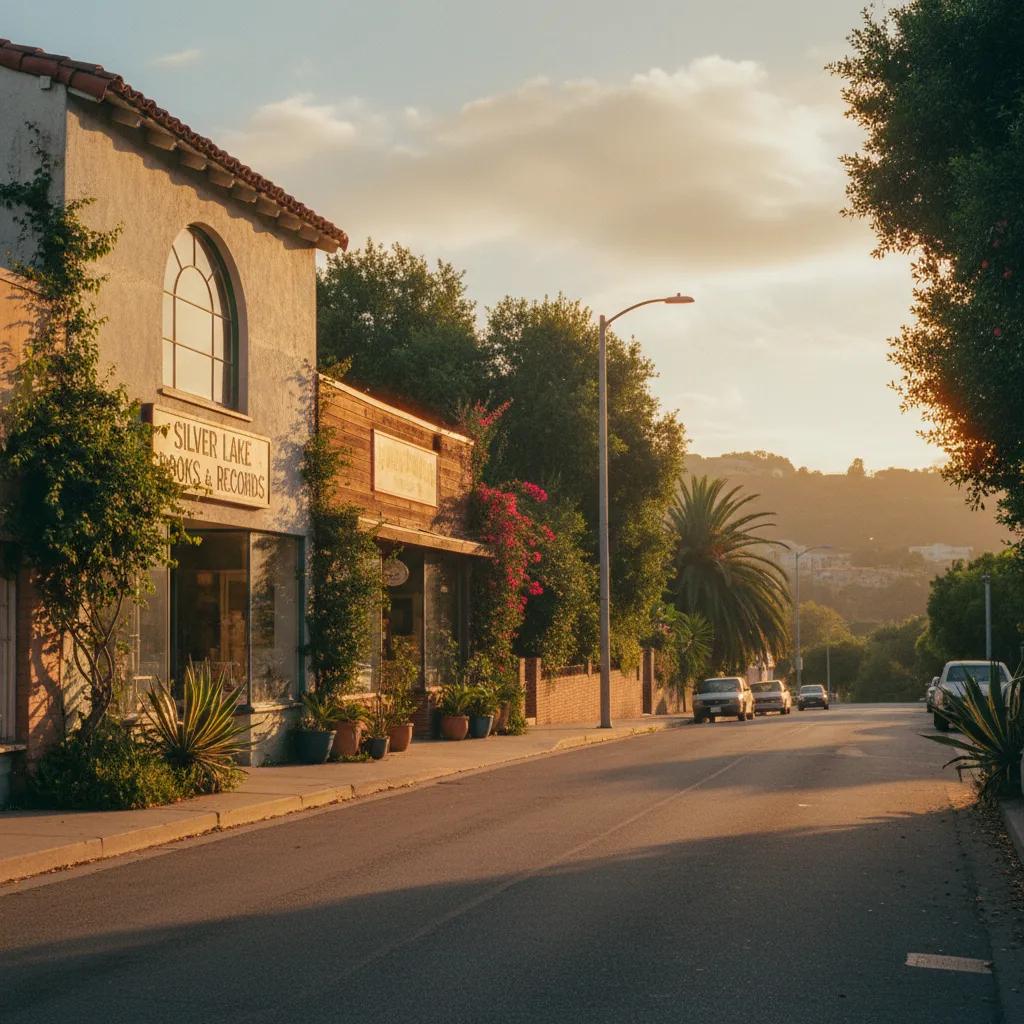 Silver Lake Film Memorabilia Collector Shop Walk: Indie Lore