 Los Feliz Nail Salon Walk In Finder for Broken Nail Repair
Neighborhood Guides

LA Midpoint Meetup Planner: 5 Questions for Weekend Brunch
Answer five questions before choosing an LA brunch neighborhood, balancing split groups, food preferences and return plans without assuming a table is held.
Use an LA midpoint meetup planner for weekend brunch when your friends are divided across different parts of the city and nobody wants to pick a neighborhood blindly. Five questions can turn that loose intention into an invitation people can accept: who is traveling, what counts as fair, what kind of meal you want, how the group will arrive and who makes the final arrangement. Answer them in that order. A neutral neighborhood is one the group has chosen for a reason, not an unexplained dot halfway across a map.
Who is traveling from where this time?
Start with the people who will actually attend. A standing group chat can include friends who are away, working or still undecided. Build the first comparison around confirmed participants, then explain how an additional traveler would affect it. Ask for broad departure areas rather than exact residential addresses. If several people are already together, count them as one shared journey where appropriate. If they will depart independently, keep their individual constraints visible. Headcount alone does not describe how the group reaches brunch.
Weekend origins can differ from weekday homes or offices. Someone might be finishing an errand, visiting family or collecting another guest. Use that starting point for this outing. Also ask about the latest departure each person can manage after the meal. A parent returning for a handoff or a friend heading to work has a concrete boundary the rest of the group should know. There is no need to give those obligations a ranking. Record them so the plan can fit the actual day.
Does fair mean equal miles or equal effort?
A literal midpoint and an equitable meetup answer different questions. Equal miles can still produce unequal effort when travelers use different transport modes or need different final approaches. Decide whether you want to reduce the longest journey, minimize the group’s combined burden or give priority to a person with the least flexibility. Each is a reasonable objective in the right circumstances. Problems arise when the group uses one objective to choose the neighborhood and another to justify it afterward.
For an example, imagine two clusters of friends, one with three people sharing a ride and another with one independent traveler. A simple majority vote could repeatedly choose the shared car’s favorite area. The group might instead decide that the solo traveler should not always make the hardest trip. Another solution is rotating the favored side across meetups. These are social agreements, not mathematical rules generated by an app. State the agreement openly so a rejected neighborhood does not feel like a judgment about whose company matters.
Is this brunch about eating or spending time together?
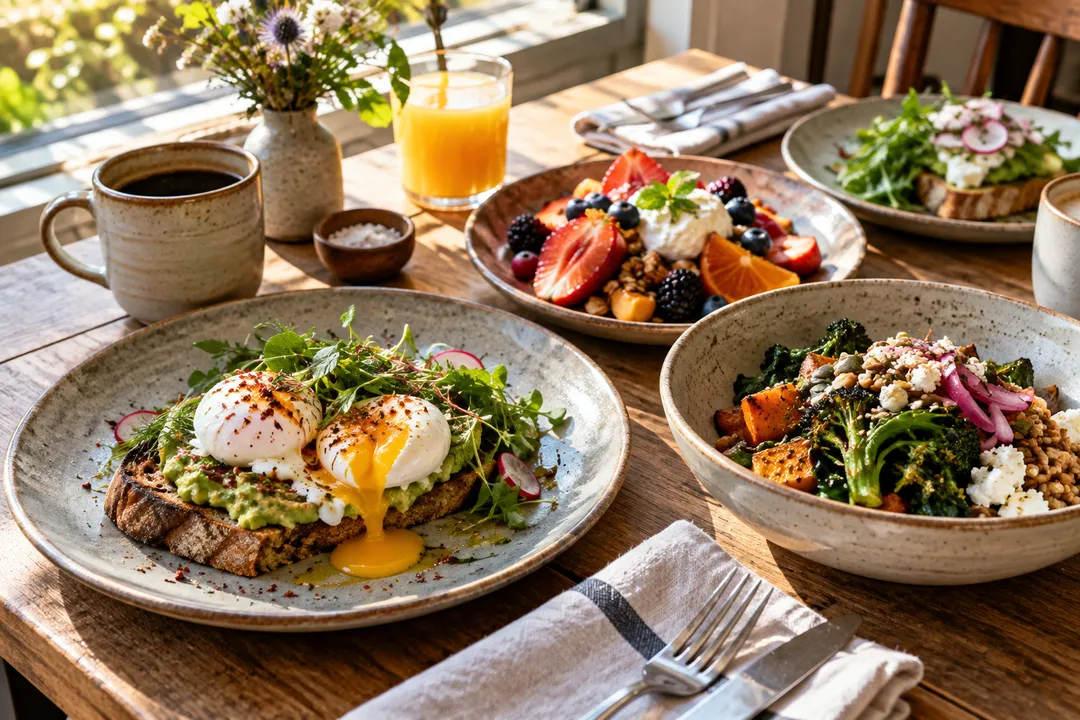
Ask what the meal is supposed to do. A birthday gathering, a short catch-up and a long conversation have different requirements. Decide whether the group wants a seated meal together or is comfortable with people ordering separately. Include dietary needs and the least comfortable spending level before browsing appealing menus. Nobody should have to reveal a private financial situation at the table to explain why a lavish brunch does not work. A clear preference in the planning brief can prevent that moment.
Avoid selecting a neighborhood solely because one restaurant photographs well. If the visit depends on a particular dish or service format, that requirement belongs in the venue comparison. If the purpose is conversation, seating and the length of the shared window may matter more. Do not assume an unlimited stay or guaranteed table at an unnamed business. This article supplies questions for choosing a place, not a promise about any cafe’s policies. Once the group selects real candidates, use their own published information to settle those details.
Can everyone arrive and leave without a second negotiation?
For each candidate area, ask every traveling party to describe the final approach. Drivers need a parking arrangement they are comfortable researching and paying for. Transit riders need a workable arrival stop and a return connection. Everyone needs a walk that fits their requirements. Keep those answers short enough to compare. If a proposed area requires a series of favors to make it work, ask whether another area would simplify the outing. A neutral plan should not quietly depend on one friend becoming the group’s transport coordinator.
Choose the meeting window from the overlap in everyone’s availability. Then decide whether a late arrival joins the group or causes the whole meal to wait. This is a group rule to agree, not a policy you can attribute to a restaurant. If someone needs to leave early, include that in the invitation without framing it as a disruption. People can enjoy different amounts of time together. The plan becomes difficult when those differences are discovered only after ordering or after cars have been shared.
Who turns the neighborhood decision into a real invitation?
Assign one organizer to make the final proposal and one person to handle any booking through the venue’s own channel. They can be the same person, but the responsibility should be explicit. Ask for agreement on the neighborhood before paying or arranging something that commits the group. Give friends a decision deadline that leaves enough time to plan their journeys. Do not interpret a suggested destination, a favorable group vote or a message sent to an assistant as confirmation that a business is holding a table.
For ideas, describe the outing in Karpo APP in ordinary language. Say that your LA brunch group is split across several starting areas, explain your fairness rule and ask for a small set of neighborhood suggestions with reasons. The public Karpo introduction presents conversational requests for going-out ideas, which is the role used here. This article does not describe a verified equidistance calculator or a reservation service. Bring actual route estimates from navigation tools into the decision when the group compares its serious candidates. The LA brunch example is an editorial planning exercise, and the published FAQ’s initial coverage list does not include LA.
What belongs in the message everyone saves?
Keep the final message practical: selected venue, meeting entrance, arrival time, expected duration and the person managing the booking. Add only transport instructions that apply to the actual location. If the plan has an optional walk, describe it as optional and work out its route after the venue is known. A short loop returning toward departure points can preserve flexibility better than a second compulsory destination. Nobody needs to move a car or miss a connection simply to finish brunch properly.
When the outing is over, ask one useful question about the next one: did the chosen fairness rule work for the people who traveled? Keep the lesson, not a permanent claim that the neighborhood is everyone’s midpoint. Different attendance, origins and obligations can change the answer. The next invitation can reuse the five questions while producing a different destination. That is what makes the planning method repeatable without making every weekend feel like the same meal in the same place for the convenience of the same people.
Ask Karpo for more information.
Keep reading
- Los Feliz Nail Salon Walk In Finder for Broken Nail Repair
 Highland Park Nail Salon Walk In Finder for Retro Manicures
 Koreatown Nail Salon Walk In Finder for K-Beauty Nail Looks