 Los Feliz Nail Salon Walk In Finder for Broken Nail Repair
Neighborhood Guides
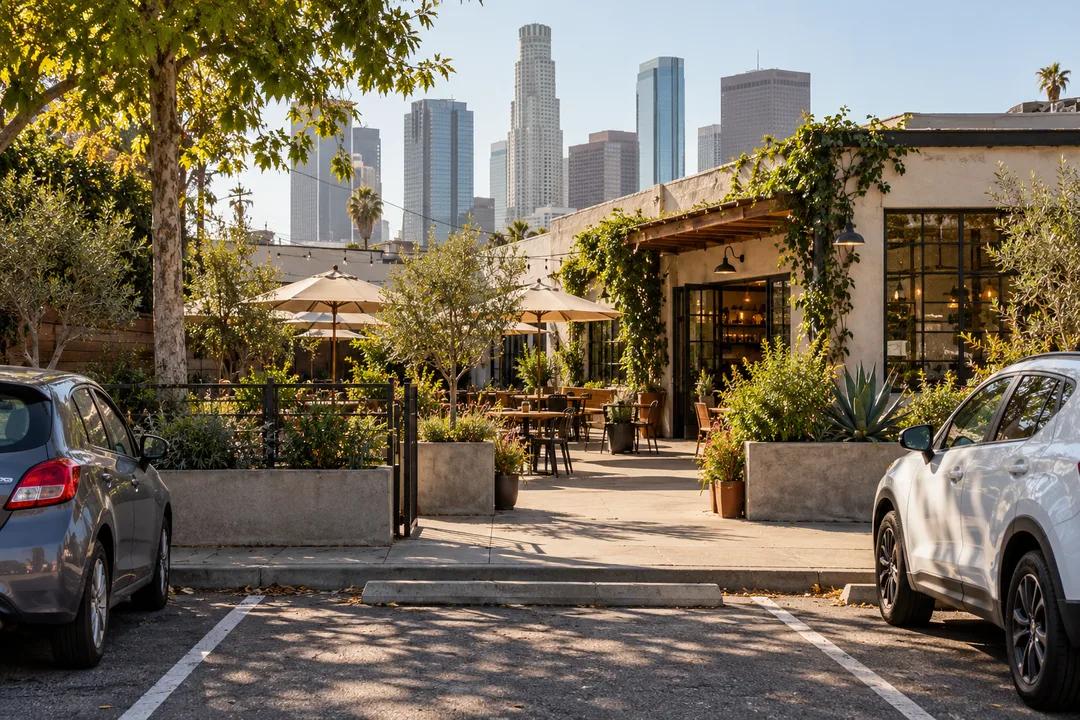
LA Midpoint Meetup Planner: 4 Parking Decisions Made First
Compare four parking decisions for a Valley-to-central LA meetup, from spending limits to the walk afterward, without assuming a space will be available.
An LA midpoint meetup planner can help frame the right question when friends coming from the Valley and Downtown want an easy place to gather. The question is not simply which neighborhood lies between them. It is where both drivers can finish their journeys without the parking arrangement overwhelming the visit. Before choosing a cafe or restaurant, make four decisions: acceptable cost, walking effort, uncertainty and the exit plan. This is a way to compare candidates, not a list of supposedly dependable spaces or a forecast of parking availability.
Decide what easy parking means to these drivers
People use the phrase easy parking to describe different things. One driver means a clearly identified garage. Another means avoiding paid parking entirely. A third is comfortable paying but needs a short, step-free approach. Ask everyone to translate the phrase into a requirement someone else can understand. The same facility can meet one requirement and fail another. Starting with this distinction prevents the group from selecting a destination on the strength of a vague online description that says nothing about their particular needs.
For a Valley-to-central LA plan, describe the actual origin areas without assuming a route. A friend starting after work may not leave from home, and a person collecting a passenger has an additional stop. Each driver should consider the complete approach to a candidate area. Keep that route work in a navigation tool. The meetup brief can summarize the burden without claiming a permanent travel time between the Valley and Downtown. A neighborhood becomes suitable through the journeys your group is actually proposing.
Decision one: set a spending ceiling
Agree on a personal parking ceiling before comparing venues. A stated ceiling is a budget preference, not a price quoted by this article. Keep it separate from the food budget so a modest meal does not unexpectedly become an expensive outing. If drivers have different limits, the group can choose an arrangement that fits the lower ceiling or agree on a voluntary way to share costs. Neither solution should rely on an assumed validation benefit that has not been offered by the chosen business.
Once you have real candidates, obtain parking terms from the operator or venue rather than treating a search summary as the full policy. The relevant details include the charging basis and any conditions attached to validation. This article provides no rates, free-parking promise or validation rule. Put a candidate aside if the only reason it seems affordable is an unsubstantiated discount. You can still choose it for other reasons, but the invitation should not describe that missing benefit as settled.
Decision two: budget the walk from the vehicle
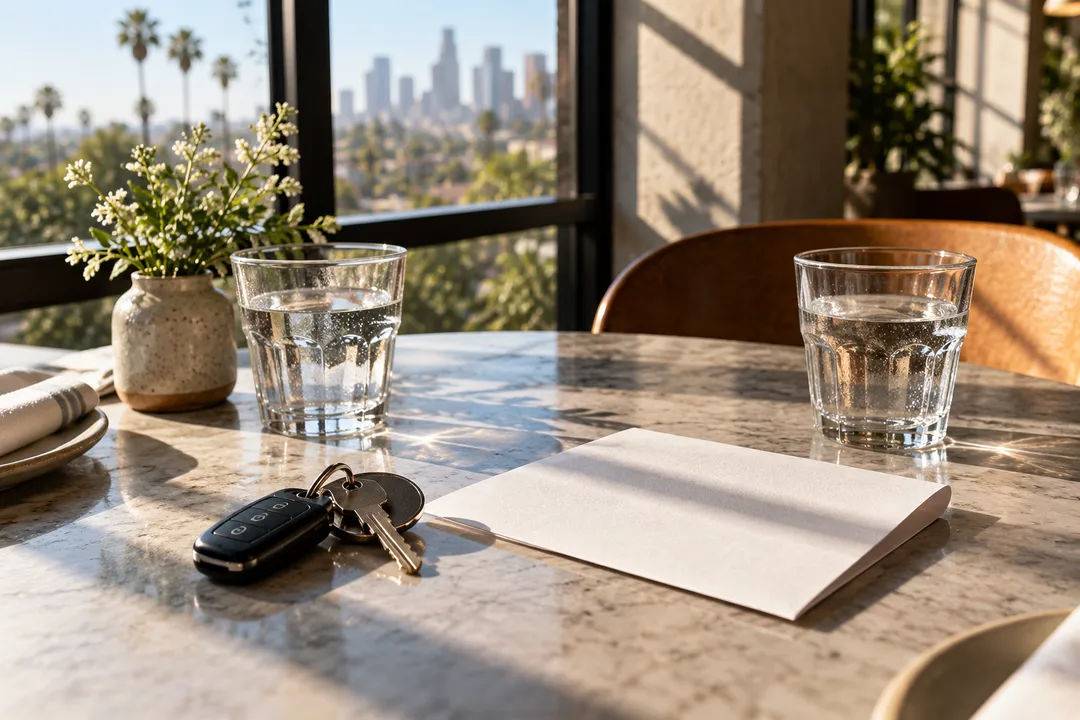
Parking does not end at the moment the engine stops. Think through how a person reaches the meeting entrance and how they will return to their car. Ask each driver about their maximum comfortable walking effort, luggage, mobility requirements and willingness to cross unfamiliar streets. Avoid inferring those preferences from age or appearance. A companion can volunteer assistance, but the basic route should be acceptable without relying on someone carrying bags or moving a car halfway through the outing.
Consider the walk as part of the gathering’s total effort. A longer approach might be welcome for someone who wants a stroll, yet unwelcome for a friend arriving tired after work. There is no single correct tolerance. When you compare two destinations, describe the difference plainly: one requires more walking, while the other asks for a higher parking budget or a less direct drive. Those are tradeoffs the group can discuss. Do not replace them with an unsupported claim that either option is universally convenient.
Decision three: choose how much uncertainty to accept
Distinguish a named parking destination from a guaranteed place to leave the car. Knowing where a facility is does not reserve a space. Likewise, seeing curbside spaces on a map says nothing about whether one will be lawful and available on arrival. Decide whether the group is comfortable searching or would prefer an arrangement that can be secured through its operator. A friend with a tight end time might reasonably reject a plan that depends on finding an unspecified spot nearby.
Give the driver a fallback before departure. It could be another researched facility within an agreed walking limit or a decision to move the meetup to another area before anyone sets off. Define the trigger without asking a driver to message while moving. The fallback should stay within the budget and access requirements already chosen. Switching to an unknown side street at the last moment can solve the immediate search while creating a harder walk or an inconvenient return. A useful contingency preserves the original constraints.
Decision four: plan the departure as carefully as arrival
A group can enjoy an uncomplicated arrival and still discover that one person needs to leave much earlier than the others. Ask about the latest comfortable departure and any obligations afterward. If cars are shared, identify who depends on whom for the return. Let an early departure remain an ordinary part of the plan. The person driving should not become responsible for keeping every optional activity possible merely because their vehicle made the initial gathering easier.
Keep the outing compact after parking. If coffee turns into a walk, choose a loop that brings participants back toward their vehicles rather than assuming everyone wants a second drive. The walk is a planning possibility, not a route recommendation in this article. When a real neighborhood and venue have been selected, use a map to work out a suitable continuation. Friends who skip it should still be able to leave independently. That makes an open-ended conversation feel relaxed without making transport open-ended too.
Turn four decisions into a useful request
Ask Karpo APP for going-out suggestions with your constraints stated in prose. Explain that friends from the Valley and Downtown want a central LA meeting area, that parking is a deciding factor, and that you want the tradeoffs explained. Include your preferences for cost and walking rather than asking for guaranteed easy parking. Karpo’s public introduction supports conversational requests for local ideas. This workflow uses that advisory role and leaves route estimates, parking arrangements and venue bookings with the appropriate operator or tool. Karpo’s FAQ lists four initial supported cities without LA, so this scenario demonstrates a request rather than confirming local results.
Your final invitation should identify the chosen gathering and the researched parking approach separately. Keep the facility’s rules distinct from your group’s preferences. The four decisions are complete when each driver understands the budget, the walking segment, the fallback and the journey home. If a candidate cannot satisfy those basics, change the area before committing to the meal. The point of meeting centrally is to preserve time with friends, not to turn an uncertain parking claim into the organizing principle of the entire afternoon.
Ask Karpo for more information.
Keep reading
- Los Feliz Nail Salon Walk In Finder for Broken Nail Repair
 Highland Park Nail Salon Walk In Finder for Retro Manicures
 Koreatown Nail Salon Walk In Finder for K-Beauty Nail Looks