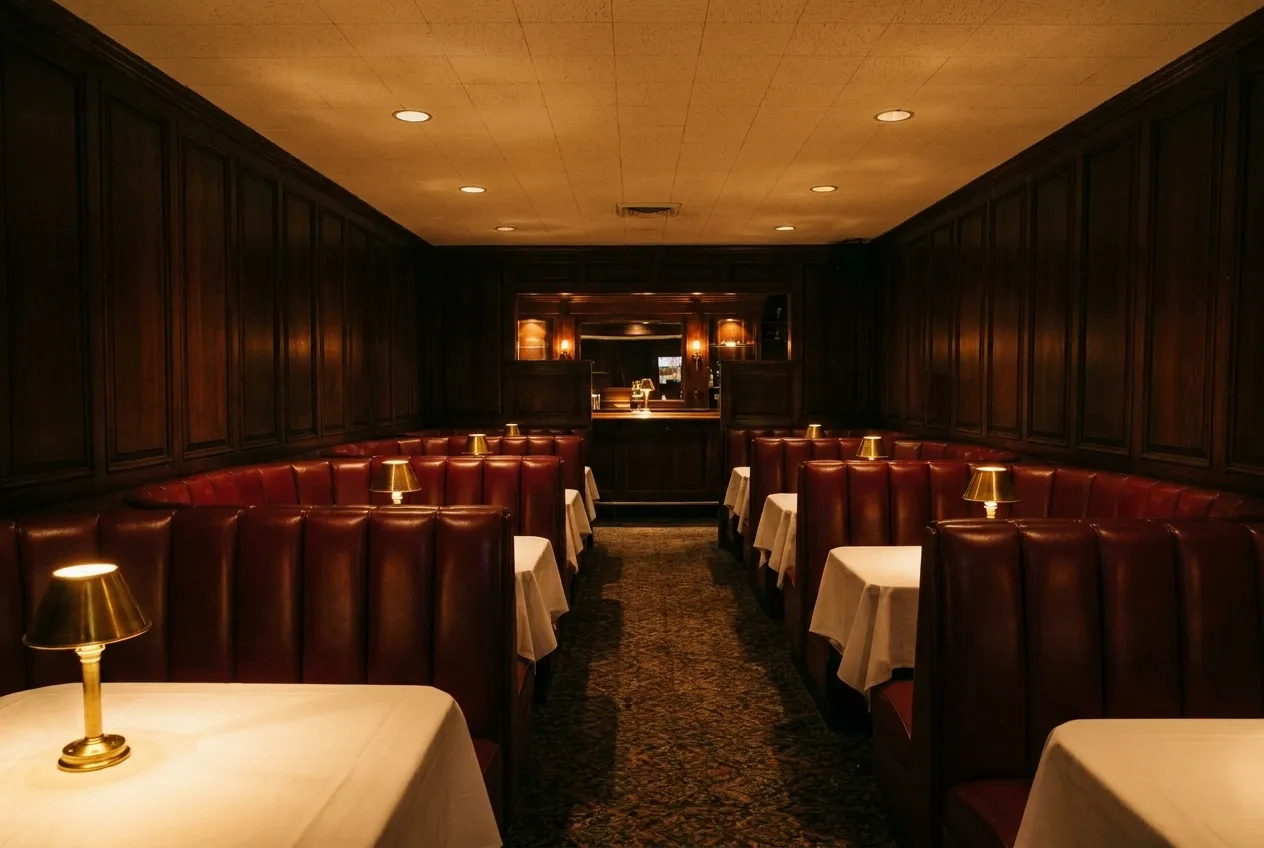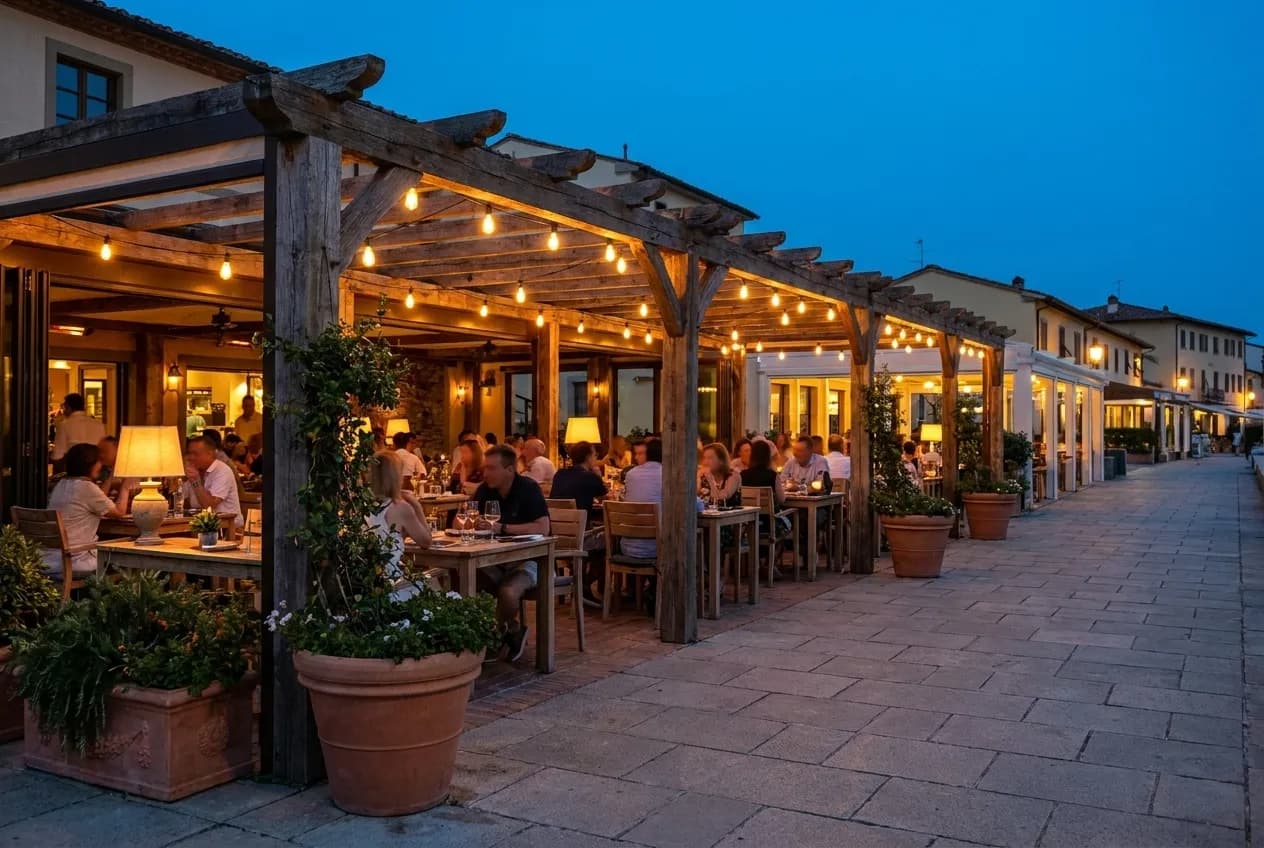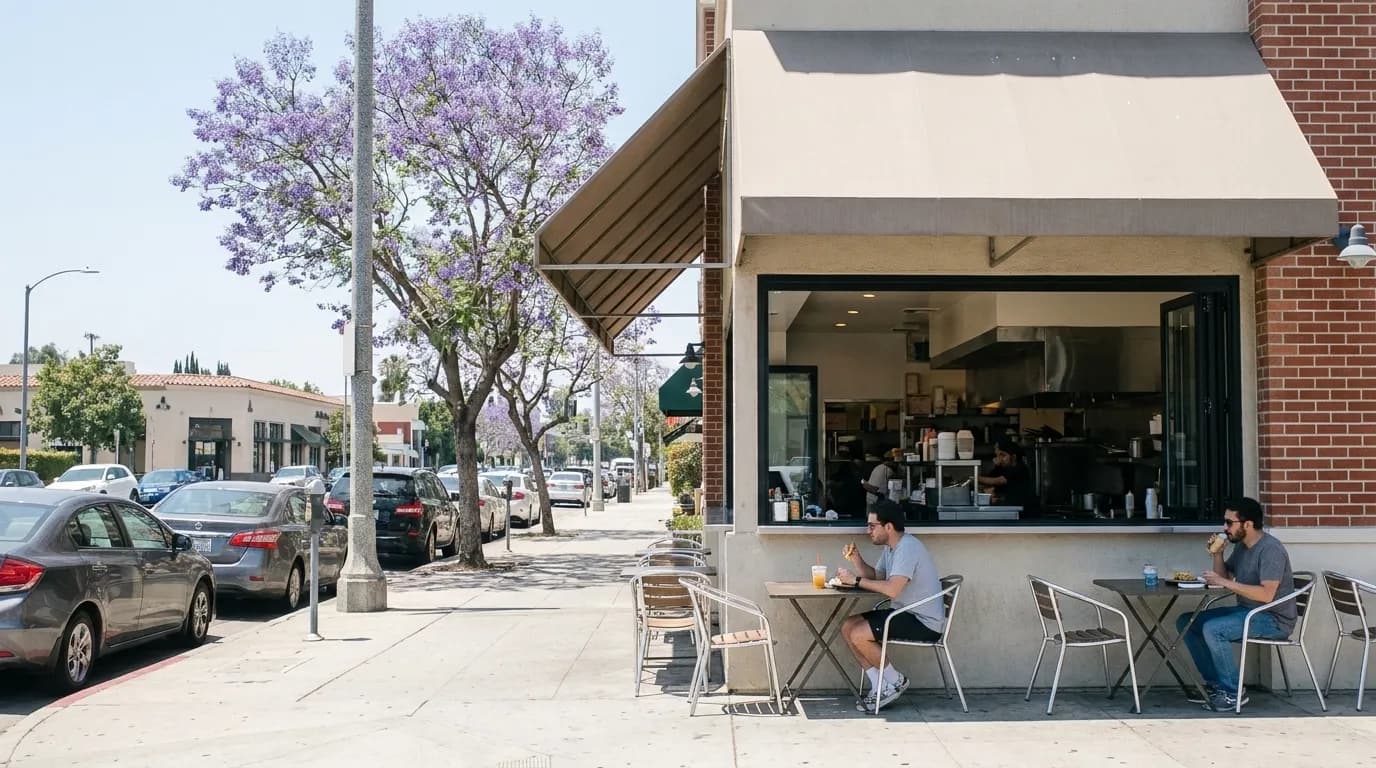
Some restaurants are built around a concept and some are built around a single item. Dune, on Glendale Boulevard in Atwater Village, is the second kind. Scott Zwiezen, previously the chef at the vegetarian restaurant Elf, opened it in early 2015, and within a very short time the falafel sandwich had become the reason the place existed. Everything else on the board is good. Only one thing is the point.
This is a counter, not a dining room, and the queue behaves very differently at one o'clock than at seven. Ask Karpo the best window to walk up at Dune today and what to add to the sandwich.
What makes a falafel sandwich worth the trip
Falafel is a dish with almost no margin for error and very little room for signature. The fritters are either light and hot inside a crisp shell or they are dense and greasy, and there is no third outcome. The bread either holds together under sauce or it does not. What separates a good falafel sandwich from a bad one is almost entirely execution and timing, which is why the good ones are made to order at a counter rather than assembled in advance.
That is the structural reason Dune works the way it does. You order at the counter, it gets built when you order it, and you eat it within minutes. The moment you introduce a dining room, a server and a ten-minute lag between kitchen and table, the dish loses the thing that makes it worth queueing for.

The rest of the menu is not filler
The board runs to hummus plates, salads and sourdough toasts, plus a pickled beets sandwich and a lamb sandwich for people who want meat. The vegetable-forward slant is not accidental — it traces directly back to Zwiezen's time at Elf, and it means the non-falafel options are treated as dishes rather than as concessions.
The practical way to use that is to order for the table rather than individually. Two falafel sandwiches, a hummus plate and a salad between three people gives you a proper meal at a place that could easily be treated as a one-item stop. The beets sandwich in particular is the sleeper order, and the one regulars alternate to when they have had the falafel too many times in a month.
Hummus is where the kitchen's background shows most plainly. A hummus plate here is treated as a composed dish rather than a dip — the texture is loose and warm rather than stiff and cold, the olive oil is not an afterthought, and what goes on top changes what the plate is for. Ordered alongside a sandwich it is a side; ordered with bread and a salad it is lunch.
How the counter actually works
You order at the counter and then find somewhere to sit — a stool at the counter itself, or a table on the patio outside. That is the whole system. There is no host, no waiting list and no reservation, which means the only variable you control is when you arrive.
The Atwater Village location runs from 11am to 10pm daily, which is a wide window and the best thing about the place from a planning perspective. Lunch between noon and one-thirty is the busiest stretch and the queue reflects it. Mid-afternoon is nearly empty. Dinner is steady but rarely as compressed as lunch, and the late end of the evening — after most neighbourhood kitchens have closed — is the window regulars use.
One more thing worth knowing about a made-to-order counter: the sandwich is at its best in the first five minutes and noticeably less good after twenty. Ordering for takeaway and driving fifteen minutes home is a measurable downgrade, and the fritters are the part that suffers. If you can eat it on the patio, eat it on the patio.
Atwater Village, and the second location
Glendale Boulevard through Atwater Village is one of the more walkable commercial strips in Northeast Los Angeles: a few blocks of independent shops, coffee and restaurants, with the Los Angeles River bike path a short distance west. Parking on the boulevard is metered and tight at peak, but the residential side streets a block off it are usually workable.
There is also a second Dune downtown on West Olympic Boulevard, which is useful to know if you are on the other side of the city, but the Atwater original is the one with the patio and the neighbourhood around it. If you have a choice, take the original.
Practical notes
Dune is at 3143 Glendale Boulevard, Los Angeles, in Atwater Village, open 11am to 10pm daily. It opened in early 2015 under Scott Zwiezen, previously the chef at Elf. Ordering is at the counter with seating at the counter or on the outdoor patio — no reservations, no table service. The falafel sandwich is the signature; the menu also covers hummus plates, salads, sourdough toasts, a pickled beets sandwich and a lamb sandwich. Order a mix for the table rather than one item each. Lunch from noon to about 1:30pm is the busiest window; mid-afternoon and late evening are the quietest. There is a second location downtown at 199 West Olympic Boulevard. Street parking on Glendale Boulevard is metered; side streets are easier.
Tags: #MediterraneanFood #AtwaterVillage #DuneLA #Falafel #LosAngelesRestaurants #CounterService #GlendaleBoulevard #Hummus #VegetarianLA #NortheastLA #ThingsToDoInLA #MediterraneanNearMe #LADining #LunchSpots
Sources consulted: timeout.com · goop.com · yelp.com
All trademarks are the property of their respective owners.
Ask Karpo first
Want to know how long the counter line is right now, whether the patio has space, and what else on Glendale Boulevard is worth a stop afterwards? Ask Karpo for current Dune hours, a quiet window to walk up, and a short Atwater Village route around it.