 Burbank Film Memorabilia Collector Shop Walk: Studio Stash
Hidden Gems & Odd Finds

Long Beach Leathercraft Supplies Shop Route Coastal Walk
Walk an oceanfront Long Beach leathercraft supplies shop route for sail makers. Compare oil-tanned water-resistant hides, sailmaker needles, and copper rivets.
Salt air sweeps across the wide harbor boardwalks and historic port basins of Long Beach, where maritime riggers and boatbuilders work alongside independent craft ateliers. For makers focused on weather-resistant leather goods, heavy sea duffels, and marine rigging protectors, wandering these coastal streets offers a direct connection to nautical working traditions. Artisans arrive carrying sailmaker palms and heavy canvas samples, eager to source oil-tanned latigo leathers, solid copper rivets, and braided sail twine. The steady ocean breeze and calling seagulls establish a brisk, purposeful rhythm along the docks. Setting out on a walking circuit through this harbor-edge neighborhood provides a unique environment to select durable materials engineered to withstand wind, saltwater, and harsh sun on open waters.
Walking Maritime Boardwalks and Harbor-Edge Workshop Lofts
A wooden boat builder, an offshore racing sailor, and a marine canvas fabricator meet near the marina edge, heading toward converted waterfront lofts that house traditional maritime trades. Stepping into a high-ceilinged workshop fragrant with pine tar, beeswax, and cured hide oils, they are greeted by rolls of heavy latigo and chrome-oil tanned leathers stacked on sturdy redwood saw horses. Natural light flooding in from harbor-facing windows allows the makers to examine hide grain density and oil saturation under genuine coastal daylight conditions without artificial glare.
The atmosphere of Long Beach's nautical craft community reflects a shared respect for functional resilience and time-tested hand techniques. Workshop keepers share practical guidance on salt-spray resistance, explaining how hot-stuffed wax-and-tallow tannages prevent leather from hardening or cracking after repeated soakings in ocean water. Learning how maritime craftsmen temper latigo against coastal fog provides invaluable insight for anyone designing rugged outdoor gear. The boatbuilder tests the flexibility of a thick burgundy latigo strap, noting its dense fiber weave and natural weatherproofing. Sourcing materials in this coastal environment ensures that every selected cut will perform reliably under demanding outdoor conditions and heavy marine loads.
Selecting Weather-Resistant Latigo and Maritime Leather Hides
Outfitting marine gear and rugged travel luggage demands heavy-weight leathers that resist both moisture intrusion and intense ultraviolet degradation. On broad workbench counters, rolls of nine-ounce oiled latigo reveal deep, rich pull-up characteristics that darken gracefully when handled. The canvas fabricator checks the thickness consistency across the bend, confirming that the hide will form sturdy chafe guards for mast rigging and reinforced corner patches on heavy duffel bags. Sourcing heavy oiled hides guarantees that completed nautical accessories will withstand years of ocean exposure and relentless salt fog.
Nearby display shelves hold heavy hand-sewing tools tailored specifically for dense leathers and multi-layered canvas construction. The artisans inspect forged steel sailmaker needles with triangular spear points designed to penetrate thick hides without tearing grain fibers. Heavy leather sewing palms reinforced with cast iron thimble sockets sit alongside cakes of pure refined beeswax used to coat braided polyester whipping twine. Selecting these specialized tools ensures that hand-sewn nautical gear will remain watertight and structurally secure in heavy seas and turbulent coastal winds.
Sourcing Solid Copper Rivets and Corrosion-Proof Fasteners
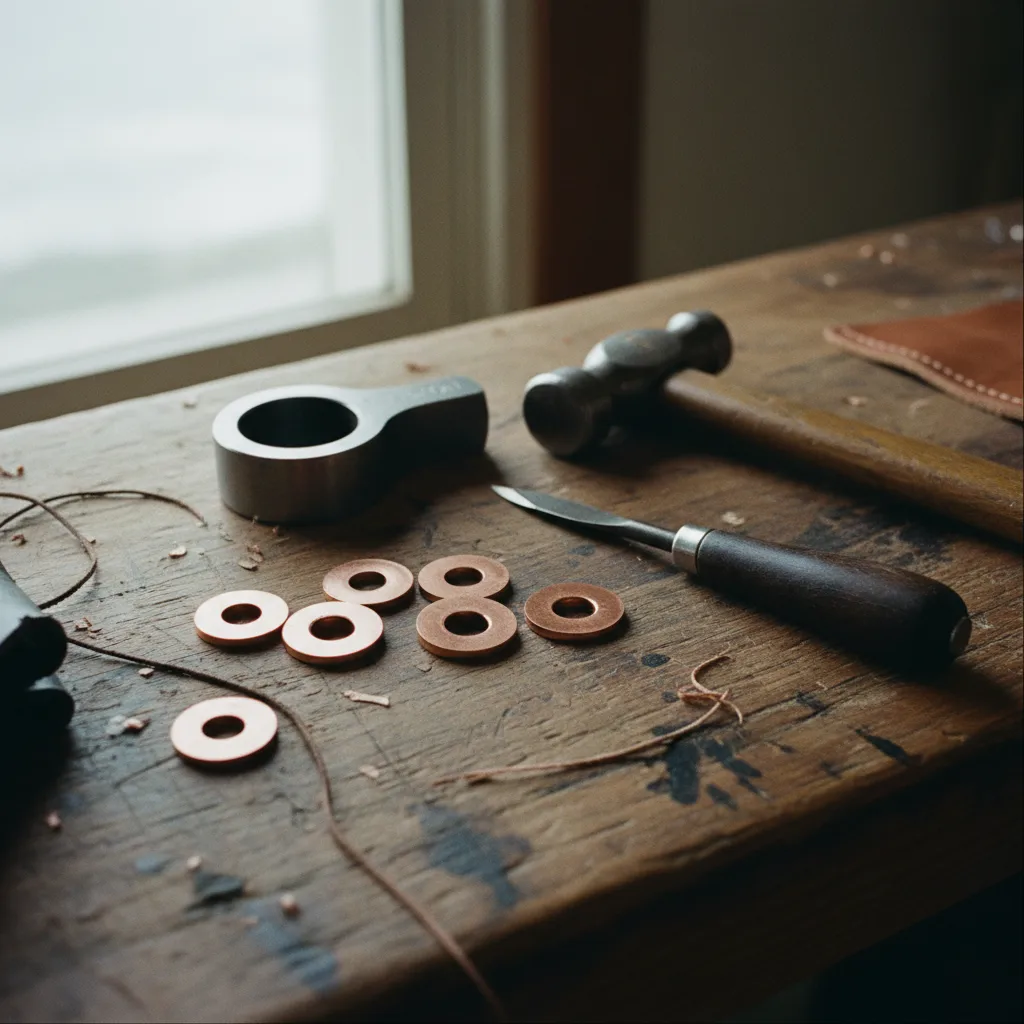
In coastal environments, ordinary steel and plated alloy fasteners quickly succumb to corrosion and rust when exposed to salty marine air. The makers gather around bins of solid copper rivets and matching setting burrs, testing the pure, heavy copper metal that develops a protective marine patina over time. The sailor demonstrates the traditional method of driving a copper burr down the rivet shank with a hollow setting tool before peening the tail into a smooth, permanent dome. Solid copper fasteners provide unmatched mechanical strength and lifetime rust resistance for heavy leather sea chests and rigging wraps.
In addition to copper rivets, the workshop offers heavy marine-grade brass snap hooks, welded stainless steel D-rings, and heavy grommet dies. Setting copper rivets with consistent ball-peen strokes produces smooth, rounded crowns that never snag against sails or heavy rigging lines. The artisans examine cast bronze snap shackles, appreciating their smooth spring-loaded action and dependable release under tension. Studio staff offer tips on pre-punching grommet holes through thick leather facing patches before setting them with weighted dead-blow mallets. The technical dialogue reinforces their mutual dedication to producing indestructible seafaring equipment that endures decades of service.
Midday Pier Strolls and Waterfront Boardwalk Reflections
Taking a midday break from material sourcing, the trio walks out onto a historic wooden pier extending into the bustling harbor. The rhythmic lap of ocean swells against weathered pilings and the sight of sailboats tacking across the bay provide a soothing backdrop for conversation. Sitting on a sun-bleached wooden bench, the makers spread out their oiled leather swatches to evaluate how the rich grain tones appear against the bright oceanic horizon. The restorative sea air clears their minds and inspires new utilitarian design concepts rooted in maritime functionality.
Strolling along the marina boardwalk reveals classic wooden sloops and working fishing vessels that showcase functional leatherwork in active everyday use, from tiller covers to mast boots. Seeing weathered leather surviving years of saltwater exposure confirms the wisdom of investing in top-tier oil-tanned materials. Carrying their rolls of heavy latigo and copper rivets, the artisans discuss how traditional maritime joinery informs modern leathercraft construction. The inspiring coastal walk reinforces their focus before wrapping up the day's acquisitions with genuine creative satisfaction.
Coastal Workshop Sourcing Advice for Heavy-Duty Maker Projects
Finding heavy marine leather supplies around Long Beach goes smoothly when you define your maritime project needs prior to departure. Utilizing the Karpo APP allows craftspeople to specify their waterfront district alongside oiled hide preferences or non-corrosive copper fastener requirements to discover relevant nearby workshop recommendations. Readers can comfortably review the recommended dockside locations, select the specialized maker lofts that match their rigging or upholstery goals, and establish their own visit schedule along the coastal harbor.
When setting out on a Long Beach maritime sourcing stroll, wearing comfortable walking shoes and bringing a heavy-duty canvas tote will keep your dense leather cuts and brass hardware organized. Taking time to talk with seasoned harbor craftspeople often yields invaluable tips on beeswax waterproofing mixtures, copper peening techniques, and upcoming boatbuilding gatherings. Maintaining a personal log of maritime stitching techniques and thread waxing formulas helps preserve traditional seafaring craft for future custom builds. Combining deliberate material selection with a refreshing walk along the ocean creates a deeply satisfying day that honors the living tradition of coastal handcraft across generations.
Ask Karpo for more information.
Keep reading
- Burbank Film Memorabilia Collector Shop Walk: Studio Stash
 Pasadena Film Memorabilia Collector Shop Walk: Classic Route
 Silver Lake Film Memorabilia Collector Shop Walk: Indie Lore