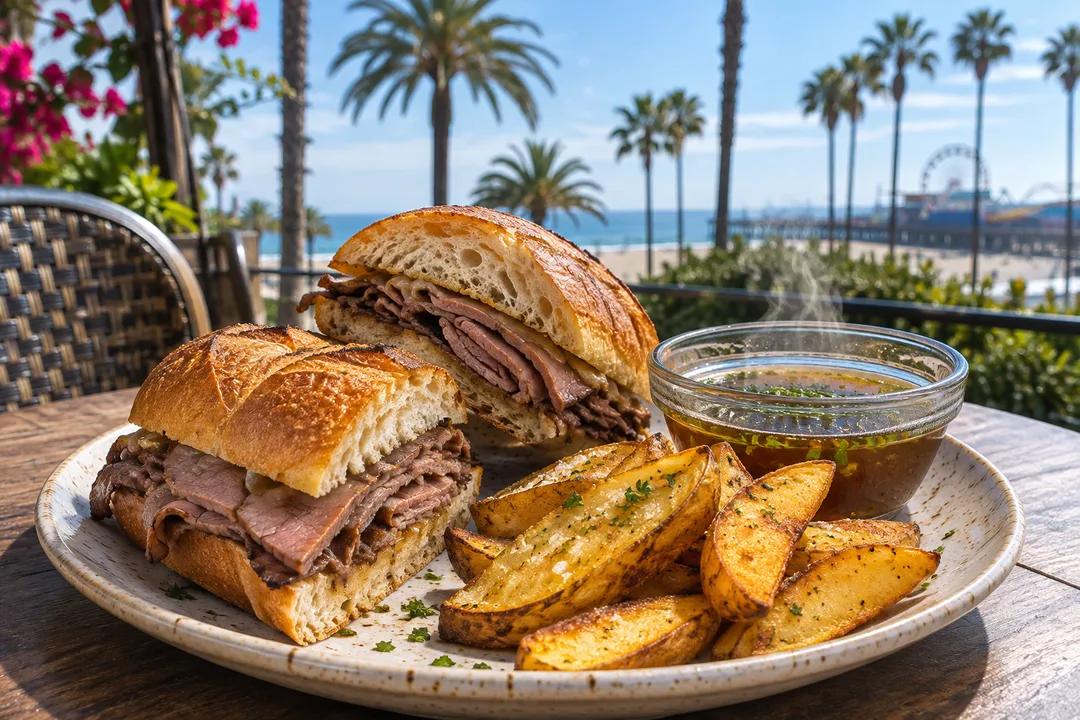
 Santa Monica French Dip Sandwich Lunch Picker by Ocean
Restaurants

Koreatown Korean BBQ Group Dinner Picker for Office Teams
Planning a year-end team dinner? This Koreatown Korean BBQ group dinner picker shows how to split tables, order cuts, pace drinks and end the night in song.
A Korean BBQ dinner for twelve coworkers succeeds or fails on one decision made before anyone sits down: how many grills, and who stands guard over each one. Koreatown makes that decision easier than anywhere else in Los Angeles, because its barbecue rooms are built for loud tables, long nights and food arriving in waves. Use this Korean BBQ group dinner picker to plan the year-end team dinner, from the seating chart to the last song of the night.
Why Koreatown Feels Built for a Team Night
Koreatown grew around Olympic Boulevard and Western Avenue as Korean families settled in the area and opened markets, churches and restaurants, and over the following decades it spread north toward Wilshire. Today it is one of the densest neighbourhoods in the city, a place where office towers, Art Deco apartment blocks and strip malls stack restaurants on top of each other. Many barbecue rooms sit on second floors or behind plain doors in plazas, so the street rarely hints at how busy it is upstairs.
That density is exactly what a work group needs. If one place has a long wait, another grill room is usually a short walk away, and after dinner there are dessert cafes, pocha bars and karaoke rooms within a few blocks. A Koreatown team night rarely needs a taxi between stops. The whole evening can happen on foot, which matters when half the group has had a few glasses of soju and nobody wants to drive.
Splitting Twelve People Across the Grills
Most barbecue tables seat four to six people around one grill, so a group of twelve usually becomes two or three tables side by side. Do the seating yourself rather than letting it happen by accident. Put one confident cook at each table, mix departments so the quiet analysts are not stranded together, and seat the manager near the middle so they are not shouting across the room all night.
When you call ahead or walk in, ask for neighbouring tables or a semi-private corner rather than a single long table. Separate grills mean meat cooks faster and nobody waits twenty minutes for the next round. Some rooms have partitions or back sections that work well for a team, and a brief chat with the host about your group size before the evening rush makes the night much smoother.
Ordering Cuts So Every Table Eats Together
Combination sets are the easiest way to feed a group, because each one bundles several meats with stews, rice and egg in a single order. Pick the same combo for every table so nobody feels the other side got the better deal. A classic build starts with thin unmarinated brisket that cooks in seconds, moves to pork belly and thick-cut shoulder, and finishes with marinated short rib or bulgogi, since sugar in the marinade chars quickly and sticks to the grate.
Order a second round only when the first is nearly gone. Overordering is the most common team-dinner mistake in Koreatown, partly because the banchan already fills the table with kimchi, pickled radish, potato salad, bean sprouts and fish cake. Those small dishes are refilled on request, so a hungry intern can eat well without anyone ordering another platter. Skip the seafood add-ons for a big group; they slow the grill and rarely get finished.
Grill Duty, Scissors and Table Manners
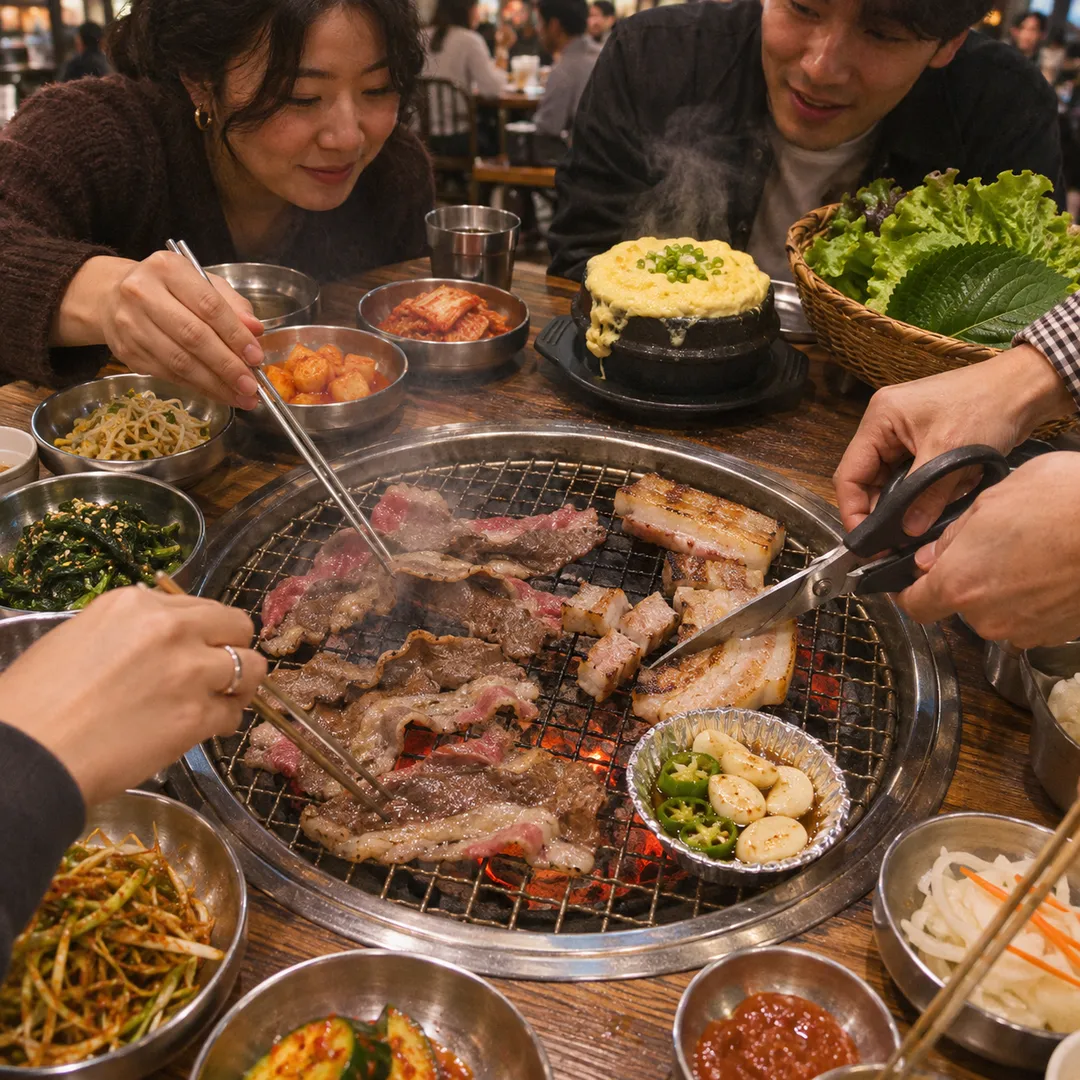
In many Koreatown rooms the staff will start the meat and cut it with kitchen scissors, then hand over the tongs. Decide in advance who takes them at each table. The traditional rule is that the youngest person cooks for elders, but on a mixed team it is kinder to rotate, and a manager who grills the first round for everyone tends to earn more goodwill than any speech.
Teach the wrap before the first piece lands. Take a lettuce or perilla leaf, add a slice of meat, a dab of ssamjang, a sliver of garlic and some green onion salad, then fold it and eat it in one bite. Newcomers often try to nibble a wrap in halves and end up wearing it. A short demonstration from the colleague who grew up eating this way turns a nervous table into a cheerful one.
Soju Etiquette for a Mixed Team
Drinking customs are part of a Korean barbecue dinner, and they are easy to explain kindly. Pour for others rather than yourself, hold the bottle with two hands when pouring for someone senior, and turn slightly away when you drink in front of an elder. Many groups make a simple toast at the start and leave it there, which keeps the ritual without turning the night into a contest.
Plan for colleagues who do not drink. Order barley tea, sparkling water or a fruity soda for them from the start, so their glass is never empty during toasts. Make it clear nobody has to finish a shot, and keep the bottles moving slowly. A well-run team dinner ends with everyone remembering the jokes, not with someone apologising in the office chat the next morning.
Timing the Night Around the Koreatown Rush
Koreatown fills from early evening, and on Friday and Saturday the waiting crowds spill onto sidewalks in front of the busiest rooms. For a work group, a weeknight early in the evening is the sweet spot. Leave the office in two waves if traffic is heavy, and send one organiser ahead to hold the table and start the first order, so the late arrivals walk into sizzling meat rather than an empty grill.
If the wait at your first choice runs past half an hour, move on. Every team has one person who gets restless, and Koreatown has enough grill rooms that a second option is rarely more than a block or two away. Keep a backup in mind before you leave the office, and agree on a group chat message that sends everyone to the new place without a debate on the pavement.
After Dinner: Dessert, Pocha and Noraebang
When the grills cool, walk off dinner along Wilshire Boulevard, where old Art Deco towers and theatre marquees glow green and gold after dark. A bingsoo cafe makes a good soft landing for colleagues heading home early, since a bowl of shaved ice with red bean or mango feeds three or four people and takes no time. Others can continue to a pocha, the casual drinking houses that serve fried chicken and spicy rice cakes into the evening.
The traditional finale is a noraebang, a private karaoke room rented by the hour with a couch, a screen and a tambourine. Walk in unless your group is very large, ask for a room for twelve and appoint someone to queue up the opening song. The shy accountant who refuses to sing at dinner is very often the one holding the microphone at midnight, and that is the story people retell in January.
Picking the Place With Karpo
A few days before the dinner, collect the basics: headcount, any vegetarians, allergies, people who avoid pork and who will need an early exit. Then shortlist two or three Koreatown grill rooms that suit a big table, and keep one in reserve. The Karpo APP can help you search for Korean barbecue spots in Koreatown, compare a few options that suit your group and save them to share with the team.
On the night itself, keep it simple. One cook per grill, one combo per table, one toast, and one plan for when the meat runs out. Koreatown rewards groups that arrive with a light plan and stay flexible, and a team that grills together for a few hours tends to walk back into the office on Monday knowing each other a little better.
Ask Karpo for more information.
Keep reading
- Santa Monica French Dip Sandwich Lunch Picker by Ocean
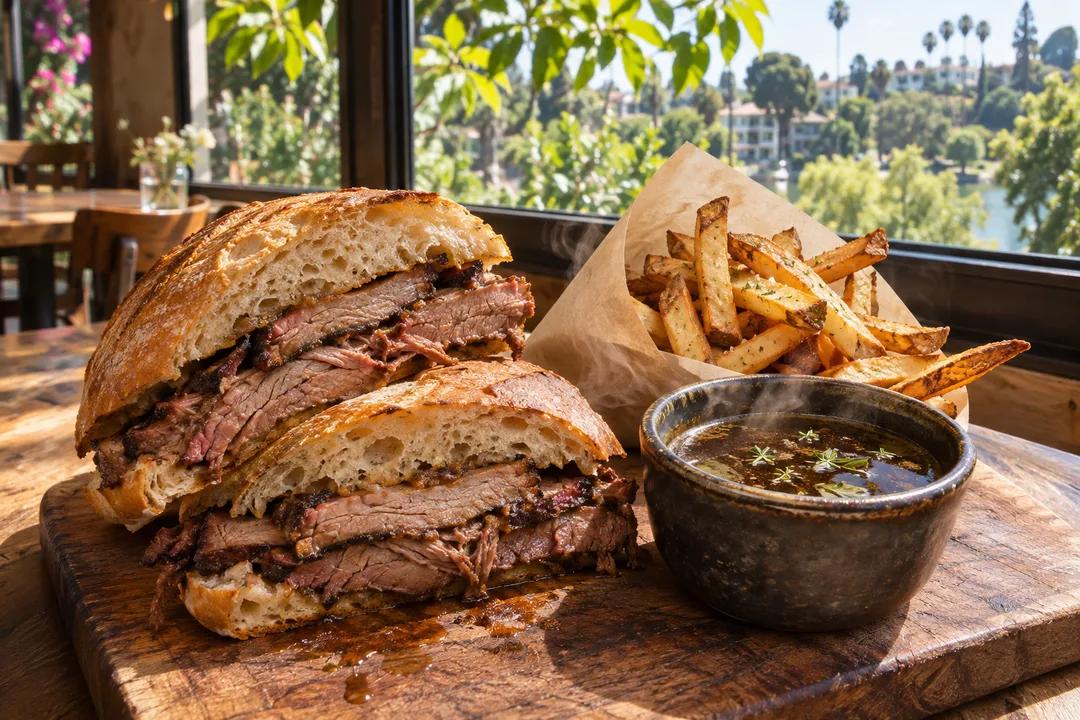 Echo Park French Dip Sandwich Lunch Picker Around Noon
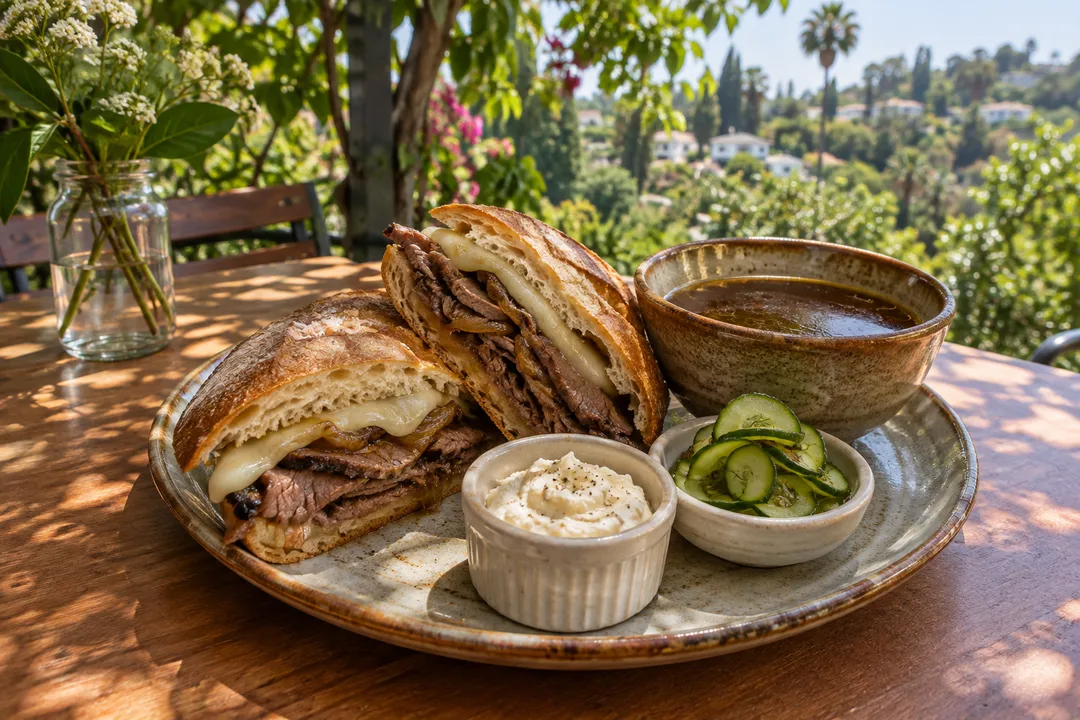 Silver Lake French Dip Sandwich Lunch Picker on Hillsides