 Burbank Film Memorabilia Collector Shop Walk: Studio Stash
Hidden Gems & Odd Finds
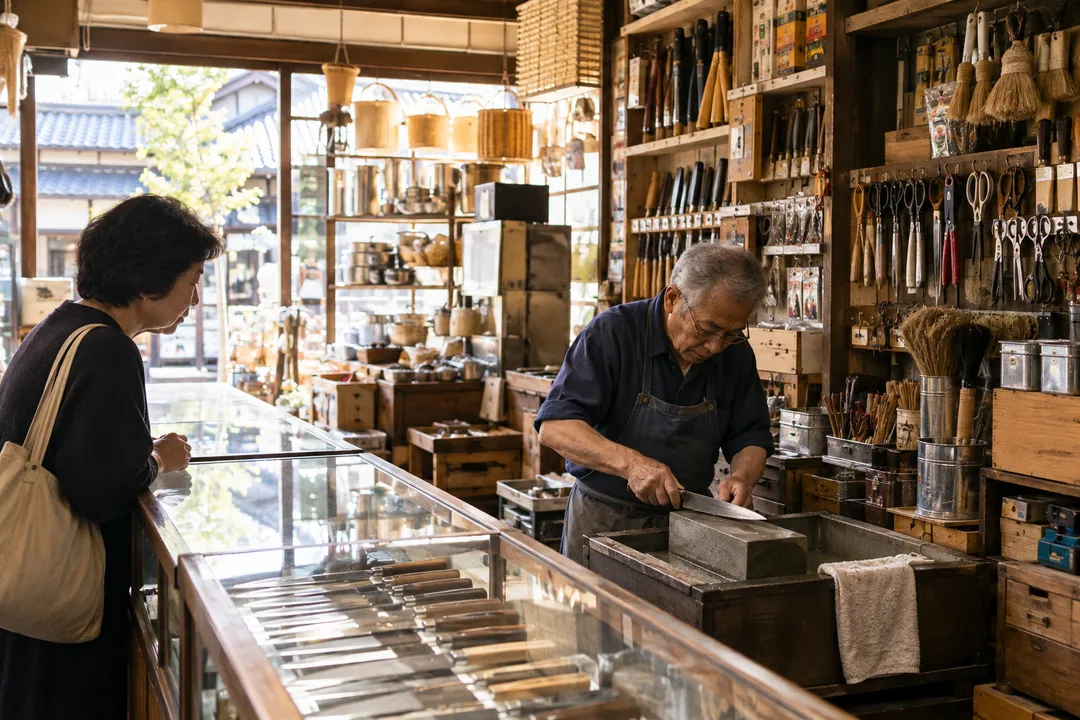
Anzen Knife Sharpening Shop: Weekend Little Tokyo Hours
Anzen Hardware at 1617 W. 6th Street offers weekend knife sharpening in Los Angeles, with a practical Little Tokyo service visit for local cooks.
Anzen Hardware at 1617 W 6th Street is a practical Los Angeles knife sharpening shop lead for a cook who prefers a neighborhood hardware errand to a luxury showroom. The listed schedule runs Saturday and Sunday from 10am to 4pm. Bring a clean, protected blade and ask the counter to explain the intake path; a hardware-store visit should never be mistaken for an automatic repair promise.
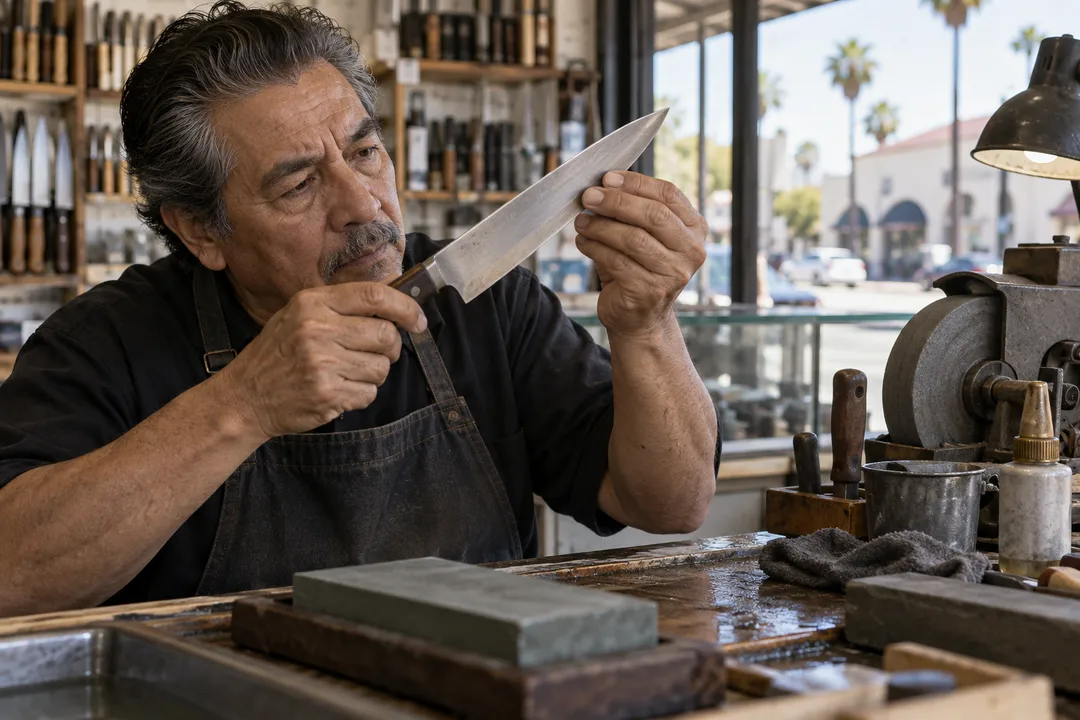
The Hardware Counter Comes First
Anzen’s hardware-store character means Anzen’s appeal is its useful, no-frills setting. Hardware stores make room for the ordinary maintenance jobs that keep a home running, and a knife service question belongs in that practical world. The first stop is the service counter, not the display aisle. State that you are asking about sharpening, show the tool only when it is safely wrapped, and let the staff explain which work the shop accepts.
Anzen’s Practical Service Question
The first useful distinction is A kitchen knife can look simple while hiding important differences. A narrow Japanese blade, a heavy stamped chef knife, a serrated bread knife, and a single-bevel slicer should not be treated as interchangeable. Tell the counter what you cut most often and whether the edge has been damaged. The useful answer may be a sharpening intake, a maintenance product, or a referral for work beyond the store’s scope.
Describe the Knife’s Work
At a neighborhood counter, Before leaving home, wipe off food residue and dry the blade completely. Use a rigid guard or a thick folded towel secured inside a bag, with the handle positioned so you can identify the knife without reaching toward the edge. Do not carry it loose through a hardware aisle. Good packing protects you, the staff, and the tool while the service question is being sorted out.
Carry It Like a Tool
Safe packing starts with Anzen is better approached as a conversation than a vending machine. Ask who performs the sharpening, whether the work is handled on site, what turnaround the counter uses, and how the finished item is labeled. If the answer is product-only, that is still useful: you have learned not to leave the knife there as though a service ticket already exists.
Ask Who Performs the Job
A service lead is not a guarantee: There is no responsible universal price to print without a current service menu. Blade length, steel, edge style, chips, and extra repair work can all change the quote. Ask for the exact scope and price for your tool, then decide whether the trip makes sense. That habit keeps a retail sharpening lead from becoming an invented guarantee in a search result.
Price Follows the Actual Blade
Ask for the exact scope before The address works best as an early errand. Start with the hardware counter, settle the service question, and then keep the rest of the route light. Carrying a valuable blade into a crowded lunch or onto several unrelated stops is unnecessary. If you are collecting supplies, separate the wrapped knife from loose hardware so nothing presses against the edge or handle.
A First Street Morning Route
First Street makes this an early errand: This option fits a cook who values convenience, a renter building a basic kitchen kit, or a professional who already knows the knife is a routine maintenance case. A collector with a handmade blade or a damaged single bevel should ask more questions before handing anything over. The store’s practical atmosphere is an advantage when the request itself is practical and clearly described.
The Case for Waiting
The wrong moment is Skip the visit if you are arriving only because dinner starts in an hour. Even a long daily schedule does not prove same-day capacity, and the staff may need to route unusual work elsewhere. If the edge is unsafe to carry or the knife has a serious chip, leave it home until you have a service path. Speed is not a substitute for the right intake.
Simple Care at Home
Until the answer is clear, For interim care, use a wooden or stable composite board, keep the knife dry, and store it so the edge cannot strike other tools. A honing rod can realign a sound edge but cannot replace metal removal when the knife is truly dull. If you are unsure of the angle, practice on a less valuable tool before experimenting with a favorite chef knife.
Identify the Knife Clearly
A simple photo record gives Write down the maker, blade length, handle material, and visible marks. Hardware stores often serve many kinds of customers, so a clear description helps the staff keep the item identifiable. A photo also gives you a before-and-after record without demanding that anyone promise a particular finish. The record is especially useful if the knife needs a second visit or outside repair.
Heat, Cars, and Timing
Morning planning helps because Los Angeles traffic makes the long opening pattern useful but does not remove the need for planning. Morning can be easier for a service question because you are not competing with an end-of-day rush. On a hot afternoon, keep the wrapped blade out of a hot car and make the hardware stop the anchor rather than leaving it unattended while you shop elsewhere.
What to Ask at Pickup
At pickup, separate the work from At pickup, ask what was done and whether the knife has a recommended storage or honing routine. Run your finger nowhere near the edge; judge the result by a controlled paper or food test at home. If the service was referred out, keep the ticket and contact details. A clear handoff is a better result than a vague claim that the knife is simply sharper.
The Value of Practical Clarity
Anzen’s value is practical clarity: The most useful Anzen visit may be the one that teaches you how local maintenance actually works. Hardware counters connect tools, repair habits, and neighborhood knowledge, but they do not turn every request into a specialist workshop. Keep the distinction visible in your own notes. You can then choose sharpening, a stone, or a dedicated cutlery expert without confusing the categories.
A Controlled Little Tokyo Errand
For a Little Tokyo route, Karpo APP can build a Little Tokyo or downtown route around the hardware stop without making you carry the knife farther than necessary. Ask for a nearby coffee break, a supply run, or a backup specialist if the counter cannot accept the work. The result should feel like a controlled maintenance errand: wrapped blade, clear question, realistic timing, and no invented shortcut.
Ask Karpo for more information.
Keep reading
- Burbank Film Memorabilia Collector Shop Walk: Studio Stash
 Pasadena Film Memorabilia Collector Shop Walk: Classic Route
 Silver Lake Film Memorabilia Collector Shop Walk: Indie Lore