 Burbank Film Memorabilia Collector Shop Walk: Studio Stash
Hidden Gems & Odd Finds
Donabe Kitchenware Store on La Brea, Closed Mondays: TOIRO
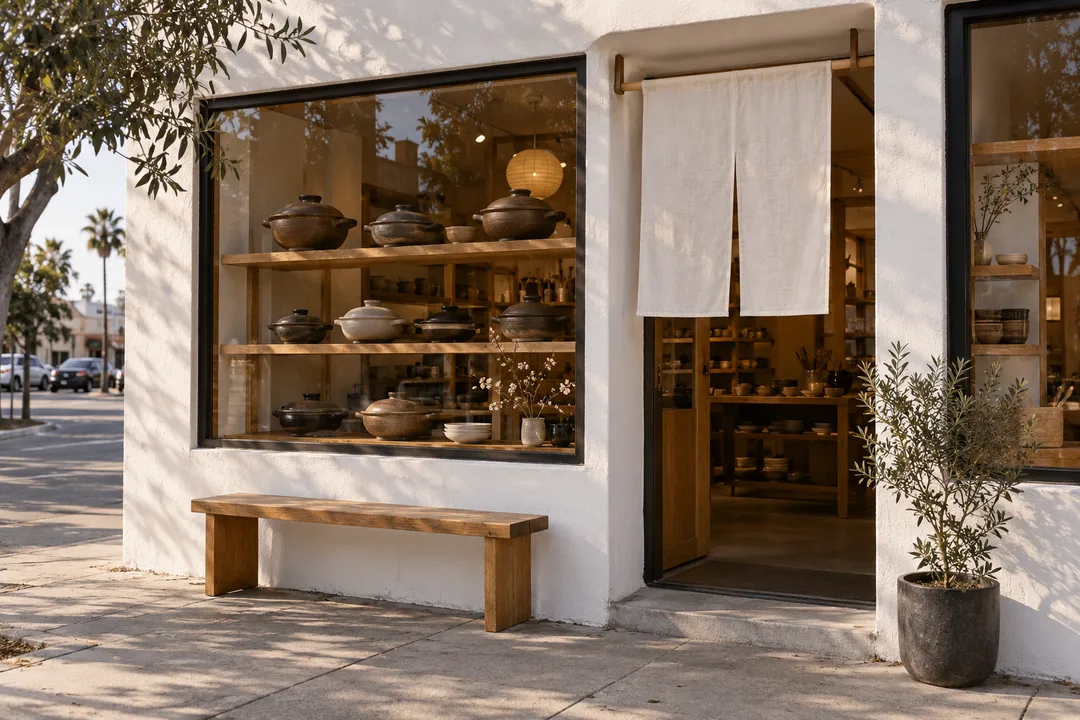
TOIRO, at 1257 N La Brea Ave, is open Tuesday to Sunday 11 am to 6 pm and closed Monday. Its Iga clay donabe come from Nagatani-en, a kiln founded in 1832.
TOIRO, at 1257 N La Brea Ave, is a small Japanese kitchenware store built around one object: the donabe, the Iga clay pot used for rice, hot pots and steaming. It is open Tuesday through Sunday from 11 am to 6 pm and closed on Mondays. The shelves hold more clay cookware than anywhere else in Los Angeles, along with hand-carved wooden tools, knives, tableware and a pantry of Japanese seasonings chosen to cook in those pots.
One Rice Cooker That Became a Shop
Founder Naoko Takei Moore grew up in Tokyo, and the shop's story starts with a single pot. In 2007 she tasted rice cooked in Kamado-san, a double-lid donabe rice cooker made in Iga, Japan, and called it the best rice she had ever eaten. She contacted the maker, Nagatani-en, and on August 27, 2008, began importing a few pieces at a time, selling them from her house in Los Angeles through a website she built herself.
Word of mouth and cooking classes in her home kitchen did the rest. In 2015 she published DONABE with Ten Speed Press, the first English-language book devoted to the subject, which became a finalist in the 2016 IACP cookbook awards. On October 10, 2017, she opened the brick-and-mortar shop on La Brea, stocking Nagatani-en's Iga-yaki pottery alongside tools and tableware she selects from across Japan.
The maker behind the pots is old even by Japanese standards. Nagatani-en was founded in 1832 in a quiet village in Iga, in Mie Prefecture, and has been run by the Nagatani family for eight generations. Its 16-level climbing kiln, built in the early 19th century and fired until the early 1970s, is the oldest surviving large climbing kiln of its kind in Japan and has been a designated cultural property since 2011. Every Iga-yaki piece on the La Brea shelves traces back to that workshop.
The Donabe Wall and What to Buy First
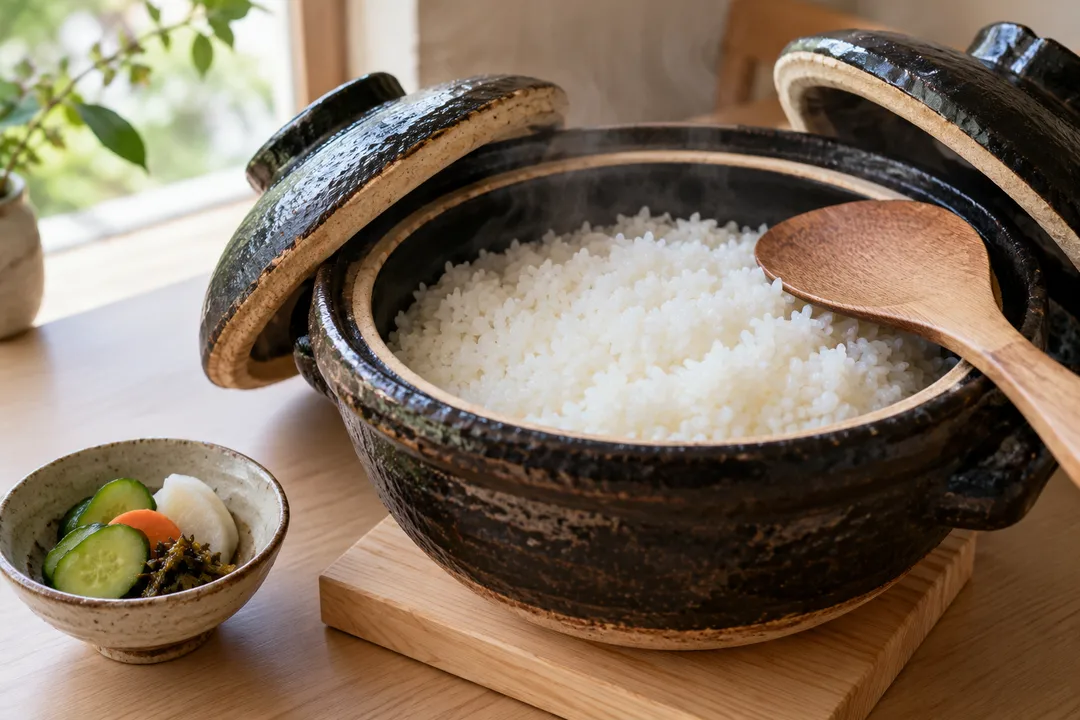
The pots are the reason to come, and seeing them in person matters, because weight, lid fit and glaze are hard to judge online. Start with Kamado-san itself: the Simply Donabe Edition, a special version designed by Naoko, is $260. If you mainly want to try clay-pot cooking without committing to a rice cooker, the Tenmoku Zosui Donabe, a small pot for rice porridge that comes with its own bowl, is $120.
Larger all-purpose donabe for hot pot and braising stand on the lower shelves, including the Yuraku-Gama Oribe Donabe at $580 and, at the top of the range, the Iki Donabe, handcrafted by a master artisan in Iga, at $1,000. Before the first real meal, every new pot needs seasoning, which TOIRO's own guide calls medome: you cook a very thick porridge in it, often from leftover rice and water. Iga clay is naturally porous, which is the source of its even heat and long heat retention, and the starch from the porridge fills the tiny gaps so the pot is less likely to crack or leak later. TOIRO describes it as a simple, one-time process, so it is worth doing the same evening you bring the pot home.
Skip buying the most expensive pot on a first visit unless you already cook with clay. A mid-size pot used three times a week teaches you more than a showpiece that waits in a cupboard for special occasions.
Tools, Knives and the Pantry Shelf
Around the clay cookware, the steel and wood pieces are just as carefully chosen. An iron rolled omelet pan for tamagoyaki is $90, a light hinoki cypress cutting board with its own stand is $50, and a Yukihira induction-compatible pot with a glass lid is $80. The TOIRO x Taski knife series, double-beveled blades handmade in Gifu, is $240, and the store's stainless kitchen scissors are $100.
The pantry shelf is where most visitors end up adding a few small things to the bag. Dashi soy sauce from Shimane is $14, Kyoto pure sesame oil by Yamada Seiyu is $30, and an autographed copy of Naoko's SIMPLY DONABE cookbook is $40. A ceramic trivet made by Nagatani-en for Kamado-san is $22, a sensible add-on, because a hot clay pot needs one on any table.
Classes, Timing and Shop Etiquette
Cooking classes and events are part of the shop's identity, and TOIRO sells seats through the cooking classes and events section of its website. Sessions there focus on donabe dishes and Japanese home cooking, which is the fastest way to learn how the pots behave before you buy one.
The shop is small, so timing matters. Weekday afternoons are the quiet window for long questions about which donabe suits your stove. Weekends bring more browsers. Handle the clay pieces with both hands and set lids down gently, because Iga clay is porous and less forgiving of knocks than glazed porcelain.
Remember the Monday closure. If Monday is your only free day, the nearest broad alternative is Williams Sonoma at the Original Farmers Market on 3rd Street, open every day, though it carries no donabe. For other Japanese homewares, Tortoise General Store in Mar Vista keeps a Tuesday-to-Sunday schedule too, so plan both visits for later in the week.
Along North La Brea
The shop sits on the stretch of La Brea between Santa Monica Boulevard and Sunset Boulevard, a working mix of small studios, shops and cafés where most people arrive by car and then walk the blocks. A short stroll north brings you to the Jim Henson Company Lot, the former Charlie Chaplin studio, whose Tudor-style buildings are easy to spot from the sidewalk.
Head south down La Brea and you reach Pink's Hot Dogs near Melrose Avenue, a Hollywood stand since 1939, if a donabe run calls for a less refined lunch. Melrose Avenue's shops and cafés start right at that corner, so an afternoon here can stretch into a long design-and-food loop, roughly a fifteen-minute walk each way from TOIRO's door.
Practical Notes
Address: TOIRO, 1257 N La Brea Ave, West Hollywood, CA 90038. Hours: Tuesday to Sunday 11 am to 6 pm, Monday closed. Online orders within the continental US ship free above $375.
Prices above are TOIRO's listed prices on its website. For more Japanese food and design stops around La Brea and Melrose, ask Karpo in the Karpo APP for a route that fits your afternoon.
Ask Karpo for more information.
Keep reading
- Burbank Film Memorabilia Collector Shop Walk: Studio Stash
 Pasadena Film Memorabilia Collector Shop Walk: Classic Route
 Silver Lake Film Memorabilia Collector Shop Walk: Indie Lore