 Burbank Film Memorabilia Collector Shop Walk: Studio Stash
Hidden Gems & Odd Finds
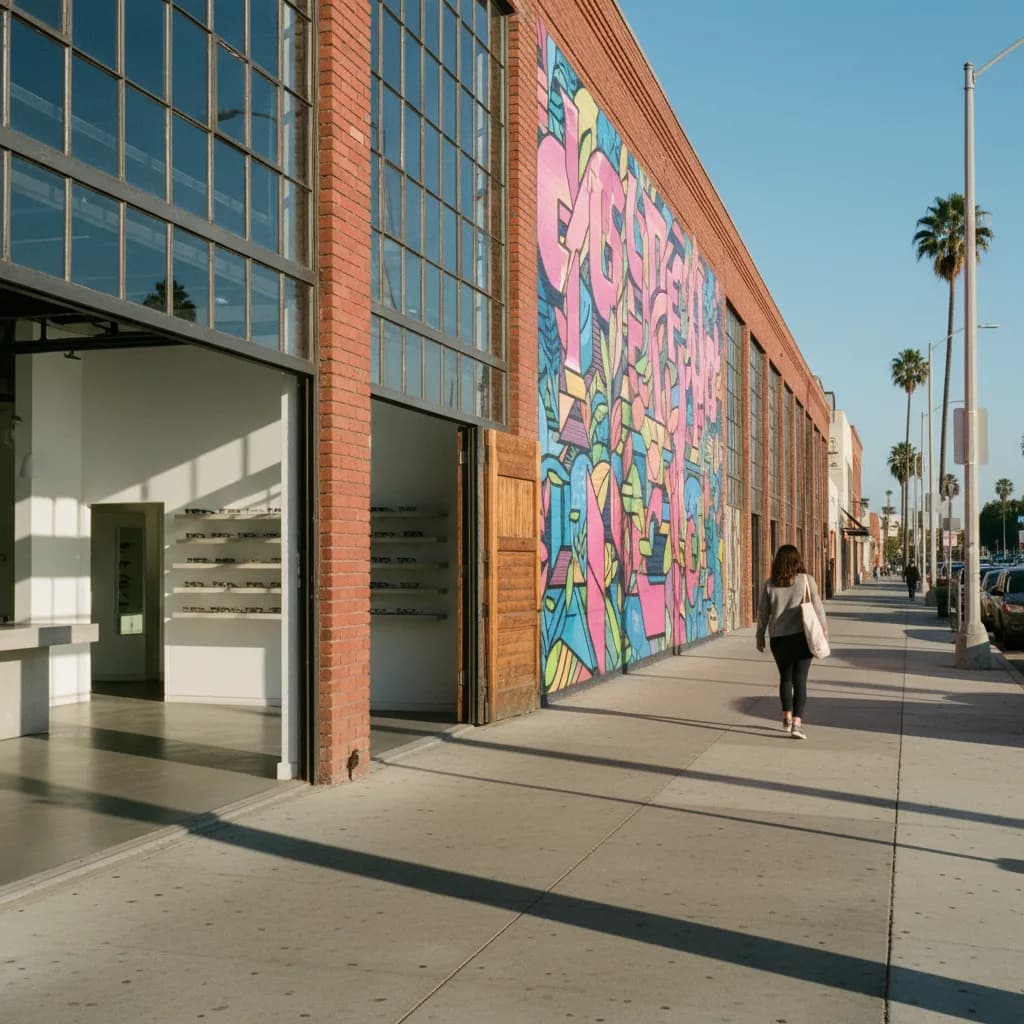
Independent Eyewear Boutique Guide to the LA Arts District
Use the LA Arts District for an independent eyewear boutique visit built around custom fittings, frame materials and a walk past warehouse murals and galleries.
The Arts District sits on the eastern edge of Downtown Los Angeles, between Little Tokyo and the concrete channel of the Los Angeles River, in a grid of old rail-side warehouses that artists began moving into decades ago. Today those brick shells hold galleries, design studios and restaurants, and the area draws people who care about how things are made. That makes it a natural place to plan an independent eyewear boutique visit focused on materials, craft and a fitting that is tuned closely to your face.
Industrial Streets With a Design Eye
Mateo Street, Traction Avenue and the blocks around them have the wide sidewalks and loading docks of their industrial past, now painted with some of the largest murals in the city. Shops here often occupy huge spaces with only a few products on display, and eyewear studios tend to follow that gallery logic. Frames may be laid out on concrete or timber like objects in an exhibition rather than packed onto a wall.
The people who shop here include architects, set designers and creative-agency staff from the surrounding offices, so the frames on offer often lean toward clean shapes, matte finishes and interesting materials. If you like the idea of glasses that read as a piece of design rather than an accessory, this is a good neighbourhood to explore.
Understanding Custom and Made-to-Order Frames
Some independent opticians offer frames made or adjusted specifically for you. That can range from choosing a stock shape in a custom colour or size, to a fully bespoke frame drawn around measurements of your face. Ask the optician what their process involves, how many fittings it takes and how long the whole thing usually runs, so you know what you are signing up for.
A custom route makes the most sense if standard frames never fit you well. People with a low nose bridge, a wide face, very narrow features or a strong prescription often struggle with off-the-shelf sizes. In those cases a made-to-measure frame can solve problems that years of adjustments never fixed, and it is worth asking about even if you end up choosing a stock option.
Materials Worth Asking About
Titanium is light, strong and resistant to corrosion, which makes it a favourite for minimalist frames and for anyone who finds heavier glasses tiring by the evening. Acetate offers depth of colour and can be warmed and reshaped for a precise fit. Less common materials such as buffalo horn or wood bring warmth and texture, but they need more care and may not suit everyone's routine.

Ask how each material behaves over time. Some acetates change colour slightly with sun exposure, natural materials can react to moisture and skin oils, and thin metal temples can bend if you push glasses up into your hair. A good optician will match the material to the way you actually live, not only the way the frame looks under spotlights.
Getting the Most From the Fitting
Bring a recent prescription and any glasses that have felt especially comfortable or uncomfortable. Explain your day honestly. Drawing at a desk, cycling across the river bridges and long video calls all put different demands on a pair. The more the optician understands, the better they can recommend lens types, coatings and frame dimensions.
Expect detailed measuring for a serious fitting, including bridge width, temple length and how far the lenses sit from your eyes. If you are investing in a custom or premium frame, ask whether follow-up adjustments are included and how the shop handles changes if the finished pair does not feel quite right.
Walking the District Between Appointments
The Sixth Street Viaduct, the bridge that replaced an older span and opened in 2022, arcs over the Los Angeles River from the southern edge of the district toward Boyle Heights. Its sweeping arches and pedestrian paths offer wide views of the downtown skyline, a good test of a new distance prescription. The river channel below is one of the most filmed concrete landscapes in the world.
Closer to the warehouses, the murals along Mateo Street and around Traction Avenue change regularly as new artists paint over older works, so even a short walk feels different from visit to visit. The Southern California Institute of Architecture occupies a long former freight depot on the district's eastern side, and its students bring a constant stream of ideas and models through the streets.
Little Tokyo sits on the north-west edge of the district, within easy walking distance. It is home to the Japanese American National Museum and a cluster of shops and food counters, and it makes a good place to sit down and look again at the photos you took while trying frames.
The Limits of an Arts District Visit
This area suits a planned visit more than a quick errand. Studios can be spread across several long blocks, some operate by appointment, and the walk between them is often unshaded in the midday sun. If you need a simple replacement pair the same day, a conventional optical store will probably be faster. Choose the Arts District when craft, fit and materials are the priority.
Weekends bring brunch crowds and gallery visitors, which can make street parking hard to find. A weekday visit tends to be calmer for a long fitting, and the Metro stop on the Little Tokyo edge of the district is a practical way to arrive without a car.
Planning Your Arts District Day
A good day here starts with a clear sense of what problem a new frame should solve, whether that is comfort, a hard-to-fit face or simply a desire for something beautifully made. Book or plan one serious fitting, leave time for a mural walk and a view from the viaduct, and give yourself a little space before you commit to a custom order.
The Karpo APP can help you shape the plan. Tell it you are looking for an independent eyewear boutique in the Arts District, mention whether you are curious about custom frames or particular materials and how much time you have, and it can help you put together a shortlist and a walking order that fits around the rest of your day.
Ask Karpo for more information.
Keep reading
- Burbank Film Memorabilia Collector Shop Walk: Studio Stash
 Pasadena Film Memorabilia Collector Shop Walk: Classic Route
 Silver Lake Film Memorabilia Collector Shop Walk: Indie Lore