 Los Feliz Nail Salon Walk In Finder for Broken Nail Repair
Neighborhood Guides
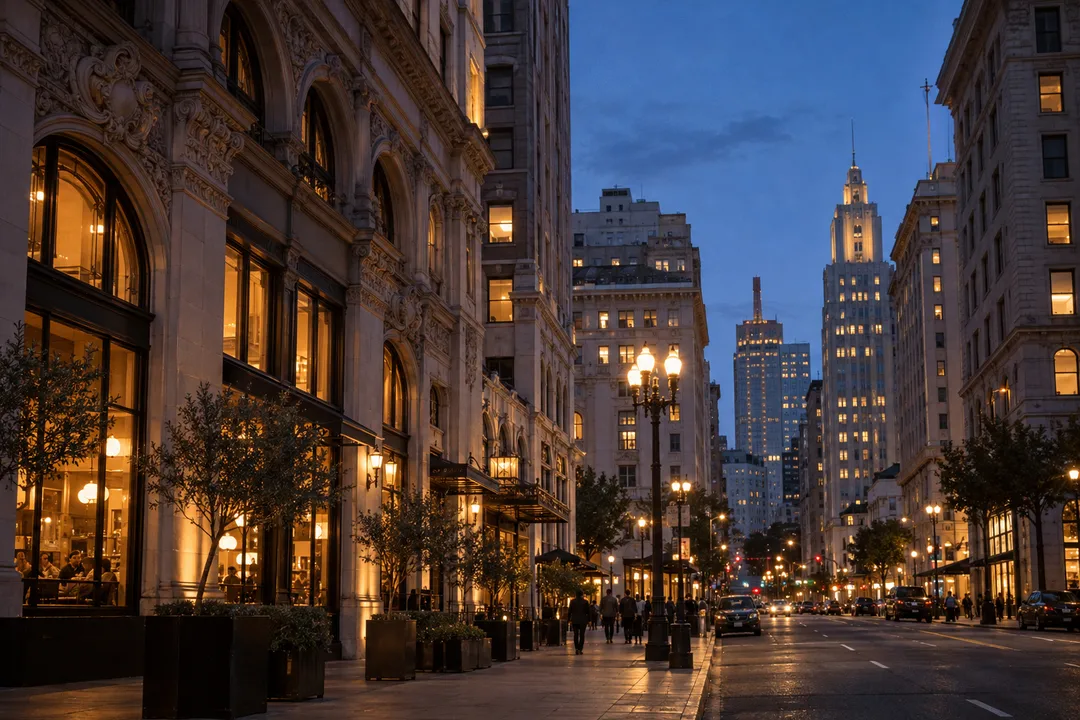
DTLA Historic Neighborhood Loop: Plan Historic Core Layers
Plan a DTLA historic neighborhood loop through the Historic Core with architecture layers, people-watching choices, and short exits when the city pace changes.
A DTLA historic neighborhood loop is a study in layers: ornate commercial facades, narrow passages, active sidewalks, and the newer city moving around them. Start by choosing a question—how old building fronts meet present-day street life, how light changes a corridor, or how a quiet lobby threshold interrupts a busy block. This planner turns that question into a flexible route with a short version, a deep-reading version, and a people-watching extension, so the walk can respond to the group rather than a fixed checklist.

Read the block before choosing direction
The Historic Core rewards an early orientation. Stand where everyone can see the next two turns, name the first architectural detail to notice, and agree that the group will regroup after every long crossing. DTLA’s visual density can pull walkers in different directions, especially when a facade, market entrance, or street performer catches attention. A clear regroup rule lets the curious person pause without losing the rest. The loop should feel layered, not hurried, even when the sidewalks are busy.
For a compact route, trace one corridor and return through a parallel street. Compare the same building materials under different storefront treatments, then leave before the details blur together. Keep the focus on public-facing elements: cornices, columns, tile, ironwork, and the rhythm of entrances. If someone wants a closer look, choose a safe place outside the pedestrian stream. The point is not to catalogue every building, but to notice how a single block holds several eras at once.
Build the loop around one architectural question
A deeper version can connect a grand avenue with side streets that change the soundscape. Use the avenue for its long views and the side street for close textures, then swap again. This alternating gear makes a downtown walk manageable for mixed groups because nobody has to stay in the loudest zone for the full outing. Avoid narrating every fact as you walk; leave quiet intervals so people can hear footsteps, buses, and the small sounds that make the present visible beside the historic shell.
Broadway is useful as a visual spine, but it should not dictate every step. When the group is alert, add a short detour to inspect a lobby edge or a courtyard view from public space. When the crowd thickens, move to the next parallel street and preserve the question you started with. A route planner should treat density as a variable. If the sidewalk becomes too compressed for a conversation, the correct choice is a quieter block, not a louder explanation.
Use Broadway and side streets as contrasting gears
For people-watching, choose a pause with a clear edge and a view of movement rather than a doorway. One person can track the choreography of deliveries, commuters, and visitors while another studies the facade above eye level. Keep bags close, leave room for wheelchairs and strollers, and do not turn a pedestrian corner into a meeting room. Those practical habits make the walk feel generous to the people who live and work in the same corridor.
If the group wants a food or drink break, make it an explicit transition instead of a surprise stop. Finish the architecture section first, then let Karpo suggest options around the end point based on distance and the group’s timing. That keeps the route honest: the historic loop remains a walk, while the meal becomes a separate decision. If a venue is crowded, the plan should offer a nearby alternative without forcing everyone to retrace the densest blocks.
Plan pauses without blocking the flow
The best downtown ending is often a change of scale. Move from a detailed facade to a broader view of the street grid, or from a crowded corridor to a block where the group can speak normally. Ask each walker to name one layer they noticed that was not obvious at the start. This quick reflection turns a collection of observations into a route memory, and it gives late joiners a way to understand the walk without hearing every earlier comment.
Use Karpo to save three DTLA versions: a compact architectural loop, a texture-heavy loop with side-street detours, and a people-watching route that ends near your chosen break. Add constraints for walking tolerance, crowd comfort, and the time available. The tool should return a route with clear decision points, not a claim that every block is equally interesting. A good result makes it easy to shorten the outing while keeping the central question intact.
Choose a finish that keeps the story coherent
Photographs work best when they show the relationship between building and street. Start with one wide frame from a public sidewalk, then make a detail image of a material, shadow, or doorway edge without blocking anyone. Skip shots that require crossing against the signal, standing in a loading area, or photographing people who did not agree to be subjects. DTLA already supplies visual drama; your job is to notice it without adding friction to a working downtown block.
Have an exit plan for every gear change. If noise or congestion rises, switch to the parallel route. If someone is tired, stop the loop at the next obvious transit or meeting point rather than adding one more landmark. If rain begins, prioritize covered public edges and shorten the visual brief. These choices are better than pretending the original route still fits. Historic neighborhoods are lived systems, and a responsive plan respects the current conditions.
Practical notes for a downtown history loop
A route card is especially useful downtown: note the last comfortable regroup point, the quieter parallel street, and the moment when the architecture question has been answered. Those notes keep the next version grounded in this walk rather than a generic itinerary.
Practical notes: keep the first meeting point easy to describe, leave room for crosswalk timing, and avoid packing too many landmarks into one session. Save one low-density alternative, one social finish, and one short version in Karpo APP. When the group can choose between those versions in real time, a DTLA historic neighborhood loop becomes an adaptable way to read the city—one block, one facade, and one changing street sound at a time.
Ask Karpo for more information.
Keep reading
- Los Feliz Nail Salon Walk In Finder for Broken Nail Repair
 Highland Park Nail Salon Walk In Finder for Retro Manicures
 Koreatown Nail Salon Walk In Finder for K-Beauty Nail Looks