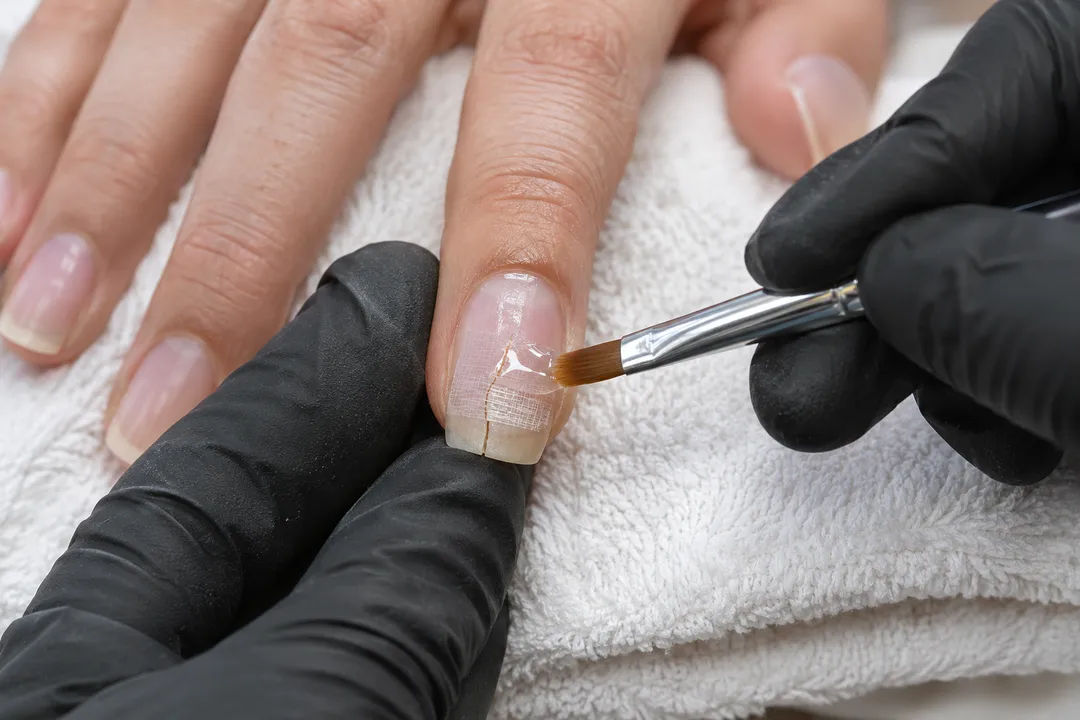
 Los Feliz Nail Salon Walk In Finder for Broken Nail Repair
Neighborhood Guides
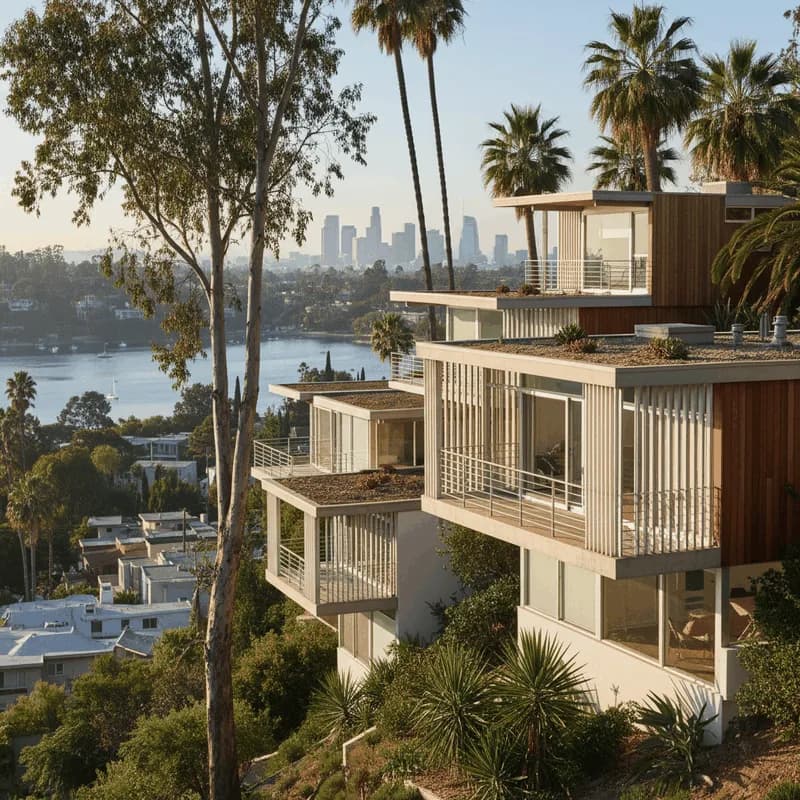
Silver Lake Historic Architecture Walking Route: 5 Climbs
Walk a Silver Lake historic architecture walking route from Richard Neutra's lakeside glass studio to 1920s streetcar stairs and Schindler hillside homes.
Steep canyon slopes that intimidated conventional tract builders during the 1920s and 1930s turned Silver Lake into North America's boldest proving ground for residential modernism. Drawn by inexpensive hillside parcels, sweeping views across the municipal reservoir completed by engineer William Mulholland in 1907, and artistic clients from nearby silent-film studios, Viennese emigrés Richard Neutra and Rudolph Schindler reinvented how houses sit on angled terrain. Following a Silver Lake historic architecture walking route from the eastern shore of the reservoir up historic 1920s streetcar stairs to Sunset Junction lets you study glass-and-aluminum sun louvers, stepped plaster cantilevers, and Spanish Colonial Revival ridge villas in one continuous loop.
Richard Neutra's Lakeside Laboratory on Silver Lake Boulevard
Launch your route on the eastern pedestrian path of the Silver Lake Reservoir opposite Silver Lake Boulevard and Neutra Place. Facing the water behind a screen of vertical movable aluminum louvers stands the Neutra VDL Studio and Residences, designated a National Historic Landmark in 2017. Originally constructed in 1932 with a no-interest loan from Dutch industrialist Cees van der Leeuw to prove that industrial steel, plate glass, and light wood framing could fit onto a compact sixty-by-seventy-foot urban lot, the house was rebuilt by Richard Neutra and his son Dion Neutra between 1964 and 1966 after a fire.
From the public sidewalk along Silver Lake Boulevard, observe how vertical aluminum fins rotate to deflect harsh western glare off the water while a shallow rooftop penthouse solarium mirrors the reservoir surface across the street. Immediately uphill behind the studio, turn onto Neutra Place and Earl Street to walk through the largest contiguous cluster of Neutra-designed single-family houses anywhere in the world. Built between 1948 and 1962—including the Treweek, Sokol, Kambara, and Flavin residences—these low horizontal pavilions link neighboring gardens through continuous post-and-beam overhangs, mitered corner glass panes with no corner mullions, and natural redwood soffits. Just east of the reservoir on Avenel Avenue, architect Gregory Ain carried that same social vision into the 1950 Avenel Cooperative Housing Project, arranging ten interlocking modernist row homes with sliding interior walls and private garden patios.
R. M. Schindler's Stepped Hillside Geometry on Lucile and Micheltorena
Walk south and climb into the hills west of the reservoir toward Micheltorena Street and Lucile Avenue to see how Neutra's contemporary and rival, Rudolph M. Schindler, tackled steep Silver Lake grades with sculptural spatial play rather than crisp industrial grids. Near the crest of Micheltorena Street stands Schindler's Oliver House, completed in 1934 on a narrow ridge saddle that views the Silver Lake water basin to the east and the Hollywood Hills to the west. Rather than leveling the hilltop, Schindler anchored a splayed timber-and-stucco frame onto the contour, tilting interior ceilings upward to catch cross-ventilation.
Several blocks south at the steep corner of Lucile Avenue and Carnation Avenue, pause across the street from Schindler's Falk Apartments, completed in 1940. Confronted with a dramatic forty-five-degree drop toward Sunset Boulevard, Schindler stacked four apartment units diagonally down the slope so the flat roof of each lower unit serves as the private sunlit garden terrace for the apartment directly above. Across the reservoir's western crest in the Moreno Highlands—originally subdivided in the 1920s by heiress Daisy Canfield Moreno for Mediterranean Revival stucco villas—look up toward the sweeping poured-concrete arched roof of Silvertop, engineered by Frank Lloyd Wright protégé John Lautner starting in 1956.

1920s Pacific Electric Stairways and the Music Box Steps
What makes Silver Lake uniquely navigable on foot is its network of more than fifty public concrete stairways poured by subdivision developers during the 1920s. Before private automobiles dominated Los Angeles, hillside homebuyers needed direct pedestrian shortcuts down steep embankments to board the Pacific Electric Red Car and Los Angeles Railway yellow streetcars running along Sunset Boulevard and Glendale Boulevard. Follow Vendome Street south toward Del Monte Drive to climb the one hundred thirty-three concrete treads of the Music Box Steps, rising up to Cove Avenue.
Immortalized in 1932 when comedians Stan Laurel and Oliver Hardy filmed their Academy Award-winning short comedy *The Music Box* hauling a crated player piano up these exact risers, the stairway still cuts between terraced gardens of agave, Mexican fan palms, and 1920s Spanish Colonial Revival bungalows. As you pause on the middle landings to catch your breath, look closely at the hand-troweled stucco textures, clay barrel-tile roof vents, and arched Judas-window peepholes set into heavy cedar front doors along Del Monte Drive and Cove Avenue.
Sunset Junction Storefronts, Heat to Skip, and Your Flat-Loop Plan B
Descend toward the triangular convergence of Sunset Boulevard, Santa Monica Boulevard, and Sanborn Avenue, historically known as Sunset Junction since electric trolley lines met here at the turn of the twentieth century. Along the low-rise commercial blocks between Micheltorena Street and Griffith Park Boulevard, 1920s brick and cast-stone commercial storefronts retain Churrigueresque parapet finials, recessed terrazzo shop entryways, and clerestory transom windows above shaded café sidewalks. Tucked onto the residential side streets just off Sunset Boulevard and Cove Avenue—including the blocks below the Mattachine Steps dedicated in 2012—early twentieth-century California bungalow courts arrange six to eight miniature Craftsman and Spanish cottages face-to-face across a shared central garden walk, offering an intimate counterpoint to the modernist glass pavilions by the lake.
Set out between eight in the morning and ten-thirty to climb the Micheltorena, Vendome, and Lucile slopes before midday Southern California sun reflects off white stucco walls and steep concrete steps. Carry water, wear grippy sneakers for narrow hillside sidewalks that occasionally disappear on curving canyon lanes, and observe private Neutra and Schindler residences respectfully from the public curb without stepping onto private driveways. Skip walking along Glendale Boulevard near the freeway terminus or Hyperion Avenue's high-speed viaduct curves during weekday commuter traffic, and skip climbing exposed west-facing stairways at two in the afternoon on warm autumn days. If midday heat builds or someone in your group prefers level ground, switch to your Plan B by following the flat two-mile paved perimeter path encircling the Silver Lake Reservoir and Meadow, which still passes directly alongside the Neutra VDL Studio and offers panoramic sightlines up to the surrounding hillside landmarks. Open the Karpo APP before your walk to link these five Silver Lake architectural stops and pair the climb with an iced coffee near Sunset Junction.
Ask Karpo for more information.
Keep reading
- Los Feliz Nail Salon Walk In Finder for Broken Nail Repair
 Highland Park Nail Salon Walk In Finder for Retro Manicures
 Koreatown Nail Salon Walk In Finder for K-Beauty Nail Looks