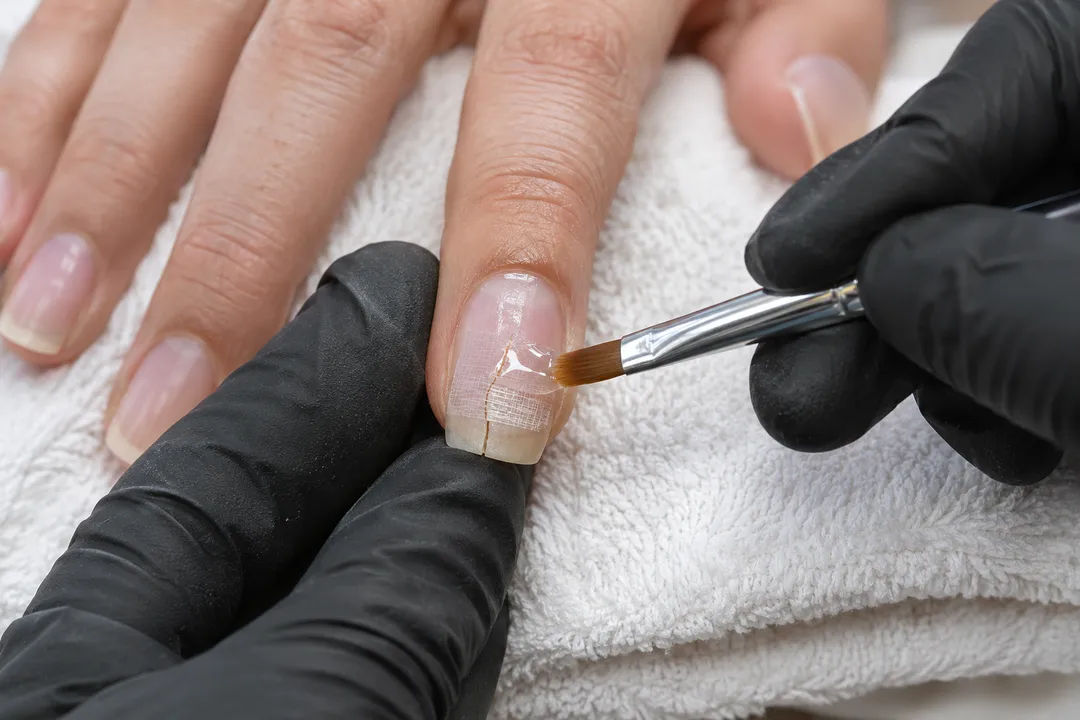
 Los Feliz Nail Salon Walk In Finder for Broken Nail Repair
Neighborhood Guides
Pasadena Historic Architecture Walking Route: 6 Civic Stops
This Pasadena historic architecture walking route links the 1927 City Hall, Civic Auditorium, Playhouse and Castle Green in about two miles of free sidewalks.
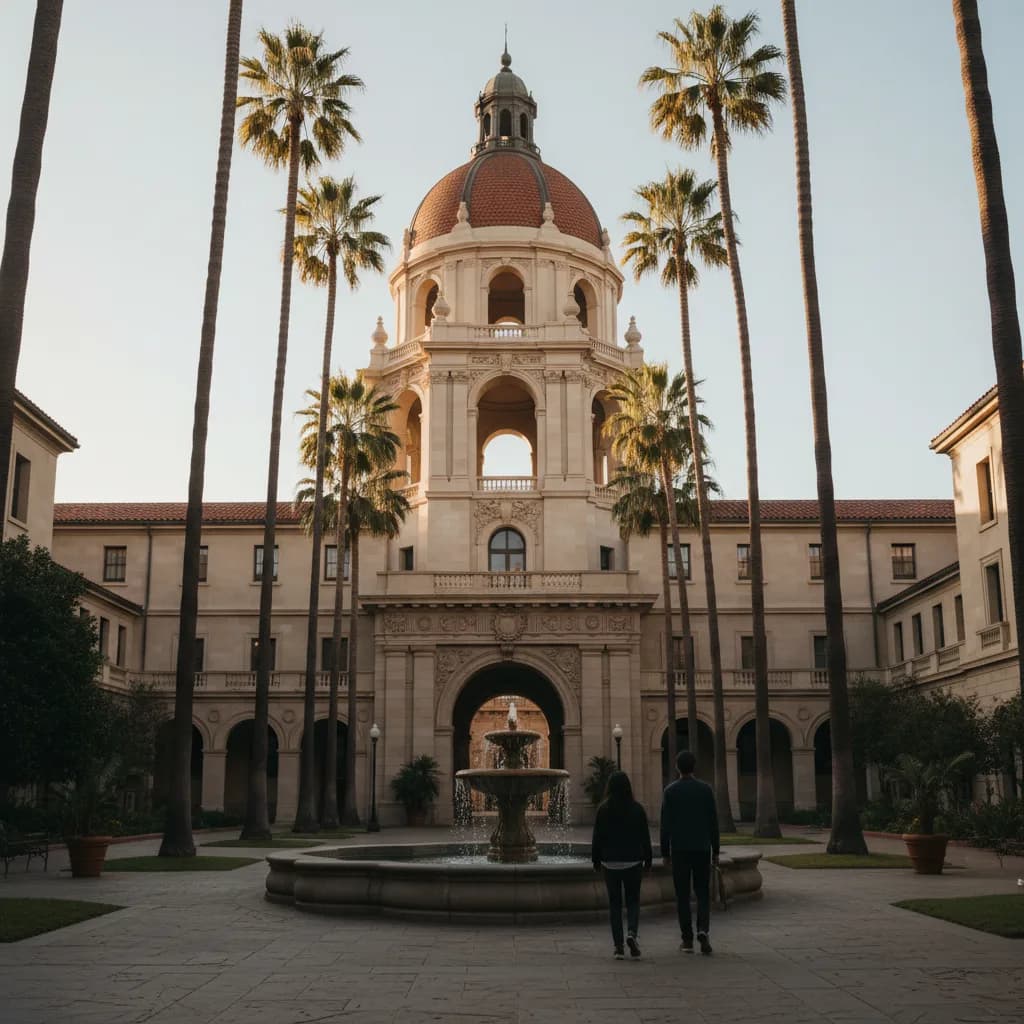
Pasadena City Hall at 100 North Garfield Avenue opened in 1927, and its tiled dome is the anchor for a free, roughly two-mile historic architecture walking route through the Civic Center and Old Pasadena. The firm of Bakewell and Brown, the same partnership behind San Francisco City Hall, gave Pasadena a Mediterranean Revival palace wrapped around a garden courtyard. From there, the Civic Auditorium, the Pasadena Playhouse, Castle Green and Colorado Boulevard all sit within a comfortable morning on foot.
Why the Civic Center Grid Makes This Route So Walkable
The buildings line up for a reason. In 1923 the city adopted a City Beautiful plan drawn up by the Chicago firm Bennett, Parsons and Frost, which arranged civic monuments along a cross of axes centered on Holly Street and Garfield Avenue. City Hall closes the view at one end, the Central Library on Walnut Street faces it from the north, and the Civic Auditorium on Green Street terminates the southern axis. Walking those axes in order turns a planning document into a sequence of framed views.
Arrive by Metro and the route starts almost at the platform. The A Line stops at Memorial Park station beside Holly Street and Arroyo Parkway, a short walk west of City Hall. Drivers can use the public garages tucked behind Colorado Boulevard, but the rail option means you can finish the loop in Old Pasadena and ride home from Del Mar station without doubling back. Comfortable shoes matter more than anything else here, because most of the best detail sits at curb level.
Stop One: The Courtyard Garden Inside Pasadena City Hall
Walk through the Garfield Avenue arch and the noise of the street falls away. The courtyard is planted with mature trees and boxed hedges around a central fountain, and the arcades on every side let you study the building at three distances: the dome from the far corner, the column capitals from the walkway, and the ironwork balconies straight above. Television fans sometimes recognize the facade from Parks and Recreation, where it stood in as the Pawnee city hall.
Locals use the courtyard as a lunch shortcut, so on weekdays you will share benches with city employees eating out of paper bags and jurors stretching their legs between sessions. Keep your voice low near the doors, because this is a working government building rather than a museum. Photographers get the cleanest symmetrical shot from the western arcade, looking east toward the dome, where the fountain sits dead center and the palms frame both edges of the picture.
Stop Two and Three: Library Facade and the 1932 Civic Auditorium
Walk north up Garfield to Walnut Street for the Central Library, designed by Myron Hunt and H. C. Chambers and completed in 1927. Its Spanish Colonial Revival front, arched entry and red tile roof complete the northern end of the civic axis. Treat this as an exterior stop and admire the composition from across Walnut Street, where the forecourt and its trees frame the arches, because the building has been the subject of extended seismic repair work in recent years.
Then turn back south past City Hall and continue to 300 East Green Street for the Pasadena Civic Auditorium, opened in 1932 and designed by Cyril Bennett and Fitch Haskell in an Italian Renaissance style. The pale facade, tall arched windows and painted soffits face a wide plaza that makes a natural pause point. Rose Queen coronations and touring concerts have filled this hall for decades, so check whether a matinee is letting out before you plan a photo from the plaza steps.
Stop Four: The Pasadena Playhouse on El Molino Avenue
Head east to 39 South El Molino Avenue, where Elmer Grey designed the Pasadena Playhouse in 1925 as a Spanish Colonial Revival theater with a tiled courtyard in front of the entrance. In 1937 the California legislature named it the State Theatre of California, and generations of actors trained in its school before heading to film studios. Step into the open courtyard to see the tile, the wrought iron lanterns and the arched loggia that turn the approach into a small plaza.
On show nights the courtyard fills with subscribers in good coats who have been coming for twenty years and students from nearby colleges hunting for rush seats. Mornings are quieter and better for the architecture itself, since the light lands directly on the west-facing front. If you want to see the auditorium interior, the only honest way is to attend a production, because the building is a working theater rather than a public tour stop.
Stop Five: The Moorish Towers of Castle Green
Walk west along Green Street to Raymond Avenue and look up. Castle Green at 99 South Raymond Avenue was completed in 1899 as an annex of the Hotel Green, designed by Frederick Roehrig, and its onion domes, striped arches and wraparound verandas look like nothing else in Southern California. The building is now private residences, so enjoy it from the sidewalk on Raymond Avenue and from the small park across the street, and save interior visits for the occasional public tour days the residents organize.
Here is the honest skip: do not bother walking the length of Raymond toward the old bridge stub expecting a second view of the hotel complex. The original main Hotel Green building across the street has been heavily altered, and the best sightline is the one you already have from Raymond and Green. Spend those ten minutes in Old Pasadena instead, two blocks north, where the density of intact facades per block is far higher.
Stop Six: Brick Alleys and One Colorado in Old Pasadena
Cross Colorado Boulevard into the Old Pasadena Historic District, listed on the National Register of Historic Places in 1983. The blocks between Pasadena Avenue and Arroyo Parkway hold brick commercial buildings from the 1880s through the 1920s, many with restored cornices, cast iron storefront columns and painted ghost signs on their side walls. Duck into Mills Place, one of the pedestrian alleys, to see the rear walls and loading doors that most visitors never look at.
Finish at One Colorado, the courtyard block bounded by Colorado Boulevard, Fair Oaks Avenue, Union Street and De Lacey Avenue, where seventeen historic buildings were stitched together around a public courtyard in the early 1990s. Weekend afternoons bring strollers, skateboarders cruising the side streets and couples taking engagement photos against the brick. It is the clearest example on the route of how Pasadena chose reuse over demolition when the old downtown was nearly lost in the 1970s.
Timing, Crowds and a Plan B for Rose Parade Season
The route takes about two hours at a relaxed pace, and weekday mornings between nine and eleven give the best mix of open courtyards and soft light on the domes. Avoid New Year's Day and the days around Rose Bowl games, when Colorado Boulevard closes for the parade, grandstands block facades and parking turns chaotic. Summer afternoons in Pasadena regularly push past ninety degrees, so carry water and use the shaded arcades at City Hall as your midday refuge.
If the Civic Center is fenced off for an event, flip the route into a craftsman walk instead. Head west toward the Arroyo Seco and the 1913 Colorado Street Bridge with its curving Beaux Arts concrete arches, then continue to the Gamble House neighborhood, where Charles and Henry Greene finished their landmark bungalow in 1908. You can save the stops in the Karpo APP and ask Karpo to suggest a loop order that fits the time you have before the light fades.
Ask Karpo for more information.
Keep reading
- Los Feliz Nail Salon Walk In Finder for Broken Nail Repair
 Highland Park Nail Salon Walk In Finder for Retro Manicures
 Koreatown Nail Salon Walk In Finder for K-Beauty Nail Looks