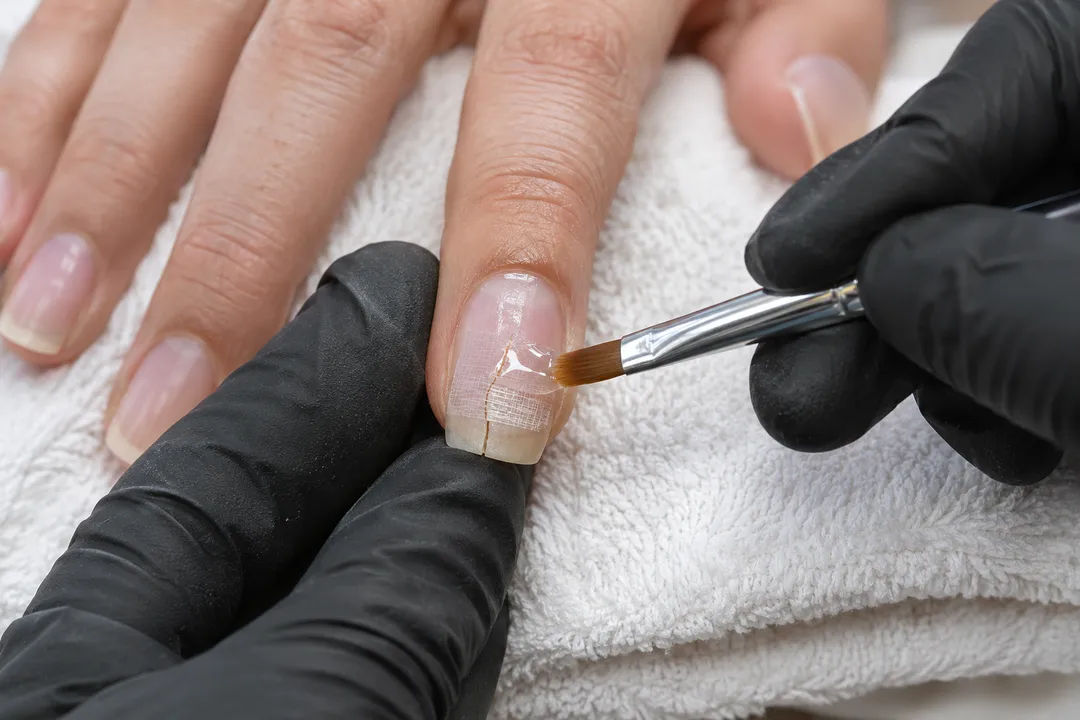
 Los Feliz Nail Salon Walk In Finder for Broken Nail Repair
Neighborhood Guides

LA Historic Architecture Stroll: Free Hollywood Walk
Tour vintage Hollywood on this free self-guided historic architecture stroll past the Pantages Theatre, Roosevelt Hotel, and Egyptian Revival facades.
Long before Hollywood Boulevard became an international tourist destination, it was an agricultural lemon-growing village called Cahuenga Valley that transformed in the 1920s into the world's most glamorous entertainment capital. Between 1920 and 1930, legendary theatre impresarios, studio founders, and visionary architects invested millions of dollars to line the boulevard with palatial movie theatres, luxury hotels, and Art Deco office towers. The Hollywood Boulevard Commercial and Entertainment Historic District was formally listed on the National Register of Historic Places in 1985, preserving dozens of landmark structures spanning Spanish Colonial Revival, Exotic Revival, and Zigzag Moderne styles. This self-guided historic architecture stroll guides you eastward past iconic cinema temples, revealing how theatrical fantasy and structural innovation forged an enduring architectural legacy.
Spanish Colonial Splendor at the Hollywood Roosevelt Hotel
Begin your architectural journey at 7000 Hollywood Blvd before the stately facade of the Hollywood Roosevelt Hotel, opened in May 1927. Named in honor of President Theodore Roosevelt and financed by a glittering syndicate of motion picture pioneers including Douglas Fairbanks, Mary Pickford, Sid Grauman, and Louis B. Mayer, this twelve-story Spanish Colonial Revival luxury hotel was built to accommodate visiting East Coast film executives and Hollywood celebrities in grand style. Designed by architects Fisher, Lake & Traver, the building features warm stucco walls, arched second-story loggias, wrought-iron Juliet balconies, and a commanding rooftop neon tower sign.
Step through the grand arched portal into the double-height historic lobby to admire the exquisitely restored Spanish Renaissance interior. Look upward to observe the massive hand-hewn wood ceiling beams, hand-painted with intricate polychrome heraldic patterns, wrought-iron chandeliers suspended from heavy chains, and a central tiled fountain surrounded by Spanish leather armchairs. On May 16, 1929, the hotel's Blossom Ballroom hosted the very first Academy Awards ceremony, where two hundred and seventy guests gathered for a private banquet to inaugurate the Oscar tradition, cementing the building's place as a cornerstone of cinema history.
Exotics and Glamour at TCL Chinese Theatre
Stroll directly across the street to 6925 Hollywood Blvd to behold the world-famous TCL Chinese Theatre, originally opened in May 1927 as Grauman's Chinese Theatre. Conceived by showman Sid Grauman following his success with downtown movie palaces, the building was designed by master architect Raymond M. Kennedy of the firm Meyer & Holler. Kennedy engineered an exotic Chinese theatrical fantasy, anchored by a colossal ninety-foot-tall bronze pagoda roof supported by two massive coral-red octagonal columns crowned by wrought-iron temple masks and hand-carved stone Heaven Dogs imported directly from China.
Walk into the forecourt to examine the world-famous concrete slabs containing the handprints, footprints, and signatures of cinema icons spanning from Douglas Fairbanks and Mary Pickford in 1927 to modern legends. Above the entrance, gaze at the dramatic thirty-foot-wide sculpted stone dragon relief carved directly into the central pagoda wall. The theater's lavish exterior demonstrated how 1920s architects discarded classical European conventions in favor of exotic, escapist theatrical motifs that prepared patrons for the larger-than-life fantasies projected upon the silver screen inside.
Sunburst Columns at the Historic Egyptian Theatre
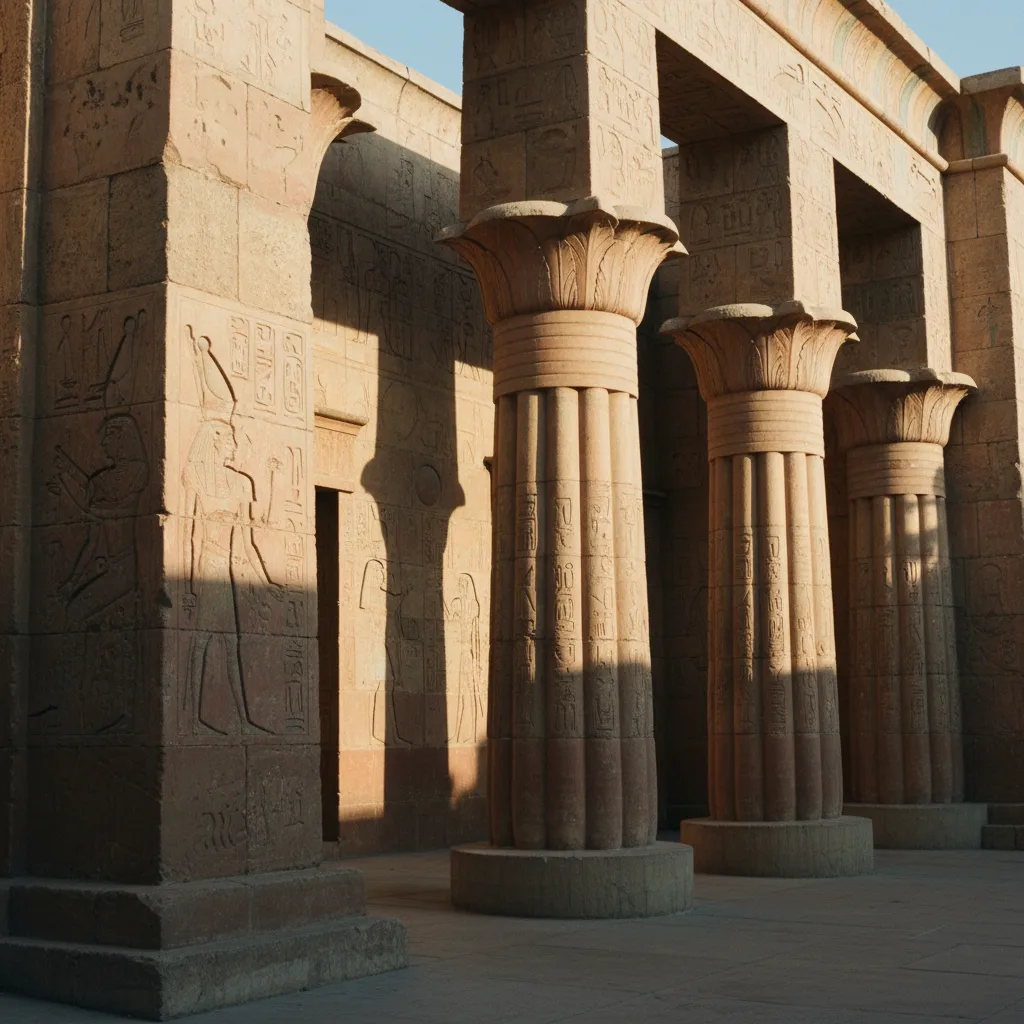
Continue east along Hollywood Boulevard past Highland Avenue to 6712 Hollywood Blvd to reach the landmark Egyptian Theatre, which opened in October 1922. Also built by Sid Grauman and designed by Meyer & Holler, this palace was completed just weeks before Howard Carter discovered King Tutankhamun's tomb in Egypt, unleashing an international craze for Egyptian Revival design. The building holds immense cultural importance as the birthplace of the modern Hollywood red-carpet movie premiere, inaugurating the tradition with the premiere of Douglas Fairbanks' Robin Hood in 1922.
Step off the busy sidewalk into the expansive entry courtyard, designed deliberately as an outdoor transitional foyer to buffer moviegoers from street noise. The walls are flanked by colossal lotus-headed columns, sculpted scarab beetles, and vibrant hieroglyphic murals restored to their original 1922 brilliance. Notice how the entrance court is framed by massive battered stone-textured stucco walls that recall the temples of Luxor and Karnak, demonstrating the extraordinary lengths 1920s architects went to create an immersive, transportive cultural experience.
Gothic Heights at the First National Building
Proceed eastward to 6777 Hollywood Blvd to inspect the Hollywood First National Building, rising prominently at the corner of Hollywood Boulevard and Highland Avenue. Completed in 1927 by the architectural firm of Meyer & Holler, this twelve-story reinforced concrete skyscraper served as the financial headquarters for First National Bank and the executive offices of major film production companies. The building's design represents a sophisticated blend of Art Deco geometric massing and ornate Gothic Revival ornamentation.
Look upward to admire the upper levels, where slender vertical piers rise without interruption to terminate in pointed Gothic arches, carved stone gargoyles, and decorative copper-clad pinnacle towers. The building was constructed during the height of the 1920s boom when banks competed fiercely to project financial invulnerability through soaring height and permanent stone materials. The street-level arcade features decorative cast-iron grilles and polished granite pilasters that maintain the stately urban street wall along this bustling commercial crossing.
Art Deco Extravaganza at the Pantages Theatre
Conclude your walk at 6233 Hollywood Blvd before the magnificent Pantages Theatre, dedicated in June 1930 near the corner of Hollywood and Vine. Conceived by vaudeville magnate Alexander Pantages and designed by architect B. Marcus Priteca, this palatial venue was the last grand movie palace constructed in Hollywood before the full economic weight of the Great Depression curtailed theater construction. The exterior is a tour de force of late Art Deco zigzag styling, anchored by a commanding eighty-foot vertical neon blade sign and an expansive wrap-around illuminated marquee.
Step inside the outer lobby to marvel at the breathtaking zig-zag vaulted plaster ceiling, lavishly coated in genuine gold and silver leaf and illuminated by geometric frosted-glass chandeliers. Priteca collaborated with interior artist Anthony Heinsbergen to cover the walls in dramatic bas-relief murals depicting modern aviation, radio communication, and industrial machinery, celebrating the dawn of the technological machine age. The Pantages hosted the Academy Awards ceremonies from 1950 through 1960, standing today as Hollywood's most pristine intact monument to pre-war theatrical luxury.
Transit Connections and Stroll Planning
This self-guided historic architecture stroll covers approximately one point two miles of flat walking along Hollywood Boulevard, taking about sixty to seventy-five minutes to complete at an appreciative pace. To capture dramatic architectural photography without harsh glare, schedule your stroll for the late afternoon hours between three and five o'clock, when westward golden sunlight illuminates north-facing theatre facades and casts long, sculptural shadows across ornate entrance courtyards, followed by sunset when vintage neon signs flicker to life.
Public transit access along the boulevard is exceptional: ride the Metro B Line (Red Line) directly to Hollywood / Highland Station to start at the western end of the walk near the Roosevelt Hotel, or exit at Hollywood / Vine Station to explore in the reverse direction starting at the Pantages Theatre. Frequent Metro bus lines including routes 180 and 217 provide convenient street-level connections. Karpo APP delivers precise GPS-guided walking navigation, historical landmark narratives, and archival photographs, making your architectural exploration of Hollywood Boulevard smooth, informative, and engaging.
Ask Karpo for more information.
Keep reading
- Los Feliz Nail Salon Walk In Finder for Broken Nail Repair
 Highland Park Nail Salon Walk In Finder for Retro Manicures
 Koreatown Nail Salon Walk In Finder for K-Beauty Nail Looks