 Los Feliz Nail Salon Walk In Finder for Broken Nail Repair
Neighborhood Guides
LA Historic Architecture Stroll: Free Broadway Theaters
Walk downtown Los Angeles on this free self-guided historic architecture stroll past the Eastern Columbia Building, Bradbury Building, and movie palaces.
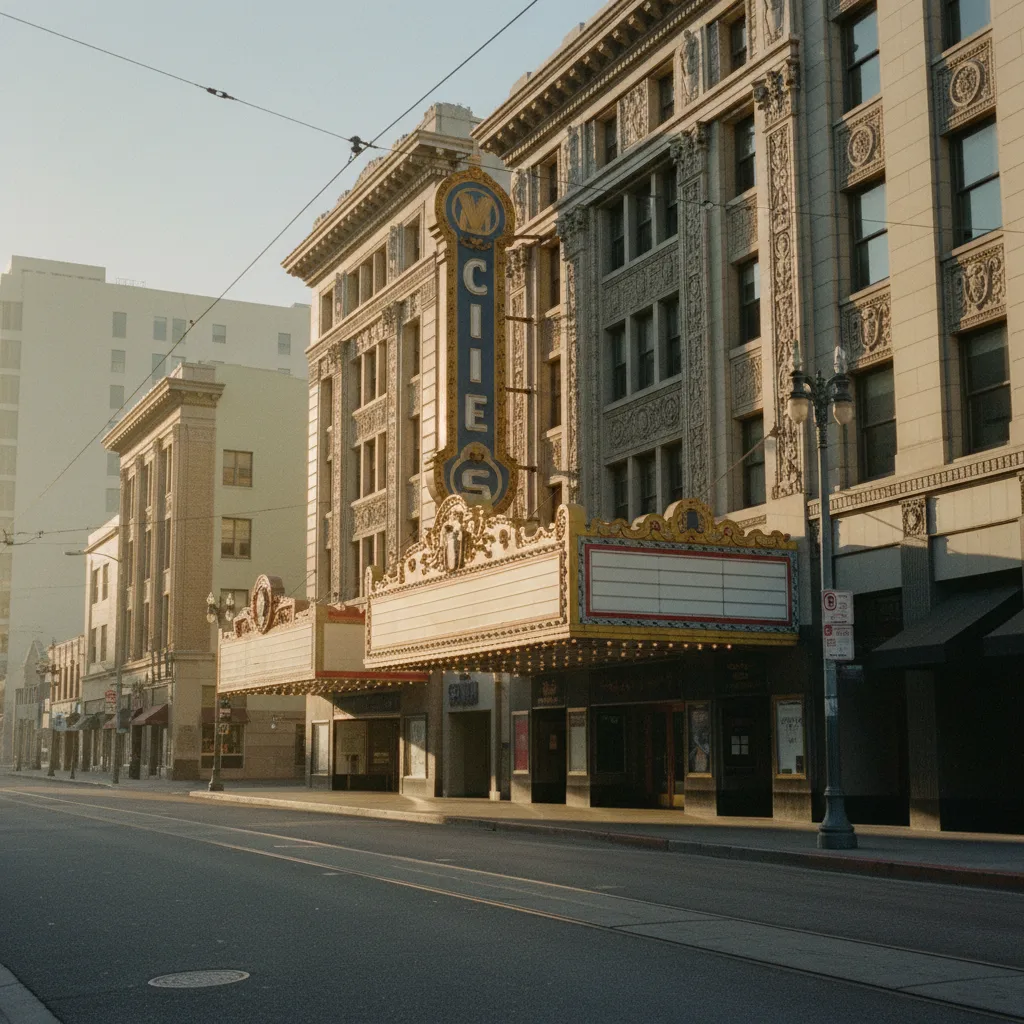
Stepping onto South Broadway in Downtown Los Angeles immerses you in the most concentrated historic theatre district in the United States. Spanning twelve vibrant city blocks between 3rd Street and Olympic Boulevard, this bustling urban corridor was designated a historic district on the National Register of Historic Places in 1979. During the golden age of American cinema from 1910 through 1931, Broadway served as the undisputed commercial and entertainment capital of Southern California, where movie moguls erected palace after palace to host lavish film premieres. This self-guided historic architecture stroll leads you through a mesmerizing open-air museum of Beaux-Arts, Spanish Churrigueresque, and Art Deco masterworks, revealing how innovative structural engineering and decorative grandeur transformed downtown Los Angeles into a world-class architectural destination.

Skylit Wonders at the Bradbury Building
Begin your architectural journey at 304 S Broadway before the unassuming brown-brick exterior of the Bradbury Building, completed in 1893. Commissioned by mining millionaire Lewis L. Bradbury and conceived by draftsman George Wyman alongside architect Sumner Hunt, this five-story commercial landmark conceals one of the world's most breathtaking skylit interior courts. Step through the entrance archway into a soaring, sun-drenched central atrium crowned by an expansive glass skylight that floods five stories of filigreed cast-iron railings with natural California daylight. Open birdcage passenger elevators encased in geometric wrought iron ascend silently along exposed vertical tracks, while pale Mexican tile and Belgian marble stairs invite contemplative upward gaze.
Wyman drew inspiration for the building's dramatic interior architecture from Edward Bellamy's futuristic 1887 utopian novel Looking Backward, which described a grand commercial hall filled with natural light and ethereal wrought-iron walkways. Take note of the exquisite French wrought iron that was originally fabricated in France and displayed at the 1893 World's Columbian Exposition in Chicago before being transported to Los Angeles. The building gained international cinematic fame as the climactic setting in Ridley Scott's 1982 dystopian masterpiece Blade Runner, yet its daily atmosphere remains an oasis of nineteenth-century tranquility where visitors can freely admire ground-level ironwork and structural glazed masonry without admission fees.
Churrigueresque Fantasy at the Million Dollar Theater
Directly across the street at 307 S Broadway stands the monumental Million Dollar Theater, which opened its doors in February 1918 as one of the very first grand movie palaces constructed in the United States. Conceived by showman Sid Grauman and designed by master architect Albert C. Martin with facade sculpture by William Lee Woollett, the twelve-story reinforced concrete building features an astonishing exterior executed in Spanish Churrigueresque Baroque terra cotta. The lavish ornamental facade resembles an intricately carved cathedral retablo, overflowing with sculpted bison heads, longhorn skulls, Spanish conquistadors, and allegorical figures celebrating the dramatic arts and California frontier history.
Look closely at the deeply undercut moldings surrounding the massive central arched window opening, where cast terra-cotta pilasters dissolve into luxuriant acanthus foliage and cherubic figures. The Million Dollar Theater established a daring precedent in urban design by stacking nine floors of commercial office space directly above a palatial 2,300-seat auditorium, proving that civic entertainment palaces could function as self-sustaining commercial enterprises. The ground-level entry vestibule still retains its historic ticketing booths and decorative ceiling plasterwork, providing an authentic physical bridge back to the earliest years of Hollywood studio prestige.
Turquoise Glamour at the Eastern Columbia Building
Stroll southward along Broadway past 8th Street to behold the peerless Art Deco monument of Los Angeles: the Eastern Columbia Building at 849 S Broadway. Designed in 1930 by prolific commercial architect Claud Beelman, this thirteen-story zigzag moderne skyscraper served as the flagship headquarters for the Eastern Outfitting Company and the Columbia Outfitting Company. The building is clad in thousands of custom turquoise-glazed terra-cotta panels accented with deep ultramarine blue and shimmering twenty-four-karat gold-leaf detailing, creating a luminous jewel-like presence that commands the downtown skyline against bright blue Southern California skies.
Cast your gaze upward to the dramatic central clock tower, which rises four stories above the main roofline with stepped ziggurat setbacks, stylized wings, and a magnificent four-sided neon clock displaying the Eastern name in glowing gold and white tubing. Beelman designed the entrance portal on Broadway as a colossal two-story recessed sunburst archway, drawing pedestrian shoppers inward through cast-bronze grilles, stylized flying chevrons, and geometric marble flooring. The vibrant turquoise glaze was formulated by Gladding, McBean & Company using mineral pigments that have resisted urban weathering for nearly a century, standing as a triumphant testament to pre-Depression decorative optimism.
Spanish Gothic Majesty at the United Artists Theater
Continue south to 929 S Broadway to examine the breathtaking United Artists Theater, completed in December 1927. Founded by legendary cinematic visionaries Mary Pickford, Douglas Fairbanks, Charlie Chaplin, and D.W. Griffith, the United Artists studio commissioned Detroit theatre architect C. Howard Crane to build their Los Angeles flagship within a soaring thirteen-story office tower. Crane clothed the facade in an elaborate Spanish Gothic revival vocabulary, incorporating slender pointed lancet arches, intricate tracery balconies, stone pinnacles, and carved grotesques representing motion picture pioneers peering down from the roof parapets.
The theater represents an extraordinary fusion of European cathedral grandeur and Hollywood theatrical illusion. Inside the public foyer and grand lobby, soaring plaster groin vaults are adorned with hand-painted fresco murals executed by theatrical designer Anthony Heinsbergen, depicting studio founders Fairbanks and Pickford alongside scenes from classic film epics. Notice how the stone-clad tower above features Gothic-style copper dormers and decorative buttresses that give the entire complex the commanding silhouette of an ancient medieval university hall transplanted into the Southern California sun.
Beaux-Arts Grandeur at the Orpheum and Palace Theatres
Double back slightly along Broadway to inspect two contrasting jewels of theatrical architecture: the Orpheum Theatre at 842 S Broadway and the Palace Theatre at 630 S Broadway. The Orpheum, dedicated in 1926 by architect G. Albert Lansburgh, features a stately French Beaux-Arts facade punctuated by fluted classical pilasters, arched French casement windows, and carved terra-cotta cartouches. Beneath its imposing vertical neon marquee blade, the marble entrance vestibule houses one of the few surviving and fully operational Mighty Wurlitzer pipe organs in California, which accompanied legendary vaudeville performers including Jack Benny and Duke Ellington.
Further north, the Palace Theatre at 630 S Broadway represents the oldest surviving Orpheum circuit vaudeville house in Los Angeles, opening in 1911 under the direction of architect G. Albert Lansburgh. Its classical French Renaissance facade incorporates four sculpted marble bas-relief panels created by sculptor Domingo Mora, portraying allegorical figures of Song, Dance, Drama, and Music. These theatres showcase how Broadway developers seamlessly integrated classical European civic discipline with high-volume urban pedestrian crowds, creating an enduring legacy of early twentieth-century American commercial architecture.
Transit Logistics and Practical Architecture Stroll Notes
This self-guided historic architecture stroll covers approximately one point three miles of level sidewalk along South Broadway, taking roughly sixty to seventy-five minutes to explore thoroughly at a relaxed architectural photography pace. For the best exterior lighting, embark on your walk during the mid-morning hours between nine and eleven o'clock, when low-angled eastward sun lights up the ornate terra-cotta facades along the west side of Broadway, or during the late afternoon golden hour when the turquoise clock tower of the Eastern Columbia reflects warm desert sunset hues.
Public transit connections are remarkably convenient: take the Metro B Line or D Line to Pershing Square Station and take the 4th Street exit, placing you just one block from the Bradbury Building starting point. Multiple local bus routes including Metro lines 4, 30, and 45 run along Broadway and neighboring Spring Street. Karpo APP provides detailed digital route mapping with GPS waypoints, helping you identify subtle historic terra-cotta maker marks, cornerstone plaques, and architectural trivia seamlessly on foot without looking away from downtown Los Angeles' historic streetscapes.
Ask Karpo for more information.
Keep reading
- Los Feliz Nail Salon Walk In Finder for Broken Nail Repair
 Highland Park Nail Salon Walk In Finder for Retro Manicures
 Koreatown Nail Salon Walk In Finder for K-Beauty Nail Looks