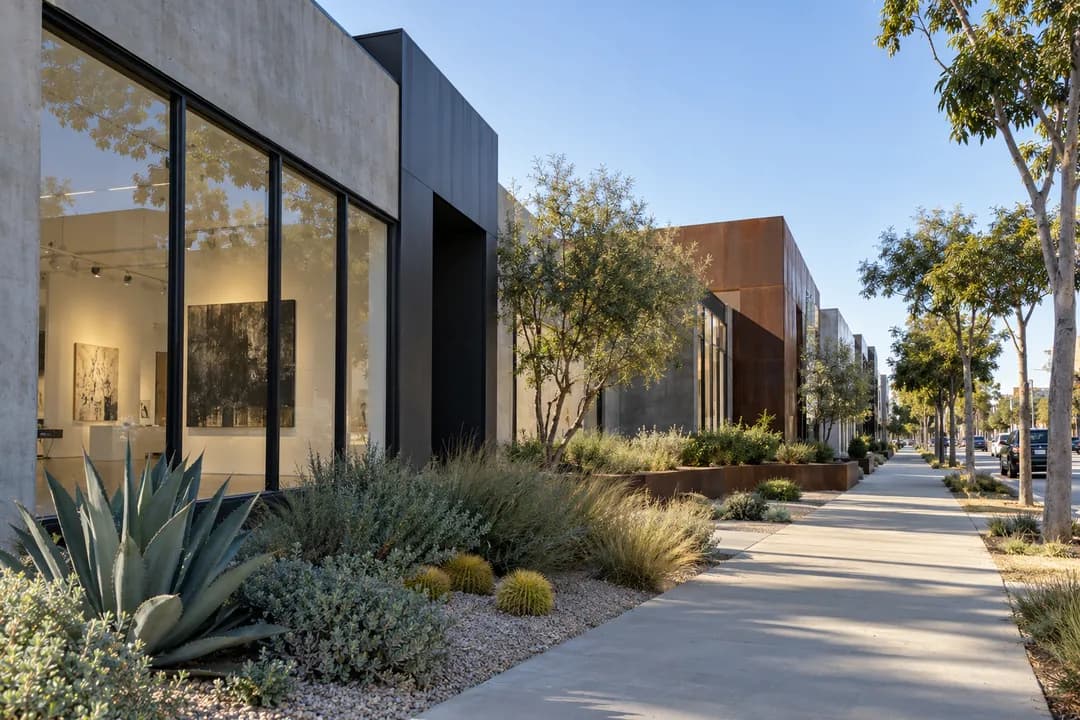
 Culver City Arts District Art Walk Near Me in West Los Angeles
Free Things to Do
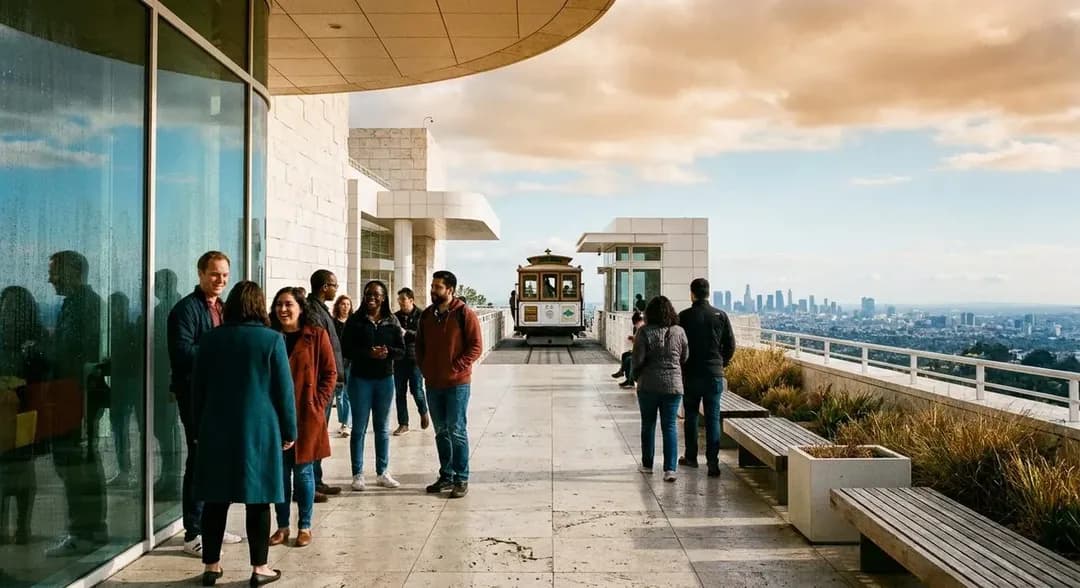
The Getty Center: Free Galleries, Free Tram, Paid Only for Parking
You pay fifteen dollars to park, then everything else—the tram ride up the hill, the Impressionist paintings, the cactus garden at sunset—costs nothing. It's the city's most accessible world-class museum, hiding in plain sight above the 405.
The fifteen-dollar gateway
You reserve your timed entry online the morning you plan to visit—slots open up throughout the day, even on weekends. The reservation itself costs nothing. When you arrive at 1200 Getty Center Drive, the attendant collects fifteen dollars for parking after 3 PM on weekdays, twenty on weekends before then. That's the entire financial transaction. No ticket booth, no admission fee, no suggested donation guilt. You park in the multi-level structure, follow the signs to the tram plaza, and board the next arriving car. The computerized funicular departs every few minutes, gliding up the hillside on its own dedicated track. Locals know to stand on the right side going up for the best view across the Sepulveda Pass, watching the 405 traffic crawl below while you ascend in silence.
Photographs first, always
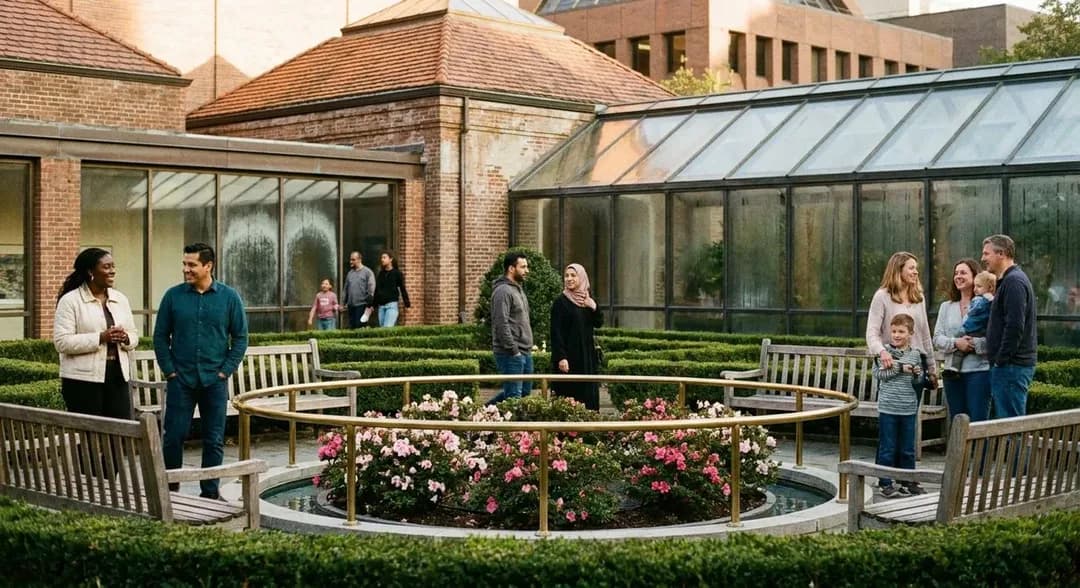
The Center for Photographs sits in the west pavilion, easily missed if you follow the main crowd toward the European paintings. You want to hit this gallery first, before the school groups arrive around eleven. The collection rotates every few months, but the permanent holdings include early daguerreotypes, Man Ray's experimental work, and a significant collection of 19th-century French photography that rarely travels. The gallery design itself—natural light filtered through scrims, smaller intimate rooms—makes you slow down. On Tuesdays and Wednesdays, you'll often find the space nearly empty until noon. The bench in the center room faces a single large-format print; regulars know it as the best seat in the entire museum for simply sitting with an image.
The garden at four-thirty
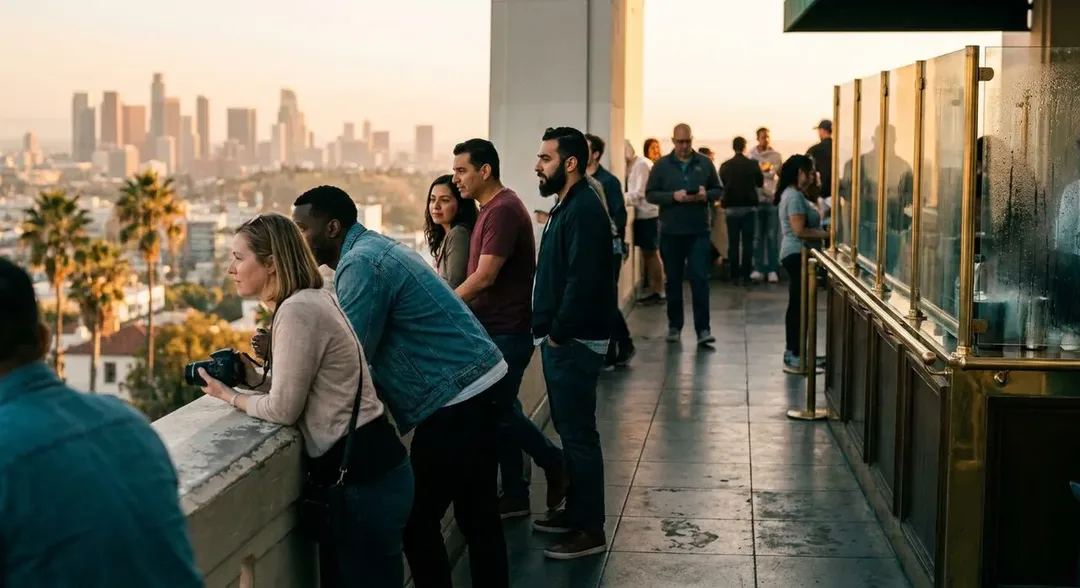
Robert Irwin's Central Garden descends in switchbacks from the arrival plaza, a living sculpture that changes completely with the seasons. Most visitors photograph it from the top and move on. You walk the entire zigzag path down to the azalea pool at the bottom, then return around four-thirty when the sun drops behind the western pavilion and the whole garden shifts into golden light. The stream running through the center follows a precise course—Irwin specified the placement of every boulder. In late spring, the purple blooms on the jacaranda tree near the lower pool last exactly two weeks. The gardeners will tell you which week if you ask. They're usually working the beds near the specialty garden between three and five, before the evening watering cycle begins.
The paintings everyone knows
Van Gogh's Irises hangs in the north pavilion, but you've seen that reproduction a thousand times. Walk past it to Gallery N204, where Manet's Spring sits in better light and draws smaller crowds. The French decorative arts rooms on the south side contain entire 18th-century salons transported from Paris—walls, ceilings, floors intact. The Régence-era paneling in Gallery S103 came from the Hôtel Colbert de Torcy; you can see the original hinge marks where the doors once hung. Thursday afternoons, a volunteer docent leads an unofficial tour of the furniture collection, pointing out which pieces retain their original upholstery. She starts at two-fifteen near the information desk, never announces it, just begins talking to whoever's nearby.
The architecture as exhibition
Richard Meier designed the complex in travertine that arrived from the same Bagni di Tivoli quarries Michelangelo used. The stone weathers and stains—you can see the patterns where water runs down the walls after rain. The courtyards between pavilions frame specific views: the San Gabriel Mountains through the north opening, the Pacific on clear days through the west. Meier placed benches at exact sightlines. The one outside the drawings gallery aligns with the center axis of the garden below. Photographers arrive before the museum opens at ten just to capture the morning light on the stone, when the whole complex glows warm against the cool air. Security doesn't mind if you're waiting in the plaza; the gates open at nine-thirty.
What nobody tells you
The museum closes at five-thirty on weekdays, eight on Saturdays, but the tram runs until thirty minutes after closing. You can linger in the garden until the final call. The café on the plaza level serves until four-thirty; the coffee is decent, but locals bring their own food and eat in the garden—it's allowed. The gift shop sells exhibition catalogues at cost; the Getty publishes its own books and prices them at print value, not museum markup. Free wifi throughout, strong enough for video calls. The restrooms in the lower level of the west pavilion are always emptier than the main plaza facilities. If you're driving from the Westside, take Sepulveda north instead of the 405—same time, better views, and you can stop at the overlook just south of the entrance to see the whole complex from below.
Practical notes
The Getty Center sits at 1200 Getty Center Drive, off the 405 at Getty Center Drive exit. Reserve your free timed entry at getty.edu—same-day slots available. Parking costs fifteen dollars after 3 PM weekdays, twenty dollars otherwise. Metro Line 761 stops at the entrance; the tram is free for everyone. Open Tuesday through Sunday, 10 AM to 5:30 PM, until 8 PM Saturdays. Closed Mondays and major holidays. The tram runs continuously; no reservation needed. Bring layers—it's often ten degrees cooler on the hill. The permanent collection is always free; special exhibitions occasionally require separate tickets. Photography allowed in most galleries without flash. The garden path includes stairs; an accessible route runs along the perimeter. Food allowed in outdoor areas only. Allow three hours minimum, five if you want to see everything properly.
Tags: #GettyCenter #FreeLA #LAMuseums #FreeAndFine #LAart #BrentwoodLA #FreeAdmission #MuseumsOfLA #GettyVilla #LAculture #FreeThingsToDo #LAtravel #ArtInLA #GettyMuseum #LosAngeles
Sources consulted: Time Out Los Angeles · Atlas Obscura
All trademarks are the property of their respective owners.
Ask Karpo for more information.
Keep reading
- Culver City Arts District Art Walk Near Me in West Los Angeles
 Bergamot Station Gallery Art Walk Near Me in Santa Monica California
 Historic Brewery Art Walk Near Me in Lincoln Heights Los Angeles California