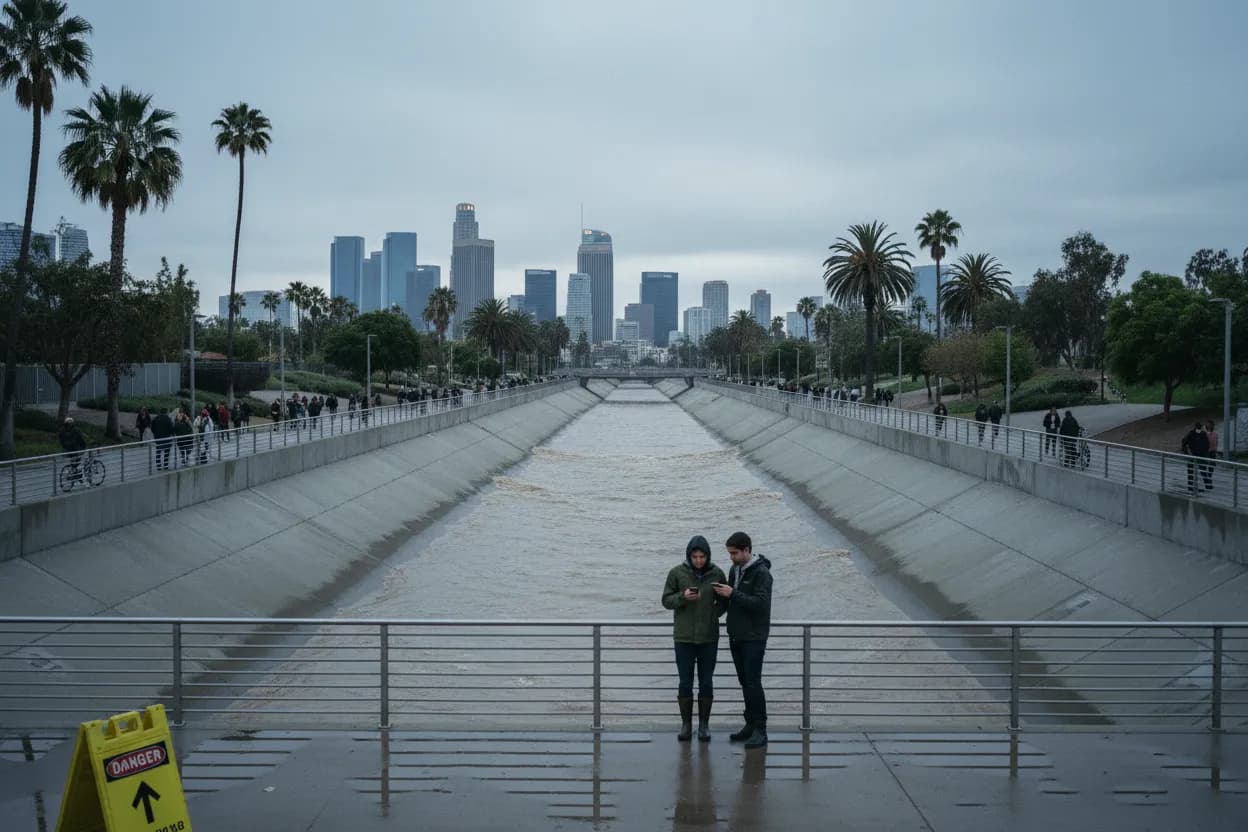
A LA flood watch is not a weekend plan killer by itself, but it is a reason to slow down before you commit to a canyon drive, hillside hike, outdoor concert, beach day, or cross-town reservation. The National Weather Service says a Flood Watch means conditions are favorable for flooding; it does not mean flooding will occur, but it is possible. Los Angeles County’s emergency guidance is blunt about the risk: flash floods can develop quickly, sometimes in minutes and even without visible rain nearby. Use this guide as a planning filter for Los Angeles, then verify current weather, alerts, event details, road conditions, and public-safety instructions on official sources before you go.
Want a second read on whether your LA weekend plan needs a safer route, indoor swap, or delayed departure? Text Karpo before you leave and ask for a verification-first checklist.

Translate The Search Into A Neighborhood Question
When people search “la flood watch,” they usually need a local decision, not a weather lecture. The useful question is: what part of Los Angeles am I actually trying to cross, enter, park in, or hike through? A plan in Downtown LA, Venice, Westwood, Woodland Hills, Leimert Park, the Arts District, Marina del Rey, or the North Valley can involve very different routes, terrain, and backup options. Before acting, verify the current forecast and any National Weather Service Los Angeles/Oxnard information at weather.gov, then check local emergency instructions through Ready LA County at ready.lacounty.gov/flooding.
Los Angeles County advises people to be especially aware of flood hazards in low-lying areas, near water, or near a recently burned hillside. That matters for canyon routes, trailheads, riverbeds, flood-control channels, and any neighborhood where your route dips under freeways or follows drainage corridors. Do not assume your destination is fine because your block is dry. The county’s guidance says flash floods can happen quickly and may carry rocks, mud, and debris.
Choose The Area By The Actual Task
Start with the job your outing has to do. If you are meeting friends for food, choose a neighborhood with an easy indoor fallback and a short walk from arrival point to door. If you are seeing an event, use the venue’s own page and Discover Los Angeles’ Find Events page only as starting points, then verify the current schedule, admission details, entry rules, transportation notes, and any weather-related changes directly with the event organizer before leaving.
For outdoor plans, be more skeptical. Discover Los Angeles highlights beaches, hiking trails, museum guides, multicultural neighborhoods, and three-day itineraries, but those are planning resources, not live safety clearance. If your plan depends on a beach, trail, canyon road, outdoor seating, rooftop, festival area, or parking lot, verify current conditions through the appropriate official source first. If you cannot confirm the route, the safer move is to choose a lower-risk indoor plan and save the scenic version for a clearer day.

Use Transit Exits As Planning Anchors
In a flood watch, the smartest Los Angeles plan is often the one with the cleanest exit. Even if you drive, think like a transit rider: where do you arrive, where do you shelter, and how do you leave without crossing moving water or a restricted area? Ready LA County says not to drive or walk through moving water, to avoid unnecessary trips, and never to drive around barricades. That should shape the route before the first text thread starts.
If you are building a group plan, pick a public landmark, station area, hotel lobby, museum, or restaurant district as the meeting anchor rather than a remote trailhead or canyon turnout. Then verify transit service, road status, parking access, rideshare pickup rules, and any venue instructions on official pages before departure. The goal is not to eliminate spontaneity; it is to avoid discovering your only practical exit after rain, closures, or traffic have already narrowed your options.
Add One Indoor And One Outdoor Backup
A good LA flood watch plan has two backups: one indoor, one outdoor-but-easy-to-abandon. The indoor backup could be a museum district, restaurant area, hotel lounge, gallery neighborhood, or movie plan, but you still need to verify current hours, ticketing, reservations, capacity, and access directly with the operator. Do not rely on old screenshots, social posts, or a friend’s memory when weather could affect staffing, roads, or entry.
The outdoor backup should be modest: a short neighborhood walk, a view spot with nearby shelter, or a beach-adjacent plan that can become coffee indoors. Los Angeles County warns people to stay away from streams, rivers, flood-control channels, and other areas subject to sudden flooding, and not to sightsee or enter restricted areas. If your backup requires crossing a wash, walking a riverbed, parking beside moving water, or driving a canyon in uncertain conditions, it is not a backup.
Avoid Treating Online Attention As A Promise
Los Angeles runs on screenshots: event flyers, reservation clips, group chats, saved posts, and map pins. During a flood watch, those are not promises. A listing on Discover Los Angeles, a venue calendar, or a restaurant page can help you shortlist ideas, but you must verify current times, availability, cancellation notices, entry instructions, and transportation changes on the official source before acting. Weather and public-safety details can change faster than a social feed gets corrected.
The same caution applies to dramatic weather posts. The National Weather Service distinction is simple: a Flood Watch means be prepared because conditions are favorable; a Flood Warning or Flash Flood Warning means take action because flooding is imminent, occurring, or, for flash flooding, potentially sudden and violent. Before you cancel or continue, check the current official alert language rather than guessing from reposts, radar screenshots, or neighborhood rumors.
Verify Conditions Before Crossing The City
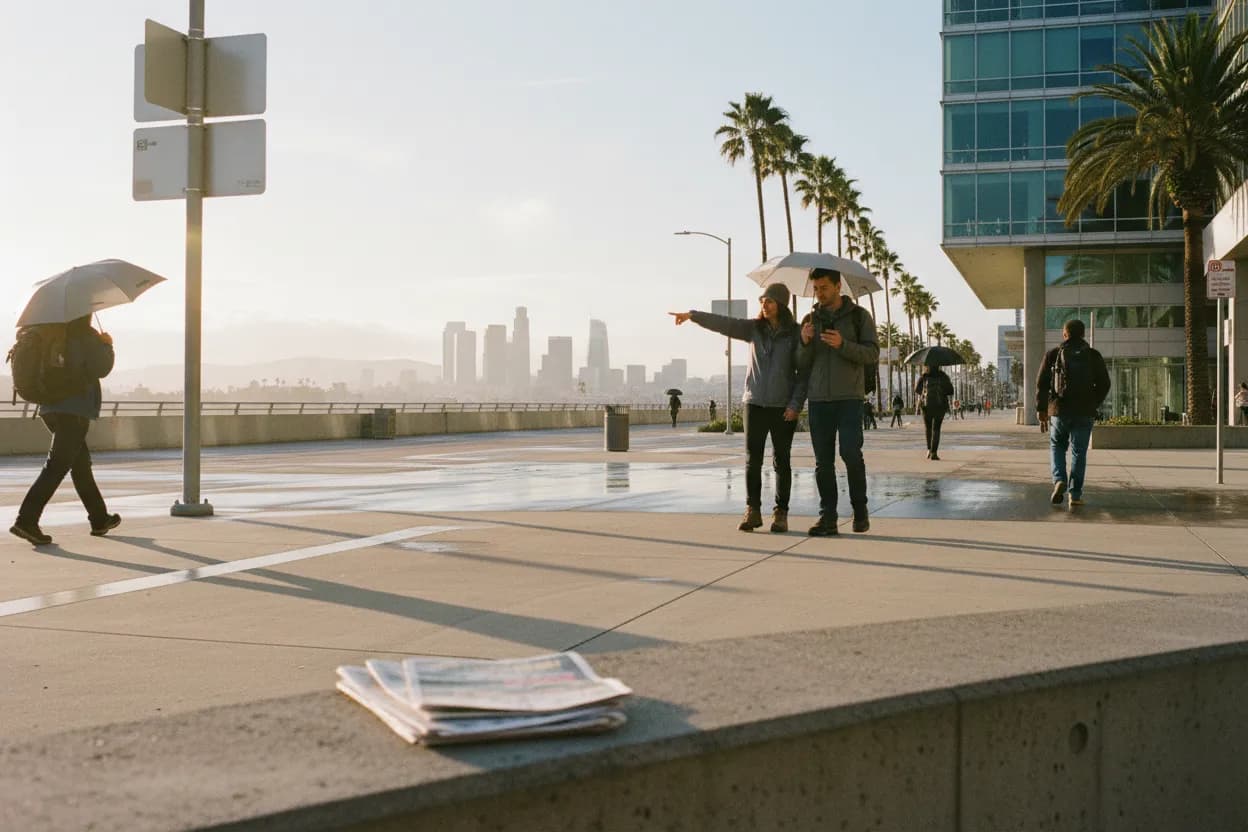
Before crossing Los Angeles, run a final official-source check: National Weather Service for current flood products and forecasts, Ready LA County for flooding preparedness and safety guidance, local emergency notification systems such as Alert LA County where applicable, and the event or venue’s own page for current status. Ready LA County also points residents to FEMA flood maps, California’s My Hazards tool, and Los Angeles County Public Works flood information for understanding local risk before storms.
If authorities tell you to evacuate, Ready LA County says to do so immediately. If you are caught by rising water, move to higher ground; if trapped in a building, go to the highest level and avoid a closed attic. If a vehicle is trapped in rapidly moving water, the county says to stay inside, and if water rises inside, seek refuge on the roof. Those are emergency instructions, not travel hacks. For weekend planning, the better win is choosing a route and destination you can verify before you ever need them.
Tags: #AskKarpo #BeforeYouGo #LAFloodWatch #LosAngeles #NeighborhoodGuides #LAWeather #FloodSafety #WeekendPlans #CanyonSafety #LAEvents #TransitPlanning #ReadyLACounty #WeatherSafety #LocalLA
Sources consulted: Ready LA County Flooding · National Weather Service Flood Safety · Discover Los Angeles
All trademarks are the property of their respective owners.
Ask Karpo first
Ask Karpo first before you cross town in uncertain weather. Share your neighborhood, destination, route, timing, and backup idea, and Karpo can help you turn official flood-watch guidance into a practical Los Angeles plan to verify before you go.


