
A LA flash flood warning is not background noise, especially in a city where one errand can mean crossing hillsides, canyons, freeways, river channels, and low-lying streets in the same afternoon. As of Tuesday, August 11, 2026, this guide is built for commuters and drivers who need a practical decision path, not a dramatic weather feed. Ready LA County says flash floods can develop quickly, sometimes in minutes and without visible rain, and may carry rocks, mud, and debris. The National Weather Service says a Flash Flood Warning means take action. Before you leave, verify the current alert, forecast, road, transit, event, and venue status on the relevant official source.
Want a second set of eyes before you drive across Los Angeles in risky weather? Text Karpo with your neighborhood, destination, and timing, and ask what official pages to check first.

Translate The Search Into A Neighborhood Question
When people search for “la flash flood warning,” the useful question is rarely “Is Los Angeles flooded?” It is usually more specific: Am I near a flood-prone area, a recently burned hillside, a low-lying street, a riverbed, or a channel? Ready LA County says flood risk deserves extra attention in low-lying areas, near water, and near recently burned hillsides. Start with your exact origin, destination, and route, then check Ready LA County’s flooding page at https://ready.lacounty.gov/flooding/ and the National Weather Service page at https://www.weather.gov/safety/flood-watch-warning before acting.
Translate the wording correctly. The National Weather Service says a Flood Watch means conditions are favorable for flooding, while a Flood Warning means flooding is imminent or occurring. A Flash Flood Warning means take action, and people in flood-prone areas should move immediately to high ground. Do not downgrade that language because the sky above you looks calm.
Choose The Area By The Actual Task
Los Angeles is too spread out for one citywide answer. Discover Los Angeles highlights neighborhood names such as North Hollywood, Hollywood, Exposition Park, San Pedro, LAX, Sawtelle Japantown, Historic Core, and Woodland Hills, which is a reminder to plan by the actual task, not by a vague idea of “LA.” A commute, airport trip, beach plan, dinner reservation, or school pickup can have a different risk profile depending on terrain, drainage, and the route you choose.
Before committing, verify the current warning or watch on the National Weather Service, then check local emergency information through Ready LA County and your city’s emergency notification system. Ready LA County recommends signing up for Alert LA County or the emergency notification system used by your city. If your plan involves a ticketed event, restaurant, hotel, beach, museum, or public space, verify the official page for current opening status, cancellation notices, access instructions, and any safety updates before going.
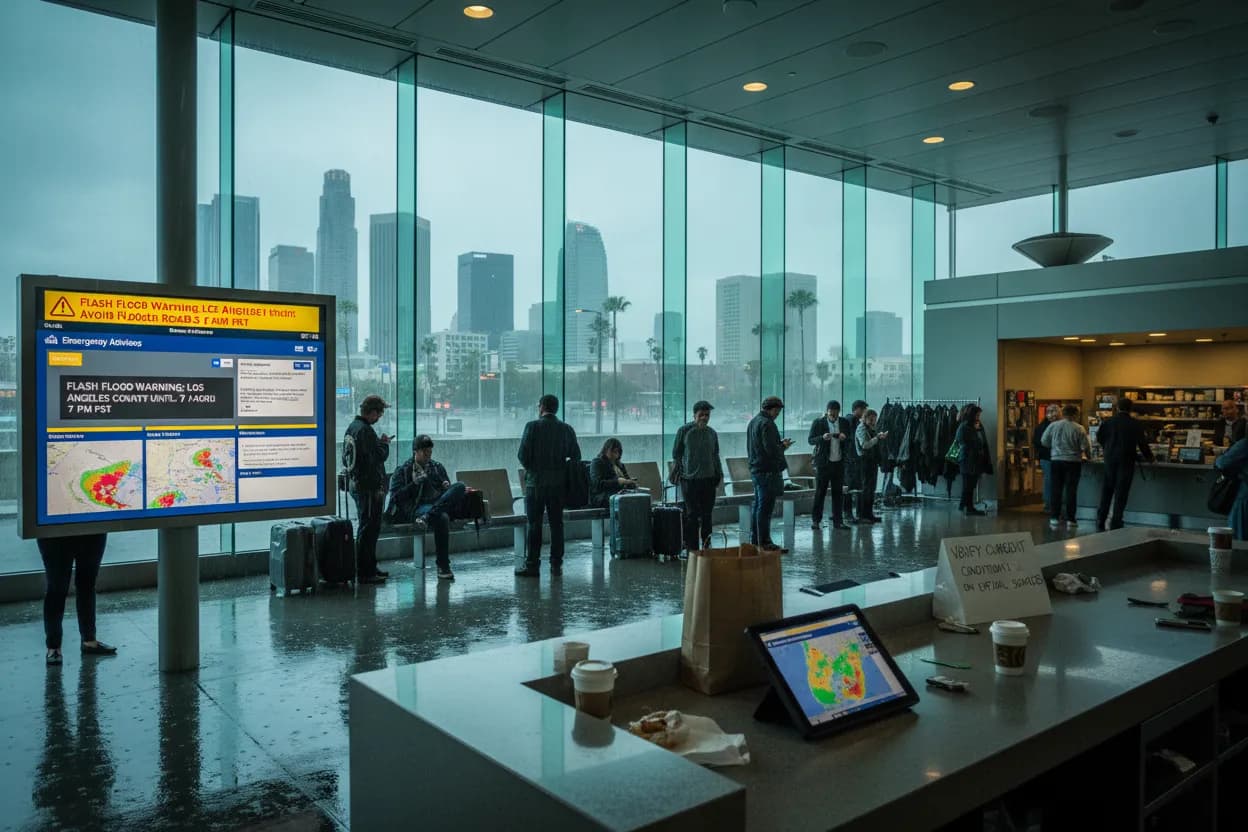
Use Transit Exits As Planning Anchors
If you are commuting without a car, treat your exit point as the center of the plan. Ask: if I leave the train, bus, rideshare, or parking structure here, where is higher ground, what is the safest indoor waiting option, and what route avoids channels, underpasses, or visibly moving water? Do not assume a normal connection is available during severe weather. For transit, road, and service claims, verify the current official service-alert page from the operator before you leave.
Ready LA County says to avoid unnecessary trips during a flood, stay away from streams, rivers, flood control channels, and other areas subject to sudden flooding, and never drive around barricades. That applies to the last mile, too. If a station exit, sidewalk, parking lot, or curb area is affected, do not improvise through moving water. Recheck official alerts, then wait in a safer location or choose a different public plan.
Add One Indoor And One Outdoor Backup
A practical Los Angeles plan has two backups: one indoor place to wait and one outdoor route to higher ground. Ready LA County says to move to higher ground if caught by rising waters. If trapped in a building, go to its highest level, avoid a closed attic, and go to the roof only if necessary while signaling for help. For any specific building, venue, mall, hotel, workplace, or campus, verify current access and safety instructions on the official page or through on-site authorities.
For your home base, Ready LA County recommends a family emergency plan with evacuation routes, utility shut-off locations, and a way for family members to contact or reconnect if separated, including an out-of-state contact. It also recommends a disaster supply kit with enough food, water, and medications for at least 10 days, plus pet and individual needs. Keep important documents in waterproof containers or sealed bags and create password-protected digital copies.
Avoid Treating Online Attention As A Promise
A viral clip, group chat, map screenshot, or repost can be useful for awareness, but it is not an official instruction. Flood conditions change quickly, and Ready LA County warns that flash floods can develop in minutes and even without visible rain. Use online attention as a prompt to verify, not as permission to drive, hike, shop, attend an event, or cross town.
The same skepticism applies to leisure plans. Discover Los Angeles promotes museums, beaches, itineraries, dining, events, and neighborhood exploration, and notes that Los Angeles has 75 miles of sunny coastline. Those pages are helpful for ideas, but weather, access, transit, event times, and venue operations can change. Before buying, booking, ordering, or heading out, verify the official event, venue, transit, road, beach, and emergency pages for current conditions and instructions.
Verify Conditions Before Crossing The City
Before a cross-town drive, run a short verification checklist. Check the National Weather Service for the current watch, warning, advisory, or forecast language. Check Ready LA County for flooding safety guidance and local emergency resources. Check your city’s emergency notification system, such as Alert LA County where applicable. If your destination is tied to an event, attraction, restaurant, workplace, school, or airport trip, check that official source directly for current status before you leave.
During flooding, Ready LA County says not to drive or walk through moving water, to avoid unnecessary trips, to obey evacuation instructions, and to never drive around barricades. It also says that if a vehicle is trapped in rapidly moving water, stay inside, and if water is rising inside the vehicle, seek refuge on the roof. After flooding, return home only when authorities say it is safe, avoid driving except in emergencies, and follow local officials on drinking-water safety.
Tags: #AskKarpo #BeforeYouGo #LosAngeles #LAWeather #FlashFloodWarning #FloodSafety #LACommute #LADrivers #NeighborhoodGuides #ReadyLACounty #NWS #EmergencyPreparedness #TransitSafety #CityPlanning
Sources consulted: Ready LA County Flooding · National Weather Service Flood Safety · Discover Los Angeles
All trademarks are the property of their respective owners.
Ask Karpo first
Ask Karpo first when the plan feels almost normal but the forecast language does not. Share your starting neighborhood, destination, travel window, and whether you are driving or riding transit, then use Karpo to build a verification checklist anchored to official weather, emergency, transit, road, and venue sources.


