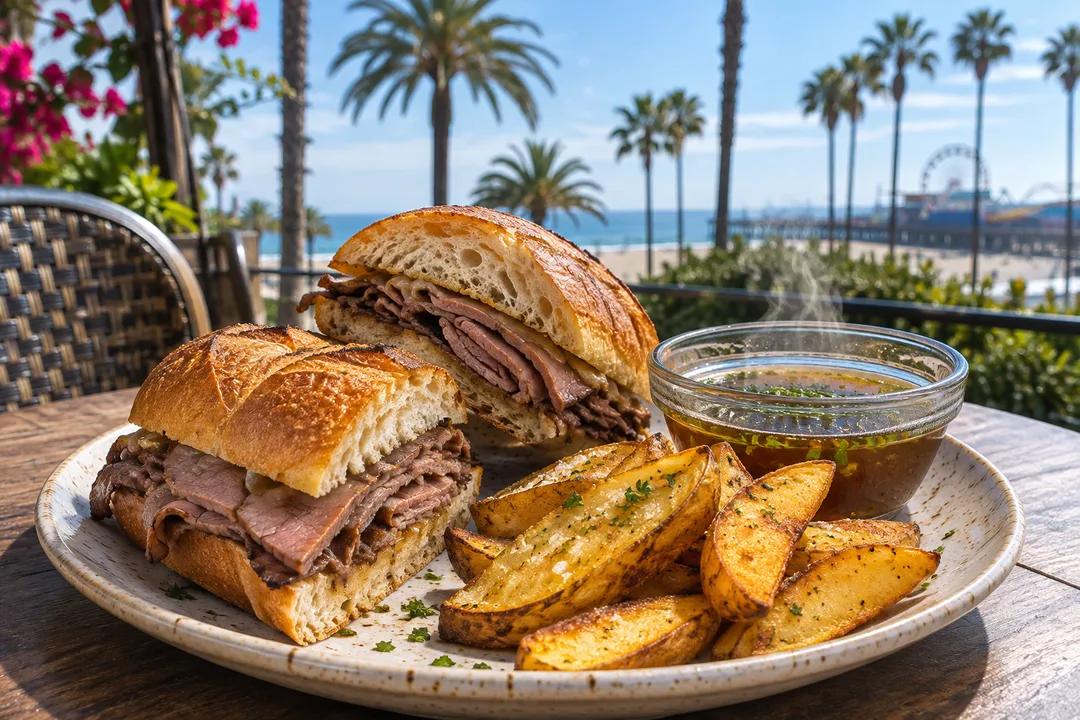
 Santa Monica French Dip Sandwich Lunch Picker by Ocean
Restaurants
LA Dinner Shortlist Builder: Eat Between Two Fixed Plans
Fit dinner between LA appointments by defining your meal window and route. Ask Karpo APP for options with the travel and timing tradeoffs made clear.
A meal between two appointments has a different job from a leisurely dinner. You need to eat without losing the next part of the evening to an awkward detour. An LA dinner shortlist builder is most useful here when it begins with the two commitments and the time available between them. Tell Karpo APP where the first plan ends, where the second begins, and what kind of meal would feel manageable. Treat any suggested restaurant as a candidate, not proof that a tightly timed journey will work.
Work backward from the second arrival
Begin with the moment you need to be at the next place, rather than the time you hope to leave dinner. Include the arrival tasks that belong to that appointment. An event might involve meeting a friend outside, finding the entrance, or collecting something before going in. A work commitment might require several quiet minutes to prepare. Those tasks consume part of the gap even though they are not travel or eating. Put them into your own plan before deciding how much dinner can contain.
Then mark when you realistically become free after the first appointment. A calendar ending is not always a doorway departure. You might need to finish a conversation, retrieve a bag, or walk back to your transport. Use a conservative release time if the earlier commitment tends to run over. This is a planning choice about your schedule, not an assertion about traffic. The meal window exists between these two honest boundaries. Everything else has to fit inside it, including paying and leaving the restaurant.
Distinguish a midpoint from a convenient stop
Halfway on a map is only one possible place to eat. Depending on your transport and commitments, dinner closer to the second appointment might make the evening easier to control. You could travel most of the way first and eat near the destination, or eat near the first appointment and preserve a clear departure point. Compare those two structures before adding a third neighborhood. The question is which location leaves you with the least complicated sequence, not which pin looks most central.
Consider a hypothetical evening that starts with a meeting in Pasadena and continues with a personal commitment in Downtown LA. Those locations illustrate the inputs, not a recommended route or a travel estimate. You would need your actual addresses, transport choice, and desired arrival time to make a decision. If you already know that you want to avoid another parking task, say so. If you are using transit, identify the stations or stops relevant to your own trip rather than letting a broad neighborhood stand in for them.
Give the meal a clear service format
A shortlist should distinguish a compact order from a long dining sequence. You might want one individual dish, a counter meal, or something that can be collected and eaten where permitted. None of these formats guarantees speed. They simply create different tasks and different points where you can decide to leave. If you need to be seated, say that. If carrying food into the next appointment would be inappropriate, rule that out before a suggestion makes takeaway sound like the easy answer.
Be precise about what you need from dinner. After an afternoon meeting, a snack might not carry you through a long event. Equally, a multi-course meal could be more than the gap can reasonably support. Choose the smallest satisfying meal format for that particular day. Add dietary requirements and any need for a calm place to sit. These details stop the comparison from optimizing only for proximity. Eating is still the purpose of the stop, even when the clock gives the plan its shape.
Separate your schedule from a restaurant fact
Your available window is something you can define. A restaurant's preparation time, wait for a table, and pace of service require evidence specific to that visit. Do not convert a review saying "quick dinner" into a promised duration. A planning response can help you identify the questions, but it cannot make an uncertain service sequence disappear. If the appointment is inflexible, choose a plan with enough room for uncertainty or keep the meal outside the gap altogether.
Use the restaurant's own menu and ordering information to understand the intended meal. If you contact staff about your timing, describe the actual constraint rather than asking a vague question about whether service is fast. Their answer might help you decide, but an enquiry is separate from a booking or accepted order. Keep those states distinct. You should know whether you have only identified a possibility, received a response, placed an order, or obtained a confirmation that names the relevant date and details.
Give Karpo the sequence, not just two place names
An example request is: "I have a Pasadena meeting followed by a Downtown LA appointment. Help me think through dinner in between. I will give you the exact endpoints and my arrival deadline. Compare eating near the first stop with traveling toward the second before eating. I want a seated individual meal, minimal extra stops, and a simple fallback if the first commitment runs late." Add your actual times privately in Karpo APP. The example describes a request structure rather than a tested itinerary.
Ask for the explanation behind each suggestion. A helpful comparison would say why a candidate fits the sequence, which part of the timing remains unresolved, and what you would give up by choosing it. A place with a wonderful dining room might lose to a simpler meal nearer the second appointment. That is a reasonable result. You can also reject a recommendation for a specific reason, such as an extra transfer or an ordering format that does not suit you, and ask for the next round to preserve that constraint.
Set a decision point before you become hungry
Make one choice in advance about what happens if the earlier appointment overruns. For example, you could decide that below a certain remaining window you will eat after the second commitment instead. The threshold belongs to your own schedule and appetite, so there is no universal number to copy. Discuss the fallback with anyone joining you. A delayed dinner is easier to handle when it is an agreed alternative, rather than a surprise discovered while someone is already trying to find a table.
Keep the fallback simpler than the main plan. It could be food you already have, an allowed snack before the next event, or a meal afterward. Do not build a second itinerary with the same uncertain detours as the first. If the next venue has rules about outside food, follow those rules. This approach gives you a clean response to a late finish without pretending that a different restaurant will reliably serve faster simply because it is closer on the map.
Practical notes for the transition
Once you have selected a candidate, preserve the exact endpoint details and the action still needed. That might be making a booking, arranging a collection, or deciding to walk in with a fallback. A shortlist alone does not establish a table or an arrival time. Use your chosen transport tool for the actual journey and the restaurant's own channel for the meal transaction. Keep any confirmation accessible so you do not have to reconstruct the arrangement during the gap between appointments.
Open Karpo APP with the two commitments and ask one focused planning question: where does dinner fit most comfortably in this sequence? Include what you can change and what you cannot. The result should help you choose whether to eat near the beginning, near the end, or outside the interval. That is a more useful outcome than forcing a restaurant into an unsuitable slot. The evening works when you arrive fed and composed, with enough space for the commitment that mattered in the first place.
Ask Karpo for more information.
Keep reading
- Santa Monica French Dip Sandwich Lunch Picker by Ocean
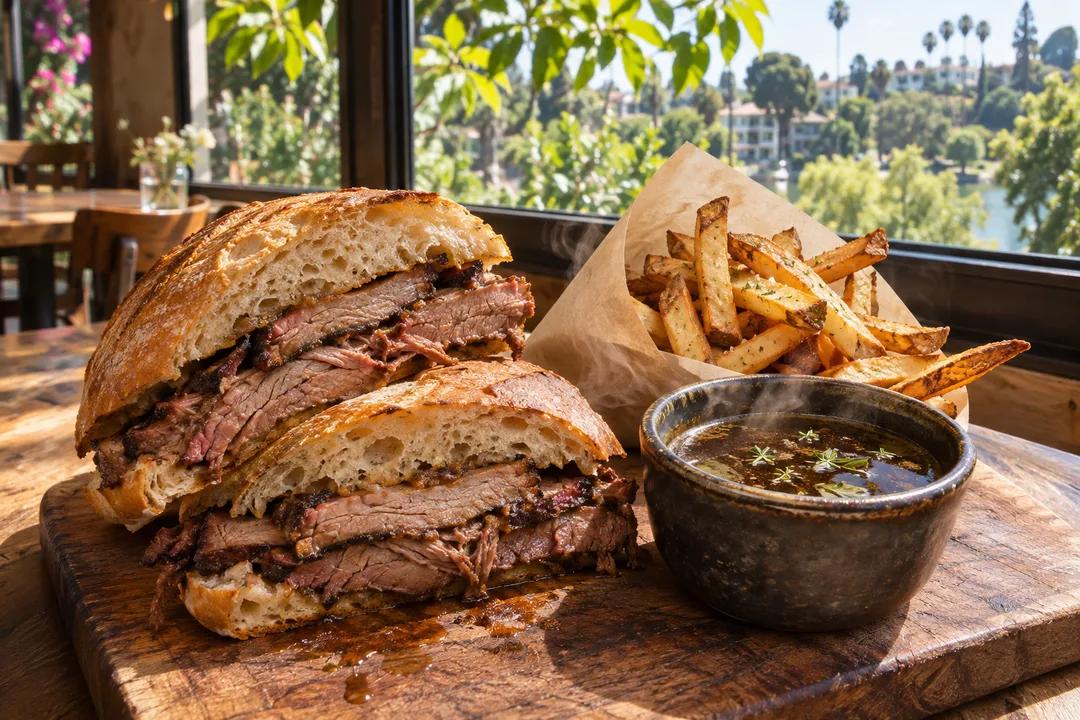 Echo Park French Dip Sandwich Lunch Picker Around Noon
 Silver Lake French Dip Sandwich Lunch Picker on Hillsides