 Santa Monica French Dip Sandwich Lunch Picker by Ocean
Restaurants
LA Dinner Reservation Finder: Two Plans for Sunset Dining
A Santa Monica dinner reservation finder compares ocean views, seating and meal timing so you can choose between sunset at the table or a separate walk.
For a Santa Monica sunset dinner, start by choosing between two experiences: watching the light change from your table, or enjoying the coast before sitting down to eat. A dinner reservation finder is useful when it helps you compare those experiences against your own priorities. Tell the Karpo APP your date, guest count and whether an ocean-facing seat is essential. Keep the actual sunset time, the restaurant's seating arrangement and the reservation itself as separate details. A coastal address does not promise a horizon view, and a suggested dining time does not secure one.
Put a date on the light you want
Golden hour is a description of light rather than a universal dinner slot. The date of your visit matters, and your personal goal matters too. You may want to see the sun reach the horizon, spend an hour in warm light or arrive after the glare has softened. Look up the sunset for Santa Monica on the date you choose and use it as an input to your plan. Do not carry a time from another season into the request or treat a restaurant photograph as a timetable.
Consider when you want to be seated relative to that moment. Arriving at sunset can mean handling the entrance, coats and menu while the view changes outside. Arriving earlier gives you more room to settle, but it can also lengthen the meal beyond what you intended. Describe that tradeoff in your conversation with Karpo. A request for a relaxed meal before sunset is different from a tightly timed stop for one course. The resulting shortlist should reflect your desired pace rather than simply favor restaurants described as waterfront.
Ask what ocean-facing actually describes
An ocean view can belong to a terrace, a bar, a window row or only a few seats inside a larger room. The label alone does not tell you where a standard dinner reservation will place you. Ask which area serves the meal you want and how that area is assigned. A table beside a window can also face a wall, another building or a section of coast rather than the open horizon. Use photographs for clues about orientation, then take specific seating questions to the restaurant.
Your party size changes the question. Two people might be comfortable sitting side by side, while a larger group may leave some guests facing away from the water. Talk about whether everyone needs an uninterrupted view or whether the setting matters more generally. If a window table is only a request, record it that way when comparing candidates. Do not let the wording ocean-facing become a guarantee that the booking channel has not made. A good choice remains enjoyable even when its attractive feature is less exclusive than you imagined.
Balance the view against comfort
Direct light can be part of the appeal and a source of discomfort. Think about glare, shade and the position of your chair without assuming you can control the room. If one diner is sensitive to bright light, ask about the setting you would actually use. A window indoors and an outdoor terrace solve different problems. Fresh air may appeal to one person while another would prefer shelter. Put these preferences ahead of a dramatic image, especially when you expect to stay through the transition from daylight to evening.
Outdoor dining also changes what you bring and how long you want to linger. Decide whether a cooler finish would be welcome or whether you would rather dine inside after spending time outdoors. Ask about the restaurant's arrangements for an unusable terrace if that affects the booking. Avoid assuming that a heater, cover or indoor replacement exists because another coastal restaurant has one. Karpo can help you organize the alternatives, but details about a particular seat or weather response need to come from the operator.
Give the meal its own reasons to work
Choose what you want to eat independently of the horizon. A dining room with a remarkable outlook may offer a meal format that does not fit your appetite, dietary needs or spending plan. Describe whether you want individual mains, shared plates or a longer sequence of courses. Include drinks in your budget if you intend to order them. Ask for comparisons grounded in available menus and terms, without inventing a typical oceanfront dinner cost. The strongest candidate should suit the meal even after daylight has gone.
If you are celebrating, decide where the celebration belongs in the schedule. You might prefer a quiet toast before ordering, dessert after the light fades or a short walk before the meal. None requires the restaurant to synchronize service with the sun. A dish may arrive while you are looking outside, and choosing a table for its view does not make the kitchen part of a photography plan. Tell your companion what you hope to enjoy so the evening does not become a series of competing expectations.
Compare dinner with a separate coastal pause
A separate sunset stop can make the restaurant choice easier. In that version, you choose a suitable public place for the coastal portion of the outing and eat afterward at a dining room selected for food and comfort. The two parts need a realistic transfer and a clear meeting point. Use the actual locations rather than assume every Santa Monica restaurant sits beside the sand. This arrangement lets you prioritize the view outside without making your entire dinner depend on a requested window seat.
There is a tradeoff in the opposite direction too. A single restaurant stop can reduce movement and give the evening a more settled rhythm. That might suit guests who prefer fewer transitions or do not want a walk. Compare both versions using the same questions: how much movement feels comfortable, how flexible is the meal time and how important is seeing the horizon from the chair? Ask Karpo to summarize the differences in plain language. You are choosing a structure for the evening before choosing a particular table.
Book the meal without promising the sky
Once you have a preferred candidate, use its booking channel to examine the actual dining area, time, guest count and cancellation conditions. A seating note should preserve your request accurately without implying that it has been accepted. If your decision depends on a view, ask the venue what it can commit to before making a financial commitment. Keep any separate coastal stop compatible with the restaurant arrival time. Booking multiple speculative tables is not needed to turn an uncertain view into a workable plan.
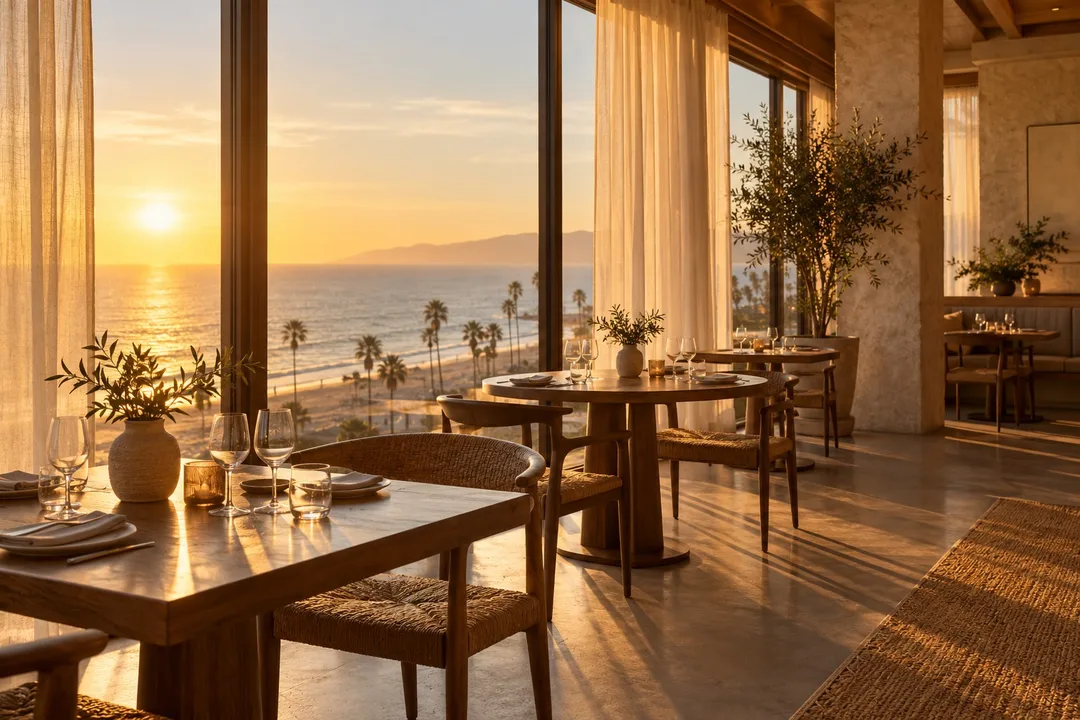
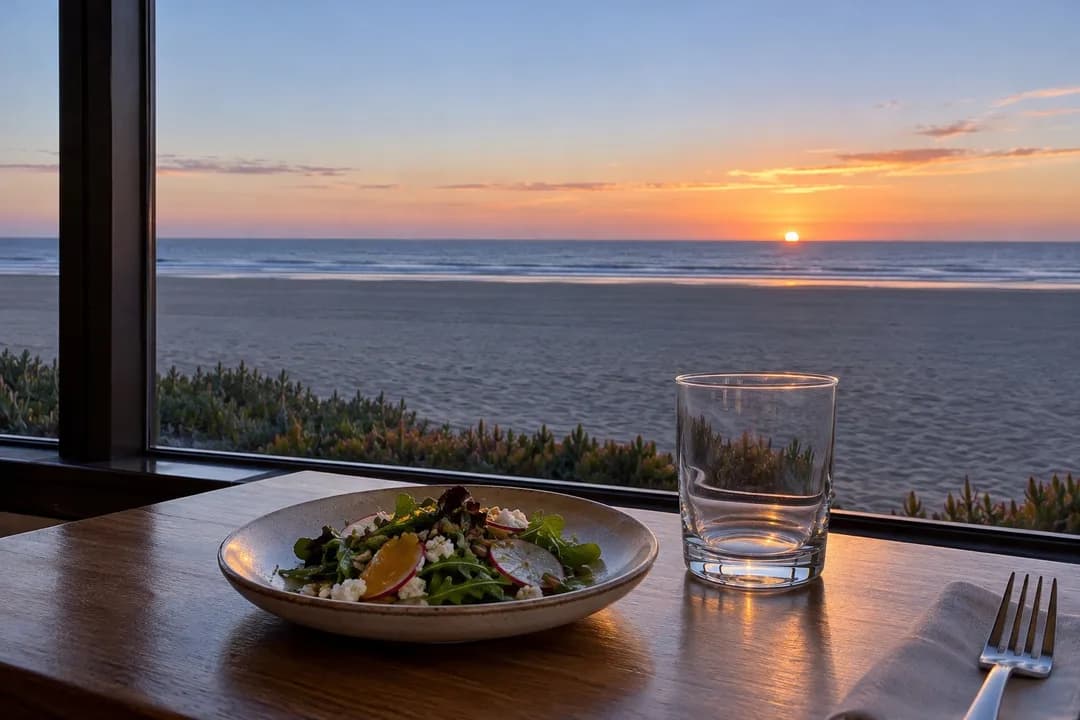
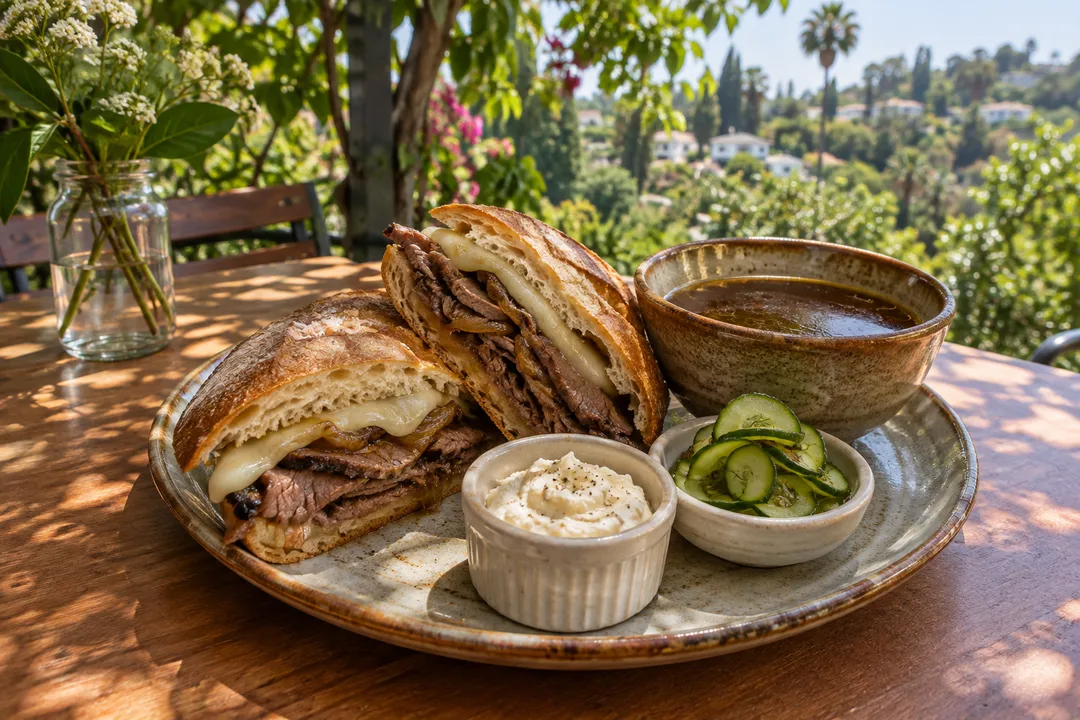
Clouds and changing light can alter the experience even when the reservation is exactly right. Choose a dinner you would still value on a less dramatic evening, and share that expectation with your companion. The generated images on this page illustrate coastal dining and are not photographs of a named restaurant or evidence of its outlook. Bring your date and preferences to the Karpo APP, compare the table-centered and walk-centered versions, then complete the dining arrangement through the restaurant. A satisfying evening needs more than a promise of a sunset.
Ask Karpo for more information.
Keep reading
- Santa Monica French Dip Sandwich Lunch Picker by Ocean
 Echo Park French Dip Sandwich Lunch Picker Around Noon
 Silver Lake French Dip Sandwich Lunch Picker on Hillsides