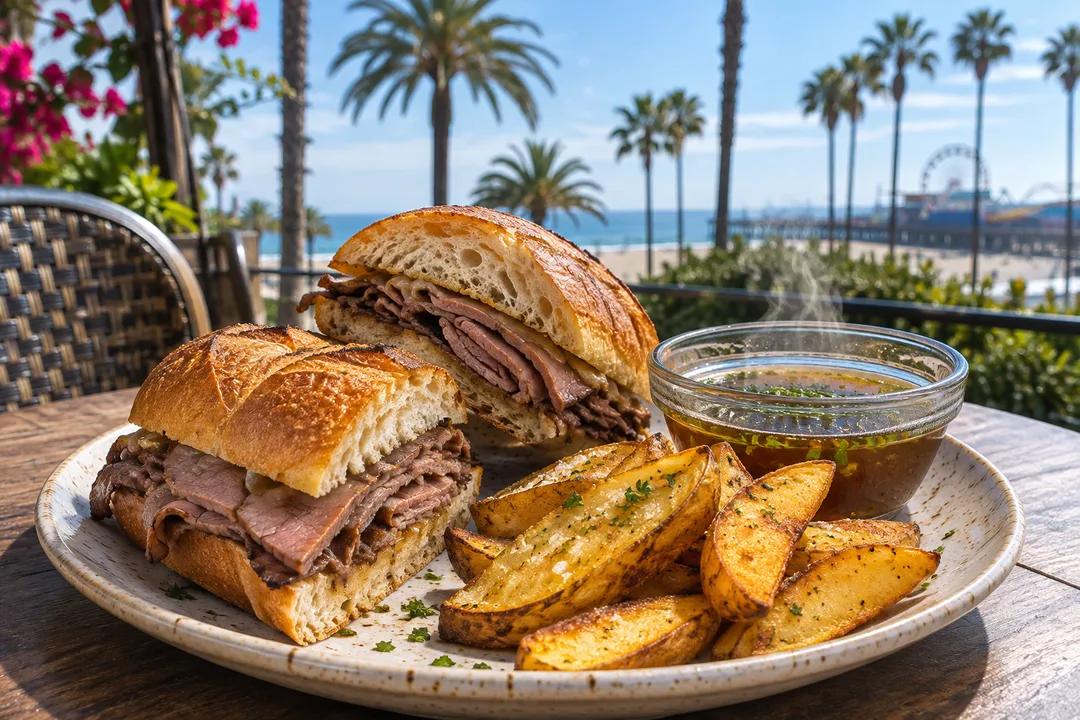
 Santa Monica French Dip Sandwich Lunch Picker by Ocean
Restaurants
DTLA Dinner Reservation Finder: Eat Before the Curtain Call
A DTLA dinner reservation finder starts with your curtain time and exit deadline, then compares early meals near the Music Center before you book a table.
For dinner before a performance near the DTLA Music Center, the most useful time is often the moment you need to leave the restaurant. A dinner reservation finder can help you shape the meal around that deadline. Give the Karpo APP your performance date, venue, party size and desired arrival buffer, then ask for dining suggestions that fit. A nearby address or an early reservation does not establish that service will finish on schedule. The goal is a workable dinner plan whose timing you can discuss with the restaurant before committing.
Work backward from the auditorium
Begin with the theater named on your ticket rather than a broad search for downtown dining. Your plan needs the entrance you will use, the time you want to be inside and any steps between the street and your seat. Picking up tickets, meeting another guest and handling a bag can all affect your personal buffer. Use your own requirements rather than assume that every performance has the same entry process. Treat the published curtain time as the fixed point, with the rest of the evening arranged around it.
As a planning example, imagine a curtain at 7:30 pm and a personal target of reaching the theater entrance by 7 pm. If you allocate twenty minutes to leaving the restaurant and completing the journey, your restaurant departure target becomes 6:40 pm. These are illustrative inputs, not a claim about walking times around the Music Center. Replace them with the details of your actual evening. The calculation helps you see what an early seating must accomplish without pretending that a reservation time alone determines the pace of dinner.
Give the restaurant a departure deadline
When you ask for candidates, include the time you intend to be out of the dining room. That is more informative than saying you are going to a show. A restaurant may offer an early table while serving a meal whose normal format does not suit your deadline. Explain how many people are dining, whether everyone arrives together and how much you hope to order. The question for the venue is whether that particular meal can reasonably fit your window, with enough time left to settle the bill.
A pre-theater menu can be helpful when one is actually offered for your date, but the label still leaves questions. Find out which courses it includes, when orders must be placed and whether everyone at the table must choose it. Compare that commitment with ordering individual dishes. Do not infer a special menu from a theater district location or an old photograph. Ask Karpo to organize the menu information it can support and identify which timing details still need an answer from the dining room.
Choose an ordering plan that fits the clock
The meal you imagine should match the time you have. A main course each leaves different decisions from a sequence of shared starters, several mains and dessert. Discuss that choice with your companions before booking. If one person wants a leisurely celebration while another wants to eat quickly, proximity to the theater will not resolve the disagreement. Decide whether dinner is a short part of the outing or a central event. You can move a longer meal to another night without sacrificing the pleasure of this performance.
Tell Karpo about vegetarian preferences, allergies and any dishes the group hopes to avoid. An unfamiliar menu can require extra conversation at the table, which is easier to accommodate when you have reviewed it beforehand. Direct allergy questions to the kitchen or reservation team rather than rely on cuisine labels. Spending constraints also deserve a place in the brief. A published fixed menu and flexible individual ordering can produce different commitments, so compare their terms instead of assigning a guessed dinner price to every candidate.
Measure convenience across the whole evening
A restaurant that appears close on a map can still create an awkward arrival or departure for your party. Think through where you will arrive from, whether anyone needs step-free access and how you intend to reach the theater afterward. Distances and route estimates belong to the actual locations you choose. Give Karpo the exact venue and ask for a comparison of approaches when relevant information is available. Keep an uncertain shortcut out of the plan, especially if you are relying on a particular entrance or a route through another building.
Parking at dinner and moving the car again before the show introduces another handoff and another possible delay. If that is your intention, make the extra movement visible in the schedule. If you prefer to park once, compare the combined journey to dinner, the performance and the return to the car. Someone arriving by transit may have a different preferred meeting point from a companion driving downtown. Agree on that point explicitly. The convenient option is the one that works for the group, not necessarily the shortest straight line between two map pins.
Keep a fallback that protects the performance
Set a decision point for a delayed arrival. If a work meeting runs over or a companion is late, you need a simpler choice than trying to compress an unchanged dinner into less time. Your fallback might reduce the number of courses, move the meal until after the show or replace the full dinner with a lighter option. None of those alternatives implies that another restaurant will have room. They are decisions about what you are willing to change when the original schedule no longer feels comfortable.
Use the shortlist to compare two different strengths. One option may offer a more convenient journey while another has a menu the group strongly prefers. Put the departure deadline first, then weigh the remaining tradeoff. If a restaurant cannot answer your timing question, leave that uncertainty visible instead of treating its early seating as proof. Do not ask Karpo to monitor tables or make a booking on your behalf. Use the conversation to refine the plan, and use the venue's booking channel to establish an actual reservation.
Close the timing loop before dinner
After selecting a candidate, read the booking conditions and share the accepted dining time with the group. Include the restaurant departure target and the theater meeting plan in the same message. If a deposit or cancellation term applies, everyone arranging the evening should understand it before you commit. Keep the performance ticket separate from the dinner reservation. Possessing one does not secure the other, and a request to finish by a certain time is still a request until the restaurant responds.
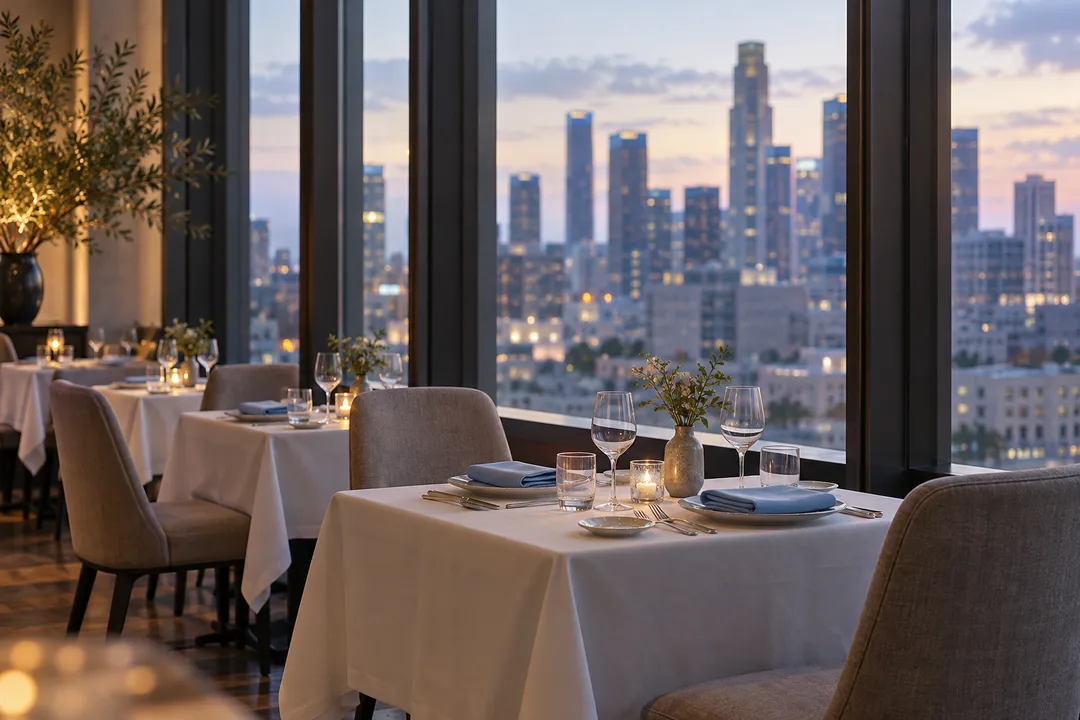
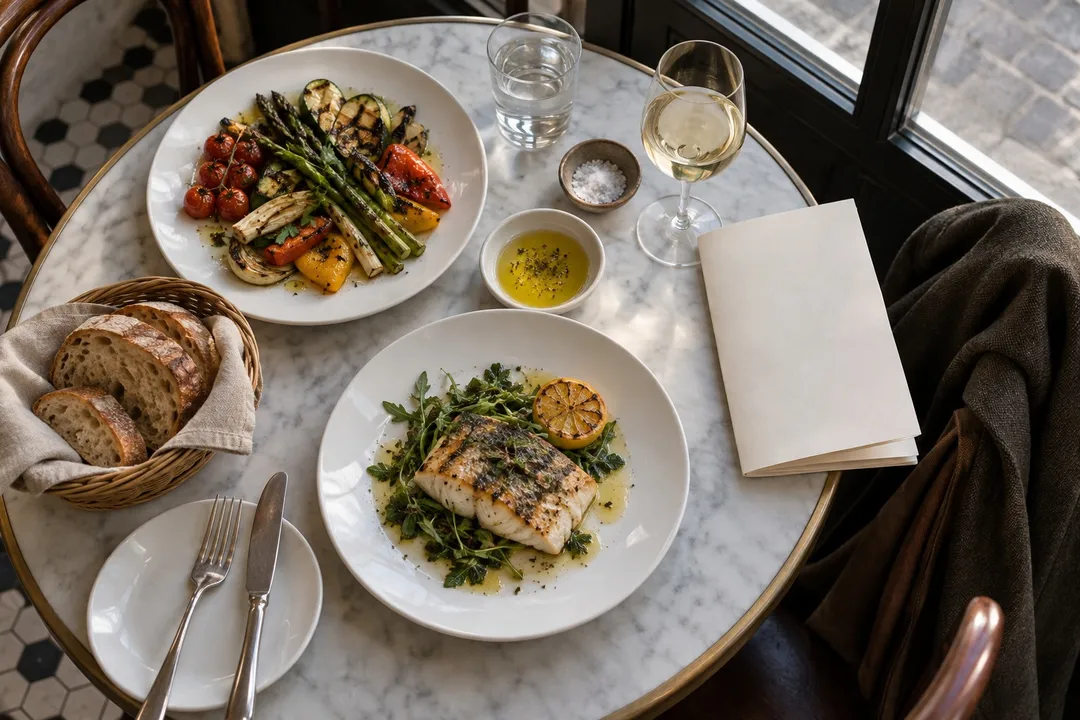
At the table, make the departure target known when you order and leave time for payment before the final rush. That is a practical conversation, not a guarantee that every stage of service will run to your preferred minute. The images here are generated illustrations of an early dinner and do not show a particular Music Center restaurant. Bring the actual show details to the Karpo APP, compare a manageable number of meals and choose the option that leaves you thinking about the performance as you walk toward the theater.
Ask Karpo for more information.
Keep reading
- Santa Monica French Dip Sandwich Lunch Picker by Ocean
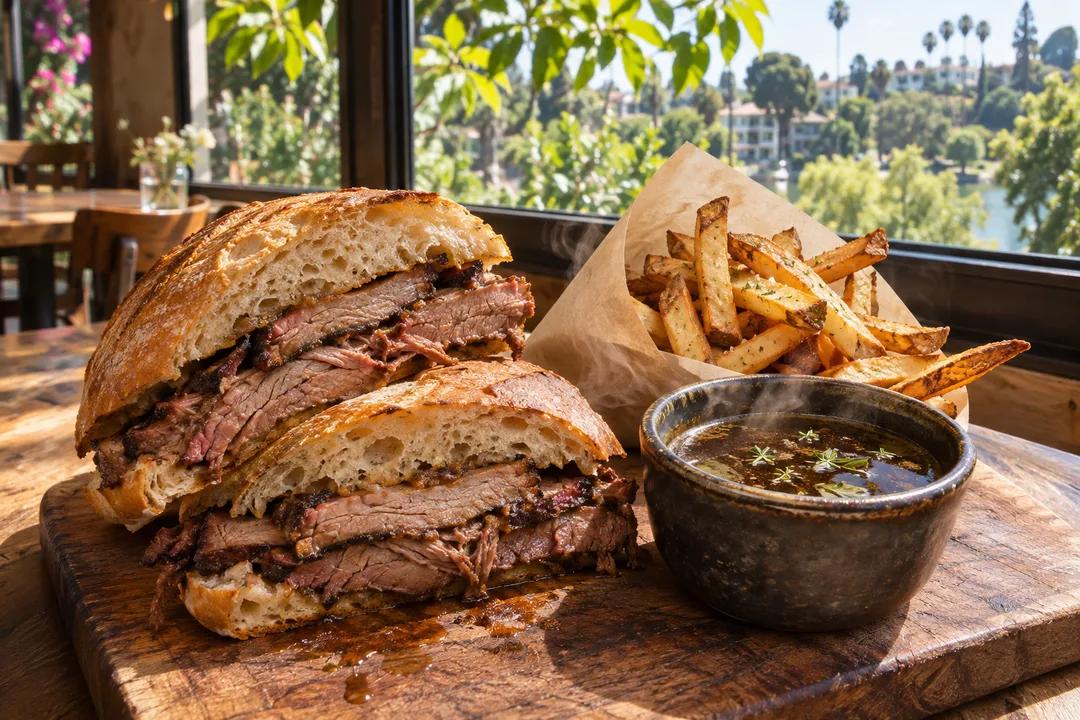 Echo Park French Dip Sandwich Lunch Picker Around Noon
 Silver Lake French Dip Sandwich Lunch Picker on Hillsides