 Santa Monica French Dip Sandwich Lunch Picker by Ocean
Restaurants
LA Dinner Reservation Finder: A Chef Counter for One
A Culver City dinner reservation finder helps solo diners and pairs compare chef counters, menu commitments and seating comfort before choosing a booking.
A chef counter in Culver City can appeal to a solo diner who enjoys watching a kitchen, or to two people who want a meal with something to discuss. Those are different requests, even when both start with a dinner reservation finder. In the Karpo APP, describe your party size, the interaction you hope for and the kind of meal you want. Ask for options to compare rather than assume every counter delivers personal attention from a chef. A bar seat, an open-kitchen table and a dedicated chef counter can offer quite different evenings.
Name the counter experience you mean
Start with what you want to see and how much involvement you want. You might enjoy an unobstructed view of plating without expecting conversation, or you may be looking for a menu presented directly across the counter. Say which matters. A restaurant can have an open kitchen while seating counter guests away from the main work area. The words chef counter do not establish who serves each course, whether explanations are included or whether diners can choose their own dishes. Ask for those details rather than infer them from the shape of the room.
If interaction is the attraction, separate an opportunity to ask a question from an expectation of continuous attention. A working kitchen has its own rhythm, and some diners prefer to watch quietly. Tell Karpo whether you want a highly guided experience or a relaxed solo meal with visual interest. When information about a candidate is incomplete, keep the degree of interaction unresolved. This prevents a strong preference for watching preparation from becoming a claim that a particular chef will host you personally throughout dinner.
Build a solo plan around your own pace
For one diner, the counter can provide a natural focus without requiring a companion. Think about whether you want a short meal, several courses or time to linger over a final drink. You may prefer to order flexibly, especially if you are arriving after work and do not know how hungry you will be. A set sequence can be appealing when you want to hand over those decisions. Explain that preference at the beginning of the search so the shortlist does not confuse a casual counter meal with a lengthy scheduled experience.
Solo seating can also create practical questions about booking categories. A website may offer a counter option for one, use a general dining category or require an inquiry for a particular experience. Read the choice you are making before accepting it. A table for one does not automatically mean a seat facing the kitchen. If the experience depends on that position, ask the restaurant about the arrangement. You can enjoy dining alone without treating a seating note as a confirmed place at a specific stretch of counter.
For two, decide how you want to share attention
Two adjacent seats direct both guests toward the work ahead of them, which can be enjoyable when you want a shared subject. They can also make face-to-face conversation less natural than it would be across a table. Discuss which experience suits the evening. A first catch-up after several months might favor a conventional table, while two enthusiastic cooks may welcome the view into preparation. Give Karpo the reason for dining together instead of assuming that the most intimate-looking counter is the right arrangement for every pair.
Adjacent places deserve an explicit question when booking. Two reservations or two seats in the same room are not necessarily a pair together. If you are choosing a shared experience, communicate that you want adjoining positions and ask how the venue handles the request. Dietary differences can affect the choice too. One guest may want a full set menu while the other prefers a smaller meal. Find out whether the format allows that before choosing it, rather than resolve incompatible expectations once both people are seated.
Understand the menu commitment before paying
A chef-led menu may involve a fixed sequence, individual ordering or a separate counter experience. Compare the actual format for the candidate you are considering. Ask how dietary requirements are handled and how much notice the restaurant needs for an adjustment. A dislike, a vegetarian preference and a serious allergy require different answers. Communicate an allergy directly with the restaurant about ingredients and preparation. An appealing description of seasonal cooking cannot establish that a kitchen can accommodate every restriction within a particular menu.
Use your own budget as a limit for the full evening rather than a guessed local price. Consider food, optional pairings, other drinks and any charges specified in the booking terms. A pairing is a separate decision from sitting at the counter. You can ask whether nonalcoholic options are described without implying that every venue supplies them. Karpo can help organize published details and compare the commitments, while the restaurant's current booking terms define what you would pay for and which choices remain optional.
Consider the chair as carefully as the cooking
Counter height and seat design can affect comfort more than a photograph suggests. A high stool without a back is a different proposition from a regular dining chair at a low counter. Think about how long you expect to sit, whether you need foot support and how you prefer to get up during dinner. If mobility or balance is a concern, ask about the actual seat and approach. The presence of a counter does not establish that the restaurant offers a suitable place for every diner.
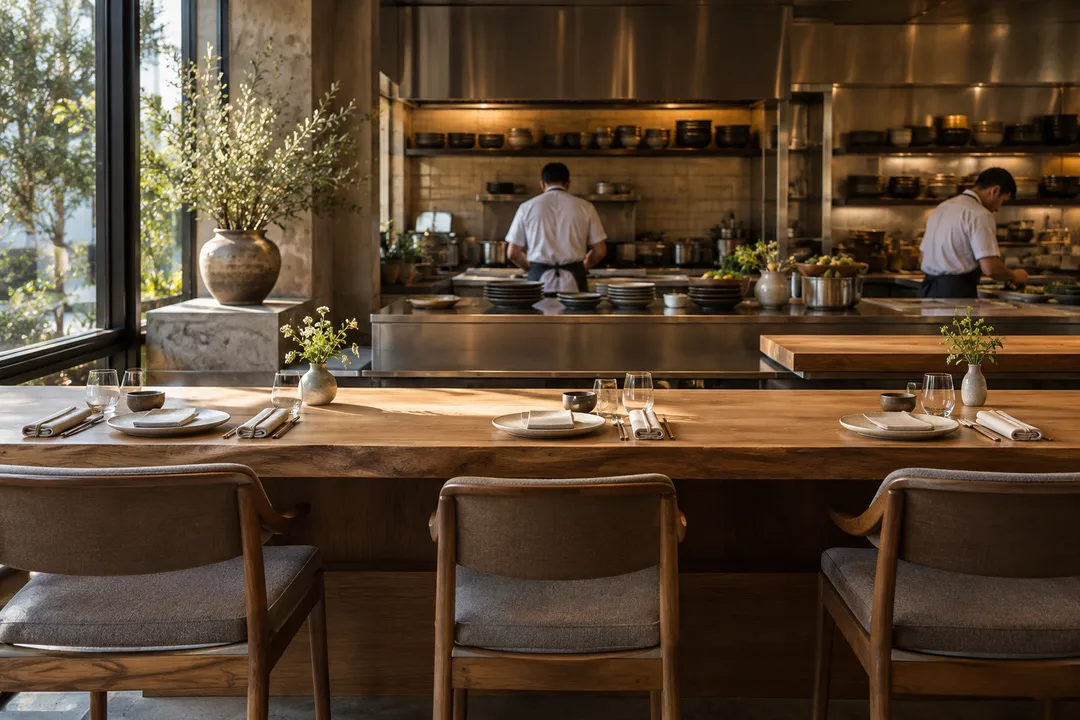
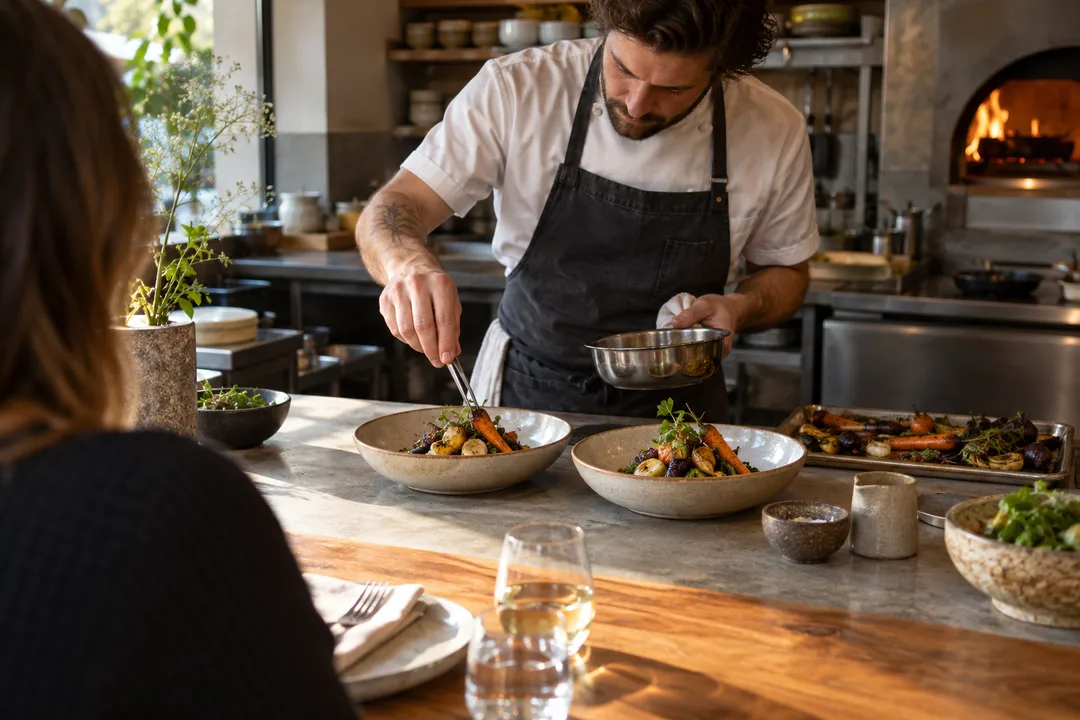
Position can also change the experience. A seat near a pass may involve more movement, while a different section may have a limited view of preparation. Heat, sound and aromas can be part of the appeal for one guest and distracting for another. Ask concrete questions about the part of the room you would use. The generated pictures on this page illustrate counter dining rather than document a real Culver City restaurant. They can help explain your preferences, but they cannot prove the layout or comfort of a candidate.
Choose the experience before securing the seat
Narrow the shortlist to a few distinct choices and state the compromise for each. One might offer a more structured meal than you originally intended, while another allows flexible ordering with less interaction. For a solo evening, let your preferred pace settle the decision. For a pair, agree on how much of the night should be spent watching the kitchen and how much talking together. Return to the Karpo conversation with any answers you receive from the venue so you can compare the options using better information.
Complete the arrangement in the restaurant's booking channel, reading the selected area, number of guests, arrival requirements and cancellation conditions. If the menu begins at a common start time, ask how arrival works rather than assume a counter meal can begin whenever you enter. Share the accepted details with your companion if there is one. The APP conversation supports discovery and planning without claiming to reserve the counter or monitor openings. A clear request gives you a better basis for choosing the meal you want to sit down to.
Ask Karpo for more information.
Keep reading
- Santa Monica French Dip Sandwich Lunch Picker by Ocean
 Echo Park French Dip Sandwich Lunch Picker Around Noon
 Silver Lake French Dip Sandwich Lunch Picker on Hillsides