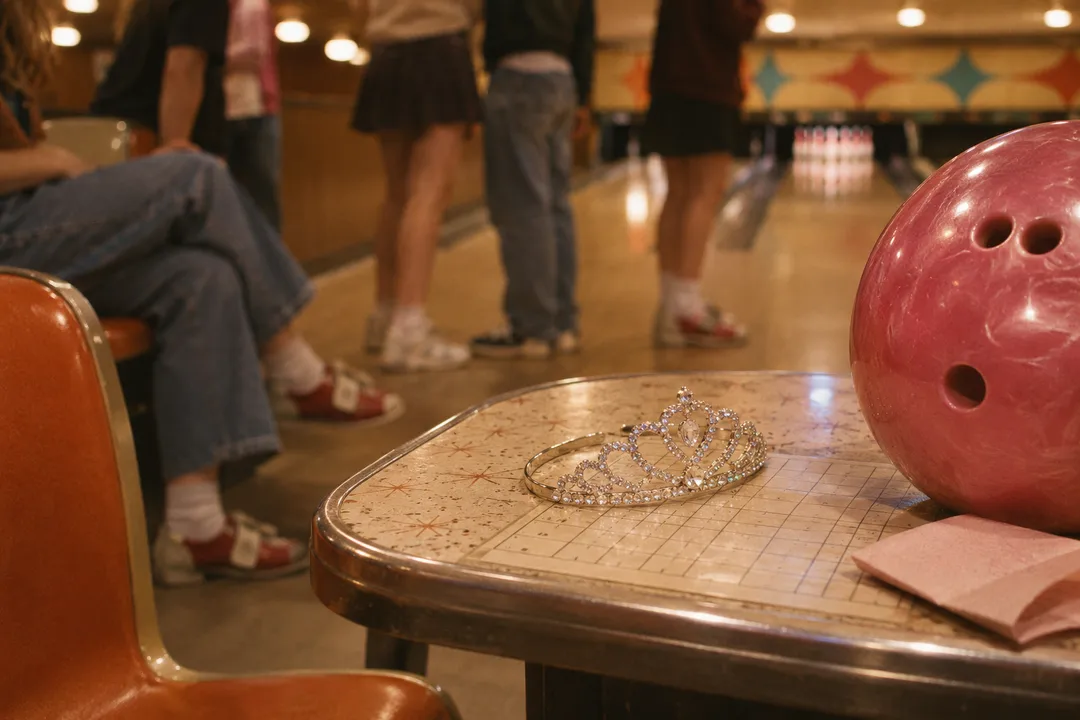
 Sawtelle Bowling Group Night Planner for a College Reunion
Sports Social
West Hollywood Cycling Trail Planner: Creative Quarter Route
Master West Hollywood urban cycling with this trail planner. Discover protected Santa Monica Boulevard lanes, quiet greenways, and dooring prevention.
Cycling through the compact urban fabric of West Hollywood requires a structured cycling trail planner approach to navigate lively nightlife boulevards, peaceful residential greenways, and vibrant design corridors. Spanning just under two square miles between Beverly Hills and Hollywood, West Hollywood features a dense concentration of architectural landmarks, world-renowned fashion ateliers along Melrose Avenue, and active bike infrastructure along Santa Monica Boulevard. Ever since incorporated as an independent city in 1984, the municipality has actively prioritized multimodal urban circulation, installing dedicated green bike lanes and traffic-calmed neighborhood streets. Karpo APP coordinates these dynamic corridors so you can monitor protected bikeway boundaries, manage curbside bus and rideshare zones, and connect to neighboring Los Angeles routes with complete navigational clarity.
Santa Monica Boulevard Protected Lanes and Connectors
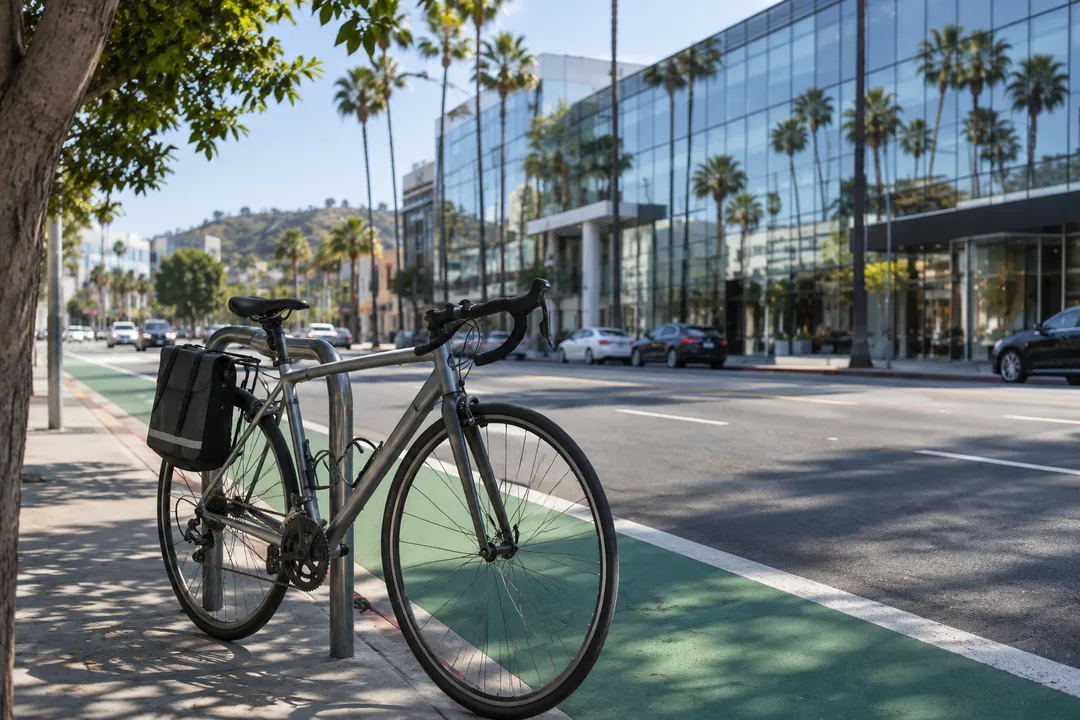
Historic Route 66, known locally as Santa Monica Boulevard, serves as the primary east-west arterial spine of West Hollywood cycling. The city maintains buffered and green-painted bicycle lanes running from Doheny Drive on the west border to La Brea Avenue on the east. Riding this central corridor guides cyclists past mid-century modern civic buildings, landscaped medians planted with mature jacarandas and palms, and landmark commercial centers. Dedicated bicycle signal phases at major cross streets like San Vicente Boulevard and Fairfax Avenue ensure secure left-turn transitions across multi-lane traffic.
While Santa Monica Boulevard provides direct and efficient transit, cyclists must exercise heightened vigilance regarding curbside vehicle activity. Delivery trucks, municipal transit buses, and frequent passenger drop-offs near dining establishments create intermittent lane friction. Experienced local commuters leverage green conflict markings at driveway intersections, maintaining a straight, predictable line rather than swerving into curbside parking gaps.
To extend distance workouts beyond city borders, riders can continue westward along Santa Monica Boulevard into the leafy residential flats of Beverly Hills, or pedal eastward toward Hollywood and the foothills of Griffith Park. Integrating these arterial connections establishes a reliable foundation for any regional cycling trail planner itinerary.
Residential Greenways and Quiet Neighborhood Corridors
For riders seeking tranquil, low-stress cycling away from arterial vehicular traffic, West Hollywood's residential grid offers exceptional east-west and north-south neighborhood greenways. Willoughby Avenue and Vista Street feature traffic-calming diverters, reduced municipal speed limits, and prominent bicycle boulevard sharrows that deter cut-through automotive traffic while prioritizing cyclists and pedestrians.
Pedaling along Willoughby Avenue reveals a shaded neighborhood landscape of 1920s Spanish Colonial Revival apartment courts, historic Craftsman bungalows, and modern architectural residences. These quiet corridors allow riders to maintain conversational cadences, bypass signalized congestion on major boulevards, and transition smoothly toward the creative galleries of the La Brea design district.
Furthermore, connecting through North Kings Road or Sweetzer Avenue guides riders past iconic modernist landmarks like the Schindler House, designed in 1922 as an experimental communal residence and studio. Pausing along these tree-lined residential passages offers a tranquil architectural contrast to the pulsing commercial energy of neighboring thoroughfares.
When crossing busy north-south arterials such as La Cienega Boulevard, Crescent Heights Boulevard, and Fairfax Avenue from residential side streets, cyclists should utilize signalized pedestrian and bicycle hybrid beacons to trigger safe crossing intervals across traffic.
Optimal Riding Hours and Traffic Rhythm
West Hollywood undergoes dramatic shifts in street energy throughout the day, making timing a critical element of ride planning. Early morning between 7 am and 9:30 am offers the most serene riding conditions across the Creative Quarter. Delivery traffic is minimal, outdoor cafe parklets along San Vicente Boulevard are just opening their doors, and ambient automotive speeds remain low, providing crisp, clean air for fitness laps and commuting.
Late afternoon and evening hours between 5 pm and 8 pm see heightened kinetic activity as commercial districts along the Sunset Strip and Santa Monica Boulevard fill with nightlife visitors, rideshare vehicles, and valet queues. Cyclists navigating the area during evening hours must anticipate sudden vehicle doors opening along parking lanes, maintaining at least three to four feet of clearance from parked cars to avoid door-zone collisions.
Night riding in West Hollywood is enhanced by pedestrian-scale streetlamps, but high-powered active lighting remains mandatory. Equipping your bicycle with an amber side-visibility marker, a powerful 600-lumen front headlight, and a pulse-mode red rear light ensures immediate detection by motorists maneuvering through signalized intersections.
Lock Security, Public Infrastructure, and Transit Links
Due to high foot traffic and active commercial nightlife, bicycle security in West Hollywood requires strict adherence to double-lock standards. Never rely on lightweight cable locks or leave your bicycle unsecured outside storefronts. West Hollywood maintains sturdy, custom-designed city bicycle racks and parking corrals outside West Hollywood Park, the West Hollywood Library, and along pedestrian shopping blocks on Melrose Avenue.
Lock both wheels and the central frame to a solid municipal rack using a heavy-duty hardened steel U-lock combined with a hardened accessory chain. If leaving your bike parked while dining indoors or attending gallery openings, remove all detachable accessories, including headlamps, rear lights, saddlebags, and cycle computers.
West Hollywood provides excellent transit integration for cyclists looking to expand their range. Cityline local shuttles and Metro bus lines along Santa Monica Boulevard and San Vicente Boulevard feature exterior two-bike and three-bike racks mounted on front bumpers, allowing riders to combine pedal power with regional bus transit at zero extra cost.
Design District Discovery and Navigation With Karpo APP
Beyond everyday commuting, cycling through the West Hollywood Creative Quarter offers an inspiring exploration of world-class interior design, public art installations, and contemporary culture. Circling the iconic Pacific Design Center with its monumental blue, green, and red architectural glass buildings designed by Cesar Pelli provides an unforgettable visual experience from the seat of a bicycle. Quiet adjacent side streets lead toward hidden pocket parks, community gardens, and open-air sculpture installations.
Active urban cycling in Southern California is continually evolving through improved protected bikeways and vision zero roadway designs. Karpo APP keeps your route planning accurate by delivering verified bicycle lane data, elevation contours, and neighborhood greenway connectors into a clear, reliable mobile format. Whether mapping an early morning workout sprint across the westside or navigating an afternoon gallery cruise through the Design District, having trustworthy pathway intelligence empowers you to ride through West Hollywood with complete confidence.
Ask Karpo for more information.
Keep reading
- Sawtelle Bowling Group Night Planner for a College Reunion
 Larchmont Bowling Group Night Planner for Carpool Parents
 Boyle Heights Bowling Group Night Planner for a Quince Court