 Sawtelle Bowling Group Night Planner for a College Reunion
Sports Social
Venice Cycling Trail Planner: Canals & Boardwalk Route
Plan scenic Venice bike routes from the oceanfront boardwalk to canal bridges. Discover timing rules, connector lanes, and defensive riding tactics.
Cycling through Venice demands a calculated cycling trail planner perspective to balance vibrant beach culture with safe, efficient coastal movement. Venice showcases an extraordinary juxtaposition of breezy oceanfront boardwalk riding, tranquil historic canal pathways, and trendsetting commercial energy along Abbot Kinney Boulevard. Conceived by developer Abbot Kinney in 1905 as a romantic seaside cultural resort, the district maintains a unique network of pedestrian footpaths, arterial bicycle lanes, and coastal trail connectors. Karpo APP coordinates these dynamic coastal bikeways so you can transition smoothly from open beach cruising to quiet neighborhood streets while tracking speed regulations and crowd patterns in real time.
Oceanfront Boardwalk Path Versus Inland Corridors
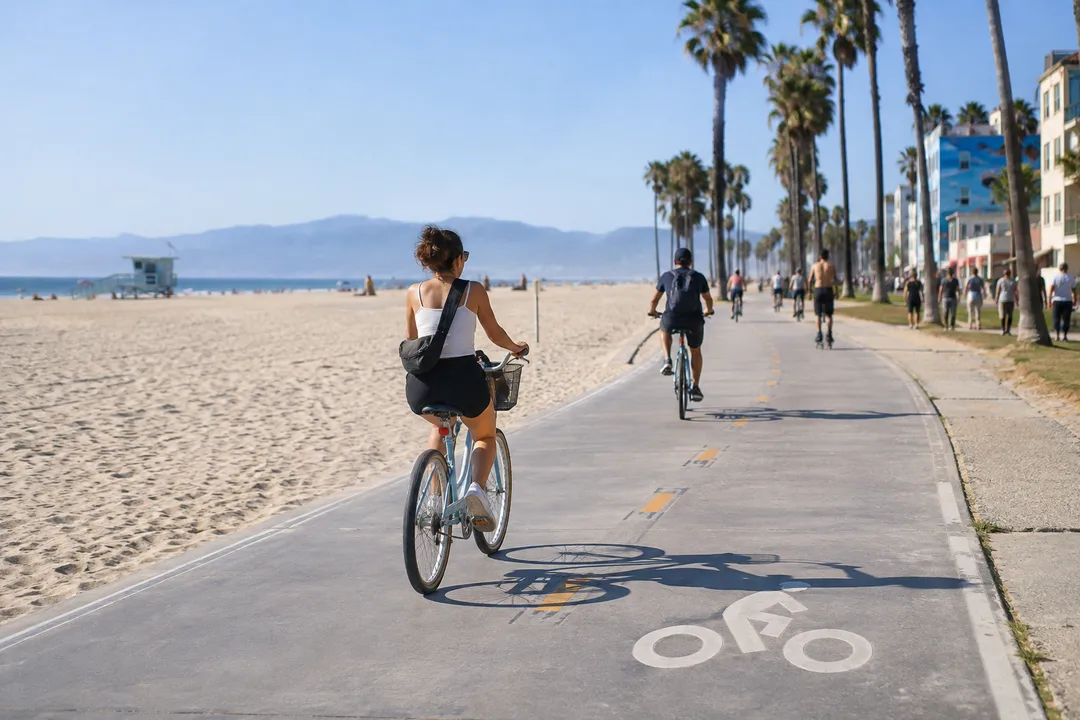
The Venice Beach section of the Marvin Braude Coastal Bike Trail provides an iconic Southern California riding experience, separated physically from pedestrian foot traffic along the sand between Santa Monica and Marina del Rey. However, the immediate vicinity of the Venice Boardwalk, Muscle Beach, and the Venice Skate Park witnesses high pedestrian density, street performers, and unpredictable pedestrian crossovers. While cruising along the sand delivers refreshing Pacific sea spray and vibrant coastal energy, maintaining high athletic cadences requires sharp visual reflexes and continuous bell alerts.
For cyclists seeking steady commuting speeds or structured endurance training, moving inland to designated city bikeways offers an uncrowded alternative. Main Street features marked bicycle lanes heading north into Santa Monica, bordered by mature street trees and low vehicular speed limits. Similarly, Venice Boulevard provides a broad east-west arterial equipped with green conflict pavement and protected sections that connect the coast directly to Culver City and central Los Angeles, establishing an essential artery in your cycling trail planner routine.
Balancing coastal scenery with smooth street travel allows riders to tailor each outing to their individual goals. Starting along the beachfront bike path in the early morning for peaceful distance miles and returning via the shaded pavement of Pacific Avenue or California Avenue prevents mid-trip frustration when beachside crowds peak in the afternoon.
Navigating the Historic Venice Canals
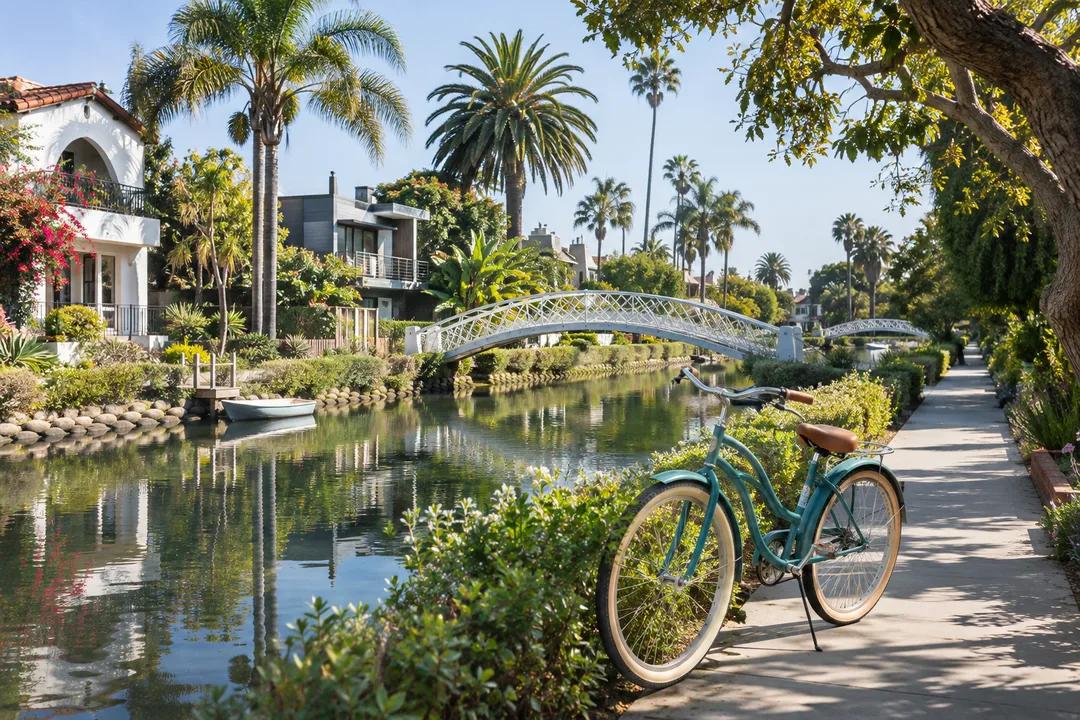
The Venice Canal Historic District offers an enchanting, slow-paced cycling detour located just a few blocks east of the oceanfront. Four primary east-west canals and two north-south canals are interconnected by graceful arched pedestrian bridges and picturesque waterside sidewalks lined with duck blinds and historic cottage residences. Riding through this designated historic district requires a gentle, respectful pace that honors resident privacy and pedestrian tranquility.
Cyclists must dismount and walk their bicycles across the narrow arched footbridges, as the steep steps and tight bridge clearances make riding hazardous to both cyclists and foot travelers. Navigating the surrounding perimeter roadways, including Strongs Drive, Dell Avenue, and Court A through E, allows riders to enjoy canal vistas while respecting local municipal walkway regulations.
The canal district functions as an ideal mid-ride rest stop where riders can slow down, hydrate, and admire twentieth-century coastal urban planning. Connecting from the canals southward along Dell Avenue leads directly into the peaceful marina basin of Marina del Rey, where wider multi-use paths resume around the harbor perimeter.
Optimal Ride Hours and Crowd Rhythm
Understanding the daily rhythm of Venice Beach is vital for a rewarding cycling adventure. The golden window for unobstructed riding occurs between 6:30 am and 9 am on weekday mornings. During these peaceful daylight hours, maintenance crews groom the sand, local surfers paddle into the morning swell, and the Marvin Braude beach trail is occupied almost exclusively by serious distance riders, runners, and morning commuters.
By midday on weekends, between 11 am and 4 pm, the boardwalk transformation reaches peak kinetic energy. Sightseers, roller skaters, rental surreys, and casual tourists frequently step across bicycle lane boundaries near Windward Avenue. Cyclists traversing this area during peak hours should reduce velocity to under ten miles per hour, keep hands resting over brake levers, and maintain heightened situational awareness near street performer circles.
Late afternoon rides between 5 pm and sunset provide spectacular ocean horizon vistas as the sun dips below Santa Monica Bay. Riding south with afternoon tailwinds creates effortless forward momentum, though cyclists pedaling north toward Malibu must contend with stiff ocean breezes and low-angle sun glare reflecting off the Pacific surface.
Bicycle Security and Beachside Lock Protocols
Bicycle theft is a persistent concern in coastal resort areas, making strict locking protocols mandatory for any Venice ride. Never leave an unlocked bicycle unattended, even for a brief thirty-second coffee pickup or restroom stop. Santa Monica and Venice provide sturdy inverted-U bike racks along Ocean Front Walk, Windward Circle, and Abbot Kinney Boulevard.
Always secure both your frame and rear wheel to an immovable post using a heavy-gauge, hardened steel U-lock, supplementing with a flexible cable looped through the front wheel. If your bicycle features quick-release wheel skewers or seatpost clamps, consider swapping them for locking security skewers that prevent opportunistic component theft. When dining or relaxing outdoors, position your bicycle in direct view of your seating area whenever possible.
Coastal salt spray and windblown silica can accelerate drivetrain wear and chain corrosion. After completing a coastal ride through Venice, wipe down your frame, rims, and chain with a clean rag to remove salt film. Applying a water-repellent chain lubricant once every two weeks maintains quiet shifting performance and extends component lifespan in marine environments.
Abbot Kinney Connections and Navigation With Karpo APP
Transitioning away from the immediate beach to explore Abbot Kinney Boulevard exposes cyclists to world-class boutique shopping, third-wave espresso bars, and innovative street murals. Abbot Kinney Boulevard serves as the cultural spine of Venice, offering dedicated bicycle corrals and parklets where riders can lock up and explore on foot. Neighboring residential side streets like Palms Boulevard, Rose Avenue, and Electric Avenue provide shaded, low-stress cycling connectors that bypass heavy vehicular congestion on Lincoln Boulevard.
Urban coastal cycling continues to thrive as Los Angeles expands its networked bikeways and active transit infrastructure. Karpo APP provides riders with clear routing precision, highlighting low-stress neighborhood connectors, protected bike lanes, and elevation contours across the westside. Whether planning a serene morning cruise through the Venice Canals or mapping a high-cadence coastal workout down to the South Bay, having reliable pathway intelligence ensures an inspiring, worry-free ride along the Pacific shoreline.
Ask Karpo for more information.
Keep reading
- Sawtelle Bowling Group Night Planner for a College Reunion
 Larchmont Bowling Group Night Planner for Carpool Parents
 Boyle Heights Bowling Group Night Planner for a Quince Court