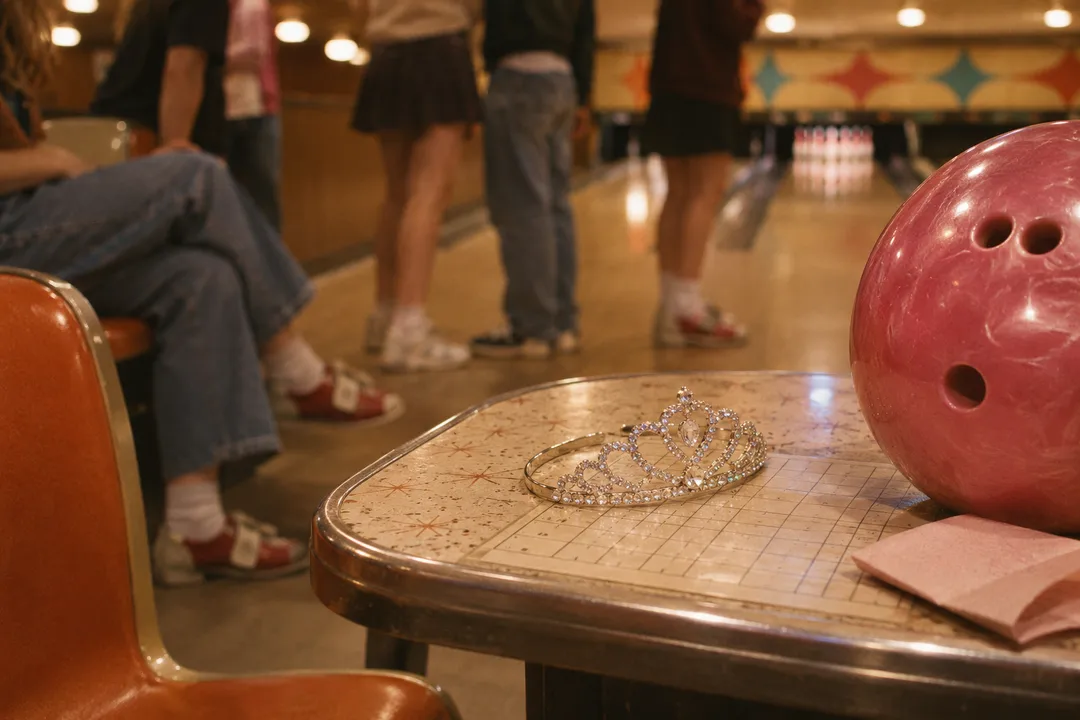
 Sawtelle Bowling Group Night Planner for a College Reunion
Sports Social
Downtown LA Cycling Trail Planner: Arts District Route
Master Downtown LA and Arts District urban cycling with this trail planner. Discover protected 7th Street lanes, historic bridges, and rail crossing safety.
Navigating the industrial fabric and historic avenues of Downtown Los Angeles requires an organized cycling trail planner framework tailored to dense urban corridors. The Arts District and surrounding downtown core offer an inspiring juxtaposition of century-old masonry freight warehouses, monumental concrete viaducts spanning the Los Angeles River, and contemporary protected bike lanes along 7th Street and Spring Street. Originally developed in the late nineteenth and early twentieth centuries as Southern California's primary citrus packing and freight railway terminal hub, the district has transformed into an active center for design studios, culinary venues, and urban cycling. Karpo APP coordinates these industrial bikeways so you can manage complex intersection signal phases, monitor multi-lane transit connections, and bypass active rail tracks with total riding confidence.
7th Street Protected Bikeway and Historic Bridges
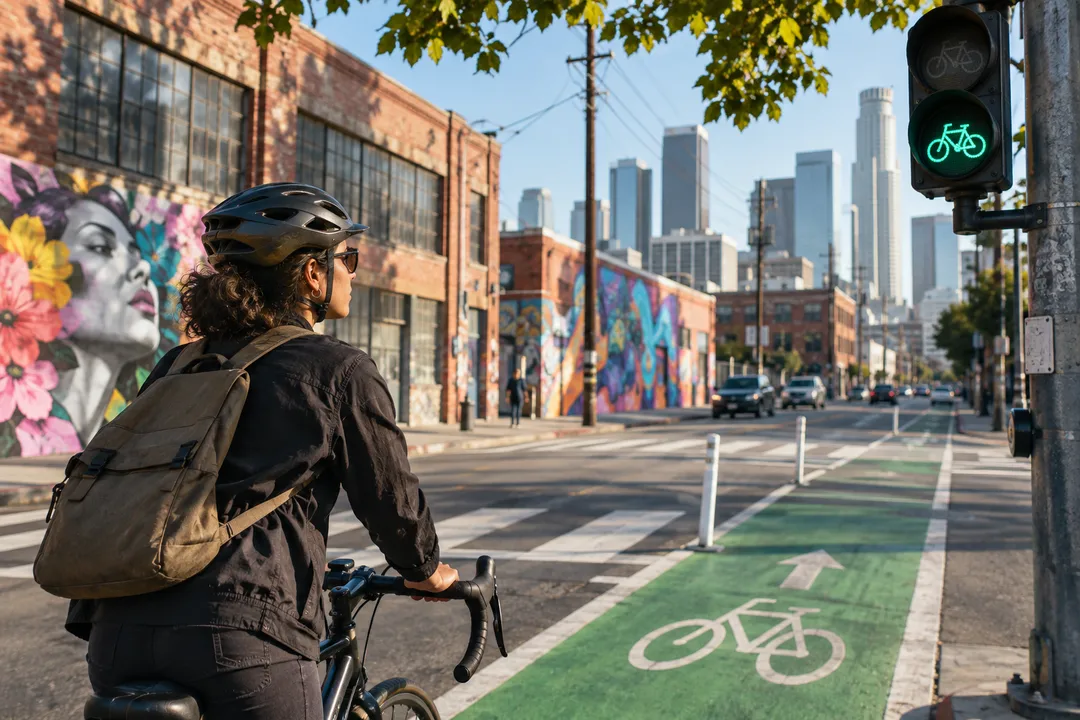
The 7th Street bicycle corridor serves as the primary east-west spine linking the downtown financial center with the Arts District and the Los Angeles River. Featuring bright green conflict paint, dedicated bicycle signal heads, and parked-car protective buffers, 7th Street enables riders to travel swiftly between Figueroa Street and Santa Fe Avenue. Riding along this route guides cyclists past landmark early twentieth-century department stores, bustling wholesale markets, and repurposed industrial loft complexes without contending directly with parallel automotive gridlock.
At the eastern edge of the Arts District, the historic 4th Street, 6th Street, and 7th Street Viaducts cross the rail yards and the Los Angeles River channel. The ribbon-arched 6th Street Viaduct, opened to the public in 2022 to replace the historic 1932 crossing, features dedicated, grade-separated bicycle tracks protected by concrete barriers. This monumental bridge delivers breathtaking, unobstructed skyline views of Downtown Los Angeles while connecting riders directly into the historic residential avenues of Boyle Heights.
Integrating these river bridges into your cycling trail planner itinerary allows seamless connectivity to the Los Angeles River Greenway and eastward climbs. When approaching the bridge approaches from Traction Avenue or Mateo Street, cyclists should anticipate slight gradient climbs and take advantage of broad, barrier-protected lanes to maintain smooth cruising cadences.
Industrial Rail Tracks and Roadway Safety
Because the Arts District originated as an intensive industrial rail depot, numerous decommissioned freight rail spurs remain embedded across asphalt intersections along Santa Fe Avenue, Palmetto Street, and Willow Street. Crossing embedded steel tracks parallel to your direction of travel presents a serious tire-jam hazard. Cyclists must always approach and cross rail tracks at a direct perpendicular angle between sixty and ninety degrees, momentarily standing on pedals to absorb pavement jolts.
Pavement surfaces across the Arts District can also transition abruptly from smooth newly surfaced asphalt to weathered cobblestone gutters, granite curbs, and industrial driveway aprons. Equipping your bicycle with durable, puncture-resistant tires measuring thirty to thirty-eight millimeters inflated to supple pressure levels dampens vibrations and protects rims from metal utility trench plates common along active construction corridors.
Large delivery trucks, freight vans, and distribution vehicles regularly maneuver along narrower district corridors like 4th Place and Molino Street. Cyclists must avoid lingering in vehicle blind spots along the right side of turning trucks, maintaining a commanding, assertive position in the center of shared travel lanes until dedicated bike lane clearings appear.
Optimal Riding Hours and Traffic Rhythm
Downtown Los Angeles experiences starkly different traffic personalities depending on the time of day and day of week. Sunday mornings between 7 am and 10 am provide the most tranquil, uncrowded riding conditions anywhere in the city center. Financial district canyon streets and Arts District warehouse lanes remain whisper-quiet, allowing riders to cruise broad avenues and admire grand architectural facades in peaceful golden sunlight.
Weekday commuter peak hours between 7:30 am to 9 am and 4:30 pm to 6:30 pm bring dense vehicular volumes, rideshare pickups, and commercial loading activity along Main Street, Los Angeles Street, and Olympic Boulevard. If riding during these peak transit hours, cyclists should plan to use the 7th Street or Spring Street protected bikeways and exercise caution near freeway onramps feeding into the 101 and 10 Freeways.
Evening rides around the Arts District offer energetic dinner-hour atmospheres as outdoor patios and galleries light up along Traction Avenue. Equipping an ultra-bright front headlight with at least 500 lumens and a wide-angle rear blinking taillight is essential for navigating darkened industrial side streets where street lighting can be intermittent between warehouse blocks.
Bicycle Lock Protocols and Urban Transit Integration
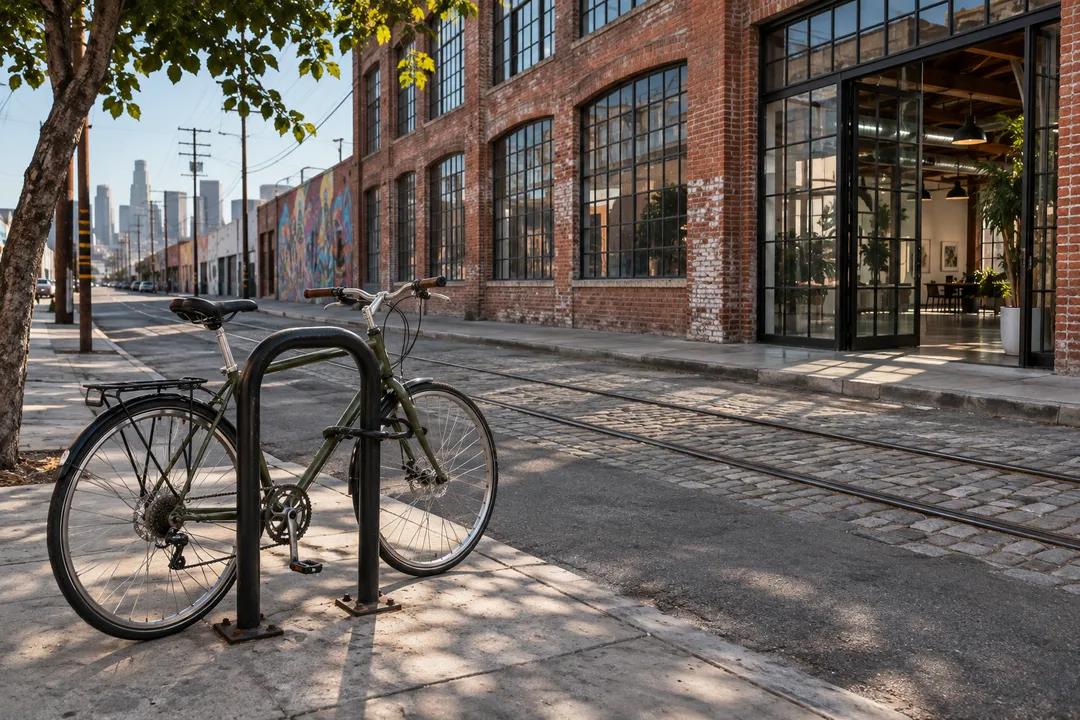
Downtown Los Angeles demands maximum bicycle lock vigilance. High-density commercial and transit hubs witness constant theft opportunities, making proper locking hardware non-negotiable. Always anchor your bicycle frame and rear wheel to city-approved inverted-U racks using a heavy-duty, hardened manganese-steel U-lock, accompanied by a hardened steel cable or secondary chain securing the front wheel.
Never leave removable accessories such as GPS head units, high-powered lights, saddlebags, or water bottles attached to an unattended bike outside. When visiting neighborhood cafes, galleries, or bookshops, choose establishments with street-facing bike parking or dedicated outdoor patios that allow continuous visual monitoring of your equipment.
The Arts District offers exceptional multimodal transit connectivity. The Little Tokyo/Arts District Metro A and E Line regional connector station at 1st and Central Avenue allows cyclists to roll bicycles directly aboard light rail cars at all operating hours without bike permits. Leveraging Metro rail enables riders to cover long distances across Los Angeles County without dealing with highway traffic.
Urban Exploration and Routing With Karpo APP
Beyond transit utility, the Arts District is a living museum of street art, historic infrastructure, and industrial conversion. Exploring winding alleyways reveals towering multi-story murals created by internationally acclaimed artists, while repurposed factory courtyards house independent coffee roasters and open-air creative markets. Neighboring districts like Little Tokyo, the Historic Core, and Chinatown are located within easy five-to-ten-minute bike rides via protected municipal bike paths.
Active urban cycling in Los Angeles continues to surge with connected bikeways and Vision Zero safety corridors. Karpo APP delivers essential route intelligence by mapping verified protected lanes, steep elevation profiles, and transit transfer points into an intuitive mobile interface. Whether charting an architectural weekend photo cruise or commuting through downtown commercial corridors, having real-time routing precision ensures a confident, connected ride across the historic heart of Los Angeles.
Ask Karpo for more information.
Keep reading
- Sawtelle Bowling Group Night Planner for a College Reunion
 Larchmont Bowling Group Night Planner for Carpool Parents
 Boyle Heights Bowling Group Night Planner for a Quince Court