 Burbank Film Memorabilia Collector Shop Walk: Studio Stash
Hidden Gems & Odd Finds
West Hollywood Curated Secondhand Clothing: 4 Melrose Edits
Walk the Melrose design corridor in West Hollywood for curated secondhand clothing. Inspect archival runway tailoring, silk gowns, and European leather.
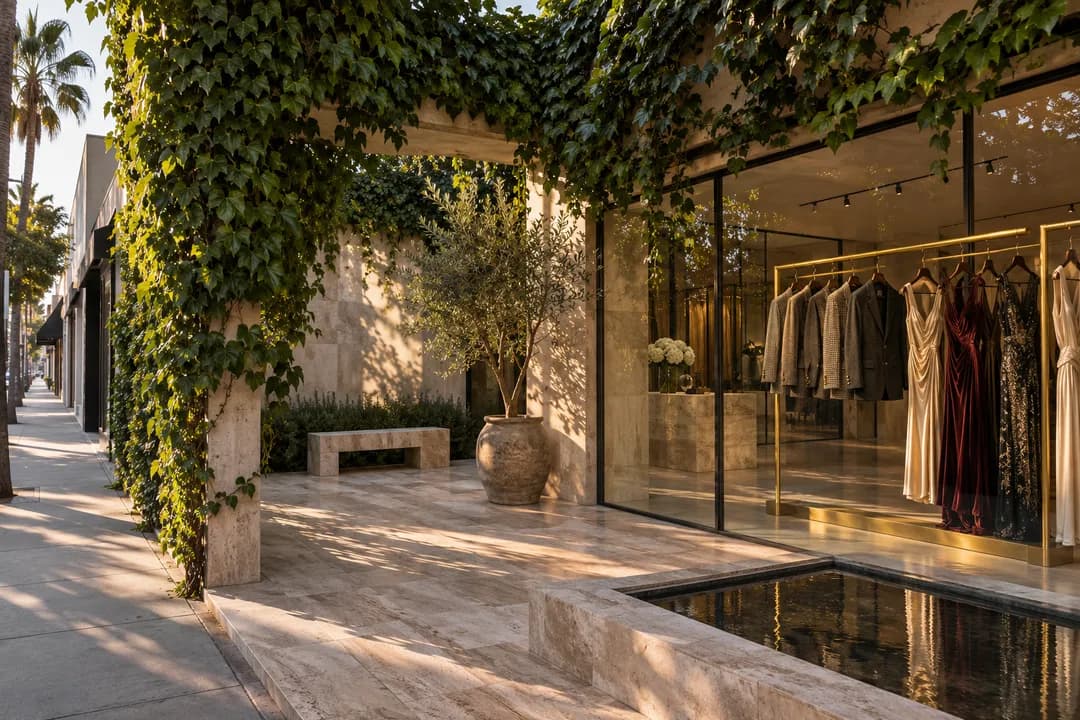
Anchored on the west by the monumental blue-glass facade of the Pacific Design Center—designed by architect Cesar Pelli and opened in 1975—and stretching east toward La Cienega Boulevard, the West Hollywood Design District offers Los Angeles's most architectural setting for curated secondhand clothing. While the eastern Fairfax stretch of Melrose Avenue caters to youth streetwear and loud graphic tees, the West Hollywood section of Melrose Avenue and its tucked-away offshoot, Melrose Place, operate like quiet European salons. Behind ficus hedges and travertine courtyards, consignment curators assemble museum-grade rails of 1980s Milanese suiting, 1990s Parisian runway silk, and sculptural Japanese avant-garde knitwear.
How the Melrose Design Triangle Organizes Four Distinct Edits
Exploring this Westside-adjacent enclave on foot works best when you treat the avenues between San Vicente Boulevard, Beverly Boulevard, and La Cienega Boulevard as four connected showroom zones. The first edit clusters along the ivy-shaded curve of Melrose Place, where former antique galleries house high-fashion archival pieces; the second spans the sun-drenched northern sidewalk of Melrose Avenue past Norwich Drive and Huntley Drive; the third ducks south along Almont Drive and Peerless Place; and the fourth follows Robertson Boulevard toward the municipal park greenspace.
Because West Hollywood incorporated in 1984 with strict pedestrian-scale design guidelines along its boutique streets, showrooms here feature generous travertine foyers, skylight wells, and private velvet-draped fitting salons. Weekday clients browsing these rails include celebrity red-carpet stylists pulling archival eveningwear for awards season, interior designers walking over from showroom appointments, and collectors who know seasonal runway collection codes by heart. Salon etiquette is unhurried and attentive: let staff lift heavy beaded gowns off high wall mounts, keep lipstick and iced drinks clear of unlined silk racks, and slip on provided cotton footies when stepping onto plush fitting-room carpets.
Inspecting Milanese Wool Tailoring and Avant-Garde Construction
Unstructured Italian wool crepe blazers, double-breasted camelhair coats, and pleated high-twist gabardine trousers represent the cornerstone of West Hollywood's curated secondhand clothing inventory. When evaluating a vintage 1980s or 1990s tailored jacket, slip your hand inside the chest canvas to feel whether the lapel roll is secured by hand-padded horsehair stitching or fused with synthetic glue that has started to bubble after dry cleaning. Authentic European atelier tailoring hangs cleanly from the shoulder pad down to the vent without pulling across the lower back.
Collectors also visit the Melrose design corridor for directional Japanese and Belgian runway pieces featuring asymmetric pleats, boiled-wool coats, and raw-edged seam allowances. Turn the garment inside out to examine the woven collection label—which often encodes the exact autumn-winter or spring-summer production year—and inspect complex origami darts or bias seams for strained threads. Because heat-set architectural pleats lose their memory if steamed flat by an inexperienced cleaner, hold pleated skirts and tops vertically at arm's length to confirm the accordion ridges spring back crisply.
Checking Bias-Cut Silk Eveningwear and Box-Calf Leather Goods
Eveningwear consignments from Beverly Hills estates and studio wardrobe archives flow steadily into West Hollywood ateliers. When examining a vintage bias-cut silk charmeuse slip dress or silk chiffon column gown, hold the skirt panel toward a courtyard window and check the hemline and underarm gussets for fabric thinning or pinholes left by heavy brooches. Hand-rolled silk hems and French internal seams are hallmarks of couture-level finishing that justify investment.
Structured leather goods—from rigid box-calf top-handle bags to woven nappa clutches and brass-chained shoulder bags—occupy glass vitrines along the walls. Inspect the folded leather piping at the bottom four corners for scuffs, open the interior gusset to check that the lambskin lining has not turned sticky from humid storage, and test turn-lock clasps for crisp mechanical snap.
Silk twill foulards, sculptural gilt-brass clip earrings, and Italian leather slingbacks round out the accessory counters inside Melrose courtyard salons. Hold vintage hand-screened silk scarves up to the skylight to admire the saturation of each color pass and verify that the plump, hand-rolled edges remain stitched toward the front face of the print. On vintage runway blazers, tap the cuff buttons gently together to distinguish carved water-buffalo horn, corozo nut, or cast pewter from hollow plastic replacements.
When trying on archival European tailoring in a West Hollywood fitting salon, bring the exact footwear silhouette you plan to wear with the trousers or coat. Subtle shifts in heel height dramatically change how wide-leg wool gabardine or bias-cut silk pools over the instep, and boutique specialists can immediately advise whether a cuffed trouser hem holds enough internal turn-back fabric for a clean invisible stitch.

Sample-Gown Traps to Skip and Your Almont Drive Plan B
Mid-morning through early afternoon on Tuesdays, Wednesdays, and Thursdays gives you uninterrupted time with boutique archivists and full daylight in the courtyard mirrors. Skip Saturday afternoon browsing between noon and 3:00 PM along Melrose Place, when brunch queues and portrait photographers crowd the narrow brick sidewalks and turn peaceful courtyard showrooms into noisy thoroughfares.
Inside the fitting room, skip heavily altered studio loaner or red-carpet sample gowns where a previous tailor has sheared off the internal seam allowance to cinch the waist; without at least half an inch of folded fabric inside the side seams, a garment cannot be let out or reshaped cleanly. You should also skip vintage patent-leather pumps showing sticky surface transfer or cracked heel caps. When La Cienega Boulevard and Melrose Place feel over-congested on a sunny afternoon, activate your Plan B by turning south onto quiet, tree-canopied Almont Drive or Norwich Drive toward Robertson Boulevard, where courtyard ateliers remain serene.
Shuttle Access, Crosswalks, and Planning in the Karpo APP
Arriving without battling valet queues or two-hour residential permit zones is simple via Metro Bus Line 10 along Melrose Avenue, Metro Bus Line 105 along La Cienega Boulevard, or the free West Hollywood Cityline local shuttle connecting the San Vicente library plaza with Robertson Boulevard. Signalized pedestrian scrambles at San Vicente Boulevard, Robertson Boulevard, and La Cienega Boulevard make crossing the wide avenues calm and predictable.
To link these four West Hollywood design pockets into an effortless afternoon route, open the Karpo APP and ask how to combine curated secondhand clothing showrooms around Melrose Avenue with courtyard espresso stops, design bookshops, and nearby gallery spaces. You can use the Karpo APP to compare the tailored runway focus of West Hollywood against the rugged workwear lofts of Downtown LA and build a customized itinerary that fits your afternoon pace.
Ask Karpo for more information.
Keep reading
- Burbank Film Memorabilia Collector Shop Walk: Studio Stash
 Pasadena Film Memorabilia Collector Shop Walk: Classic Route
 Silver Lake Film Memorabilia Collector Shop Walk: Indie Lore