 Burbank Film Memorabilia Collector Shop Walk: Studio Stash
Hidden Gems & Odd Finds
Arts District Curated Secondhand Clothing: 4 Mateo Racks
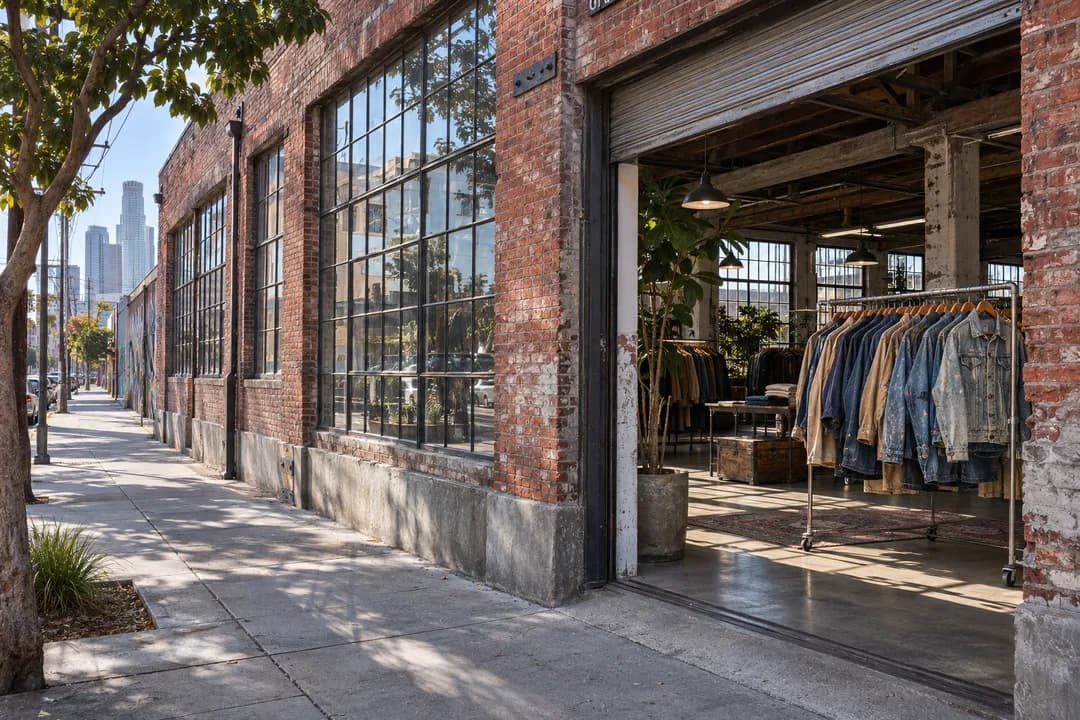
Explore curated secondhand clothing in Downtown LA Arts District lofts on Mateo and Traction. Inspect selvedge denim, chore coats, and vintage workwear.
Brick freight warehouses constructed between 1912 and 1928 along Mateo Street and Traction Avenue form the architectural backbone for curated secondhand clothing in the Downtown Los Angeles Arts District. Unlike cramped street-level thrift stores where hundreds of synthetic garments jam onto circular carousels, the adaptive-reuse lofts between Third Street and Seventh Street treat archival apparel like industrial design objects. High timber-beam ceilings, poured concrete floors, and north-facing steel-sash factory windows give collectors the physical room and unweighted daylight required to evaluate faded indigo workwear, distressed horsehide jackets, and deadstock American knitwear without visual fatigue.
How Mateo Street and Traction Avenue Shape the Loft Edit
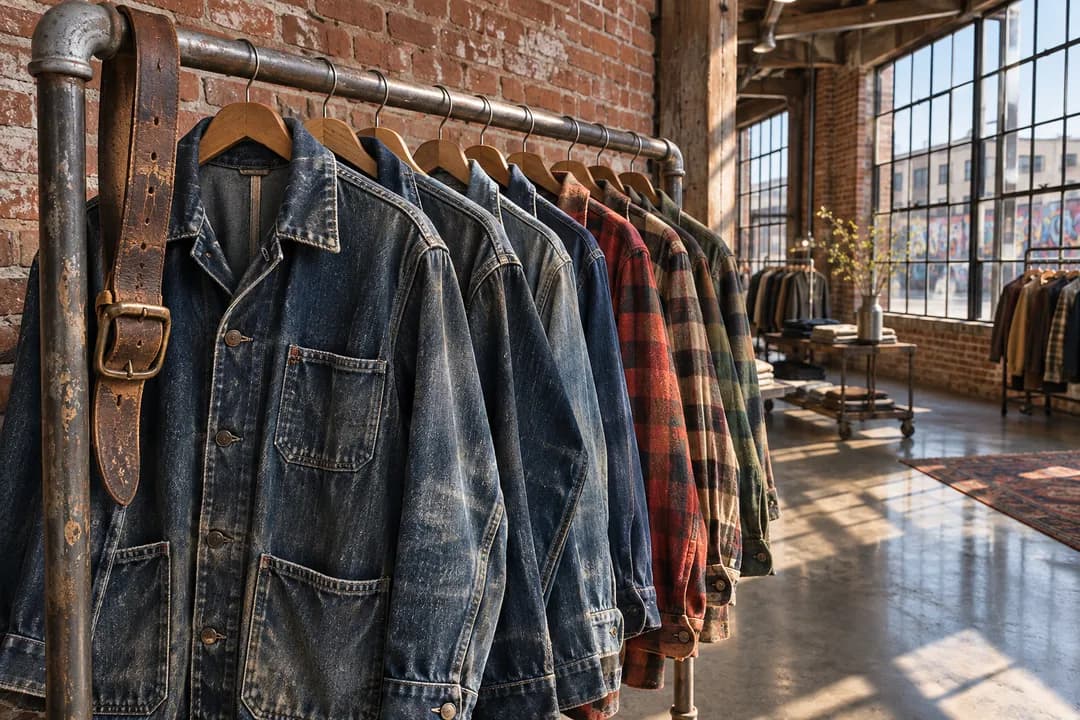
Walking south from the Traction Avenue intersection toward Palmetto Street and Mateo Street reveals why garment dealers gravitate toward this former Santa Fe Railway industrial zone. The loading bays that once handled citrus crates and machinist parts now house rolling raw-steel pipe racks spaced wide enough for buyers to step back and study the drape of a 1950s French moleskin chore coat or a 1970s blanket-lined denim trucker jacket. Because real estate footprints inside these brick lofts favor open gallery layouts, curators edit their floor inventory down to four main rack categories: selvedge denim, military utility outerwear, heavyweight loopwheeled fleece, and sun-faded graphic tees.
That spatial discipline directly benefits anyone hunting for structural longevity rather than disposable trend pieces. Instead of digging through damaged polyester blends, shoppers encounter pre-sorted rails where every garment has already been steamed, ozone-sanitized, and checked for dry rot. Local wardrobe stylists from nearby film production stages, architectural designers working out of East Fourth Street studios, and denim enthusiasts carrying fabric tape measures make up the steady weekday crowd. An unspoken etiquette governs these loft showrooms: always re-button heavy wool shirts on their wooden hangers and ask before unfastening fragile deadstock paper flashers on unworn vintage jeans.
Evaluating Selvedge Denim, Canvas Workwear, and Hardware in Daylight
Four specific garment categories anchor the strongest racks along the Mateo Street corridor, starting with shuttle-loomed selvedge denim and carpenter trousers. When pulling a pair of vintage five-pocket jeans from a loft rail, walk two steps toward the tall industrial casement windows to read the vertical warp striations and diagonal twill lines under natural California light. Authentic rope-dyed indigo displays a crisp contrast between deep blue pocket interiors and high-friction whisker fades across the lap, whereas chemically distressed reproductions look flat and uniform across the seams. Turn the cuff inside out to inspect the chain-stitched hem roping and check that the cotton pocket bags remain intact along the bottom fold.
Military utility sateen and duck-canvas chore coats occupy the second core rack group in the Arts District. Pay close attention to olive-drab OG-107 fatigue shirts, hickory-striped railroad jackets, and waxed canvas field coats that have softened through decades of honest wear. Run your thumb over the bar-tack reinforcements at pocket corners and test original melamine urea buttons or blackened brass Donut-style shanks for wobble. Well-curated lofts celebrate visible history—such as hand-darned elbow patches or period stenciling on a naval deck jacket—while rejecting pieces with compromised shoulder seams or rusted-shut Talon and Conmar zipper sliders.
Heavyweight knitwear and broken-in leather outerwear round out the four-rack framework. Look for tubular-knit cotton sweatshirts with set-in or raglan sleeves, deep V-insert neck gussets, and four-needle flatlock seams that lie completely flat against the collarbone. On leather flight jackets and motorcycle Cafe Racers, pinch the underarm gussets and collar crease to ensure the hide feels supple and hydrated rather than papery or flaking. Checking the rayon or quilted acetate lining around the cuffs tells you immediately whether a jacket was stored in a climate-controlled archive or neglected in a damp garage.
Daylight Timing, What to Skip, and Your Traction Avenue Plan B
Midday between late morning and mid-afternoon on Wednesdays, Thursdays, and Fridays delivers the clearest window light inside Mateo Street lofts and the calmest access to full-length mirrors. Skip late-afternoon browsing after 4:30 PM when low shadows from adjacent concrete viaduct pillars and multi-story creative offices flatten color perception inside ground-floor showrooms, making it easy to confuse navy wool with faded black or miss faint oil marks on khaki twill. You should also skip racks of unwashed modern fast-fashion resales near street pop-ups; stick to lofts that focus on single-stitch cotton, natural fibers, and heritage construction.
When Saturday afternoon courtyard pop-ups, coffee queues, or commercial production trucks congest the narrow sidewalks on Mateo Street between Sixth Street and Palmetto Street, execute an immediate Plan B by walking four blocks north to the quieter stretch of Traction Avenue and Hewitt Street. That northern pocket near the historic 1906 Little Tokyo streetcar alignment retains wider pedestrian brick plazas and shaded courtyard breezeways where browsing remains unhurried even during weekend art walks. If coastal heat spikes across the concrete basin, duck into the shaded arcade walkways along East Third Street before looping back toward the river.
Transit Access and Mapping Your Loop in the Karpo APP
Reaching the Arts District without circling for metered street parking is straightforward via the Metro A Line or E Line to the Little Tokyo/Arts District underground station at First Street and Central Avenue, which opened in 2023 as part of the Regional Connector transit project. From the station plaza, a ten-minute walk south along Alameda Street and east onto Third Street or Traction Avenue drops you directly into the warehouse district. Cyclists and pedestrians approaching from Boyle Heights can also cross the sweeping 2022 Sixth Street Viaduct ribbon arches and descend the west ramp straight toward Mateo Street.
Before heading out, open the Karpo APP to organize your Arts District walking loop and pair your curated secondhand clothing stops with nearby roasteries, industrial architecture landmarks, and courtyard lunch counters. You can ask the Karpo APP which blocks between Traction Avenue, Hewitt Street, and Mateo Street match your aesthetic—whether you are hunting for rugged American workwear or minimalist archival tailoring—and sequence a relaxed half-day itinerary that keeps backtracking to a minimum.
Ask Karpo for more information.
Keep reading
- Burbank Film Memorabilia Collector Shop Walk: Studio Stash
 Pasadena Film Memorabilia Collector Shop Walk: Classic Route
 Silver Lake Film Memorabilia Collector Shop Walk: Indie Lore