 Burbank Film Memorabilia Collector Shop Walk: Studio Stash
Hidden Gems & Odd Finds

LA Craft Class Shortlist: Go Solo or Make Friends
Build an LA craft class shortlist around the company you want: quiet independent practice, a shared table or a creative afternoon with someone you already know.
Going alone to a workshop and choosing a social workshop are separate decisions. You can arrive by yourself and spend the afternoon concentrating, or attend with a friend and discover that the work leaves little room for conversation. For an LA craft class shortlist, begin with the kind of company you want during the making. That choice affects the teaching format, the project and even the way you judge a successful session. A sociable photograph is only one clue, and it cannot tell you how the room actually works.
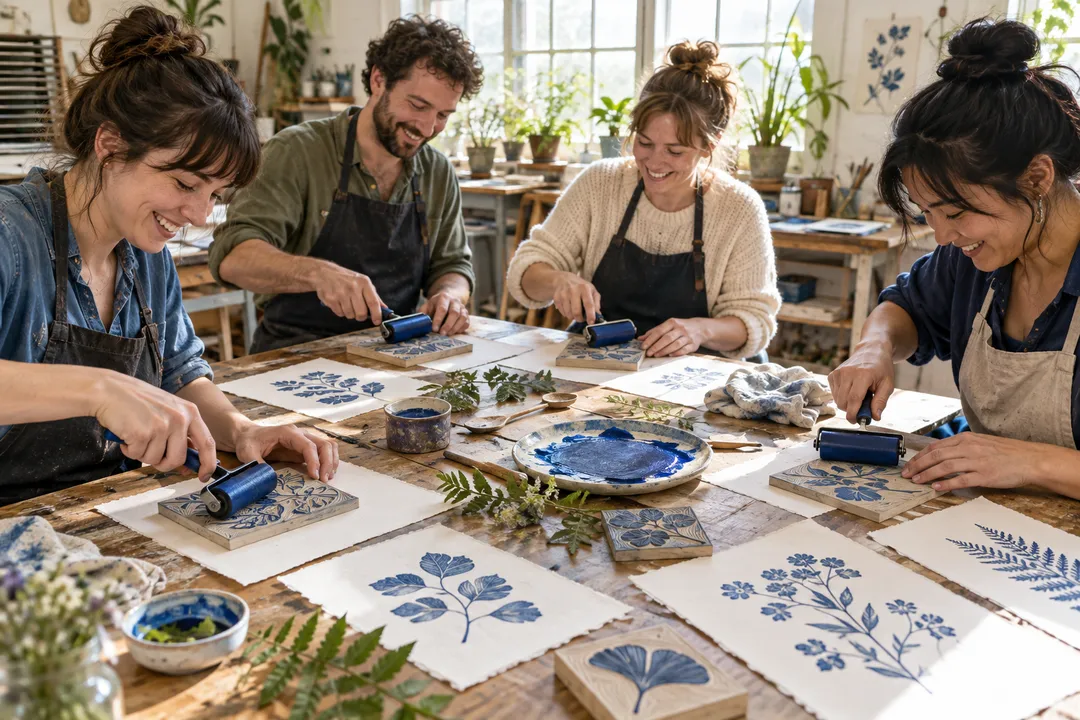
Quiet concentration can be the whole point
If you want time away from conversation, describe the task you would enjoy focusing on. Repeating stitches, arranging a colour sequence or refining a paper shape are possible interests to explore. You do not have to sell the outing to yourself as a chance to meet people. A good personal brief might ask for individual workstations, clear demonstrations and an activity that can be pursued at your own pace within the lesson. Those are selection preferences, not assumptions about a named studio.
Think about how you would like to ask for help. Some people prefer a short correction at their seat, while others enjoy watching the instructor help the whole table. Neither means you need a private lesson. The distinction is whether learning in front of other participants sounds comfortable. Include that preference when comparing formats. “Solo friendly” is a useful starting phrase, but a description of the actual interaction you want gives a much clearer picture of your ideal afternoon.
A shared table needs a reason to interact
For a social outing, look beyond the number of people pictured. Are participants making separate objects, sharing materials or contributing to one piece? These structures create different opportunities for conversation. Separate projects can offer easy moments to compare colours without requiring anyone to collaborate. A joint project involves more negotiation. Decide whether you want gentle company alongside your own task or a genuinely cooperative activity before treating the two as interchangeable.
Avoid assigning a friendship outcome to a booking. A workshop can put people in the same room, but the course description cannot promise that strangers will connect. Choose a session you would still enjoy if the conversation were brief. That gives you a more dependable basis for the decision. The craft itself should offer something you want to try, while any introductions become a welcome part of the experience rather than the single condition on which the outing succeeds.
Bring a friend without turning them into your instructor
Two friends may want very different things from the same session. One might value conversation and a finished keepsake, while the other wants careful feedback on technique. Discuss those priorities before choosing. An experienced friend can be encouraging, but they should not automatically become responsible for explaining every step. Look for a format where each person receives the instruction they need. The point of attending together is to share an afternoon, not to assign unpaid teaching duties across the table.
Consider whether both of you want the same medium. If one person dislikes handling sticky materials, an attractive clay photograph will not solve that mismatch. Find a positive overlap instead: selecting colour, learning a new hand movement or making something small enough to carry. Start with the shared interest and leave room for different designs. Two objects do not need to match for the outing to feel shared. Comparing the choices you made can become the conversation afterwards.
Match the project to the amount of talking
A detailed sequence asks for attention. That may be exactly what you want, but it can conflict with a plan to catch up throughout the session. Consider arranging the social part before or after the making, rather than expecting one activity to satisfy both purposes at every moment. A short meal nearby can remain an optional idea until you have chosen the class location. There is no need to invent a precise route or promise a particular café as part of an unbooked plan.
If conversation during the work matters, include it as a question about format. Ask whether the session is designed around individual concentration, group demonstrations or collaborative making. Let the organiser's description supply the answer. Do not infer a party atmosphere from colourful decorations or a group photograph. Similarly, an unadorned studio can still host a warm communal session. What participants do together is more informative than the room's styling.
Give Karpo a social brief with clear boundaries
In the Karpo APP, you could ask: “Help me think through a craft afternoon in LA. I will arrive alone, would enjoy light conversation, and want my own small project. Compare a communal workshop with a quieter lesson so I can decide which setting suits me.” If attending with a friend, replace the solo preference with both people's aims. The request invites a comparison of formats. It does not claim that Karpo knows who else will attend or can guarantee the atmosphere of a future session.
Follow up with the uncertainty that matters. You might ask for a simpler project if you want more room to talk, or a more structured lesson if arriving alone feels easier with a clear sequence. Keep the wording specific to your own comfort. “I want opportunities to chat without a compulsory group performance” is more actionable than “make it fun.” The conversation can help you articulate that distinction before you start comparing particular organisers.
Decide what information belongs in the comparison
Keep a short note for each candidate: personal or shared project, instructional format, interaction described by the organiser, and any conditions relevant to your party. Add a category for information that is absent rather than filling it with a guess. You can then compare a promising quiet session and a sociable one on equal terms. A large list of possibilities is less helpful than two well-understood alternatives with different strengths.
The booking conditions also matter when a friend is involved. Read whether places are purchased individually, whether a group ticket exists, and what the organiser says about changes. Those terms belong to the specific offering. Do not assume that sitting together follows automatically from buying on the same day, or that a private group booking is required simply because you are attending as a pair. Use the actual published arrangement as the basis for your decision.
Practical Notes for going alone or together
If you are arriving solo, choose an arrival plan that gives you time to settle without feeling rushed. If you are bringing someone, agree on a meeting point and a simple way to handle a late arrival. Carry what the organiser requests and keep the rest of the outing flexible. Afterwards, judge the session against your original aim: focused practice, comfortable company or a shared memory. Each is a valid reason to make something in LA, and each deserves a different shortlist.
Ask Karpo for more information.
Keep reading
- Burbank Film Memorabilia Collector Shop Walk: Studio Stash
 Pasadena Film Memorabilia Collector Shop Walk: Classic Route
 Silver Lake Film Memorabilia Collector Shop Walk: Indie Lore