 Burbank Film Memorabilia Collector Shop Walk: Studio Stash
Hidden Gems & Odd Finds

LA Craft Class Shortlist for Friends With Mixed Skills
A mixed-skill craft group in LA needs room for different ambitions. Build one shared brief that protects beginners while leaving experienced friends interested.
One friend already sews, another has never touched a needle, and a third mostly wants everyone to spend time together. Choosing by the most confident person's favourite craft can leave the rest of the group stranded. An LA craft class shortlist for mixed abilities needs a shared entry point and room for individual choices. Begin by describing what every participant needs to enjoy the session. The aim is a group afternoon in which nobody has to pretend to know more, or less, than they do.
Ask each person for one wish and one limit
Collect a short answer from everyone before discussing venues. The wish might be trying a new material, making a useful object or having a relaxed conversation. The limit might concern travel, cost, physical comfort or the level of instruction needed. Keep these answers concrete enough to act on. “I want to make something” is a starting point; “I want one small textile project with a demonstration of each step” tells the organiser or planner much more.
Distinguish a firm limit from a preference. Someone who cannot return for collection has a practical constraint. Someone who mildly prefers blue fabric has a design preference. If every wish is treated as essential, the brief can become impossible before you have looked at any offerings. Give each person a chance to name their actual boundary, and let the rest remain negotiable. This protects the person with the least flexibility without giving the loudest enthusiast complete control.
Look for one technique with room to grow
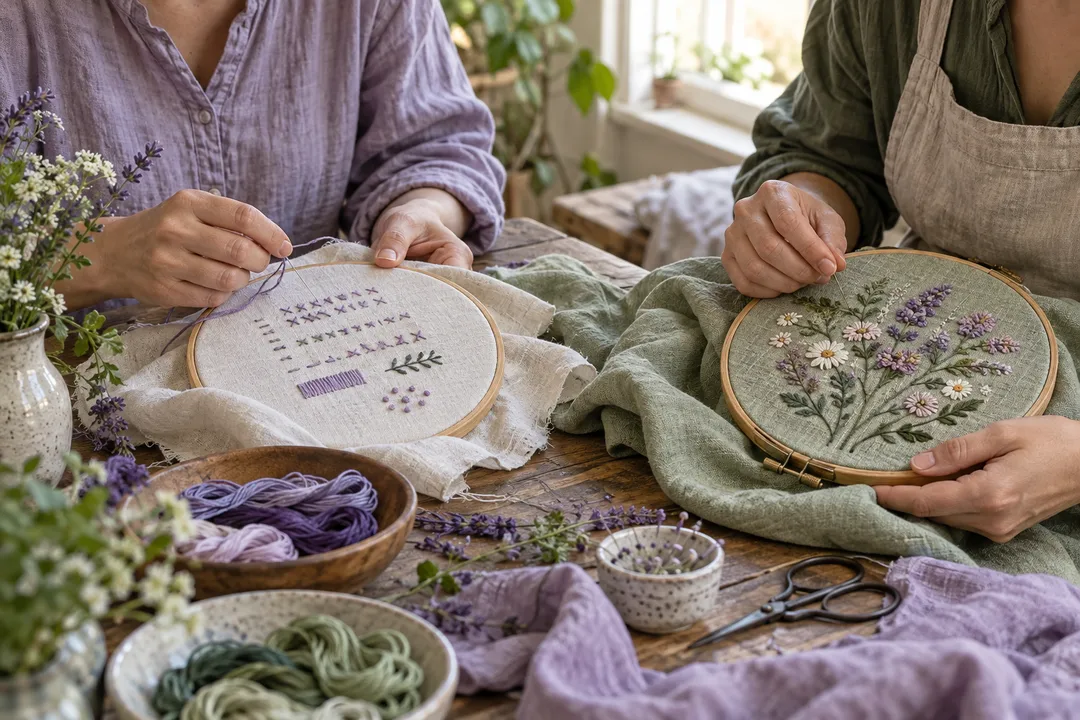
A shared technique can create common ground while leaving different outcomes possible. In a hypothetical stitching session, one participant might practise a basic line while another develops a more detailed motif. The important word is hypothetical: the actual course must allow that variation. Do not assume a fixed project can be changed simply because your experienced friend would enjoy extra complexity. Use the course description to distinguish adaptable instruction from a lesson built around everyone completing exactly the same sequence.
Also consider whether the experienced participant is genuinely interested in revisiting the basics. Familiar work can be enjoyable, but that is their choice. Ask what would keep the afternoon engaging: a different material, a design decision or a technique they have not tried. You may discover that a new medium puts everyone closer to the same starting point. That can be a useful option, provided the physical demands and pace still suit the least experienced member of the party.
Keep instruction with the person teaching
Agree that a skilled friend is attending as a participant. They can offer encouragement without becoming the group's default help desk. If beginners need step-by-step explanation, the session should provide that through its actual teaching format. Otherwise the experienced person may spend the afternoon solving problems while never touching their own project. That is a different arrangement from the shared outing you intended, and it deserves to be discussed before anyone buys a place.
Class size alone does not tell you how much individual attention people receive. Read how the organiser describes demonstrations, guidance and prerequisites. A small group can still be expected to work independently; a larger session can have a clear guided sequence. Keep the evidence about support separate from your guess about the room. When a requirement is essential, choose among offerings that describe it rather than filling a blank with optimism.
Decide how together the making should be
There are several ways to share an activity. Everyone can make a separate version of one project, choose different designs using the same materials, or contribute to a collective object. These arrangements ask different things of the group. Separate objects let people progress at different speeds. A joint piece can invite negotiation about design and responsibility. Pick the social structure deliberately, especially if one person is inclined to take over whenever a decision needs to be made.
If people work at different speeds, decide what a satisfying finish means for each person. It may be a complete small object for one friend and an interesting technique experiment for another. Matching output should not be the price of sharing time. At the same time, avoid assuming the instructor can extend a lesson while one person completes an ambitious design. Keep each person's goal within the published session and reserve extra practice for another occasion.
Turn the discussion into one useful APP request
A group brief in the Karpo APP might read: “Help us compare craft activities for four friends in LA. Two are complete beginners, one sews regularly, and one cares most about a relaxed shared afternoon. We want separate small projects, clear instruction and choices that let people work at different levels.” Add the party's travel and spending limits. The number describes your example group, not the capacity of any venue. This is a request for planning ideas rather than a statement that places have been secured.
Ask for the reason each suggested format fits the group. A recommendation is easier to discuss when it connects to beginner support, individual design freedom or a manageable end product. If one option serves only the most experienced person, say which requirement it misses. If another leaves that person uninterested, ask what variation might make it worthwhile. Keep the comparison about the shared brief instead of restarting a vote each time someone sees a new photograph.
Make one person responsible for the booking details
Once you have chosen a specific offering, nominate one person to assemble its actual terms for the group. This is administration, not permission to decide everyone else's preferences. The organiser's published information should establish how places are purchased, whether participants can sit together, and any group or private-session conditions. Do not infer those arrangements from your party size. Four friends can still be four individual bookings if that is how the offering works.
Send everyone the same concise decision note: the selected activity, why it fits the agreed priorities, the practical commitment and the action each person needs to take. Keep unresolved details visible instead of turning them into promises. A clear note reduces confusion about whether someone has merely voted for an idea or actually purchased a place. Payment and confirmation should follow the organiser's process, with each participant understanding what they have agreed to.
Practical Notes for a group that learns differently
Plan the meeting point around the actual chosen location and give people enough arrival time to settle. Include access needs and material sensitivities in the original brief. During the session, let friends ask their own questions and make their own design decisions. Afterwards, compare discoveries rather than judging whose object looks most professional. The strongest group choice gives everyone a reason to be there, while leaving enough individuality for the afternoon to belong to each person.
Ask Karpo for more information.
Keep reading
- Burbank Film Memorabilia Collector Shop Walk: Studio Stash
 Pasadena Film Memorabilia Collector Shop Walk: Classic Route
 Silver Lake Film Memorabilia Collector Shop Walk: Indie Lore