 Lincoln Heights Champurrado Winter Cafe Picker: Two Routes
Coffee & Dessert
Arts District Cozy Coffee Roastery Cafe : Warehouses, Murals
The Arts District hides its coffee in old brick warehouses near the LA River. Look for a drum roaster behind glass, then walk the cup past murals and galleries.
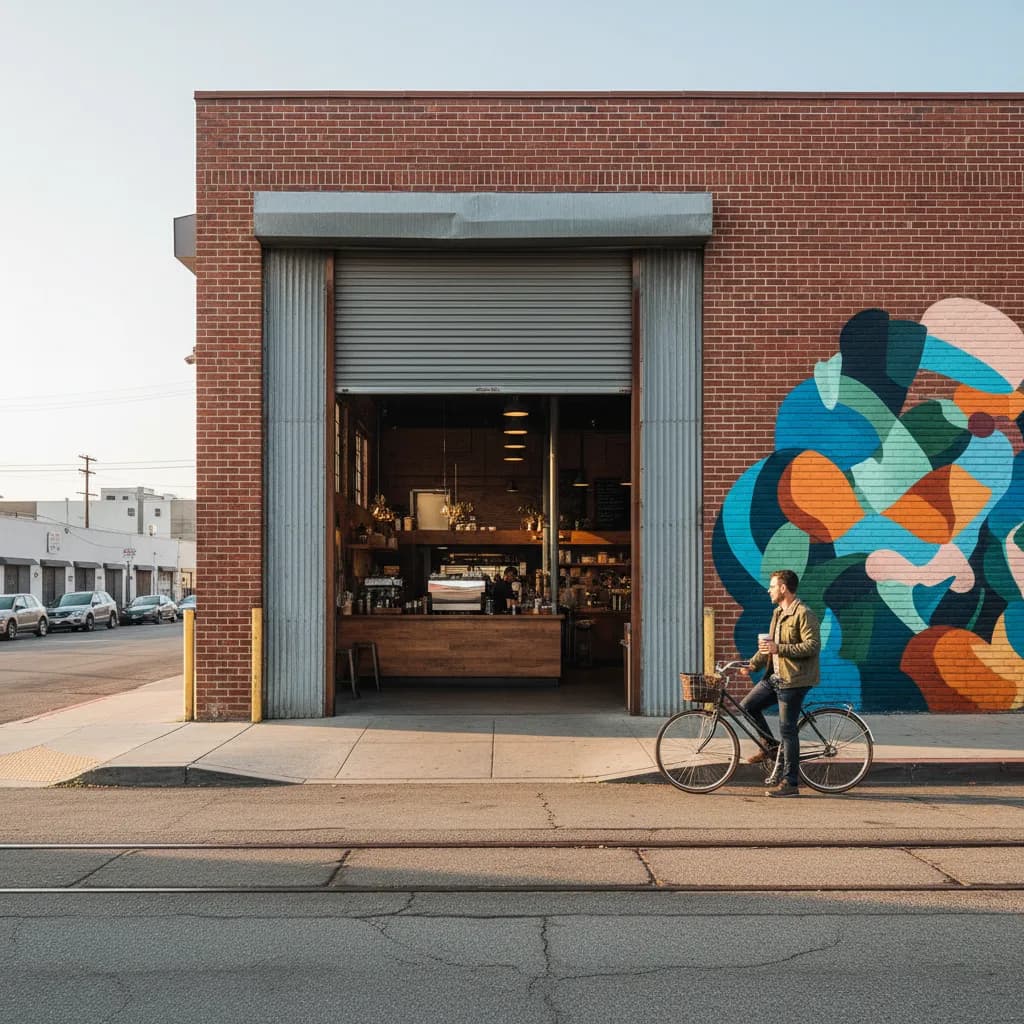
A cozy coffee roastery cafe in the Arts District looks nothing like a cottage. It is usually a brick warehouse with a roll-up door, a long communal table and, if you are lucky, a drum roaster turning beans behind a sheet of glass. This former rail and produce district on the east edge of downtown Los Angeles has become a coffee destination precisely because the old industrial buildings have room to roast on site.
Why Warehouses Make Good Roasteries
Roasting coffee takes space, ventilation and a tolerance for smoke and noise, which is hard to find on a boutique street. The Arts District has all three. Its old warehouses once stored citrus and goods arriving by rail, and their high ceilings, wide doors and loading docks suit roasting equipment perfectly. Several specialty roasters have moved into these buildings, and many pair a production floor with a public cafe.
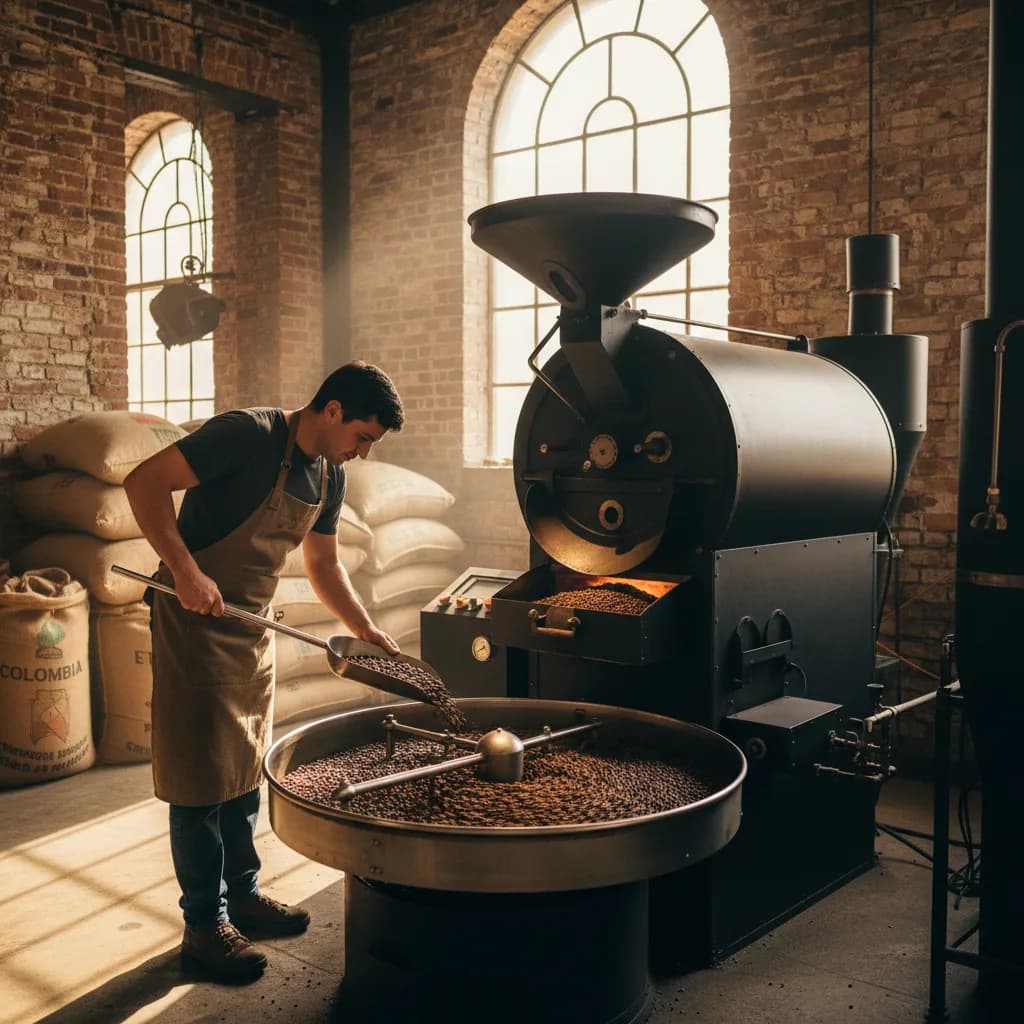
That layout gives the room its character. You sit at long wooden tables under exposed beams and ductwork, the air smells of roasting coffee, and through the glass you can watch green beans turn brown in the drum. The noise of the machine mixes with music and conversation. Cozy here means warm, industrial and a little loud, the opposite of the hushed corner cafe you might find in a residential neighborhood.
How to Spot an Active Roastery
Not every warehouse cafe roasts on site, and some only use the look. The surest sign is equipment you can see: a drum roaster, a cooling tray and sacks of green coffee stacked nearby. A strong roasting smell when you walk in is another clue. Ask the barista whether they roast in the building. If they do, ask when the roaster usually runs, because watching a batch drop into the cooling tray is the best show in the district.
Look at the retail shelf too. Roasteries usually sell several single origins with roast dates printed on the bag, and staff can explain each one. Some host public cuppings, where you taste several coffees side by side with a spoon. If a cafe offers one while you are visiting, join it. It is the most direct way to understand what a roaster is trying to do, and it costs you only a little time.
What to Order in a Roaster Cafe
Order something that shows the beans clearly. A pour-over of the newest single origin or a straight espresso will tell you far more than a flavored latte. If the menu lists tasting notes, read them and see whether you agree. Ask for a recommendation if you are unsure. Baristas in roaster cafes are usually happy to talk origins, processing methods and why a coffee from one farm tastes different from another.
An honest suggestion: skip the large food menu if there is one. Many warehouse cafes serve brunch plates that are fine but crowded on weekends, and the coffee gets lost behind the eggs. Have a pastry with the first cup and save the bigger meal for one of the restaurants nearby. That way you can linger with the coffee itself instead of waiting on a busy kitchen.
Walking the Cup Past the Murals
The Arts District is one of the best places in Los Angeles to see street art on foot. Large murals cover warehouse walls along the main streets, and many change every year or two as new artists are invited to paint. Walk slowly with your cup and look up. Some of the best pieces are high on side walls, and the streets are quiet enough on weekday mornings to stop in the middle of the sidewalk.
Hauser and Wirth Los Angeles is the cultural anchor of the walk. The gallery occupies a converted flour mill complex with a courtyard garden, and entry to the exhibitions is free. Take a seat on the courtyard benches and finish your coffee among the planted beds and the old brick mill walls. It is one of the most unexpected and calm corners of downtown, and it fits naturally into a coffee morning.
Finish on the Sixth Street Viaduct
The Sixth Street Viaduct, the new bridge over the Los Angeles River, rises at the southern edge of the district. Its sweeping white arches light up at night, but in the morning the walkways are quiet and the views stretch across the river channel to Boyle Heights and the downtown skyline. Bring your second coffee up the ramp and drink it looking back at the warehouses where it was roasted.
If you prefer flat ground, walk north into Little Tokyo instead. The neighborhood is only a few blocks away and offers Japanese bakeries, tea shops and the Japanese American National Museum. A short loop through Little Tokyo pairs well with a morning in the Arts District, and it gives you a quiet place to rest if the warehouse cafes feel too crowded or loud.
When to Go and What to Expect
Weekday mornings are the best time for this route. The roasteries are working, the cafes are calm, and the streets are easy to walk. Weekend mornings bring brunch crowds and long lines at the most popular spots. If a line looks long, skip it and pick a less-known roaster down the block. The district has enough options that one busy cafe should never end your morning.
The area is still partly industrial, so expect trucks, construction and a few empty lots between the busy blocks. Stay on the main streets, especially early or late, and keep your belongings close. Parking is mostly metered or paid lots, and spaces fill fast at lunch. Wear comfortable shoes, because the best coffee stops can be several blocks apart, and the bridge walk adds more distance.
Getting to the Arts District
The Metro A and E lines stop at Little Tokyo/Arts District station, which puts you within walking distance of most warehouse cafes. Several bus lines cross the district, and rideshare is simple. Cycling is pleasant on weekend mornings when traffic is light. Allow about three hours for a relaxed loop that includes one roastery cafe, the murals, the gallery courtyard and the bridge.
Karpo APP makes it easier to find roasters that match your mood. Tell it you want a warehouse cafe where you can watch beans being roasted, or a quiet coffee stop near the Arts District galleries, and it suggests nearby options with a short note on each. Save a shortlist for your walk and contact the cafe directly about anything that depends on timing.
Ask Karpo for more information.
Keep reading
- Lincoln Heights Champurrado Winter Cafe Picker: Two Routes
 Pico-Union Champurrado Winter Cafe Picker: Two Easy Ways
 Highland Park Champurrado Winter Cafe Picker: Two Avenues