 Burbank Film Memorabilia Collector Shop Walk: Studio Stash
Hidden Gems & Odd Finds

Highland Park Consignment Shop Crawl Planner for Band Night
Dressing a band for its first gig? Plan a Highland Park consignment shop crawl along York and Figueroa that builds one stage look per player on a small budget.
The first gig is booked, the setlist is almost done, and then someone asks the awkward question: what are we wearing? Most new bands own nothing but tour tees and jeans that do not quite match. Highland Park, with its long run of vintage and secondhand shops, is a good place to fix that in an afternoon. This consignment shop crawl planner helps four bandmates build one stage look each, keep a shared color story, and still have money left for strings.
Why Highland Park Fits a Band Wardrobe Run
Highland Park has been one of the city's most creative neighborhoods for years. Musicians, painters and makers have settled into its craftsman bungalows and hillside streets, and the shops along York Boulevard and North Figueroa Street reflect that. Vintage racks, secondhand boutiques and buy-sell-trade counters sit among record stores, taquerias and small bars, so a band can spend an afternoon walking between them without moving the van.
The racks here often lean toward exactly what a new band needs. Western shirts, corduroy jackets, worn leather, seventies prints and bold party pieces show up regularly, mixed with simpler everyday basics. That range lets a band pick a look with personality without heading into full costume territory. You want the audience to notice the music first and the clothes second, and Highland Park racks are good at that balance.
Agree on a Color Story First
Before anyone touches a hanger, sit down at rehearsal and agree on a simple color story. Two or three colors are plenty, such as black, rust and cream, or denim blue with one bright accent. Each player then shops within those colors. It sounds restrictive, but it is the fastest way to look like a band rather than four friends who happened to share a stage.
Next, agree on one rule for each player's role. The singer might take the boldest piece, the drummer needs something cool and loose that will not restrict arm movement, and the guitarist and bassist need sleeves that stay out of the way of their hands. Write those notes in the band chat, so everyone walks into the first shop with a clear idea of what they are looking for.
Using Karpo to Map the Afternoon
Open the Karpo app a day or two before and describe the plan. Tell it you are a four-piece band in Highland Park looking for secondhand stage outfits, that you want a walkable route along York and Figueroa, and that you have about three hours. Karpo can suggest a short list of vintage and consignment shops that fit and sketch an order for the walk, which saves a long group chat thread.
Share the plan with the band and let everyone add one stop of their own. Musicians often have a favorite shop they have been meaning to visit, and including it keeps everyone invested. Shop details change, so glance at each place's own page before you go. If the crawl starts running long, ask Karpo to shorten the list so you still have time to make it home before evening rehearsal.
Shopping as a Team Without Slowing Down
Inside each shop, split up and give everyone ten minutes to pull options in the band colors. Then regroup at the mirror and try pieces on together. Seeing four outfits side by side is the only way to judge whether the look works as a set. Take a quick group photo at each stop so you can compare later without relying on memory.
Be practical about stage conditions. Lights are hot, rooms get crowded, and players sweat. Choose breathable fabrics where you can, avoid anything that rustles loudly near a microphone, and check that jackets allow a full arm swing. Do a quick strum or drumming motion in the fitting room. A shop assistant who sees a band doing air guitar in the mirror will usually understand exactly what you are doing.
Fitting Checks Before You Pay
Older clothes deserve a careful look before you buy. Check the armpits and collar for wear, test every zip and snap, and look inside the lining of jackets. Small repairs like loose buttons are easy to fix at home, but a split seam under the arm will open further the first time a guitarist reaches for a high fret. If a piece needs real tailoring, think about whether there is time before the gig.
Footwear deserves the same attention. Stage floors can be slippery, and pedals need a sure foot. Boots and shoes that look perfect on a rack can pinch after two hours of standing. Walk around the shop and stand in them for a few minutes before you commit. If nothing fits comfortably, wear your own shoes and let the jackets and shirts carry the look.
A Walk Through the Craftsman Streets
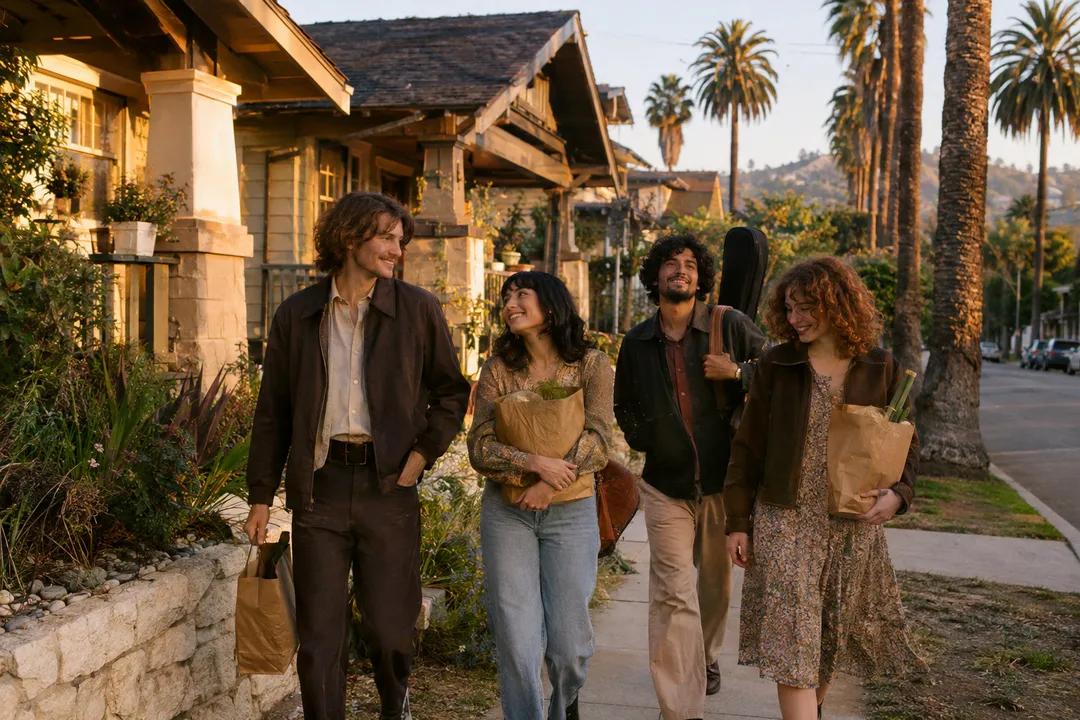
Between shops, take the side streets rather than staying on the main boulevard. Highland Park has one of the largest collections of early twentieth century craftsman homes in Los Angeles, with deep porches, wooden beams and big shade trees. The hills around the neighborhood glow in the late afternoon, and the quieter streets are a good place to talk through the set while your bags swing at your sides.
If you have a little extra time, wander toward the Arroyo Seco, the creek corridor that runs along the edge of the neighborhood, or rest in the shade at Sycamore Grove Park. Bands rarely get unscheduled time together outside a rehearsal room. A slow walk with new clothes in hand is a good moment to decide who says what between songs and how you want the first night to feel.
Getting There Without the Van
Highland Park is easy to reach without a car. The Metro A Line has a station right in the neighborhood near Figueroa, so bandmates coming from different parts of the city can meet on the platform and walk to the first shop. Leaving the van behind also removes the stress of street parking on a busy afternoon.
Bring a couple of sturdy tote bags and a garment bag if anyone finds a long coat or a structured jacket. Keep receipts together in one envelope so the band can split costs fairly later. If you share a band fund, agree in advance how much of it goes to clothes and how much stays for gas, strings and drumsticks.
Testing the Looks at Rehearsal
Wear the new outfits to the next rehearsal before the gig. It is the only way to find out whether a sleeve catches on the strap, whether a shirt shows sweat under the lights, or whether a jacket is too warm for a full set. Play the loudest song twice and see how everyone feels at the end. Adjust before the night rather than on stage.
Take a few photos in the rehearsal space as well. They will be useful for the gig poster, a social post, or the band page. Seeing yourselves dressed as a band for the first time often changes how you play, with a bit more confidence and a bit more attitude. That is half the point of building a stage wardrobe in the first place.
Keeping the Wardrobe Going
A band wardrobe grows with the band. After a few shows you will know which pieces work, which ones are too hot, and which ones the audience remembers. Keep the stage clothes separate from everyday clothes, wash them gently, and repair small damage quickly. A good secondhand jacket can last for years of shows if it is looked after.
Next time you need a refresh, ask Karpo to plan a new crawl based on what worked. Tell it your color story, the pieces you want to replace, and the neighborhood you want to explore. Highland Park will always have something new on the racks, and the search is half the fun of being in a band.
Ask Karpo for more information.
Keep reading
- Burbank Film Memorabilia Collector Shop Walk: Studio Stash
 Pasadena Film Memorabilia Collector Shop Walk: Classic Route
 Silver Lake Film Memorabilia Collector Shop Walk: Indie Lore