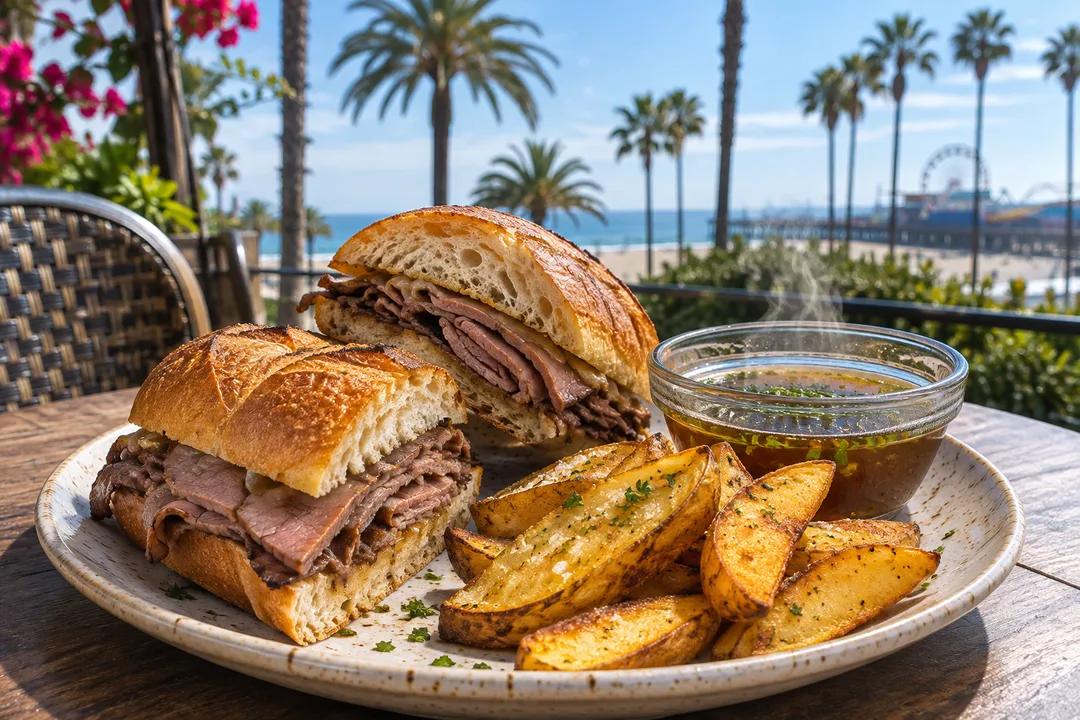
 Santa Monica French Dip Sandwich Lunch Picker by Ocean
Restaurants

Koreatown Cold Weather Food Crawl Planner: Seoul to Oaxaca
A Koreatown cold weather food crawl through three cuisines on one chilly afternoon: Korean bone broth, Oaxacan chocolate and mole, then Salvadoran pupusas.
Koreatown is one of the densest neighborhoods in Los Angeles, and it holds far more than Korean food. On the same blocks you will find Oaxacan kitchens, Salvadoran pupuserias and Bangladeshi spots, all serving the warming dishes their home regions rely on in cooler months. A cold weather food crawl here means crossing three food cultures in one chilly afternoon, each stop a short walk from the last.
A Neighborhood Built in Layers
Koreatown took its current shape as Korean immigrants opened businesses along Olympic Boulevard and Western Avenue, and the area grew into the commercial heart of Korean life in Southern California. At the same time, families from Oaxaca, El Salvador, Guatemala and Bangladesh settled on the surrounding streets. The result is a neighborhood where a Korean barbecue sign and a Oaxacan bakery window often share the same block.
That layering is what makes a crawl here so rewarding. Every one of those food traditions has its own answer to cold weather. Korean cooks reach for slow-simmered bone broths and bubbling stews. Oaxacan kitchens serve thick hot chocolate and dark moles. Salvadoran griddles turn out pupusas that are best eaten scorching hot. Linking them in one walk turns a grey day into a small trip around the world.
Planning a Small Group Afternoon
This crawl works best with three or four people. Each stop serves dishes that are easy to share, and a small group can order a little of everything without anyone feeling stuffed. Agree on the rule before you start. One dish per stop, shared, with a short walk in between. Anyone who orders a full set meal at the first stop is out of the crawl.
Start in the early afternoon on a weekend. Lunch crowds will have thinned, the light is soft, and the afternoon chill makes hot food feel right without the late-night rush. Wear a warm layer, since Koreatown's wide boulevards can funnel a cold wind, and bring a tote for anything you buy along the way, like a bag of Oaxacan chocolate or a box of Korean rice cakes.
Stop One: Korean Bone Broth
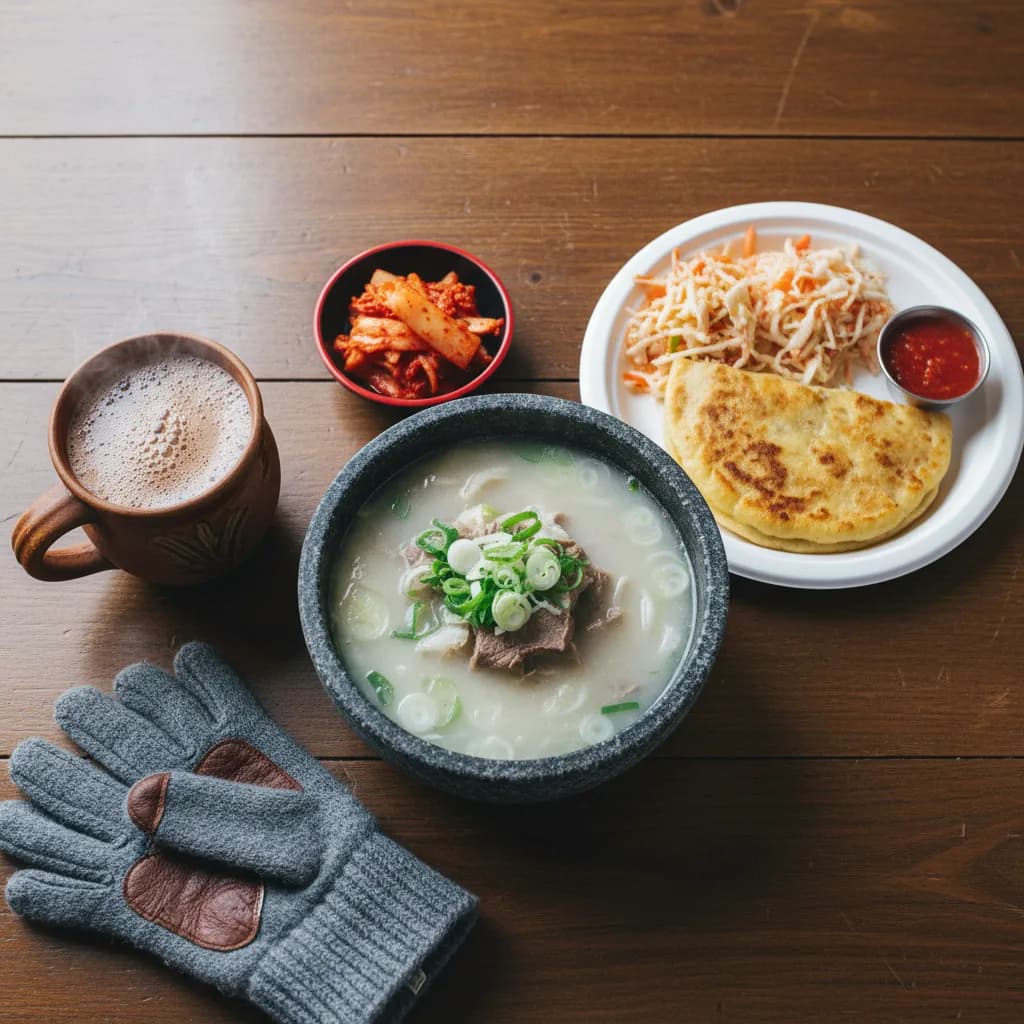
Begin with seolleongtang or gomtang, the milky ox-bone soups that Korean families have long relied on in cold months. These soups arrive plain, and part of the ritual is seasoning them yourself at the table with salt, pepper and chopped scallions. Add a spoonful of rice to the broth and eat with the kimchi that comes alongside. The room usually smells of simmering bones and steam.
Order one or two bowls for the group and split them. The soup is gentle and filling, which makes it the right foundation for what comes next. You will often share the room with older Korean couples eating in comfortable silence, office workers on a late lunch and students who swear by it as a cold remedy. Eat slowly. The broth stays hot for a long time.
If anyone in the group is not into bone broth, look for a kalguksu shop instead. These knife-cut noodles come in a light, clear broth, often with clams or chicken, and the noodles are cut by hand in many kitchens. They are just as warming and a little more approachable for first-timers. Either soup sets up the rest of the crawl, so pick the one that fits the table.
Stop Two: Oaxacan Chocolate and Mole
Walk a few blocks to one of the Oaxacan kitchens or bakeries that dot the area. Oaxacan hot chocolate is the reason to stop here. Ground with cinnamon and sugar, then whipped into a frothy cup with water or milk, it is richer and more fragrant than any packet mix. Pair it with a piece of sweet egg bread for dipping, the way it is enjoyed in Oaxaca.
If the group is still hungry, share a small plate of mole, the complex, dark sauce Oaxaca is famous for, served over chicken or as part of an enmolada. Ask the staff which mole they recommend that day. Many kitchens make several, and people are proud to explain them. Skip the big combination plates. A cup of chocolate and a shared taste of mole is exactly enough for this leg.
Stop Three: Salvadoran Pupusas
Finish at a pupuseria, where thick corn tortillas stuffed with cheese, beans or pork are cooked on a hot griddle to order. Pupusas are best eaten straight off the comal, topped with curtido, the tangy cabbage slaw, and a thin tomato salsa. Order a few different fillings and tear them apart at the table. The steam from the first bite is the perfect cold weather finish.
Pupuserias tend to be casual, family-run rooms where the cooks pat out the dough in view of the tables. Watch for a minute before you order. The rhythm of the hands is part of the experience. Drink a warm atol or a cup of coffee alongside if the menu offers it. By the end of this stop, the cold outside will feel far away.
What to Skip and What to Do If Plans Change
Skip Korean barbecue on this crawl. It is the dish Koreatown is best known for, but a grill table is a full evening commitment with a big order and a long sit, and it will swallow the whole afternoon. Save it for another night. The same goes for the giant family platters at any stop. A crawl is about small tastes, and the soups, chocolate and pupusas already give you plenty of variety.
If a stop has a long wait, do not stand in the cold. Koreatown has so many kitchens per block that another soup house or pupuseria is almost always a few minutes away. If rain arrives, lean on the indoor food courts tucked inside the neighborhood's malls and plazas, where several counters sit under one roof. You can finish the whole crawl without opening an umbrella.
Getting Around and Making It Your Own
Koreatown is well served by the Metro, with several stations along Wilshire Boulevard on the D Line, which makes it easy to arrive car-free. Parking is famously difficult, so a train or a drop-off is the better choice. Plan a loop that keeps you on the busier commercial streets, where the restaurants cluster and the sidewalks feel lively even on a grey afternoon.
Before you go, use the Karpo APP to shortlist a Korean soup house, an Oaxacan kitchen and a pupuseria within a short walk of one another. Then let the order flex with the group's mood. If everyone is chilled to the bone, start with the pupusas for a fast warm-up. If people are already full from breakfast, start with chocolate. The only rule that matters is to keep each stop small.
Ask Karpo for more information.
Keep reading
- Santa Monica French Dip Sandwich Lunch Picker by Ocean
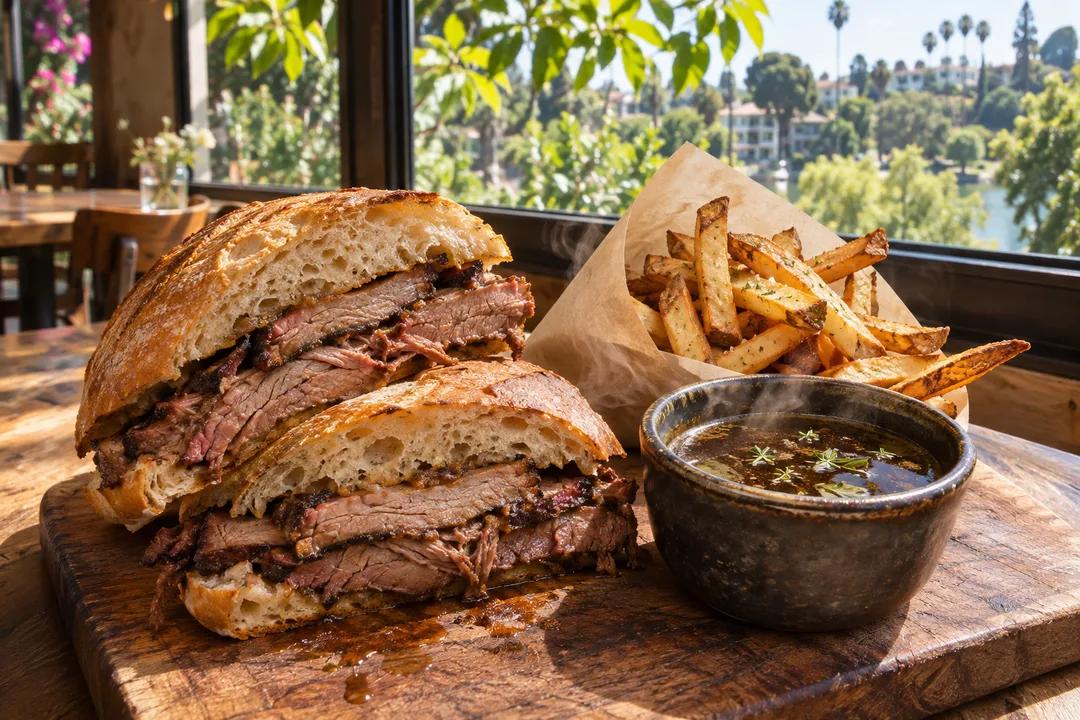 Echo Park French Dip Sandwich Lunch Picker Around Noon
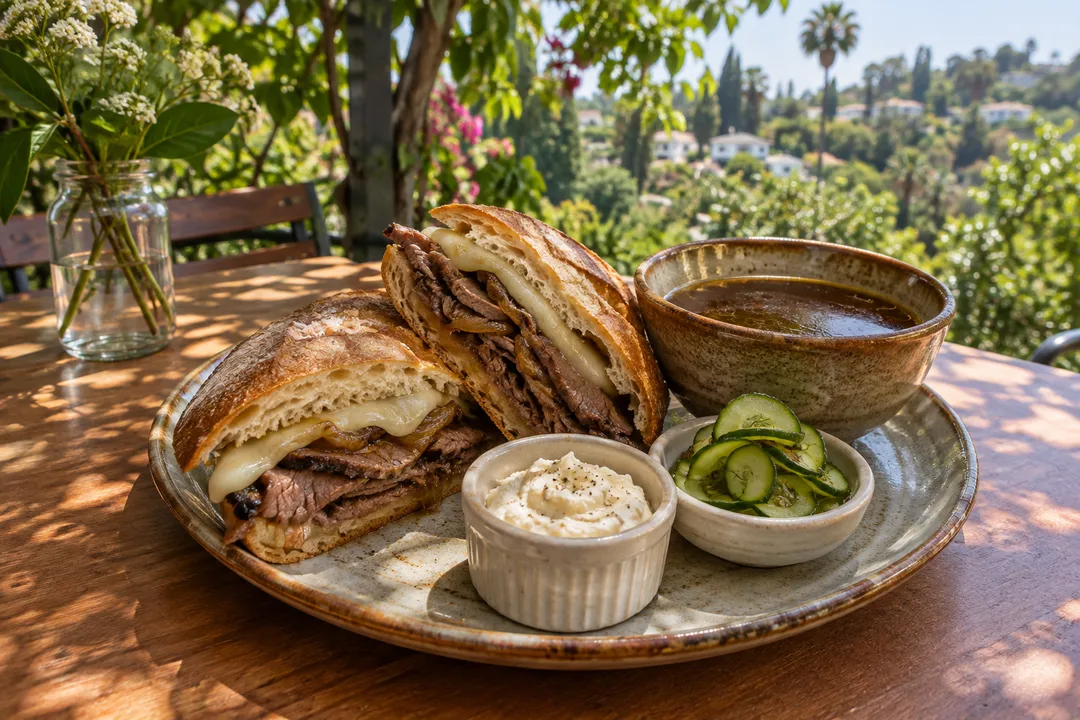 Silver Lake French Dip Sandwich Lunch Picker on Hillsides