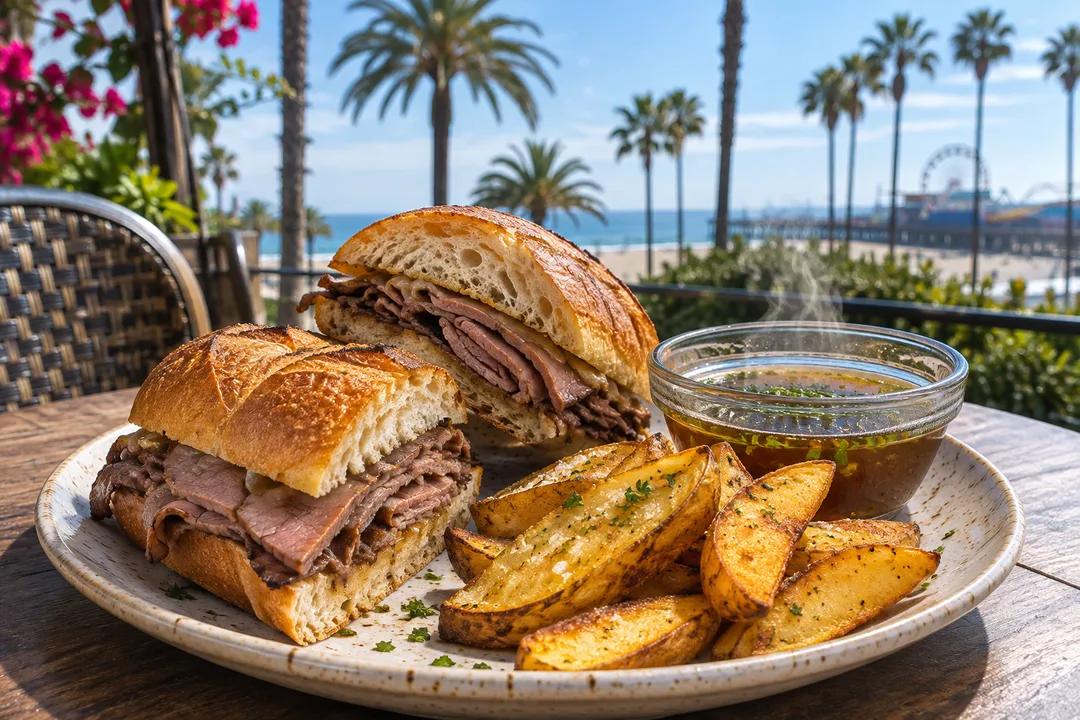
 Santa Monica French Dip Sandwich Lunch Picker by Ocean
Restaurants

Arts District Budget Lunch Route Planner: Mateo Walk
Map a fast Arts District lunch loop from Traction Avenue to Mateo Street, connecting warehouse delis, bakery counters, and shaded courtyard benches.
Walking out of the underground Metro A and E Line portal at Little Tokyo/Arts District Station at 1st Street and Central Avenue places you at the northern gateway to Los Angeles's historic warehouse corridor. Following an Arts District budget lunch route planner lets you bypass the ninety-minute white-tablecloth tasting rooms and reservation-only industrial brasseries along East 3rd Street in favor of rapid counter windows, sourdough bakery cases, and brick-walled loading dock courtyards. Whether you are stepping out of an architecture studio near Sci-Arc on Merrick Street, visiting contemporary exhibition spaces along Santa Fe Avenue, or taking a forty-five-minute break between creative agency shoots on Mateo Street, a structured north-to-south loop keeps your midday errand effortless.
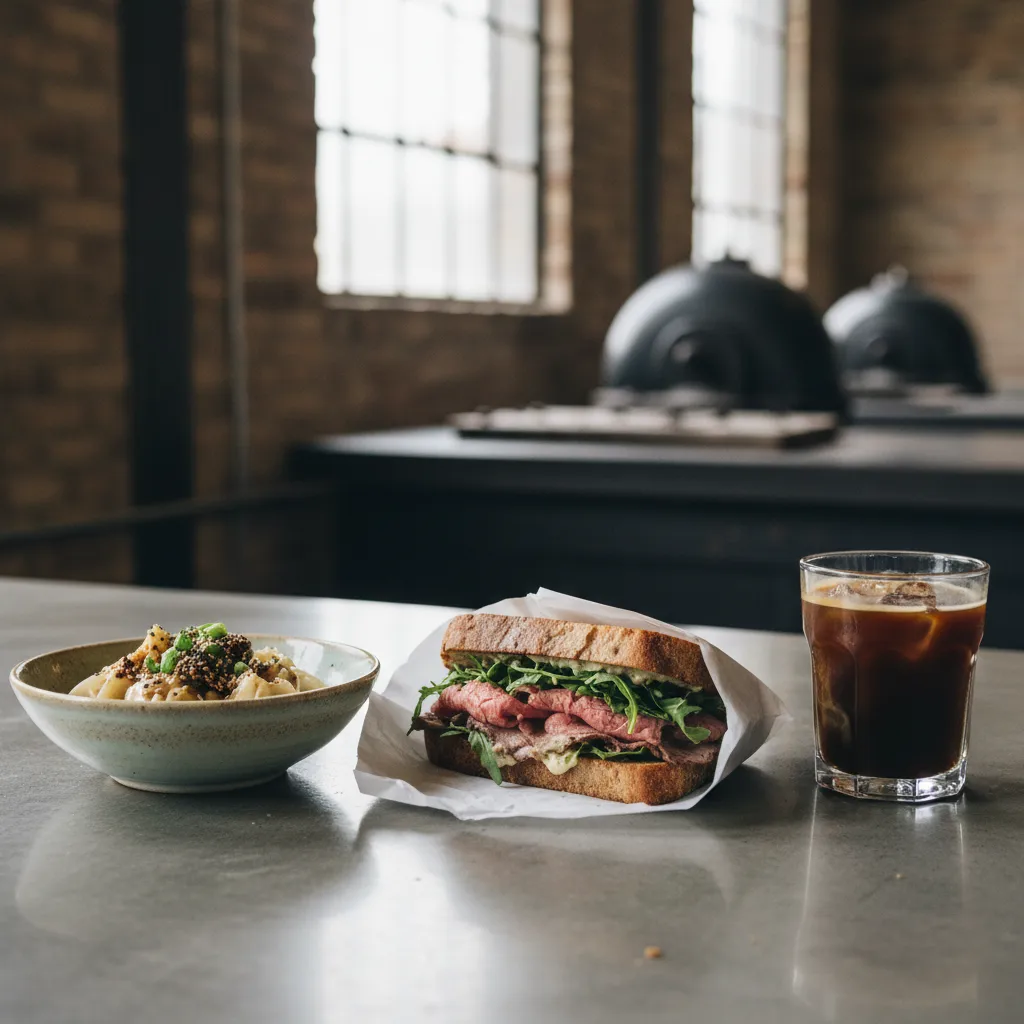
Navigating the Rail Spur Grid from Traction Avenue to Mateo Street
Unlike standard rectangular blocks in central Downtown, the Arts District follows the diagonal geometry of nineteenth-century citrus packing sheds and Santa Fe Railway freight spurs between Alameda Street and the Los Angeles River. Traction Avenue cuts across the northern half of the neighborhood at a sharp angle from East 3rd Street toward Hewitt Street, while Mateo Street and Santa Fe Avenue run south toward the monumental concrete arches of the 6th Street Viaduct, which reopened in 2022 as a gleaming twin-ribbon cable-stayed bridge. Knowing where pedestrian passages cut through former rail yards prevents dead-end detours against fenced industrial lots.
Arriving at your chosen counter between eleven-thirty and twelve-ten is the smartest move along East 3rd Street and Traction Avenue. By twelve-twenty-five, film production crews from nearby soundstages, architecture students, and loft designers pack the narrow ordering lanes at corner delis and coffee roasters. Putting in your sandwich or grain-bowl order before the noon whistle means you are walking out into the courtyard with a warm butcher-paper parcel in under six minutes.
Sourdough Bakery Counters, Butcher Delis, and Street-Side Taco Carts
Adaptive reuse has turned former cold-storage depots and biscuit factories along Traction Avenue, Hewitt Street, and Mateo Street into some of the city's liveliest daytime counter kitchens. Bakery windows open directly onto concrete loading bays, stacking country sourdough baguettes layered with mortadella, aged provolone, pickled fennel, and pistachio pesto alongside flaky savory galettes and sea-salt focaccia squares. Just around the corner toward Willow Street and Palmetto Street, artisanal butcher counters and market halls carve hot pastrami, roast turkey, and smoky brisket to order, wrapping half-pound sandwiches that easily fuel an afternoon of studio work.
For walkers craving hot griddle plates or chilled noodle bowls, the blocks bridging the northern edge of the Arts District toward 1st Street also connect handmade ramen and rice-ball counters, chili-oil dumpling windows, and wood-grilled Sonoran flour-tortilla taco stands stationed beside brick warehouse murals. Every meal along this corridor is packaged for walk-away convenience in rigid cardboard trays or foil pouches that stay warm while you stroll two blocks to a shaded bench.
Skip the sprawling full-service brewery gardens and reservation-driven courtyard restaurants along East 3rd Street and Imperial Street when you are working on a strict weekday lunch schedule. Those cavernous warehouse dining rooms are built for two-hour group gatherings, meaning table seating and check settlement will eat up your entire break.
One Santa Fe Plaza, Brick Courtyards, and Arts District Park
Because the neighborhood grew out of freight yards rather than residential subdivisions, knowing where to find public and open-air seating is essential for a relaxed midday pause. Right at 5th Street and Hewitt Street, Arts District Park—a half-acre neighborhood pocket park featuring mature shade trees, curved concrete benches, and a central lawn—serves as the community's primary civic green space. Midday regulars, gallery assistants, and neighborhood dog owners gather along the perimeter benches to unwrap sandwiches away from delivery truck traffic.
Along Santa Fe Avenue near East 3rd Street, the breezy pedestrian promenade running beneath the long horizontal span of the One Santa Fe apartment and retail complex offers shaded outdoor tables, stepped concrete ledges, and wide brick walkways open to daytime foot traffic. Walkers observe a friendly local code in these shared warehouse passages: keep filming equipment carts and gallery loading doors completely unobstructed, tuck takeaway bags securely under beverage cups when afternoon winds funnel up from the Los Angeles River channel, and clear every crumb before returning to work.
If your route starts closer to the northern end of Traction Avenue, a five-minute walk west across Alameda Street brings you directly into the historic Japanese Village Plaza and the pedestrian walkways flanking the Japanese American National Museum, which opened its glass-and-steel pavilion at Central Avenue in 1999 alongside the preserved 1925 Hompa Hongwanji Buddhist Temple building. Stone planters and shaded brick plazas there offer another calm pocket to finish a boxed lunch before heading back east into the loft district.
Organizing Your Warehouse District Loops with the Karpo APP
Because the northern Traction Avenue cluster and the southern Mateo Street and 7th Street warehouse row sit nearly a mile apart across active rail crossings, walking from one end of the district to the other without checking your map can consume thirty minutes in transit alone. Opening the Karpo APP before leaving your studio desk lets you split the neighborhood into distinct north and south lunch loops, compare quick deli and bakery counters against taco or noodle stops, and save your favorite weekday routes.
Keeping a saved shortlist in the Karpo APP also pays off whenever location scouts and commercial film shoots temporarily close a block of Mateo Street or Hewitt Street at midday. Instead of backtracking around production trucks, you can immediately check your bookmarked backup counters one street over on Santa Fe Avenue and keep your lunch break on track.
Summer Asphalt Glare and Covered Arcade Alternatives
Broad expanses of dark warehouse brick and wide industrial asphalt make the Arts District noticeably warmer than coastal Los Angeles neighborhoods between June and October. When midday temperatures climb past eighty-five degrees, avoid walking the exposed length of Alameda Street and instead use the shaded interior passages of the ROW DTLA complex at 7th and Alameda—housed in the historic 1920s Los Angeles Terminal Market buildings originally erected for the Southern Pacific Railroad—where deep concrete overhangs and breezy breezeways cut the afternoon heat.
Before walking back to your studio loft or boarding the Metro E Line at Little Tokyo/Arts District Station, cap off your route with a five-minute stop at one of the specialty coffee roasters or small-batch tea bars along Traction Avenue and Mateo Street. Grabbing a sparkling yuzu espresso tonic, an iced hojicha latte, or a dark-chocolate tahini cookie under the industrial steel trusses brings a crisp, creative finish to your midday walk.
Ask Karpo for more information.
Keep reading
- Santa Monica French Dip Sandwich Lunch Picker by Ocean
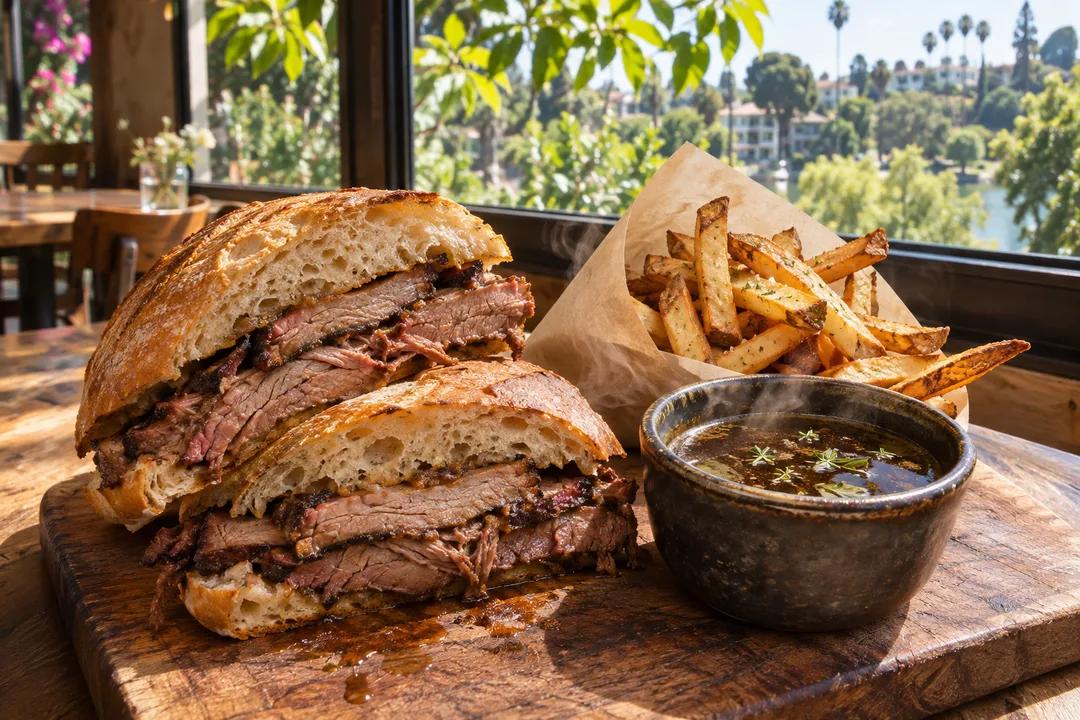 Echo Park French Dip Sandwich Lunch Picker Around Noon
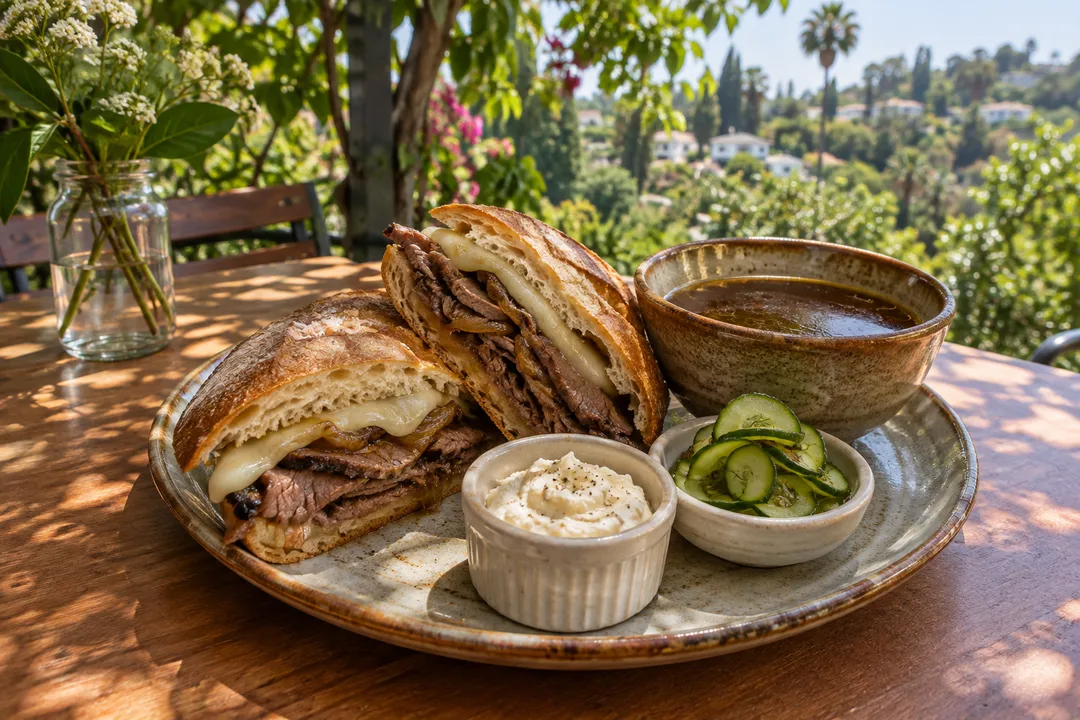 Silver Lake French Dip Sandwich Lunch Picker on Hillsides