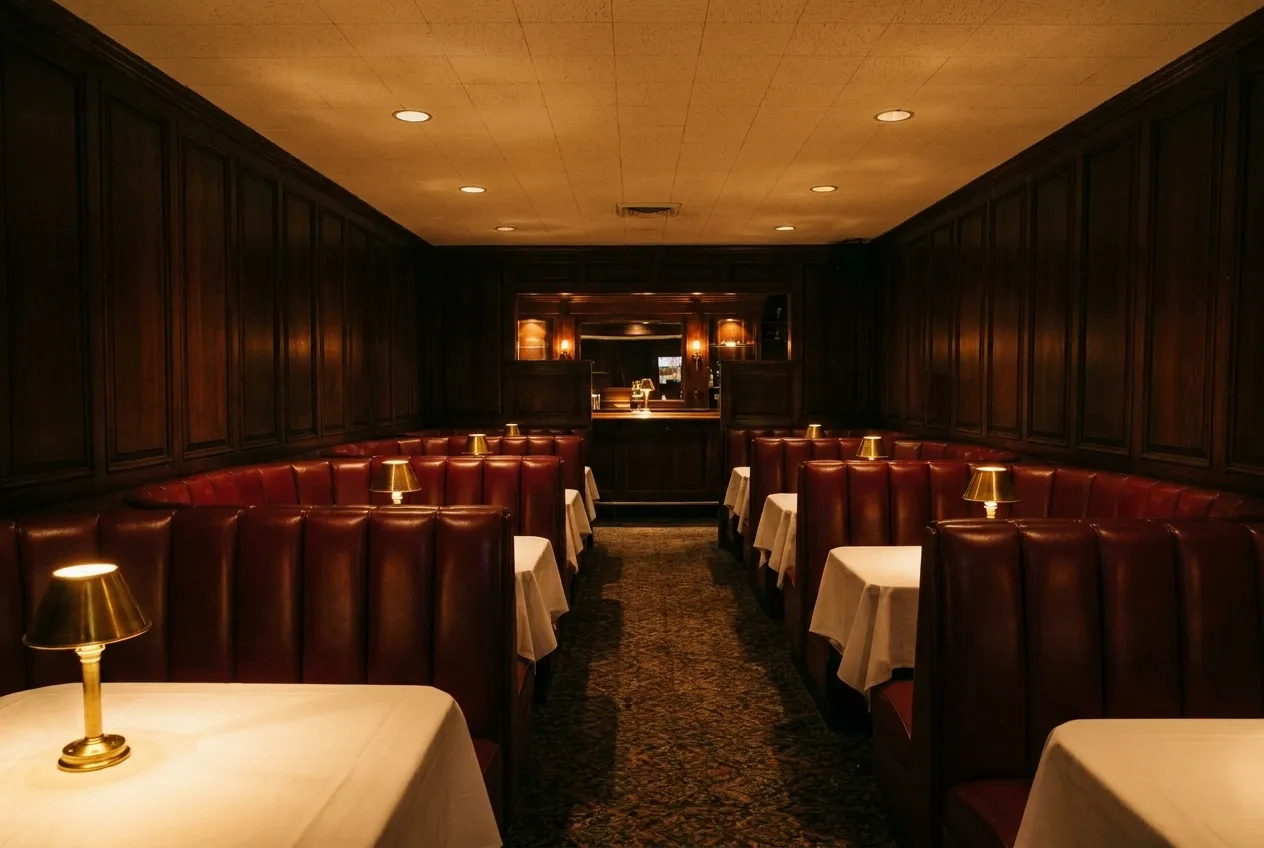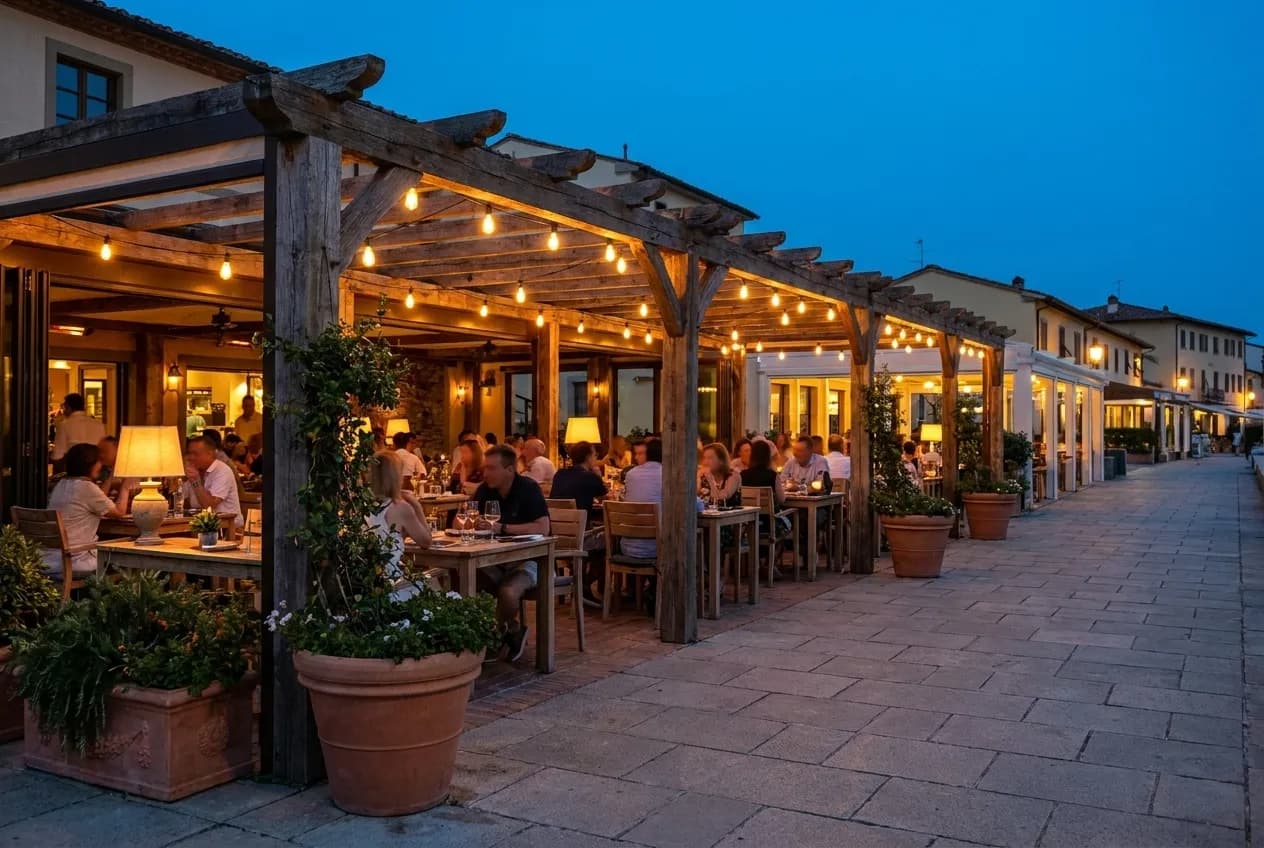
Ask which bowl deserves the phrase best ramen in Los Angeles and you will start an argument that has been running for two decades. What is not in dispute is where the argument began. Daikokuya opened on East First Street in Little Tokyo in February 2002, and the line that formed under its sign became a neighborhood landmark in its own right — people queued for close to an hour for a bowl of pork-bone broth in a city that, at the time, had barely started to care. Newer shops have since out-teched it and out-designed it. None of them have displaced the line.
The wait swings from ten minutes to an hour depending on when you show up and which door you use. Ask Karpo to read the current queue in Little Tokyo and tell you whether to sit down or switch to the takeout annex.
The broth, and the one word that changes it
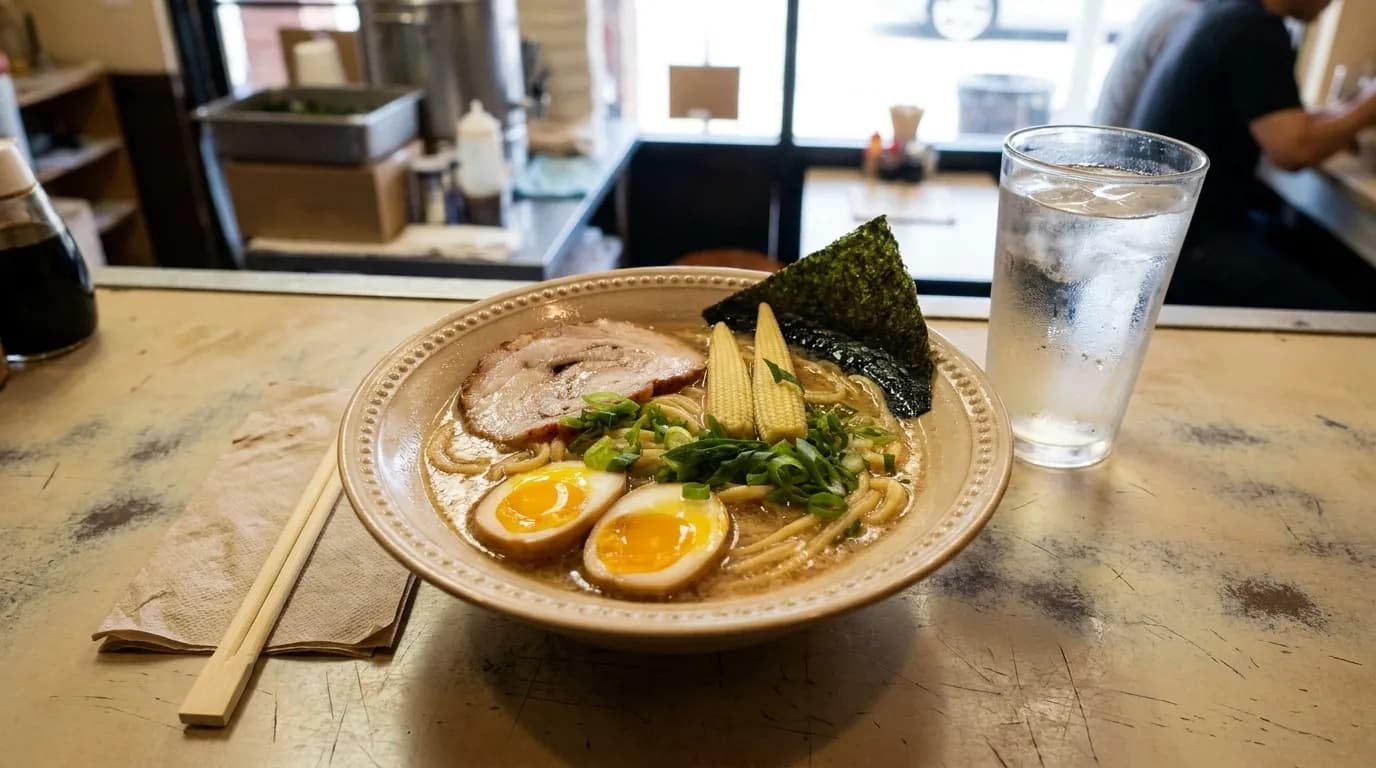
Daikokuya's house bowl is tonkotsu — pork bones cooked long enough that the fat emulsifies into the liquid and the broth turns opaque rather than clear. That is the baseline. The variable is a word on the order: kotteri. Choosing the kotteri version makes the broth noticeably sweeter and considerably creamier, pushing it from rich into unmistakably heavy territory.
This matters more than a menu footnote suggests, because the kotteri style is what most people are actually remembering when they describe the Daikokuya bowl. It is also why the shop divides opinion. If your reference point is a clean, restrained Tokyo shoyu, this bowl will read as too much. If you came for the version of tonkotsu that coats the spoon, it is exactly the point. Order a glass of water alongside and pace yourself — the second half of the bowl hits differently from the first.
The queue is a system, not a mob
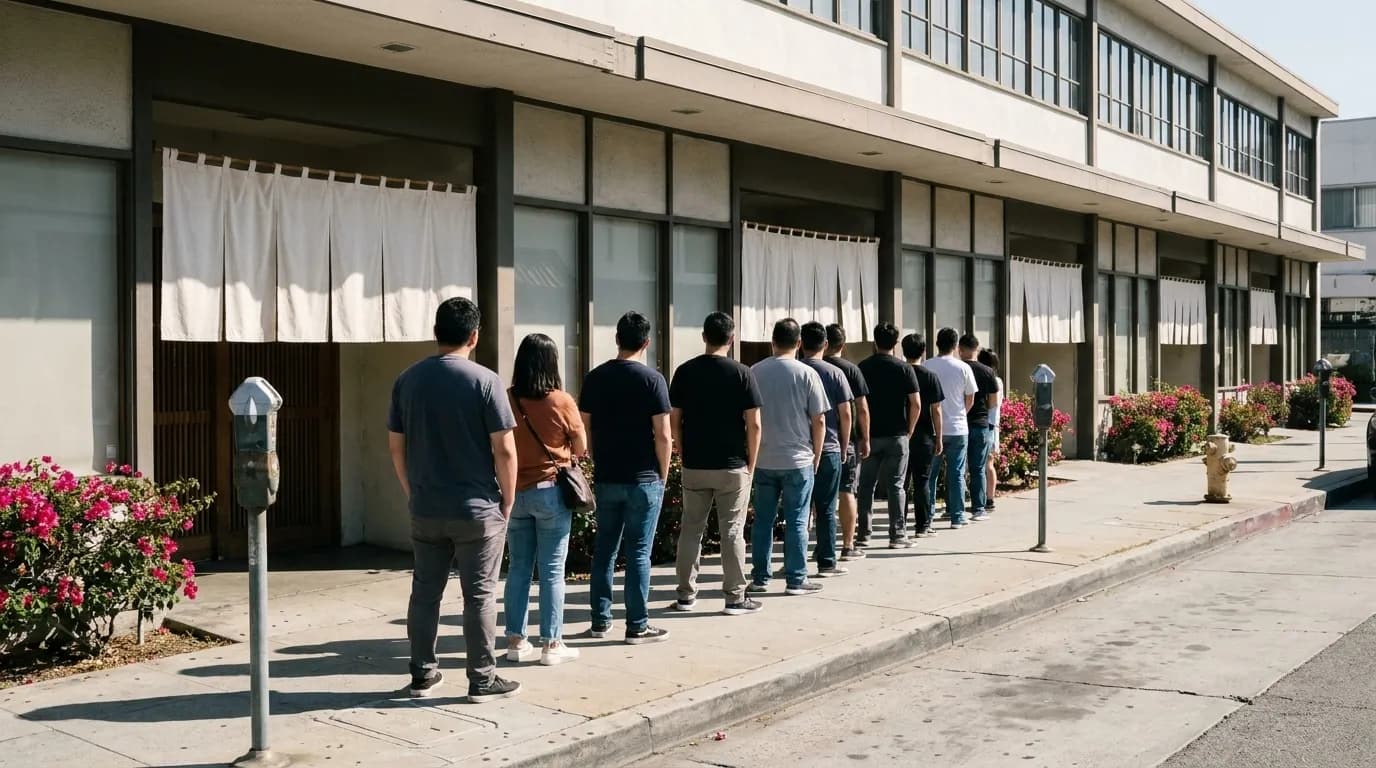
The sidewalk outside can look like chaos on a Saturday. It is not. There is a waitlist you sign into, and when you sign in you indicate whether you want to be seated indoors or outdoors. That choice has consequences: the two lists move at different speeds, and picking the one that is shorter at that moment is frequently worth twenty minutes. Nobody at the door will volunteer this. It is simply how the list works.
The second piece of the system is one block of sidewalk away and gets consistently overlooked. Daikokuya operates a separate annex at 321 1/4 East First Street, a few doors down, and it is takeout only. On a night when the dining room is running an hour deep, the annex is the release valve — same kitchen, no waitlist, and Little Tokyo has plenty of places to sit and eat within a two-minute walk. If you are eating alone, or you are on a schedule, walking past the main door to the annex is almost always the better call.
When to go
The shop runs 11am to 10pm Monday through Thursday, 11am to midnight on Friday and Saturday, and 11am to 10pm on Sunday. Read those hours as a map of where the pressure is. The two-hour extension into midnight on Friday and Saturday is the least-contested window in the whole week: the dinner rush has broken up by half past ten, and the kitchen is still going for another ninety minutes.
The other soft spot is the mid-afternoon gap on a weekday, roughly 2pm to 4pm, after the downtown lunch crowd clears and before anyone has finished work. Weekend lunch is the worst possible choice and it is the slot most visitors default to, because it is the one that fits neatly between a museum and a parking meter.
One more thing worth knowing before you order: the shop bills itself as a noodle and rice-bowl house, not a ramen-only counter, and the rice side of the menu is not an afterthought tacked on for people who did not want soup. If you are two people, ordering one bowl and one rice dish and splitting both is the version of this meal that most regulars settle into, and it is a far better use of an hour-long wait than two identical bowls of the same heavy broth.
What else is on the block
Daikokuya sits in the middle of the densest walkable stretch in Little Tokyo, which is the real reason the wait is survivable. Japanese Village Plaza is directly across the street, with enough small shops, confectioners and coffee to absorb forty-five minutes without anyone getting restless. The Metro A and E lines stop at Little Tokyo/Arts District station a couple of minutes away, which makes this one of the few high-demand LA restaurants where showing up without a car is genuinely the easier option — there is no parking strategy that beats walking up from the platform.
It also means the queue is not dead time. Put your name on the list, take the text, and spend the wait in the plaza rather than standing on the sidewalk watching the door.
Practical notes
Daikokuya Little Tokyo is at 327 East First Street, Los Angeles, CA 90012, open 11am to 10pm Monday through Thursday, 11am to midnight Friday and Saturday, and 11am to 10pm Sunday. Sign into the waitlist on arrival and state your indoor or outdoor preference — the two lists move at different rates. The takeout-only annex is a few doors down at 321 1/4 East First Street and has no waitlist at all. Ask for kotteri if you want the sweeter, creamier version of the tonkotsu broth; skip it if you prefer something lighter. Peak waits land at weekend lunch and early weekend evening; the quietest windows are weekday mid-afternoon and the last ninety minutes on Friday and Saturday nights. Nearest transit is the Metro A or E line to Little Tokyo/Arts District.
Tags: #BestRamenInLosAngeles #Daikokuya #LittleTokyo #TonkotsuRamen #LARamen #RamenNearMe #DowntownLA #EastFirstStreet #KotteriBroth #LAFoodGuide #RamenShop #LosAngelesEats #NoodleRun #JapaneseFoodLA
Sources consulted: bishamon-ten.com · pbssocal.org · discovernikkei.org · yelp.com
All trademarks are the property of their respective owners.
Ask Karpo first
Want to know how long the line actually is right now, whether the annex is open, and what else nearby is still serving if the wait has run past your patience? Ask Karpo for live Little Tokyo conditions, a realistic arrival window for Daikokuya, and a short walking backup around East First Street before you head downtown.