 Santa Monica French Dip Sandwich Lunch Picker by Ocean
Restaurants
Best Restaurants Near Me in the Arts District: Hayato's One Seating
One kaiseki seating a night for a handful of guests, built around a Japanese seasonal calendar rather than a menu. What that discipline actually demands.
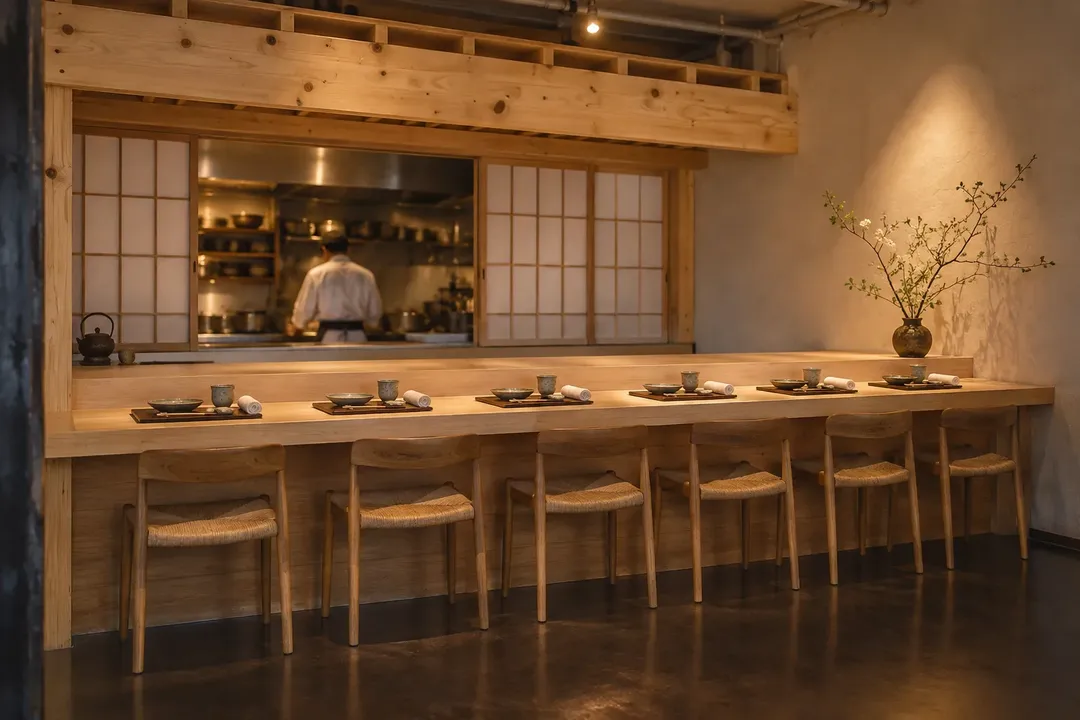
A best restaurants near me search in the Arts District produces warehouses full of brunch and a single small room doing something almost nobody else in the United States attempts. Hayato serves one kaiseki seating a night to a handful of guests, following a Japanese seasonal calendar with a precision that makes most farm-to-table language look approximate.
One seating a night for a handful of seats is the tightest booking in Los Angeles, and the menu turns over with the Japanese calendar. Ask Karpo when Hayato next has space and what season the menu is currently in.
What kaiseki actually is
Kaiseki is not a tasting menu with Japanese ingredients. It is a formal multi-course structure that developed out of the tea ceremony, with a defined sequence of course types: a seasonal opener, a clear soup, sashimi, a grilled dish, a simmered dish, rice and pickles to close. Each slot has a role, and the chef composes within the structure rather than around it.
The other defining constraint is the calendar. Traditional Japanese cooking divides the year into twenty-four solar terms and seventy-two micro-seasons of roughly five days each, and a serious kaiseki kitchen changes its menu with those divisions rather than with the four Western seasons.
That means a menu eaten in early May is genuinely different from one eaten in late May, not as a marketing claim but as a structural requirement. Eating here twice in a year gives you two different restaurants.
Why one seating a night
Kaiseki demands that each course arrives at a specific temperature at a specific moment in the sequence, with the dish and its vessel chosen together. None of that survives a room turning tables twice in an evening, because the second service inherits the compromises made for the first.
A single seating means Brandon Hayato Go can start every guest at the same moment and run one sequence at one pace all night. The cost is the obvious one: the restaurant can serve a very small number of people, and the price per head has to carry the whole operation.
The vessels are part of the meal
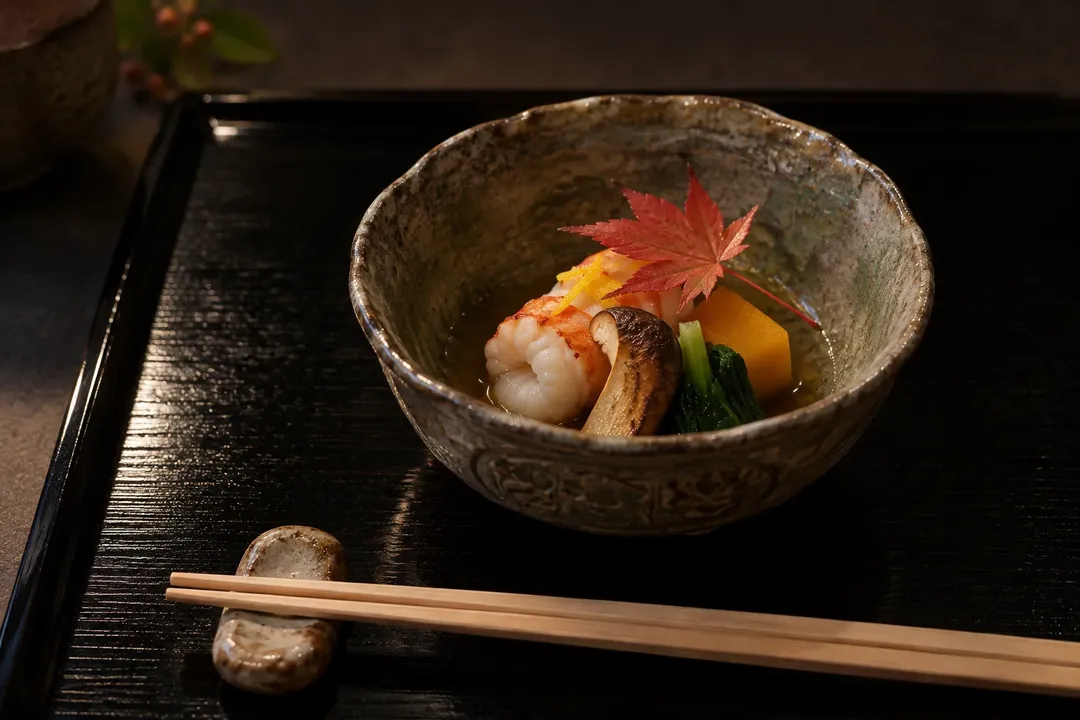
In kaiseki, the ceramic, lacquer and glass a dish is served on is chosen for the season and the course, not for a house style. Cool glass appears in summer, heavier warm-glazed ceramic in winter, lacquer for soups. The collection a kitchen builds over years is effectively half the menu.
This is worth knowing before you go, because it changes what you look at. If a course arrives on an unusual piece, ask about it. The answer is generally specific and interesting, and it is part of what you are paying for rather than decoration.
The rice course near the end is the one to pay attention to. In this tradition the rice is not a filler at the end of the meal; it is a technical showpiece, cooked in a donabe and served at its peak in a window of a few minutes.
There is a second, quieter benefit. Because everyone begins together, the room can be silent when a course demands it and conversational when it does not, and the chef can time the whole sequence against a single clock. Kaiseki is partly about the shape of an evening rather than the sum of its dishes, and that shape is impossible to hold across two turns of a dining room.
Booking and what to expect
Reservations are released in advance and go almost immediately. There is no realistic walk-in strategy. The practical approach is to know the release schedule, book the moment it opens, and be flexible about the date rather than the restaurant.
Allow two and a half to three hours. Sake is the natural pairing and the list is chosen for the food rather than for name recognition; ask for guidance rather than ordering by label. Dietary restrictions must be raised at booking, because a kaiseki sequence cannot be improvised around.
Arrive on time. A single seating means the meal starts when it starts, and a late guest holds up a fixed sequence for everybody else in the room.
The Arts District around it
The neighbourhood is warehouses, rail spurs and converted lofts on the eastern edge of downtown, and it is unusually walkable for Los Angeles. Within fifteen minutes on foot there are breweries, bakeries, galleries and a large amount of exterior mural work on the industrial buildings.
Parking is the recurring friction, with metered streets, restricted blocks and level crossings that slow everything down. The Metro A Line at Little Tokyo puts you at the western edge, and rideshare is the simplest option for a late finish.
Practical notes
Address: Hayato is in the Arts District, Los Angeles, inside a converted industrial building; confirm the exact entrance when you book, because it is not obvious from the street. Dinner only, one seating, limited nights.
Book the instant reservations open and take whatever date you can get, allow three hours, ask about the vessels and the current micro-season, and take the sake guidance. Do not schedule anything after it. If you cannot get in, the same discipline is worth looking for at the city's other serious Japanese counters rather than substituting a generic tasting menu.
Tags: #LosAngeles #ArtsDistrict #BestRestaurantsNearMe #Hayato #Kaiseki #JapaneseCuisine #FineDining #LARestaurants #MichelinStar #Donabe #LADining #SeasonalMenu #DTLA #LAEats
All trademarks are the property of their respective owners.
Ask Karpo first
Want to know when Hayato next releases reservations, which micro-season the menu is in, and what the nearest comparable Japanese counter is? Ask Karpo for the booking window, the current menu length, and an Arts District alternative for the same night.
Ask Karpo for more information.
Keep reading
- Santa Monica French Dip Sandwich Lunch Picker by Ocean
 Echo Park French Dip Sandwich Lunch Picker Around Noon
 Silver Lake French Dip Sandwich Lunch Picker on Hillsides