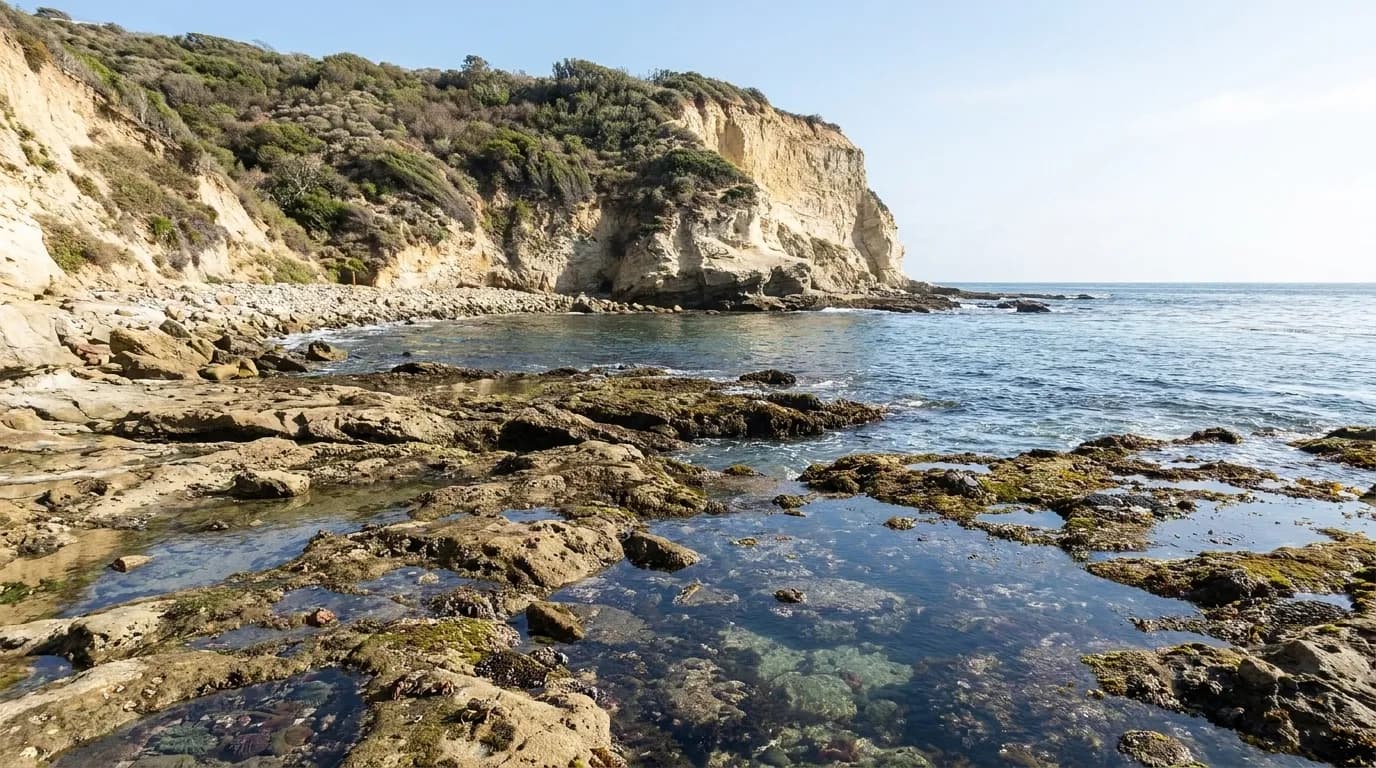
El Porto sits at the northern end of Manhattan Beach, and it is the beach South Bay surfers default to for one reason that has nothing to do with the beach itself. Offshore there is an underwater canyon, and that canyon focuses swell energy onto this stretch of coast in a way the flat sandy shelf either side does not. The practical result is that El Porto is consistently bigger than its neighbours, and frequently has waves on days when the rest of the bay is flat.
The lot is metered on a five-hour limit and the surf here does not behave like the beaches either side of it. Ask Karpo what El Porto is doing today and how long you actually need on the meter.
What the canyon actually does
Swell travelling across deep water slows and refracts when it hits shallower ground. A submarine canyon running toward shore acts as a channel, concentrating that energy rather than dissipating it across a wide shelf. The waves that arrive at El Porto have effectively been funnelled.
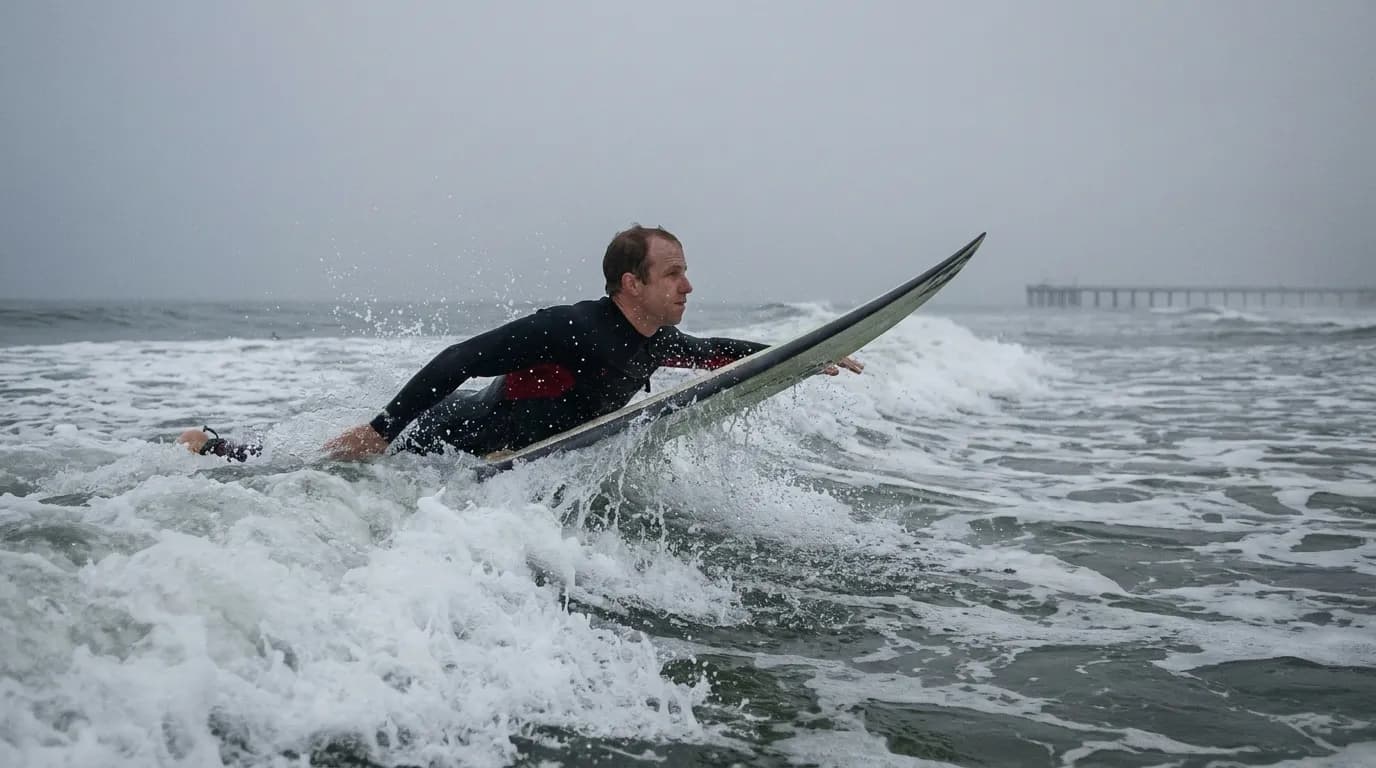
The waves break over sandbars with both lefts and rights, and on a good swell they can hold at up to double overhead. That is a serious size for a Los Angeles County beach break and it explains both why the line-up is crowded and why it is not a beginner spot on a big day.
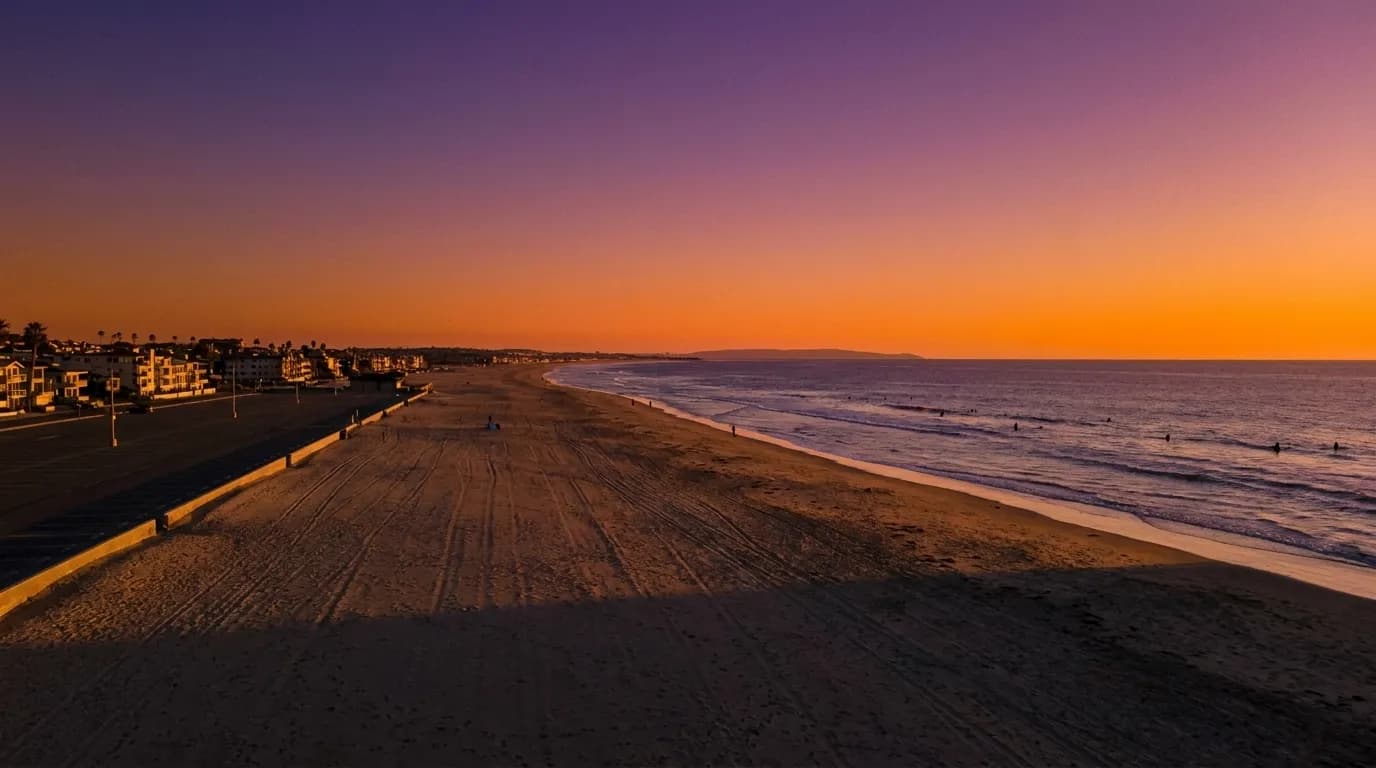
There is a second, less romantic reason the spot is well known: a power station stands at the north end of the beach and the sand between it and 45th Street has never been developed into a promenade. What that means in practice is a long, plain stretch of beach with none of the restaurants, volleyball courts or foot traffic that define Manhattan Beach two miles south.
Sandbars move, which is the catch
A reef break is in the same place every year. A sandbar break is not. The bars at El Porto shift with the seasons and with storms, which means the peak that was working in October may be fifty metres north by March, and a spot that was excellent last winter can be mediocre this one.
The practical consequence is that checking the actual water before committing is worth more here than at a fixed break. Ten minutes standing on the sand watching where the sets are breaking will do more for the session than any forecast.
The parking lot is the best in the South Bay
The entrance to the lot is at the west end of 45th Street, off Highland Avenue, and the lot runs the full length of the beach south toward Rosecrans Avenue. That is an unusually generous amount of parking directly adjacent to sand for this coastline, and it is the reason El Porto works as a surf spot with a lot of traffic.
It is metered with a five-hour limit, and a quarter buys fifteen minutes. Work the arithmetic before you go in: a three-hour session is twelve quarters, and running back up the beach to feed a meter mid-session is the least enjoyable part of anyone's morning. Most regulars either pay by app where available or over-pay deliberately at the start.
Non-surfers, and what the beach is like otherwise
It is a broad sand beach with a wide flat apron, so as a place to sit it is perfectly good and considerably less manicured than the beaches further south around the Manhattan Beach pier. The crowd skews toward people who came to be in the water rather than to be seen.
The same canyon that makes the surf good makes the shorebreak stronger, which is worth knowing if you are swimming or bringing children. It is not a calm wade-in beach on a day with swell, and the difference between El Porto and the pier beaches on the same afternoon can be substantial.
Crowding in the water is the other constant. Because this is the reliable break in a densely populated stretch of coast, the line-up is busy whenever the surf is good, and local etiquette is enforced socially rather than politely. If you are new to the spot, sit wide, watch who is taking what, and do not drop in on anyone.
Timing
Mornings are the standard answer for surfing anywhere in Southern California — the wind typically comes up onshore through the middle of the day and degrades the surface — and El Porto is no exception. Dawn to about ten is the window, and the lot reflects that with a rush that starts before sunrise on a good swell.
Winter is the bigger season on this coast, driven by north and west swell, while summer is generally smaller and better for learning elsewhere. If you are visiting and want to see the spot doing what it is known for, the colder months are the ones to aim at.
Practical notes
El Porto is at the northern end of Manhattan Beach in the South Bay, Los Angeles County. An offshore underwater canyon concentrates swell here, producing waves that are consistently larger than at neighbouring beaches and that can hold up to double overhead, breaking left and right over sandbars whose positions shift over time. The parking lot entrance is at the west end of 45th Street off Highland Avenue and the lot runs south to Rosecrans Avenue; it is metered with a five-hour limit, and one quarter buys fifteen minutes. Mornings before the onshore wind are the best surfing window, and winter carries the bigger swell. The shorebreak is stronger than at the pier beaches, so take care swimming.
Tags: #BeachNearMe #LosAngelesBeaches #ElPorto #ManhattanBeach #SouthBay #Surfing #SurfSpots #LAOutdoors #BeachParking #SportsSocial #ThingsToDoInLA #BeachesNearMe #Waves #SoCalSurf
Sources consulted: en.wikipedia.org · californiabeaches.com · parkopedia.com
All trademarks are the property of their respective owners.
Ask Karpo first
Want to know what the swell is doing, whether the wind has come up, and how long you need on the meter? Ask Karpo for today's El Porto conditions, a realistic morning window, and somewhere in the South Bay to eat once you are out of the water.