 Burbank Film Memorabilia Collector Shop Walk: Studio Stash
Hidden Gems & Odd Finds
LA Artisan Pottery Gallery: Fit One Visit Into 60 Minutes
Fit an LA artisan pottery gallery visit into a personal 60-minute plan by separating travel, looking time, and departure before adding another destination.
A 60-minute LA artisan pottery gallery plan works only after you define what the hour includes. If it begins at your starting point and ends at your next commitment, travel belongs inside it. If the hour is entirely for looking, keep the journey separate. The number here is your planning limit, not a gallery's session length or a promise about traffic. Choose one destination and protect a departure point before considering an extra stop.
Decide Where the Clock Begins
Write down the place where you will be when the free hour starts and where you need to be afterward. A vague plan to fit art between two appointments can hide the return journey. If you are already near a candidate, the available looking time differs from a visit requiring a cross-city trip. Include the transition back to the next activity, such as reaching a meeting point or collecting something you left elsewhere. Those small tasks still consume time even though they are not part of the exhibition.
Give the Search a Boundary That Matters
In the Karpo APP, describe Los Angeles, your actual starting area, and the end of your free window. Say that you want one ceramic-art stop and that a short journey matters more than the largest selection. Karpo's public introduction describes working around a user's schedule and finding things worth seeing. Use those stated purposes to start the conversation. A planning response should not be treated as a traffic guarantee, proof of entry, or confirmation of a particular show's contents unless supporting details establish those facts.
Distinguish a Visit From an Appointment
An exhibition, a retail gallery, and a private studio may offer very different ways to enter. Choose the type of experience that matches your available window rather than assuming every result supports casual browsing. An activity with a fixed beginning can consume the whole hour differently from a visit you control. If no suitable option emerges, a later art outing is preferable to compressing a restricted or appointment-based visit into a gap it cannot accommodate. Your constraint should guide selection, not disappear as soon as an attractive image appears.

Divide the Hour on Paper Before Leaving
Try a provisional split that reserves time for arrival, focused looking, and leaving. The amounts should follow the journey you actually face, rather than a universal formula. For example, someone already nearby might devote most of the hour to the room, while someone farther away might find the usable remainder too small. Treat the division as a decision aid and revise it when information changes. It does not establish a gallery's expected visit duration, recommended arrival time, or tolerance for late visitors.
Select One Thing Worth Looking At Slowly
A short visit becomes more rewarding when you give attention a specific target. You could focus on a single group of vessels, the way a sculpture uses an opening, or the relationship between clay and another material. Pick the question after seeing what is actually presented. There is no need to choose a favorite before entering or to claim familiarity with a show you have not seen. One sustained encounter can justify the stop without turning the available minutes into a race through every room.
Keep the First Sweep Brief and Respectful
On arrival, orient yourself without blocking entrances or moving into restricted areas. Notice the arrangement and any information that explains how visitors should use the space. Then return to the work that interests you. If you need help locating a particular section, ask a concise question when staff are available. Avoid spending the entire visit trying to optimize a route through a small room. The purpose of an initial look is simply to make a choice, leaving the rest of your attention for the object or group you selected.
Choose a Departure Cue You Can Follow
Set a personal reminder before the point when you must leave, with enough room to gather your belongings and complete any conversation. Keep the alert discreet so it does not become another visitor's distraction. When it arrives, make a final observation and leave the rest for another time. Continuing to browse until the last possible moment creates a departure problem that the original plan was meant to solve. A stopping cue is useful only if you are willing to act on it, even when a neighboring room looks appealing.
Do Not Turn a Short Browse Into a Rushed Purchase
If an object catches your interest as something to buy, separate that decision from the pressure of the clock. Record the identification when permitted and ask what information is needed for a later enquiry. Do not assume that a work can be held, delivered, returned, or purchased online. Those are seller-specific arrangements. A limited outing can introduce you to a piece without requiring an immediate transaction, and postponing a decision can be more sensible than leaving with unanswered questions about size, function, care, or transport.
Let the Exit Decide Whether Anything Else Fits
After leaving, reassess the remaining time from your actual position. A second destination should be optional, not a condition for calling the outing successful. If you have only enough time for the next commitment, go directly there. If you have a comfortable margin, you can use it for a short rest rather than another attraction. Avoid adding a specific café or shop to the plan without establishing that it fits the journey and the occasion. This page offers a way to allocate time, not a list of verified nearby businesses.
Make a New Request When the Window Changes
If your free hour becomes a longer afternoon, tell the Karpo APP what changed and what you enjoyed at the first stop. Ask for the next part around that interest and your current area. Conversely, if time shrinks, remove activities instead of asking the same route to fit a smaller space. Give the revised end point along with the new limit. Clear changes help a planning conversation stay grounded in the outing you can actually take, without suggesting that the app is monitoring your movement or automatically rearranging bookings.
Practical Notes: One Completed Stop Is Enough
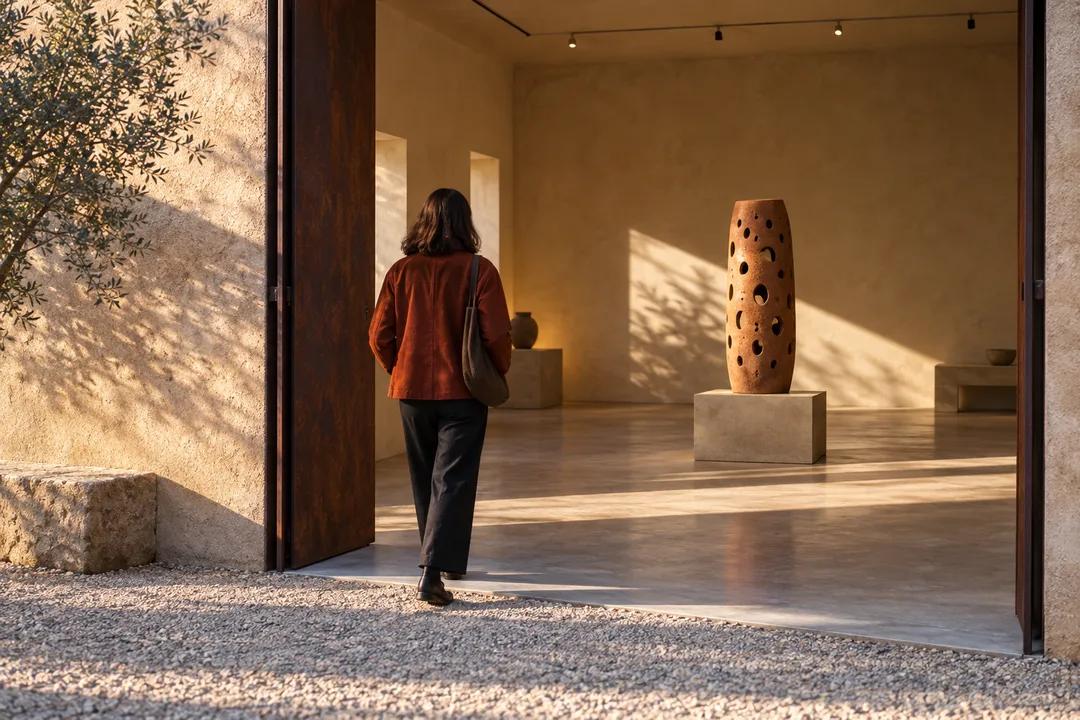
Before starting, know the clock's beginning, the next required location, and the point when you will leave the gallery. During the visit, spend your attention on a manageable selection of work and respect the room's instructions. Afterward, retain one observation that might shape a longer return. Skip the second stop when it weakens the first or makes the next commitment uncertain. The anonymous photographs illustrate a focused ceramic-art visit; they do not depict a named venue, establish access, or promise that any journey takes a particular number of minutes.
Ask Karpo for more information.
Keep reading
- Burbank Film Memorabilia Collector Shop Walk: Studio Stash
 Pasadena Film Memorabilia Collector Shop Walk: Classic Route
 Silver Lake Film Memorabilia Collector Shop Walk: Indie Lore