 Burbank Film Memorabilia Collector Shop Walk: Studio Stash
Hidden Gems & Odd Finds
West Hollywood Artisan Leather Goods Shop: Fit a Jacket
A West Hollywood artisan leather goods shop visit is best for jackets: test shoulders and sleeves, learn the leather, then walk Melrose to the Blue Whale.
A leather jacket is the one piece most worth trying on in person, and the design quarter on Melrose Avenue in West Hollywood is a good place to do it. An artisan leather goods shop on this stretch usually stocks garments alongside bags and belts, with fitting rooms and staff who know how a cut should sit. Plan for a slow afternoon, wear the shirt or sweater you will most often layer underneath, and let the fit decide before the price tag does.
The Blue Whale and a Street Built for Looking
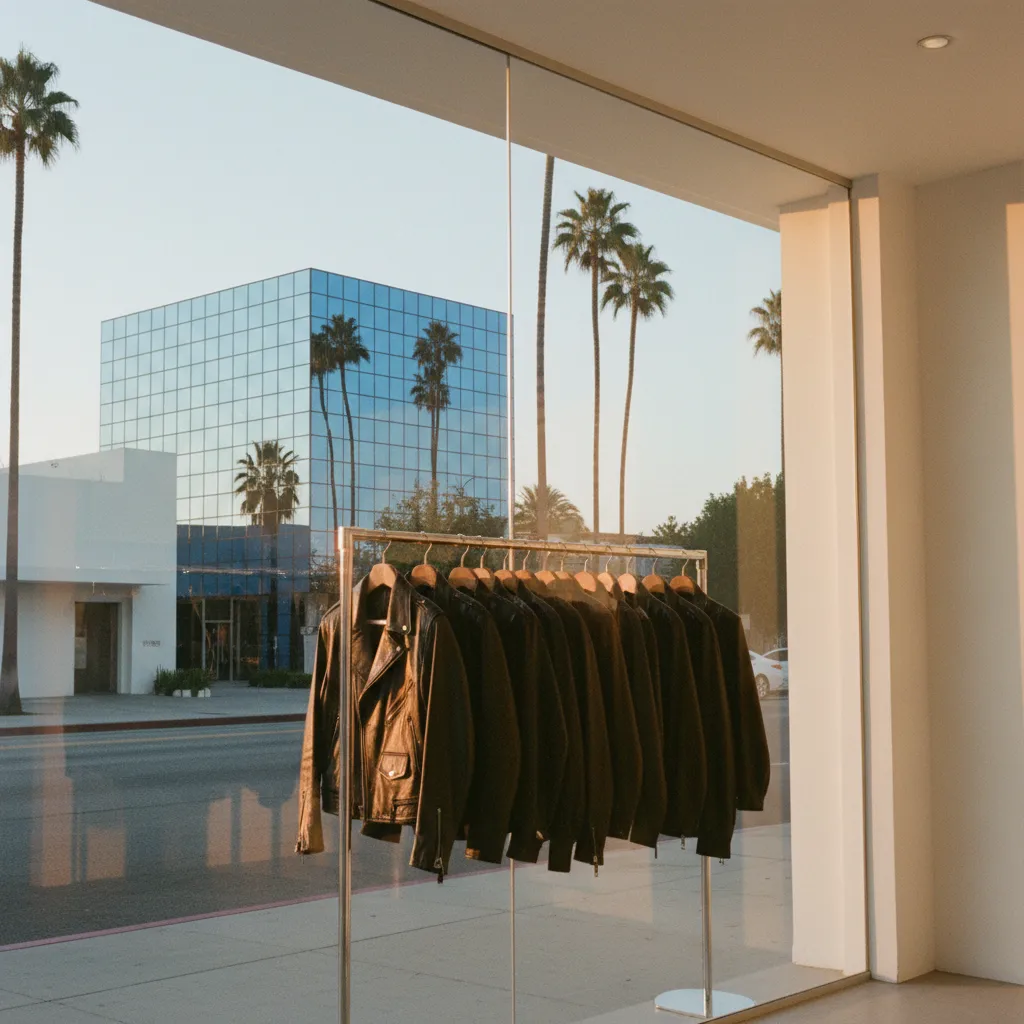
The Pacific Design Center at Melrose and San Vicente opened in 1975, and its blue glass hall, designed by Cesar Pelli, earned the nickname the Blue Whale almost at once. Green and red buildings followed in later decades. The center gave the surrounding blocks a reputation as a place where designers, decorators and stylists come to see materials up close, and the shops along Melrose and Robertson grew up serving that trained eye.
West Hollywood itself became a city in 1984, and its streets have long been a home for people who dress with intention, from stage performers to film stylists. Leather has a visible place in that story. On a weekend evening you will see jackets worn as everyday armor, not as costume, and many locals will tell you that a good one is bought once and then repaired for the next twenty years.
Five Fitting Tests in the Mirror
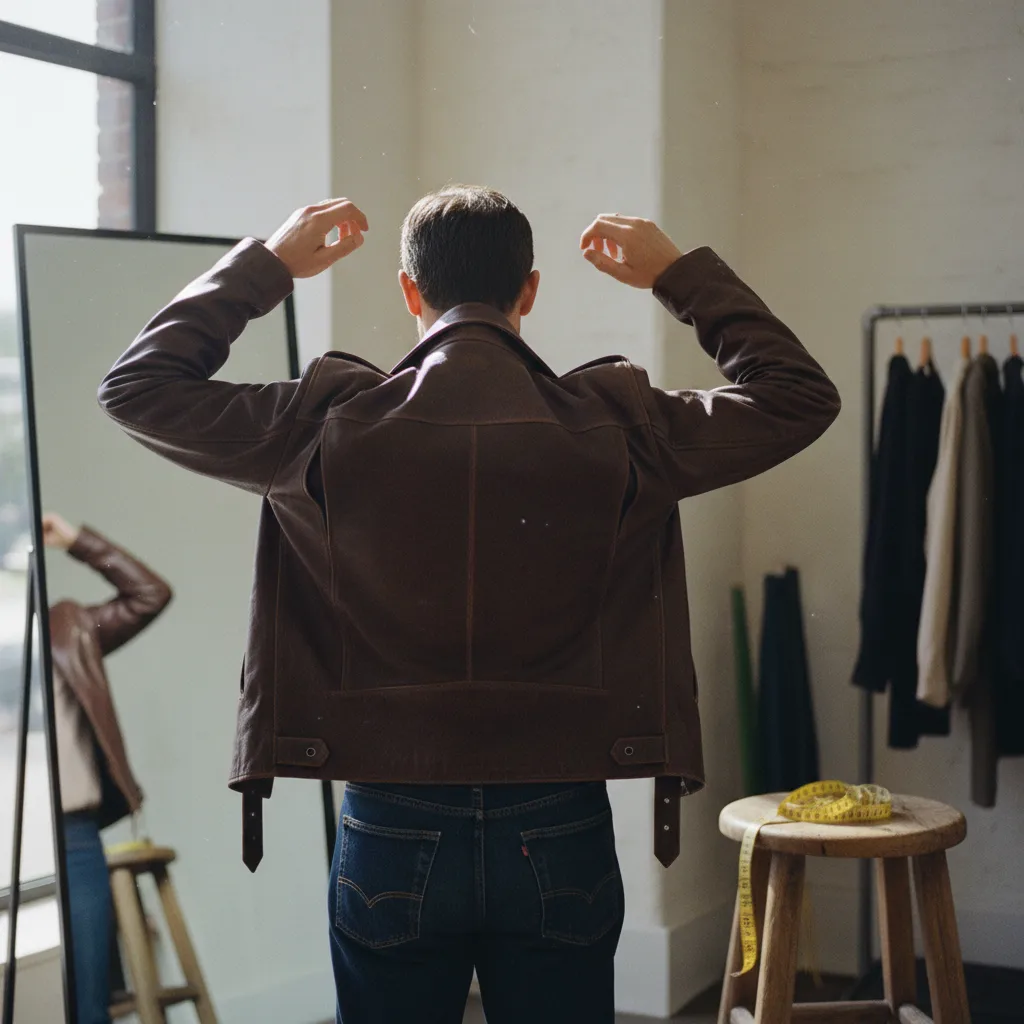
Start with the shoulders. The seam should land at the edge of your shoulder bone, not past it, because leather sleeves cannot be easily moved by a tailor. Next, cross your arms in front of you and reach forward as if driving. If the back pulls tight across the shoulder blades, try the next size or a different cut. A jacket that only looks good while you stand still will stay in the closet.
Check the sleeves with your arms relaxed. They should reach the base of your thumb, since leather shortens slightly at the elbow as it breaks in. Zip the front and sit down. The hem should not ride up into your stomach or flare out at the hips. Finally, lift both arms above your head. A small amount of lift at the waist is normal, but the whole jacket rising like a box means the armholes are cut too low.
What the Leather Itself Tells You
Lambskin feels soft and light from the first minute, which makes it pleasant for a city jacket, but it scuffs easily and will not protect you on a motorcycle. Cowhide starts stiff and heavy and takes weeks to mold to your body, yet it lasts for decades and develops creases that become yours. Goatskin sits in the middle, with a pebbly grain that hides wear. Ask which one you are wearing before you fall for how it feels.
Look inside the jacket. A lining stitched cleanly at the seams and finished around the pockets suggests care, while loose threads and puckered seams near the zipper show haste. Open and close every zipper several times. Heavy metal zips run smoothly and lock firmly, while cheap ones snag on the leather. A shop that takes pride in its work will happily let you inspect all of this, and many will offer to adjust sleeves or replace hardware later.
A Walk Between Fittings
Start at the Pacific Design Center, where the plaza and the outside of the glass buildings are worth a look even if the showrooms inside are mainly for trade. From there, walk west along Melrose toward Robertson, comparing the shops on both sides of the street and noting which ones let you take your time in front of a mirror. Then turn south on Robertson Boulevard, where courtyards and shaded sidewalks make a calmer second loop.
Give yourself a pause between fittings. A leather jacket you tried an hour ago looks different in memory than it did in the mirror, and walking a few blocks helps you sort a crush from a real fit. Many careful shoppers try three jackets, leave, and return later to the one they kept thinking about. That pause costs nothing and often saves an expensive mistake on a piece meant to last for years.
Who Is Trying Things On
On a weekday you will share the racks with stylists pulling pieces for a shoot, interior designers on their way to a showroom appointment, and visitors who planned a whole trip around finding the right jacket. Weekends are busier and more social. Stylists move fast but check every seam, and they rarely buy a jacket that needs major changes. That is a sensible rule to follow, since big alterations to leather are costly and not always possible.
Skip a jacket that only fits once you imagine it stretching a lot. Leather does relax, mainly at the elbows and across the back, but it will not grow a full size. Skip a fashion color you are not sure you will wear in three years, since a jacket is built to last far longer than a trend. Black and dark brown are classic for good reason, and they pair with almost everything in a Los Angeles closet.
When the Right Size Is Missing
If a style you love is not in your size, ask whether the shop can order it or make one to measure. Some small makers take measurements and build a jacket for you, which takes longer but solves fit problems for people with long arms or broad shoulders. If that is not possible, take a photo of the label and the cut, and use it as a reference when you try jackets elsewhere.
Keep the Fitting Notes in Karpo APP
Tell Karpo APP the kind of jacket you want, your usual size and how you plan to wear it, and ask for a West Hollywood walk that links the Blue Whale, Melrose Avenue and Robertson Boulevard. After each fitting, save a short note about shoulders, sleeves and leather type so you can compare later without relying on memory. The app keeps your notes and route in one place, and the mirror still has the final say.
Ask Karpo for more information.
Keep reading
- Burbank Film Memorabilia Collector Shop Walk: Studio Stash
 Pasadena Film Memorabilia Collector Shop Walk: Classic Route
 Silver Lake Film Memorabilia Collector Shop Walk: Indie Lore