 Burbank Film Memorabilia Collector Shop Walk: Studio Stash
Hidden Gems & Odd Finds

Pasadena Artisan Leather Goods Shop Walk: Pieces That Last
Old Pasadena suits an artisan leather goods shop search for things that last: browse the brick alleys, learn simple leather care, then rest at City Hall.
Old Pasadena is built from brick buildings that have outlived several generations of shops, which makes it a fitting place to look for leather you plan to keep. An artisan leather goods shop search here works best on foot along Colorado Boulevard and the narrow alleys that branch off it, where small storefronts sit between cafés and bookshops. Go with one clear goal, such as a bag or belt for daily use, and judge every piece by how it will look in ten years.
Blocks That Were Saved
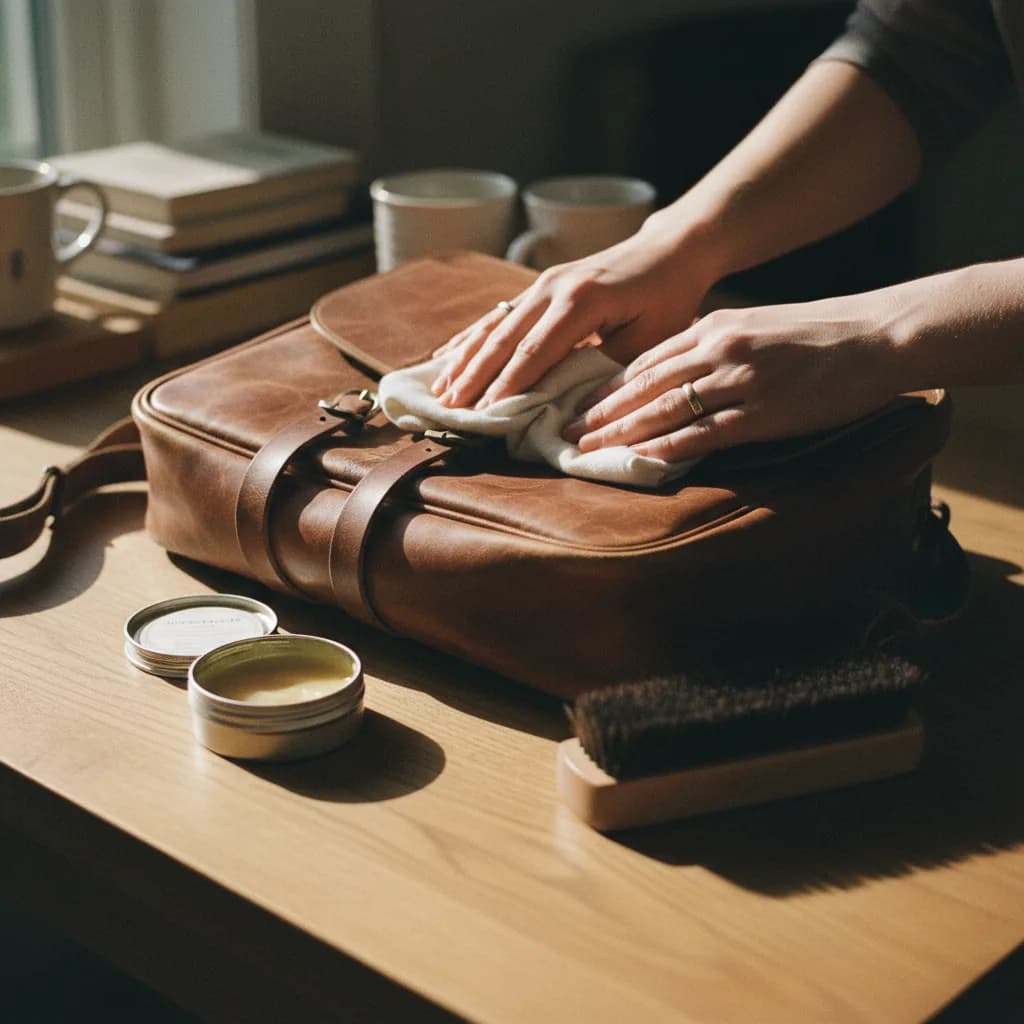
The commercial core of Old Pasadena grew up in the decades around 1900, when the city was a winter resort for wealthy visitors from the East and Midwest. By the middle of the century many of its buildings were neglected, and some were slated for demolition. Preservation efforts in the 1970s and 1980s led to the area's listing as a historic district, and restored facades and hidden courtyards slowly filled with new businesses.
That rescue story fits leather well. The district survived because people chose to repair rather than replace, and the same thinking applies to a good bag or pair of boots. Every New Year's Day the Rose Parade rolls down Colorado Boulevard past these same buildings, a reminder that this street has kept its shape through more than a century of change. Things that last here are things that were looked after.
Choose a Piece Worth Looking After
Start with full-grain leather, which keeps the natural surface of the hide and ages into a richer color, instead of corrected grain that has been sanded and coated to look uniform. Check that stress points such as handle bases and strap rings are reinforced with extra stitching or rivets. Ask whether the strap can be replaced on its own, since straps wear out first. A bag designed for repair is a bag designed to last.
Look at how the piece is assembled. Edges that are folded and stitched hold up well on soft goods, while cut edges that have been burnished suit firmer bags and belts. Both are good signs of care. Avoid pieces with glue showing at the seams, thin plastic edge paint, or hardware that rattles when you shake the bag. These are small details on the shop floor and big problems after a year.
Simple Care at Home
Most leather needs less care than people think. Wipe it with a soft, dry cloth when it gets dusty, and use a slightly damp cloth for light marks, letting it dry naturally away from heat. Every few months, or when the surface looks dry, rub in a thin layer of a plain leather conditioner with a clean cloth, then buff it off. Too much product clogs the surface, so a little goes a long way.
Store leather where it can breathe. A cotton dust bag is better than plastic, which traps moisture and can cause mold. Stuff bags lightly with paper so they keep their shape, and hang belts or lay them flat rather than coiling them tightly. If a piece gets soaked in a rare Southern California storm, blot it, let it dry slowly at room temperature, and condition it once it feels dry again.
An Old Pasadena Loop
Start on Colorado Boulevard near Fair Oaks Avenue, the historic heart of the district, and walk the blocks in both directions, stepping into the side alleys where smaller shops often hide. The alleys are part of the charm, with brick walls, small courtyards and quiet corners away from traffic. Give each shop a proper look and ask whether the leather goods are made locally or by small workshops elsewhere.
When you need a break, walk east toward Pasadena City Hall, finished in 1927, whose domed tower and Spanish Revival courtyard garden are open to visitors. The fountain and shaded arcades are a calm place to look at what you have bought or to think over a piece you left behind. From there, the Civic Center blocks and the Central Park area offer more room to stroll before heading back to a Metro A Line station for the ride home.
Who Is Browsing and What to Avoid
Old Pasadena draws students from nearby colleges, families on a weekend outing, longtime residents running errands and visitors from across the San Gabriel Valley. The most useful people to watch are the older locals who have carried the same briefcase or satchel for years. Many of them are shopping for a strap, a buckle or a repair rather than a new bag, and that habit is the heart of buying leather well.
Avoid buying leather goods that cannot be repaired, such as bags with heat-sealed edges or fused seams that cannot be stitched again. Avoid rushing a purchase on a crowded weekend afternoon if you are unsure, because a busy shop makes it hard to inspect a piece closely. Weekday mornings are quieter, and the staff will have more time to answer questions about where a piece was made and how it should be cared for.
If Nothing Feels Right
Not every visit ends with a purchase, and that is fine. If nothing meets your standard, look again at the leather you already own. Many older bags and belts can be cleaned, conditioned and fitted with new hardware for far less than a new piece. Ask a local cobbler or leather repair shop whether your old favorite can be brought back, and you may leave Pasadena with something that feels new again.
Keep the Plan in Karpo APP
Tell Karpo APP what you hope to find, such as a briefcase for work or a belt for everyday wear, and ask it to plan an Old Pasadena walk along Colorado Boulevard, through the alleys and on to the City Hall courtyard. Save notes on the leather, stitching and repair options of each piece you like, so you can compare them later. The app keeps your plan tidy, and the choice is still about what will last.
Ask Karpo for more information.
Keep reading
- Burbank Film Memorabilia Collector Shop Walk: Studio Stash
 Pasadena Film Memorabilia Collector Shop Walk: Classic Route
 Silver Lake Film Memorabilia Collector Shop Walk: Indie Lore