 Burbank Film Memorabilia Collector Shop Walk: Studio Stash
Hidden Gems & Odd Finds

Arts District Artisan Leather Goods Shop: Commission a Piece
Arts District warehouses suit a custom artisan leather goods shop visit: bring a reference, ask about hides and patterns, then walk Mateo Street to the river.
The Arts District is where a custom order makes more sense than a quick purchase, because the old warehouse blocks east of downtown Los Angeles still hold working studios behind roll-up doors. An artisan leather goods shop here is often half showroom, half workbench, and the best visits start with a conversation about what you want made. Bring a photo or an old bag you love, wear comfortable shoes for long blocks, and leave room in the afternoon for a slow walk toward the river.
From Rail Yards to Workbenches
This corner of the city grew up around rail lines, citrus packing houses and factories, and the scale of the buildings still shows it. When industry moved out in the second half of the last century, artists moved into the empty lofts, drawn by high ceilings, freight elevators and low rents. The district's name comes from that wave, and its walls became a canvas for murals that still cover whole sides of buildings along Traction Avenue and Mateo Street.
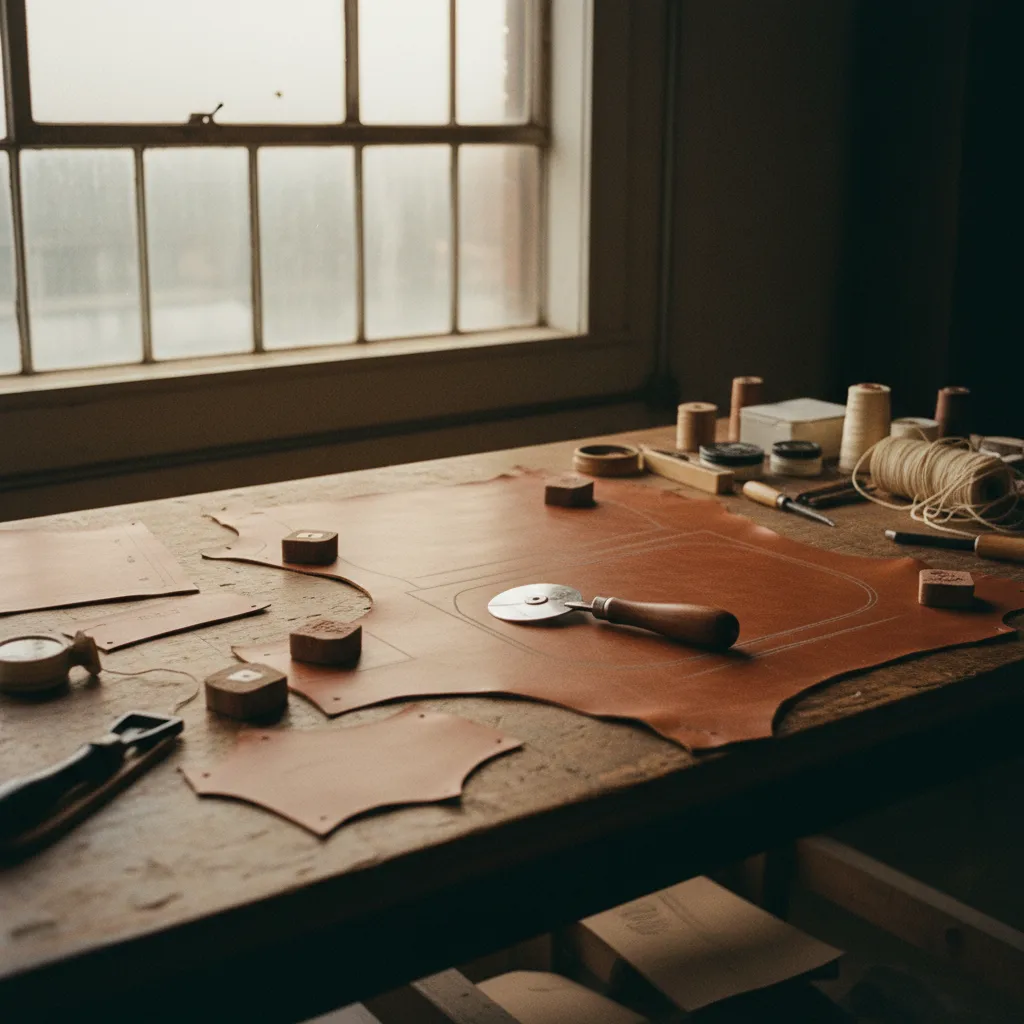
That history explains why leather fits here. A warehouse floor has space for a long cutting table, a heavy press and racks of whole hides, all of which are hard to squeeze into a small boutique. Many makers in the district also do production work for designers, film sets or other brands, so the person who sews your wallet may have spent the morning on a costume or a run of belts for a shop across town.
Before You Ask for a Custom Piece
Decide what job the piece has to do. A daily work bag that carries a laptop needs a firmer leather, reinforced handles and a base that keeps its shape, while a soft weekend tote can be lighter and more relaxed. Measure the things you carry most, such as a laptop, a water bottle or a camera, and write the numbers down. A maker can design around real dimensions far better than around a vague request for something medium.
Collect two or three references, not ten. One photo for shape, one for color and one for a detail such as a pocket or a closure is enough. Ask whether the maker can show you a finished piece in the same leather, because a small swatch rarely shows how a full panel folds, creases and catches light. If they suggest a different hide for your use, listen. They see how materials fail every week.
Questions That Separate Craft From Costume
Ask where the leather comes from and how it was tanned. Vegetable-tanned hides from established tanneries hold an edge well and age to a deep tone, while softer chrome-tanned leathers drape better for garments. Ask whether the pattern will be cut by hand or with a die, and whether seams will be hand stitched or machine stitched. There is no single right answer, but a maker who explains the tradeoffs clearly is one worth trusting with a commission.
Ask about hardware too. Solid brass or stainless fittings last for decades, while plated zinc buckles can chip and snap within a year or two. Then ask how repairs work if a strap tears or a seam opens later. The strongest answer is simple: bring it back. A studio that expects to see its work again is building pieces to last, and that is the whole point of buying from a workshop instead of a mall.
Shape the Afternoon Around the Studio
Start near the corner of Traction Avenue and Third Street, where small cafés and galleries give you a gentle warm-up, and work south toward Mateo Street. The blocks here are long and the sidewalks can be uneven, so take your time and look up at the murals as you go. Studio doors that are open usually mean visitors are welcome to look, but a quick hello before stepping inside is good manners in a working space.
Hauser and Wirth's gallery complex, set in a former flour mill, is free to enter and makes a calm midpoint with its courtyard and changing exhibitions. Farther south and east, the Sixth Street Viaduct arches over the Los Angeles River with wide walkways and views back to the downtown towers. It is the right place to finish if you want to think over a design before committing to it, with the afternoon light on the concrete.
Who Is Here and What to Avoid
On a weekday you will share the sidewalks with set designers loading vans, architecture students carrying models from the nearby school housed in an old freight depot, and makers taking a break outside their doors. Weekends bring more visitors and brunch crowds. For a serious conversation about a commission, a weekday visit is the better choice, when the maker has time to sketch with you instead of answering quick questions from passers-by.
Avoid rushing a custom order. If a deadline is tight, such as a gift for a date next week, choose a finished piece from the shelf and ask for initials or a small adjustment instead. Avoid paying for a design you have not seen sketched or sampled in some form. A short sketch, a paper mockup or a photo of a similar past piece protects both of you and makes the final result far more likely to match the picture in your head.
If the Timing Does Not Work
Some studios here run on appointments or close for production days, so a locked door is common. If that happens, walk a few blocks and look at the work in other shops with your new checklist in mind, comparing stitching, edges and hardware. You will start seeing quality quickly. Then contact the maker you wanted to meet directly and ask for a time to come back, rather than settling for something that does not quite fit.
Plan It With Karpo APP
Tell Karpo APP what you want made, the rough size and how you will use it, and ask it to plan an Arts District afternoon that links a studio visit with the flour mill gallery and the Sixth Street Viaduct. Keep your measurements, reference photos and notes from each studio in one list, so comparing makers later is easy. The plan helps you move through the district, and the design itself stays a conversation between you and the person at the bench.
Ask Karpo for more information.
Keep reading
- Burbank Film Memorabilia Collector Shop Walk: Studio Stash
 Pasadena Film Memorabilia Collector Shop Walk: Classic Route
 Silver Lake Film Memorabilia Collector Shop Walk: Indie Lore