 Los Feliz Nail Salon Walk In Finder for Broken Nail Repair
Neighborhood Guides
Melrose Art Walk Route Planner: Free Design Courtyard Loop
Explore free architectural courtyards from the Pacific Design Center to Melrose Place in West Hollywood, linking glass facades with garden ateliers.
Where the foothills of the Santa Monica Mountains slope down toward Melrose Avenue, San Vicente Boulevard, and Robertson Boulevard, West Hollywood's Design District forms a sun-drenched pedestrian triangle dedicated to architecture, decorative arts, and contemporary visual culture. Using a structured Melrose art walk route planner allows you to connect the monumental monochromatic glass towers of the Pacific Design Center with the intimate ivy-draped courtyards of Almont Drive, La Peer Drive, and Melrose Place. Because the exterior sculpture plazas, landscaped paseo passages, and public architectural facades along this loop require no admission tickets, you can experience five decades of Southern California design history in a single afternoon stroll.
Starting at the Glass Monoliths of the Pacific Design Center
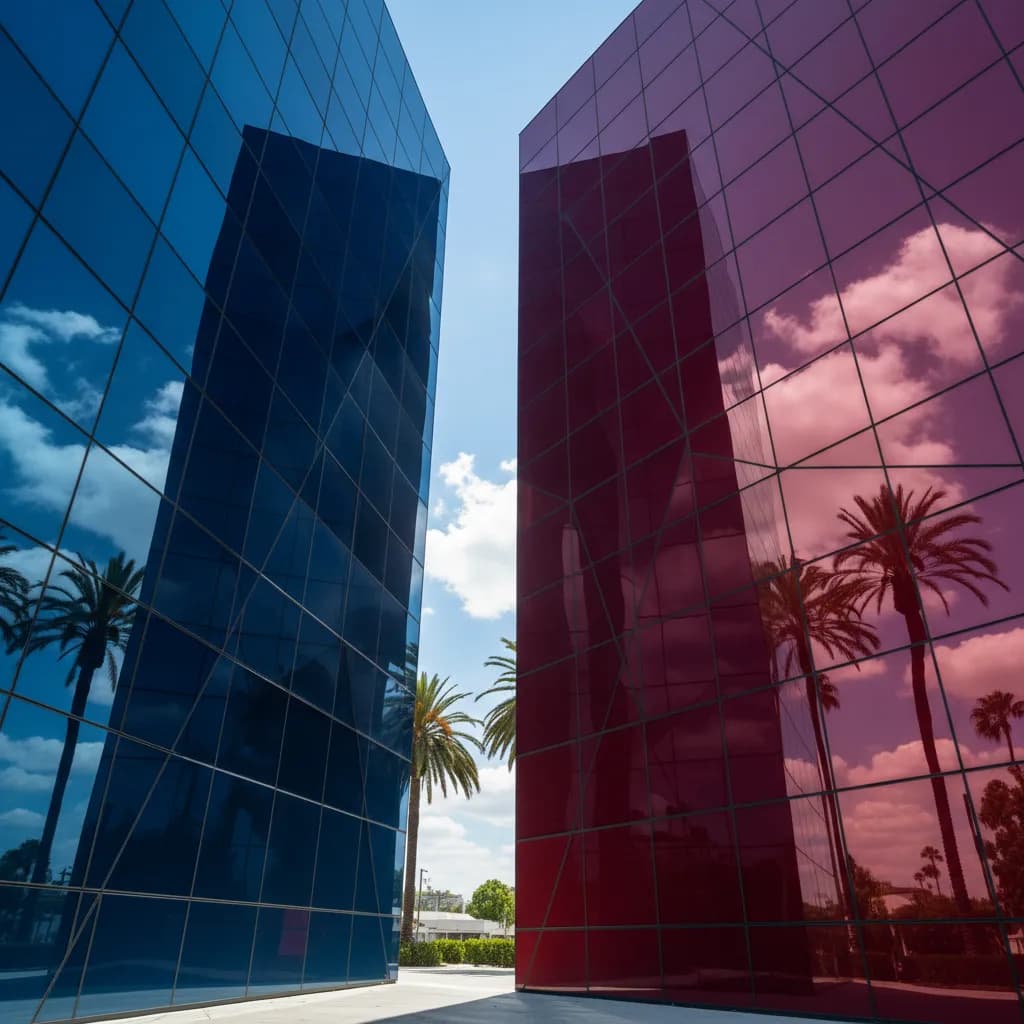
Begin your walk at the corner of San Vicente Boulevard and Melrose Avenue before the outdoor plaza of the Pacific Design Center, one of Southern California's most recognizable modern architectural landmarks. Designed by architect Cesar Pelli, the campus opened its first building—affectionately nicknamed the Blue Whale for its extruded cobalt-glass profile—in 1975, followed by the emerald-clad Green Building in 1988 and the twin curved towers of the Red Building in 2012.
Walk across the wide travertine and concrete entry plaza where the blue, green, and ruby curtain walls angle toward the sky, creating shifting geometric reflections of surrounding Canary Island date palms and passing clouds. The open-air concourse along San Vicente Boulevard and Melrose Avenue also borders West Hollywood Park and its civic library complex, where outdoor public sculptures and painted park murals provide an inviting foreground against Pelli's saturate-colored glass planes.
Strolling the Showroom Lanes of Robertson, Almont, and La Peer
From the northern edge of the Pacific Design Center plaza, cross Melrose Avenue and walk west toward Robertson Boulevard, Almont Drive, and La Peer Drive. Since the late 1940s and 1950s, when decorator showrooms, antique dealers, and fine art framers clustered along these quiet side streets, the blocks just north and south of Melrose Avenue have functioned as an open-air laboratory for interior architecture and sculptural craft.
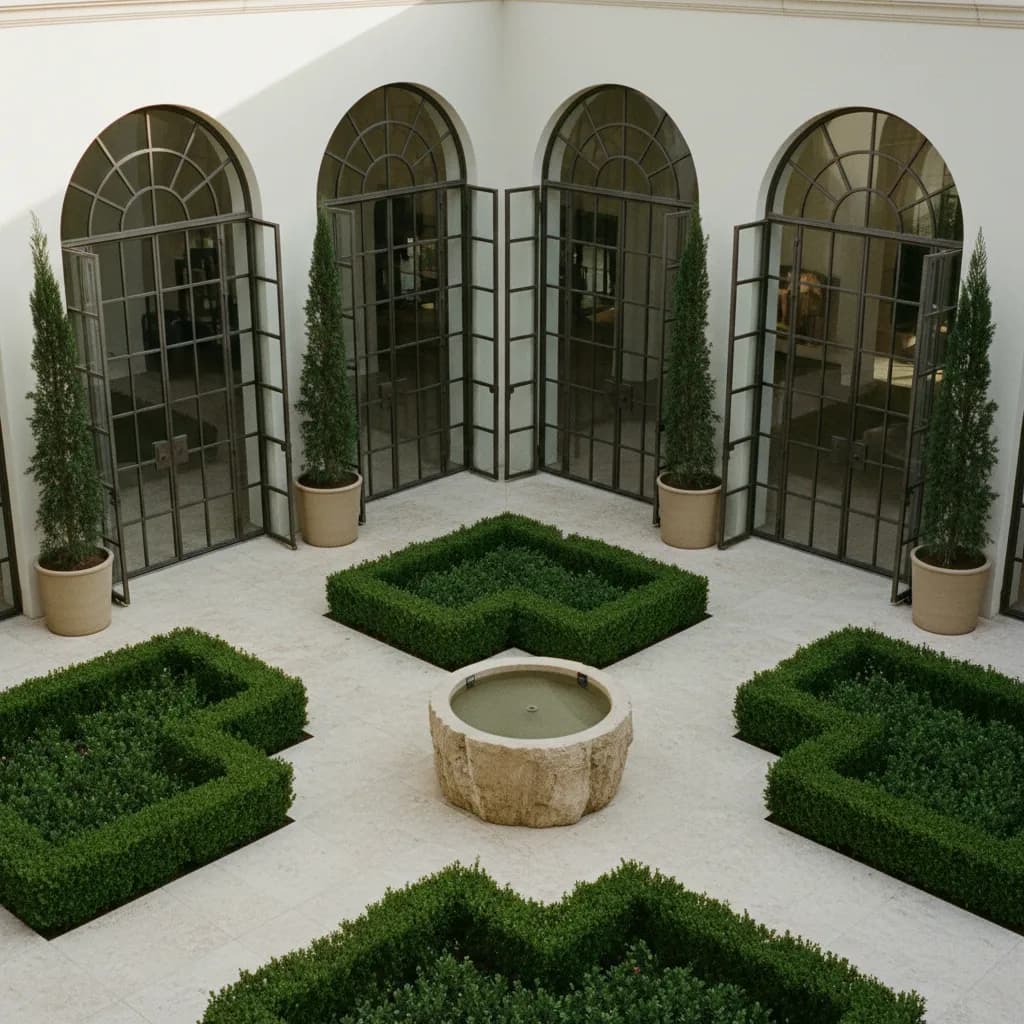
Turn down Almont Drive and La Peer Drive to observe how mid-century brick warehouses and low-slung Regency-style pavilions have been adapted into contemporary galleries, tapestries studios, and collectible furniture spaces. Tall steel-framed casement windows, travertine-paved entry courts, and clipped boxwood parterres allow pedestrians on the public sidewalk to look directly into sunlit rooms displaying carved marble vessels, hand-knotted textiles, and architectural lighting.
Notice the attention paid to exterior surfaces along Melrose Avenue between Robertson Boulevard and La Cienega Boulevard: board-formed concrete walls, fluted limestone pilasters, brass-inlaid thresholds, and seasonal façade murals turn the commercial blocks into a continuous material sample board. Walking slowly along the southern sidewalk in mid-afternoon keeps the sun behind the roofline, eliminating window glare so you can study the craftsmanship inside each vitrine.
Entering the Tree-Shaded Enclave of Melrose Place
Continue east to the intersection of La Cienega Boulevard and Melrose Avenue, where the diagonal spur of Melrose Place branches off the main thoroughfare for two tranquil blocks between La Cienega Boulevard and Orlando Avenue. Shaded by a mature canopy of jacaranda and ficus trees, Melrose Place preserves a cluster of 1920s and 1930s Spanish Colonial Revival and French Normandy courtyard buildings originally occupied by antique importers and print dealers.
Step through the open wrought-iron archways along Melrose Place to explore the recessed limestone and terracotta courtyards, where tiered stone fountains, potted Italian cypresses, and arched French doors frame quiet ateliers and botanical perfumery counters. Even though busy arterial traffic flows just one block away on La Cienega Boulevard, the enclosed geometry of these garden courts muffles street noise and creates a European-scaled pedestrian promenade.
Whenever you want to pause your Design District walk for an espresso under the jacaranda trees, a courtyard lunch on Melrose Place, or an early evening patio table near Robertson Boulevard, open the Karpo APP and ask in natural language for West Hollywood cafes or dining rooms that match your afternoon plans.
Looping Back Along Norwich Drive and Huntley Drive
At the eastern end of Melrose Place near Orlando Avenue and Croft Avenue, turn south back to Melrose Avenue and begin your return leg westward along the opposite sidewalk past Norwich Drive, Huntley Drive, and Sherwood Drive. These residential-adjacent cross streets showcase the abrupt architectural transition between commercial gallery facades on Melrose Avenue and hedged 1920s Spanish bungalows tucked half a block south.
If you wish to extend the eastern turn of the route by five minutes before heading west, walk two blocks north along North Kings Road toward the historic 1922 Schindler House, where architect Rudolph Schindler pioneered tilt-slab concrete panels, sliding canvas screens, and outdoor garden rooms that permanently defined Southern California indoor-outdoor living. Seeing those early modernist principles alongside the contemporary stone and glass showrooms on Melrose Avenue gives your walk a rich century-long architectural arc.
Along Norwich Drive and Huntley Drive, several corner buildings feature wrap-around mural walls, sculptural steel gates, and pocket bamboo gardens that reward a brief detour off the main avenue. Completing the loop back to San Vicente Boulevard around four o'clock in the afternoon positions you to watch the western sun ignite the ruby-red and cobalt-blue glass planes of the Pacific Design Center in dramatic late-day contrast, while the adjacent lawns of West Hollywood Park offer shaded public benches to rest your feet.
Sunlight Reflections, Crosswalk Pacing, and Courtyard Etiquette
Because the West Hollywood Design District combines monumental reflective glass facades with intimate shaded courtyards, light conditions shift dramatically between noon and dusk. Midday sun emphasizes the saturated blue and red glass panels of Cesar Pelli's towers on San Vicente Boulevard, whereas late afternoon casts warm, low-angle light into the west-facing garden courts of Melrose Place and Almont Drive.
Use the signalized pedestrian crossings at San Vicente Boulevard, Robertson Boulevard, and La Cienega Boulevard rather than jaywalking across wide arterial lanes. When stepping into open-air showroom courtyards along Melrose Place or La Peer Drive, keep pathways clear for design clients carrying material samples and enjoy handheld street photography from the public sidewalks and plazas.
Ask Karpo for more information.
Keep reading
- Los Feliz Nail Salon Walk In Finder for Broken Nail Repair
 Highland Park Nail Salon Walk In Finder for Retro Manicures
 Koreatown Nail Salon Walk In Finder for K-Beauty Nail Looks