 Los Feliz Nail Salon Walk In Finder for Broken Nail Repair
Neighborhood Guides
Arts District Art Walk Route Planner: Free Mateo Loft Loop
Walk free warehouse courtyards from Traction Avenue to Mateo Street in the DTLA Arts District, linking historic brick lofts with Sixth Street Viaduct views.
Framed by the concrete channel of the Los Angeles River on the east and classic rail yards to the west, the Downtown Los Angeles Arts District occupies a century-old industrial grid where citrus packing houses, flour mills, and locomotive sheds have evolved into expansive creative spaces. Using a dedicated Arts District art walk route planner transforms what can otherwise feel like a disorienting maze of loading docks and dead-end cul-de-sacs into a fluid north-to-south pedestrian loop. Starting near the Little Tokyo / Arts District Metro station and winding down Traction Avenue, East Third Street, Palmetto Street, and Mateo Street, this self-guided route connects free museum-scale courtyard complexes with exterior street murals and timber-truss warehouse lofts.
Starting on East Third Street at the Former Flour Mill Complex
Begin your walk where East Third Street meets Garey Street and Hewitt Street, the historic anchor of the northern Arts District. Here, the sprawling brick-and-concrete compound originally constructed in 1907 for the Globe Grain and Milling Company now houses Hauser & Wirth Los Angeles, a museum-caliber contemporary exhibition campus open to the public without admission fees during regular gallery days. Stepping through the open steel gates reveals a central gravel courtyard and outdoor garden where monumental bronze, steel, and stone sculptures sit beneath olive trees and restored industrial silos.
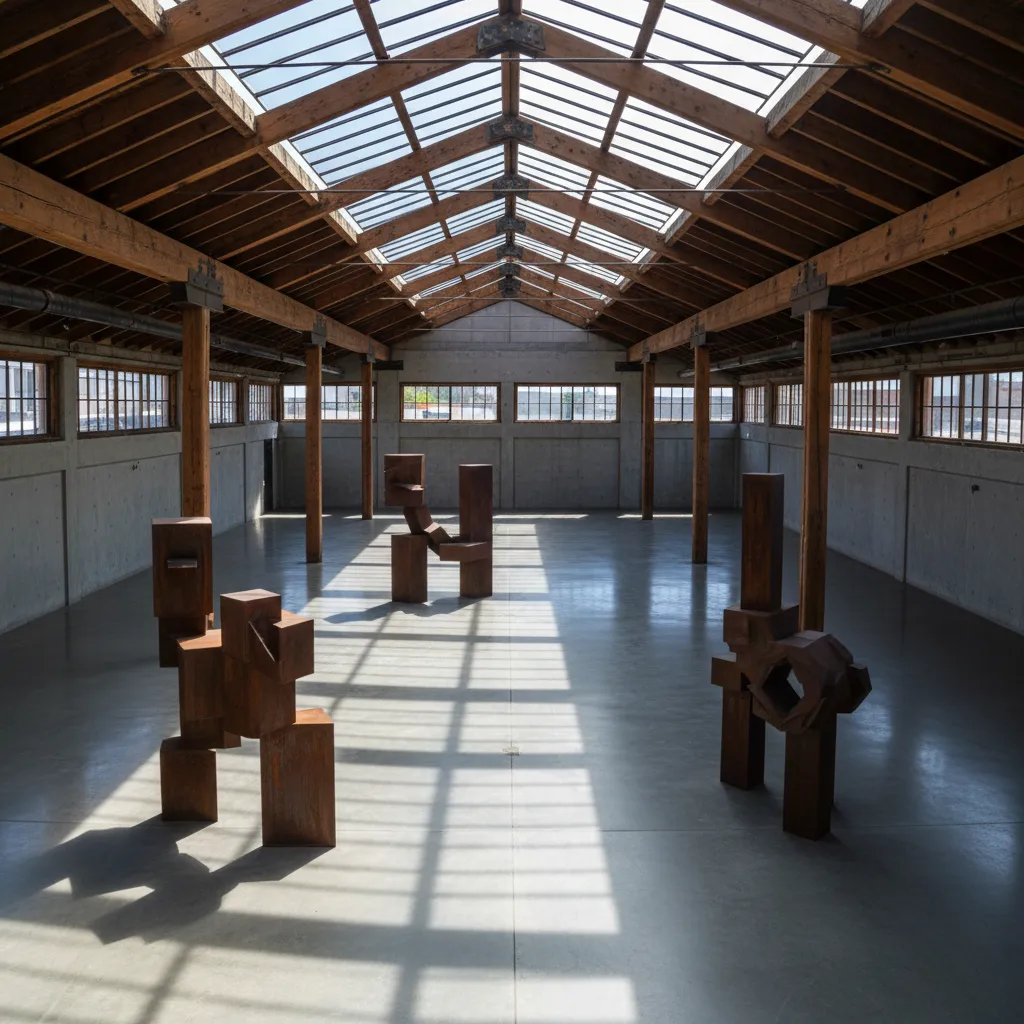
Take twenty minutes to walk the full perimeter of the former mill complex before heading deeper into the neighborhood. Inside the breezeways connecting the North Gallery, South Gallery, and bookshop wing, original hand-painted safety stencils, heavy timber loading doors, and sawtooth skylights preserve the tactile history of early twentieth-century Los Angeles manufacturing. Because the open-air courtyard links East Third Street directly to East Second Street, it serves as an ideal orientation point where you can study the scale of the industrial architecture before turning toward Traction Avenue.
Tracing Historic Rail Spurs Down Traction Avenue to Hewitt Street
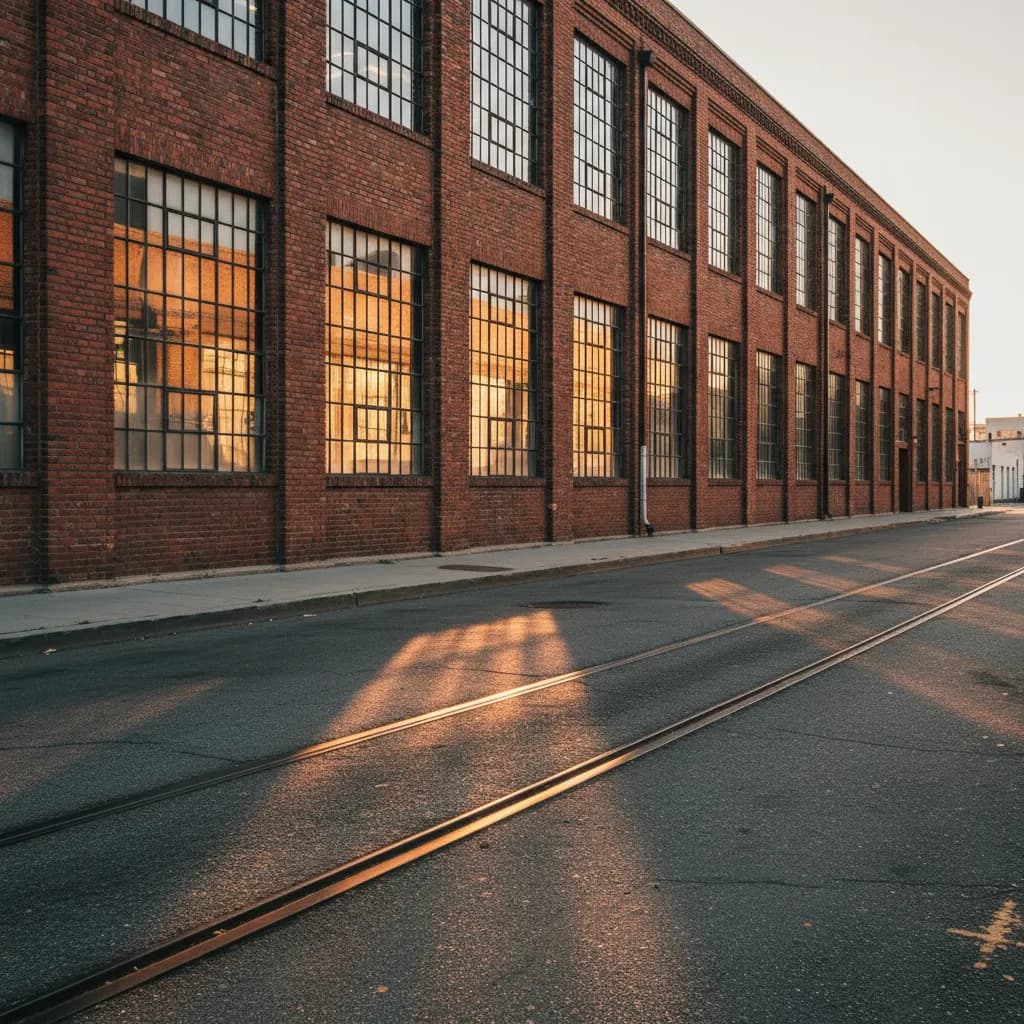
From the southern gate of the mill courtyard, cross East Third Street and angle southeast along Traction Avenue, a diagonal thoroughfare named for the historic electric streetcar lines that once converged here. Notice how the street grid shifts off the cardinal compass points, creating triangular flatiron corners and wide brick facades where visual artists began converting vacant lofts into live-work studios during the 1970s. Look down at the asphalt along Traction Avenue and Hewitt Street to spot remnants of standard-gauge freight spurs still embedded in the pavement from the era when boxcars delivered grain and raw timber directly to warehouse bays.
Turn south onto Hewitt Street between East Third Street and East Fourth Street, one of the most visually concentrated pedestrian blocks in Downtown Los Angeles. Both sides of Hewitt Street feature continuous multi-story aerosol and acrylic murals painted across corrugated metal roll-up doors and unreinforced masonry walls. Walking this stretch in mid-afternoon allows you to see how angled sunlight rakes across the brickwork without harsh overhead glare, highlighting the layered brushwork where newer community commissions meet older stencil pieces.
Crossing Fourth Street Into the Palmetto and Mateo Loft Corridor
At the southern end of Hewitt Street, cross East Fourth Street carefully at the signalized crosswalk and continue one block east to Colyton Street and Palmetto Street. South of Fourth Street, the pedestrian rhythm slows considerably as retail storefronts give way to deep red-brick warehouses, architectural fabrication shops, and ceramic and printmaking studios along Palmetto Street and Mateo Street. Here, tall multi-pane steel factory windows rise two and three stories above wide concrete loading aprons originally built at freight-car height.
Walk east along Palmetto Street toward Mateo Street, pausing to admire the interplay between historic red brick, weathered board-formed concrete, and lush drought-tolerant landscaping planted along the converted loading docks. Many of the adaptive-reuse buildings between Palmetto Street and East Sixth Street feature recessed entry courts and ground-floor exhibition windows where you can view large-scale abstract canvases, cast-glass installations, and sculptural furniture from the public sidewalk or step inside during open showroom afternoons.
If you want to break up your afternoon walk with an espresso, a shaded patio lunch, or a bakery stop near Mateo Street and Imperial Street, open the Karpo APP and ask in natural language for Arts District cafes or dining rooms that match your group's mood and dietary preferences.
Finishing Under the Arches of the Sixth Street Viaduct
Continue south down Mateo Street past East Sixth Street toward Industrial Street and Imperial Street, where the southern warehouse zone meets the dramatic concrete ribbons of the Sixth Street Viaduct. Reopened in July 2022 as the Ribbon of Light designed by architect Michael Maltzan, the bridge spans the Los Angeles River and the eastern rail tracks with ten pairs of canted concrete arches that frame the skyline above Santa Fe Avenue and Mateo Street.
Standing near the intersection of Mateo Street and East Sixth Street during the final hour before sunset offers one of the most striking architectural perspectives on the route. Low golden light reflects off the steel-sash loft windows along Mateo Street while illuminating the pale curving arches of the viaduct overhead. From here, you can either loop north along Santa Fe Avenue to compare the easternmost studio blocks or walk back up Mateo Street toward Fourth Street and Third Street to reconnect with the Metro rail station.
Daylight Timing, Footing, and Industrial Street Etiquette
To get the most out of this DTLA route, plan your walk between Wednesday and Sunday from mid-afternoon through early evening, when the public exhibition courtyards on East Third Street and the design showrooms near Palmetto Street and Mateo Street are active. Because several blocks in the Arts District still function as working wholesale and production corridors with active loading bays, stay alert near driveway aprons and wear supportive closed-toe walking shoes suited for uneven historic brick curbs and embedded steel train tracks.
Photography is welcome along the public sidewalks of Traction Avenue, Hewitt Street, Palmetto Street, and Mateo Street, as well as in the outdoor garden courtyard on East Third Street, provided you avoid blocking narrow pedestrian passages or using tripods inside gallery rooms. Keeping your route focused on this compact rectangle between East Third Street, East Seventh Street, Alameda Street, and Santa Fe Avenue ensures a rich two-hour architectural and visual arts walk without long freeway underpass crossings.
Ask Karpo for more information.
Keep reading
- Los Feliz Nail Salon Walk In Finder for Broken Nail Repair
 Highland Park Nail Salon Walk In Finder for Retro Manicures
 Koreatown Nail Salon Walk In Finder for K-Beauty Nail Looks